
Ferritin vs iron: what is the difference?
Updated October 31, 2026 · 12 sources · Written by the AumniVIDA team
UnitsShort answer
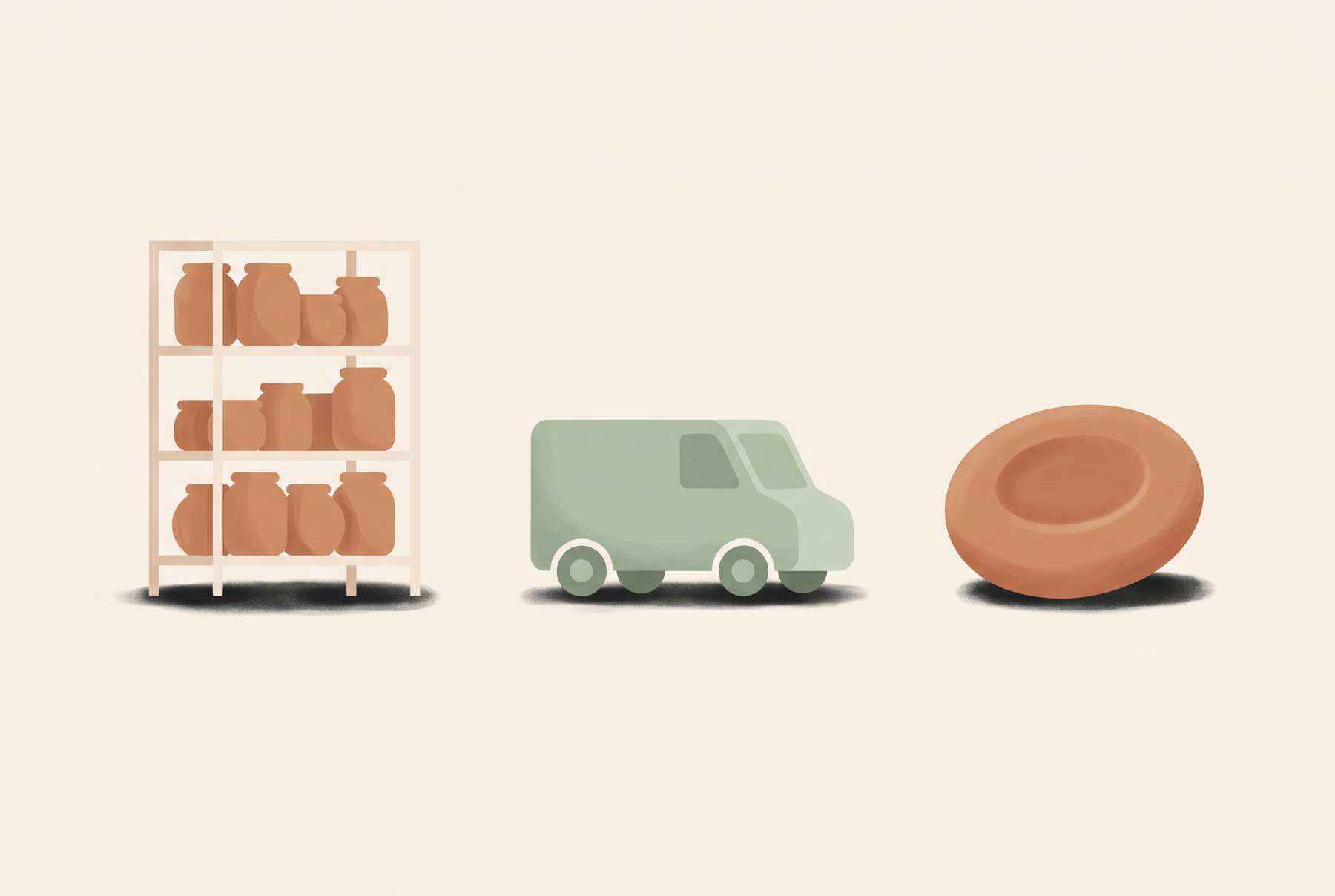
Ferritin is the protein that stores iron, so the ferritin test estimates your iron reserves. Serum iron measures iron moving in the blood right now, transferrin saturation shows how full the transport protein is, TIBC shows its capacity, and hemoglobin shows iron already built into red cells. Each answers a different question.
Key takeaways
- 1
Ferritin reflects stores; serum iron reflects iron in transit and changes with meals and time of day.
- 2
Ferritin is the most accurate single blood test for iron deficiency [1].
- 3
Transferrin saturation separates inflammation from overload when ferritin is high [2].
- 4
Hemoglobin falls last, so iron deficiency can exist with a normal hemoglobin [3].
Is ferritin the same as iron?
No. Ferritin is a protein that holds iron in storage; iron is the mineral itself. A ferritin test estimates the size of your iron reserve, while a serum iron test measures iron circulating at that moment.
Each ferritin molecule is a hollow protein shell that can store up to about 4,500 iron atoms [4]. Most of it sits inside cells in the liver, marrow and immune cells; the small amount in blood tracks the size of those stores when there is no inflammation [5].
Iron in the blood travels on a different protein, transferrin, on its way to the bone marrow and other tissues. Its level reflects what was absorbed or released recently, and hepcidin can lower it quickly during inflammation [3].
| Test | What it shows | Typical pattern in iron deficiency | Main pitfall |
|---|---|---|---|
| Ferritin | Iron stores | Low (30 ng/mL or lower in most adults) | Raised by inflammation, liver disease, alcohol |
| Serum iron | Iron in transit now | Low | Swings with meals, supplements and time of day |
| Transferrin saturation | Share of transport seats filled | Low (below 20% supports deficiency) | Low in inflammation too; high in liver disease |
| TIBC (total iron-binding capacity) | Capacity of transferrin to carry iron | High | Low in inflammation and malnutrition |
| Hemoglobin | Iron already in red cells | Normal early, low once anemia develops | Falls last; many other causes of anemia |
Should I test ferritin or iron?
Ferritin is the better first test for iron deficiency because it reflects stores rather than a moment in time. A full iron panel adds serum iron, TIBC and transferrin saturation, which help when ferritin may be inflated.
Across 55 studies, ferritin outperformed every other blood test for diagnosing iron deficiency anemia [1]. A ferritin cutoff of 30 µg/L found 92% of iron-deficient anemic patients with 98% specificity [6].
Serum iron alone is a poor test because it changes through the day and with food. Its main use is to calculate transferrin saturation, which matters most in two situations:
Reading ferritin with transferrin saturation and CRP
Read ferritin with transferrin saturation (TSAT) and CRP
- Ferritin below 30 ng/mL (30 µg/L)30 µg/L (30 ng/mL), any CRPIron deficiency: find the cause (BSG 2021, ASH 2026)
- Ferritin 30 to 100 ng/mL (30 to 100 µg/L)30 to 100 µg/L (30 to 100 ng/mL), CRP above 5 mg/L, TSAT below 20%Iron deficiency still possible, hidden by inflammation (ASH 2026, WHO 2020)
- High ferritin, normal TSAT, CRP above 5 mg/LInflammation is the likely driver, not overload (Sandnes 2021)
- High ferritin, normal TSAT, normal CRPThink liver fat, metabolic syndrome or alcohol (Sandnes 2021, Valenti 2023)
- Ferritin above 200 to 300 ng/mL (200 to 300 µg/L)200 to 300 µg/L (200 to 300 ng/mL) with TSAT over 45%Possible iron overload: HFE testing (EASL 2022)
Every pattern needs a clinician to confirm. Ferritin alone should never be used to diagnose overload (WHO 2020).
What if ferritin and iron disagree?
Mismatches are common and informative. Low ferritin with normal iron usually still means low stores, and high ferritin with low iron usually means inflammation. High ferritin with high transferrin saturation suggests iron overload.
- Low ferritin, normal serum iron. Stores are low even if the moment-to-moment level looks fine. Low ferritin is highly specific for iron deficiency [2].
- Normal ferritin, low iron or low saturation. Common when inflammation inflates ferritin; iron deficiency may still be present [7]. Check CRP.
- High ferritin, low iron. Inflammation raises hepcidin, which holds iron in storage and lowers serum iron [3].
- High ferritin, normal saturation. Points to reactive causes such as metabolic syndrome, fatty liver or alcohol [2].
- High ferritin, high saturation. Raises the question of hemochromatosis or another overload [8].
Liver disease can make transferrin saturation look high without overload, because the liver makes less transferrin [2]. These patterns guide a clinician; they are not a self-diagnosis.
What is the difference between ferritin and hemoglobin?
Hemoglobin is the iron-containing protein in red blood cells that carries oxygen; ferritin stores spare iron. Ferritin falls first as stores empty, and hemoglobin falls later, when iron deficiency has become anemia.
Most of the body's iron sits in hemoglobin [9]. When iron runs short, the body uses its ferritin stores first, so ferritin drops while hemoglobin stays normal. Only when stores are exhausted does hemoglobin production suffer, which is why iron deficiency without anemia is common [3].
Physiology studies mark this turning point: hemoglobin begins to fall when ferritin drops to about 25 µg/L in women [10] [11]. A normal hemoglobin therefore does not rule out low iron stores.
The reverse also happens: hemoglobin can be low with normal ferritin when anemia has another cause, such as low vitamin B12 or folate, kidney disease or inflammation. Related markers such as homocysteine can help a clinician look at the B vitamin side.
What is the difference between ferritin and transferrin?
Ferritin stores iron inside cells; transferrin carries iron in the blood. Transferrin saturation, the share of transferrin carrying iron, shows supply in transit and is the main second test beside ferritin.
Transferrin saturation is a calculated value reflecting the proportion of iron-binding sites on transferrin that are occupied [2]. TIBC estimates how much transferrin is available.
In iron deficiency, the body makes more transferrin, so TIBC rises while saturation falls. In inflammation, saturation falls but TIBC does not rise. In overload, saturation climbs above 45% to 50% [2]. Reading ferritin and transferrin saturation together resolves most ambiguous results.
One caution: transferrin saturation depends on serum iron, so it shares the same swings with meals and time of day. A single high saturation is usually repeated, ideally on a morning sample, before anyone talks about overload. In hemochromatosis, EASL bases the diagnosis on both a raised saturation and a raised ferritin, plus genetic testing [8].
More about Ferritin
- Ferritin: the full guideFerritin is the protein that stores iron inside your cells, and a blood ferritin test estimates how much iron you have in reserve.
- What does low ferritin mean?Low ferritin means your iron stores are running out.
- What does high ferritin mean?High ferritin usually signals inflammation, fatty liver, alcohol, metabolic syndrome or cell damage rather than too much iron: only about 10% of cases reflect iron overload.
- How to increase ferritinFerritin rises when you absorb more iron than you lose.
- What is a normal ferritin level?A typical lab ferritin range runs from about 15 to 30 ng/mL at the low end to about 200 ng/mL in women and 300 ng/mL in men.
- Ferritin test: what it measures and how to prepareA ferritin test is a routine blood draw that estimates your iron stores.
Protocols that act on Ferritin
- Plant-based and vegan dietsA plant-based diet gets most or all of its food from plants: vegan diets exclude all animal foods, vegetarian diets exclude meat and fish.
- Anti-inflammatory dietAn anti-inflammatory diet is an eating pattern meant to lower chronic low-grade inflammation: more oily fish, olive oil, vegetables, fruit, legumes, nuts and whole grains, and less processed meat, refined carbohydrate and sugary drinks.
- Carnivore dietThe carnivore diet is an animal-foods-only pattern of meat, fish, eggs and animal fat, often under 20 g of carbohydrate a day.
Common questions
Can I have normal iron but low ferritin?
Yes. Serum iron reflects iron in transit at that moment, while ferritin reflects stores. Low ferritin with normal serum iron usually still indicates low stores [2].
Should I take ferritin or iron supplements?
Supplements contain iron, not ferritin; your body makes ferritin from the iron you absorb. Take iron only after testing and with a clinician's plan [12].
Is ferritin or hemoglobin more important?
They answer different questions. Ferritin shows stores and falls first; hemoglobin shows whether anemia has developed [3]. Both are useful together.
Is ferritin the same as folate?
No. Folate is a B vitamin needed to make red cells; ferritin stores iron. Both can be low at once, which is why clinicians sometimes test them together.
Sources
- 1.Guyatt GH, Oxman AD, Ali M, et al. Laboratory diagnosis of iron-deficiency anemia: an overview. Journal of General Internal Medicine, 1992. doi:10.1007/BF02598003
- 2.Sandnes M, Ulvik RJ, Vorland M, et al. Hyperferritinemia-A Clinical Overview. Journal of Clinical Medicine, 2021. doi:10.3390/jcm10092008
- 3.Pasricha SR, Tye-Din J, Muckenthaler MU, et al. Iron deficiency. The Lancet, 2021. doi:10.1016/S0140-6736(20)32594-0
- 4.Harrison PM, Arosio P. The ferritins: molecular properties, iron storage function and cellular regulation. Biochimica et Biophysica Acta, 1996. doi:10.1016/0005-2728(96)00022-9
- 5.World Health Organization. WHO guideline on use of ferritin concentrations to assess iron status in individuals and populations. World Health Organization, 2020. Link
- 6.Mast AE, Blinder MA, Gronowski AM, et al. Clinical utility of the soluble transferrin receptor and comparison with serum ferritin in several populations. Clinical Chemistry, 1998. PubMed 9550557
- 7.Powers JM, Lim MY, Achebe MO, et al. American Society of Hematology 2026 guidelines for diagnosis of iron deficiency. Blood Advances, 2026. doi:10.1182/bloodadvances.2025015950
- 8.European Association for the Study of the Liver. EASL Clinical Practice Guidelines on haemochromatosis. Journal of Hepatology, 2022. doi:10.1016/j.jhep.2022.03.033
- 9.Iolascon A, Andolfo I, Russo R, et al. Recommendations for diagnosis, treatment, and prevention of iron deficiency and iron deficiency anemia. HemaSphere, 2024. doi:10.1002/hem3.108
- 10.Mei Z, Addo OY, Jefferds ME, et al. Physiologically based serum ferritin thresholds for iron deficiency in children and non-pregnant women: a US National Health and Nutrition Examination Surveys (NHANES) serial cross-sectional study. The Lancet Haematology, 2021. doi:10.1016/S2352-3026(21)00168-X
- 11.Addo OY, Mei Z, Jefferds MED, et al. Physiologically based serum ferritin thresholds for iron deficiency among women and children from Africa, Asia, Europe, and central America: a multinational comparative study. The Lancet Global Health, 2025. doi:10.1016/S2214-109X(25)00009-9
- 12.Snook J, Bhala N, Beales ILP, et al. British Society of Gastroenterology guidelines for the management of iron deficiency anaemia in adults. Gut, 2021. doi:10.1136/gutjnl-2021-325210