
Plant-based and vegan diets
What is plant-based and vegan diets?
A plant-based diet gets most or all of its food from plants: vegan diets exclude all animal foods, vegetarian diets exclude meat and fish. Randomized trials show lower LDL cholesterol, weight and HbA1c. Large cohorts link them to less heart disease but, for vegans, more fractures, and B12 must be supplemented.
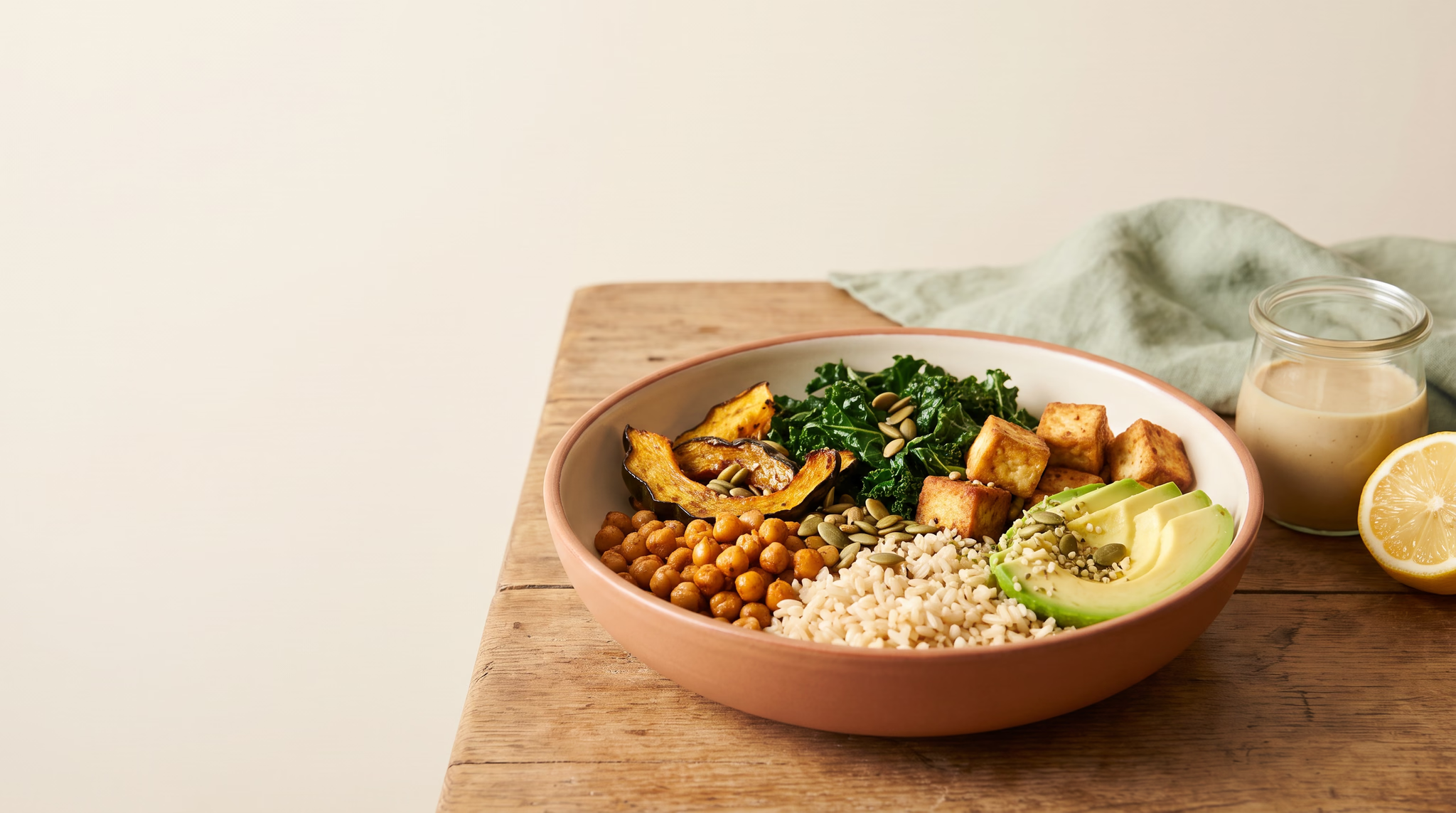
Major nutrition bodies state that well-planned vegetarian and vegan diets are healthful and adequate, and randomized trials consistently show lower LDL cholesterol, weight and HbA1c. Public debate is loud, and some concerns are real: vegans need B12 and should plan for iodine, calcium and omega-3, EPIC-Oxford found more fractures and haemorrhagic strokes, and unhealthy plant-based diets carry higher risk.
The rules
The rules ofPlant-based and vegan diets
- 1Vegan: eat no meat, poultry, fish, dairy, eggs or other animal-derived foods.
- 2Vegetarian: eat no meat, poultry or fish; dairy and eggs are allowed in the lacto-ovo version.
- 3Whole-food plant-based: build meals from whole grains, legumes, vegetables, fruit, nuts and seeds, and keep refined grains, added sugar and processed foods low.
- 4Eat legumes or soy foods every day.
- 5Take vitamin B12 from a supplement or fortified foods if you eat few or no animal foods.
- 6Use iodized salt or another reliable iodine source.
- 7Include calcium-rich foods daily, such as calcium-set tofu or fortified plant milk.
Share these rules as an image or a link.
| Vegan | No animal foods at all. |
|---|---|
| Lacto-ovo vegetarian | No meat, poultry or fish; dairy and eggs allowed. |
| Pesco-vegetarian (pescatarian) | No meat or poultry; fish, dairy and eggs allowed. |
| Whole-food plant-based (WFPB) | Vegan or near-vegan, with minimal refined foods, added sugar and often added oils. |
| Ornish program | A 10% fat whole-food vegetarian diet combined with exercise, stress management and group support. |
| Flexitarian or semi-vegetarian | Mostly plant foods with occasional meat or fish. |
What it aims to do
- Lower LDL cholesterol and ApoB and reduce the risk of heart disease.
- Lose weight and improve blood sugar control in type 2 diabetes.
- Reduce the risk of colorectal and other cancers.
- Live longer by replacing processed and red meat with plant foods.
- Reduce the environmental footprint of eating and avoid harm to animals.
What it claims, and what the evidence shows
Grades reflect evidence in people. Animal and cell results alone never earn more than limited.
Heart and blood vessels
Moderate evidenceBody fat and weight
Moderate evidenceBlood sugar and insulin
Moderate evidenceLifespan and mortality
Mixed evidenceCancer risk
Limited evidenceBone health
Evidence againstMuscle and strength
Limited evidence
Key takeaways
- 1
Plant-based covers vegan, vegetarian, whole-food plant-based and flexitarian patterns; health effects depend on food quality, not the label.
- 2
Randomized trials lower LDL cholesterol by about 12 mg/dL (0.30 mmol/L)0.30 mmol/L (12 mg/dL), ApoB by about 13 mg/dL and weight by about 4 kg.
- 3
EPIC-Oxford vegetarians had 22% less ischaemic heart disease but 20% more stroke, and vegans had 2.3 times the hip fracture risk of meat eaters.
- 4
Evidence on lifespan is mixed: Adventist vegetarians lived longer, UK vegetarians did not outlive health-conscious meat eaters.
- 5
Vegans need B12 from supplements or fortified foods and should plan iodine, calcium, vitamin D, omega-3, iron and protein.
What is a plant-based diet?
A plant-based diet gets most or all of its food from plants. Vegan diets exclude all animal foods, vegetarian diets exclude meat and fish, and whole-food plant-based diets also minimize refined and processed foods. The health effects depend heavily on which plant foods fill the plate.
"Plant-based" is used loosely, so the first step is to say which version you mean:
| Pattern | Excludes | Keeps |
|---|---|---|
| Vegan | All animal foods, including dairy, eggs and honey | Plants only |
| Lacto-ovo vegetarian | Meat, poultry, fish | Dairy, eggs |
| Pesco-vegetarian | Meat, poultry | Fish, dairy, eggs |
| Semi-vegetarian or flexitarian | Most meat | Occasional meat and fish |
| Whole-food plant-based (WFPB) | Animal foods and most refined foods, oils and added sugar | Whole grains, legumes, vegetables, fruit, nuts, seeds |
Plant-based diet vs vegan
Vegan describes what is excluded, often for ethical reasons. Whole-food plant-based describes what is eaten and is a health framing. A vegan diet built on white bread, fries, sweets and soda is plant-based in name only. US cohorts made this distinction measurable: a healthful plant-based diet index scored whole grains, fruit, vegetables, nuts, legumes, oils and tea or coffee positively, while an unhealthful index scored refined grains, potatoes, sweets, juices and sugary drinks positively [12].
The two behave very differently. The healthful pattern was linked to 25% lower coronary heart disease risk, the unhealthful one to 32% higher risk [6]. Every rule below is written with that in mind.
A week on a well-planned plant-based diet
Protein anchor, every day
Legumes or soy at most meals.
- Lentils, beans and chickpeas
- Tofu, tempeh and edamame
- Soy milk
Fill the plate, every day
The whole foods the healthful plant-based index scores up.
- Whole grains
- Vegetables, including leafy greens
- Fruit
- Nuts and seeds
Cover the gaps
Plants do not supply reliable B12, and vegans run low on iodine and omega-3.
- Vitamin B12 from a supplement or fortified foods
- Iodized salt or another reliable iodine source
- Calcium-set tofu or calcium-fortified plant milk
- Algae-based EPA and DHA, optional
Keep low
An unhealthful plant-based pattern went with 32% higher heart disease risk.
- Refined grains and fries
- Sweets
- Juices and sugary drinks
If you are pregnant or breastfeeding, plan B12, iodine, iron and DHA with a clinician or dietitian.
Does a plant-based diet lower cholesterol and heart disease risk?
Yes for cholesterol, with good evidence: randomized trials lower LDL by about 12 mg/dL (0.30 mmol/L)0.30 mmol/L (12 mg/dL) and ApoB by about 13 mg/dL. Cohorts link vegetarian diets to about 22% to 25% less ischaemic heart disease, though one large UK cohort also found more haemorrhagic strokes.
Blood lipids. This is the best-established effect. A meta-analysis of 30 randomized trials found that vegetarian and vegan diets lowered total cholesterol by 0.34 mmol/L, LDL cholesterol by 0.30 mmol/L and ApoB by 12.9 mg/dL compared with omnivorous diets [1]. In the Stanford twins trial, the vegan twin's LDL fell 13.9 mg/dL more than the omnivore twin's in 8 weeks [2]. See LDL cholesterol and ApoB.
Heart disease. In 48,188 EPIC-Oxford participants followed for 18 years, vegetarians had 22% lower rates of ischaemic heart disease than meat eaters, about 10 fewer cases per 1,000 people over 10 years [3]. A meta-analysis of cohorts put the reduction at 25% [4].
Reversal claims. Dean Ornish's Lifestyle Heart Trial combined a 10% fat whole-food vegetarian diet with exercise, stress management, smoking cessation and group support. Over 5 years, average coronary stenosis improved by 3.1 percentage points in the intervention group and worsened by 11.8 points in controls, with 25 versus 45 cardiac events [5]. The trial was small (48 randomized, 35 completed) and tested a whole lifestyle package, so it cannot isolate the diet.
The stroke signal. The same EPIC-Oxford analysis found 20% higher rates of total stroke in vegetarians, about 3 more cases per 1,000 over 10 years, mostly haemorrhagic [3]. Other cohorts have not consistently shown this. It is one reason to plan a plant-based diet well rather than treat it as automatically protective.
EPIC-Oxford: heart disease and stroke versus meat eaters
- Vegetarians: ischaemic heart disease0.78 hazard ratio vs meat eaters
About 10 fewer cases per 1,000 over 10 years
- Fish eaters: ischaemic heart disease0.87 hazard ratio vs meat eaters
- Vegetarians: total stroke1.2 hazard ratio vs meat eaters
About 3 more cases per 1,000 over 10 years, mostly haemorrhagic
Show the data
| Item | Value (hazard ratio vs meat eaters) | Low | High | Note |
|---|---|---|---|---|
| Vegetarians: ischaemic heart disease | 0.78 | 0.7 | 0.87 | About 10 fewer cases per 1,000 over 10 years |
| Fish eaters: ischaemic heart disease | 0.87 | 0.77 | 0.99 | |
| Vegetarians: total stroke | 1.2 | 1.02 | 1.4 | About 3 more cases per 1,000 over 10 years, mostly haemorrhagic |
Is a plant-based diet good for weight loss and diabetes?
Trials say yes. Vegan diets of at least 12 weeks reduced weight by about 4.1 kg and HbA1c by 0.18 percentage points on average, and cohorts link vegan diets to about half the odds of type 2 diabetes. Much of the effect runs through lower calorie intake and weight loss.
Weight. A meta-analysis of 11 trials in people with overweight or type 2 diabetes found vegan diets reduced body weight by 4.1 kg and BMI by 1.38 kg/m2 compared with control diets [7]. In a 16-week trial of 244 adults, a low-fat vegan diet reduced weight by 5.9 kg [8]. In a tightly controlled inpatient study, people ate 689 kcal a day less on a minimally processed plant-based, low-fat diet than on an animal-based ketogenic diet [10].
Type 2 diabetes. In 99 adults with type 2 diabetes, a low-fat vegan diet reduced weight by 6.5 kg versus 3.1 kg on a standard diabetes diet over 22 weeks, and HbA1c fell 1.23 versus 0.38 points among those whose medication did not change [9]. In the Adventist Health Study 2, diabetes prevalence was 2.9% in vegans and 7.6% in nonvegetarians [11]. A healthful plant-based index was linked to 34% lower diabetes risk even after adjusting for BMI [12]. See HbA1c and fasting insulin.
How to lower triglycerides on a plant-based diet
Triglycerides are the exception: the trial meta-analysis found no average effect on them [7]. If they are high, the usual focus is on legumes, whole grains and nuts in place of refined starches, juices and sweets; see triglycerides.
Do vegetarians and vegans live longer or get less cancer?
The evidence is mixed. Seventh-day Adventist vegetarians had 12% lower mortality than nonvegetarians, but UK vegetarians had the same mortality as health-conscious meat eaters. Vegetarian diets are linked to modestly lower total and colorectal cancer risk.
Mortality. Two large cohorts of health-conscious people disagree:
- In the Adventist Health Study 2 (73,308 people), vegetarians combined had 12% lower all-cause mortality than nonvegetarians (HR 0.88). The estimate for vegans was similar (0.85) but less certain [13].
- In two pooled UK cohorts (60,310 people), vegetarians and comparable meat eaters had the same all-cause mortality (HR 1.02) [14].
- Across cohorts, vegetarian diets were not linked to lower all-cause mortality overall [4].
The UK comparison group was itself health-conscious, a likely reason the gap disappears. In other words, the advantage of a vegetarian diet may be smaller than the advantage of a generally healthy lifestyle.
Cancer. Vegetarian diets were linked to 8% lower total cancer incidence, and vegan diets to 15% lower in the few studies available [4]. In Adventists, vegetarians had 22% lower colorectal cancer risk [15]. These are observational findings, and no trial has tested cancer outcomes. The colorectal finding fits the evidence on processed and red meat; see avoiding red meat.
What nutrients do vegans and vegetarians need to watch?
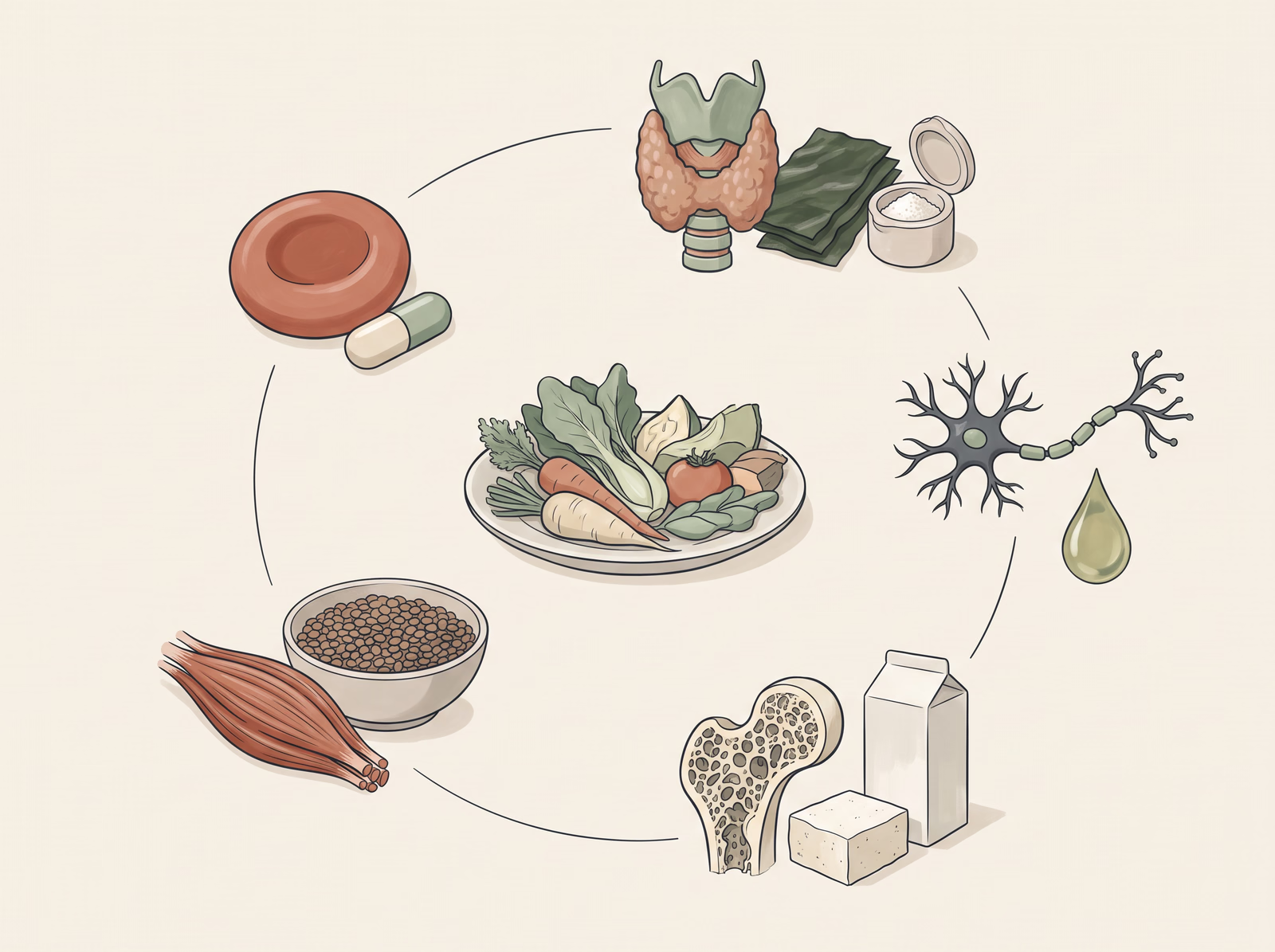
Vitamin B12 is essential: vegans need fortified foods or a supplement. Iodine, long-chain omega-3, calcium, vitamin D, iron and zinc also need planning. Vegans in EPIC-Oxford had 2.3 times the risk of hip fracture, and B12 deficiency in breastfed infants of vegetarian mothers can cause neurologic harm.
Vitamin B12. Plants do not supply reliable B12. In studies using sensitive markers, deficiency affected 62% of pregnant vegetarian women, 25% to 86% of children, 21% to 41% of adolescents and 11% to 90% of older adults, with higher rates in vegans [20]. The consequences can be serious: the CDC reported two breastfed children of vegetarian mothers who developed neurologic impairment from B12 deficiency [21]. The Academy of Nutrition and Dietetics states that vegans need a reliable B12 source such as fortified foods or supplements [22]. Low B12 raises homocysteine, a useful lab check.
Iodine. Vegans had the lowest urinary iodine of any group and did not reach optimal status; a few who ate a lot of seaweed took in far too much [23]. Iodized salt or a modest supplement is the usual approach; seaweed is unreliable.
Omega-3. Plasma EPA and DHA were lower in vegetarian and vegan men than in meat eaters and did not change with years on the diet [24]. Whether lower levels matter for health outcomes is not known. Algae oil supplies EPA and DHA without fish.
Bone. Vegans in EPIC-Oxford had 2.31 times the risk of hip fracture and 43% higher risk of any fracture than meat eaters [16]. A meta-analysis found lower bone density in vegetarians and vegans and more fractures in vegans [17]. Lower BMI explained part of this, and adjusting for calcium and protein weakened it slightly. Calcium-set tofu, fortified plant milks, adequate protein and vitamin D are the planning points.
Iron. Plant iron is less well absorbed. Checking ferritin is sensible, especially for menstruating women.
EPIC-Oxford: fracture risk versus meat eaters
- Vegans: hip fracture2.31 hazard ratio vs meat eaters
About 15 more cases per 1,000 over 10 years
- Vegetarians: hip fracture1.25 hazard ratio vs meat eaters
- Fish eaters: hip fracture1.26 hazard ratio vs meat eaters
- Vegans: any fracture1.43 hazard ratio vs meat eaters
Show the data
| Item | Value (hazard ratio vs meat eaters) | Low | High | Note |
|---|---|---|---|---|
| Vegans: hip fracture | 2.31 | 1.66 | 3.22 | About 15 more cases per 1,000 over 10 years |
| Vegetarians: hip fracture | 1.25 | 1.04 | 1.5 | |
| Fish eaters: hip fracture | 1.26 | 1.02 | 1.54 | |
| Vegans: any fracture | 1.43 | 1.2 | 1.7 |
How do you get enough protein and build muscle on a plant-based diet?
Eat legumes and soy daily and aim for total protein, not single foods. Plant proteins are somewhat less digestible and lower in leucine, but when vegans and omnivores both ate 1.6 g of protein per kg a day, 12 weeks of strength training built muscle and strength equally.
Protein quality. Soy and wheat protein stimulate less muscle protein synthesis per gram than several animal proteins. The likely reasons are lower digestibility, more of the amino acids being used by the gut and liver, lower leucine and a less complete amino acid profile. Larger servings, blends of plant proteins and protein-rich foods such as soy can offset this [19].
What happens in practice. In a 12-week resistance training study, 19 habitual vegans and 19 omnivores had protein intake raised to 1.6 g per kg of body weight a day, using soy for vegans and whey for omnivores. Leg lean mass rose 1.2 kg in both groups, and muscle size and leg-press strength gains did not differ [18].
Practical targets.
- Put a legume or soy food in every meal: lentils, beans, chickpeas, tofu, tempeh, edamame or soy milk.
- Spread protein over 3 to 4 meals.
- Use a soy or pea protein powder if total intake falls short, especially for older adults or people training hard.
- Combine grains and legumes over the day to round out amino acids; they do not need to be in the same meal.
For protein-focused eating more broadly, see high-protein diets.
Is a plant-based diet the healthiest? What do critics say?
Mainstream nutrition bodies say a well-planned vegetarian or vegan diet is healthful at every life stage. Critics, often from the low-carb and carnivore communities, argue that animal foods are more nutrient-dense and that vegan diets risk frailty. Both sides cite real data; the quality and planning of the diet decide most of the outcome.
The case for. The Academy of Nutrition and Dietetics holds that appropriately planned vegetarian, including vegan, diets are healthful, nutritionally adequate and suitable for pregnancy, childhood, older age and athletes [22]. The EAT-Lancet Commission proposed a mostly plant diet as healthy for people and the planet [25]. Randomized trials consistently show lower LDL, weight and HbA1c [1] [7].
The case against. Animal-based advocates such as physician Paul Saladino argue that vegan diets lead to frailty and that the cohort data favoring plant eaters reflect healthy user bias. Some of their points have support: vegans have more fractures [16], lower B12, iodine and omega-3 status [20] [23] [24], and plant protein is less anabolic per gram [19]. And UK vegetarians did not live longer than comparable meat eaters [14].
Where the evidence lands. Most of the claimed harms are nutrient gaps that supplements and food choices can close. Most of the claimed benefits apply to the healthful version of the diet, not to plant-based junk food [6]. A diet does not need to be fully vegan to capture much of the benefit: a Mediterranean diet or a diet that mainly cuts red and processed meat moves in the same direction.
Plant-based diet vs carnivore diet
No trial has compared the two on health outcomes. On LDL cholesterol, plant-based diets lower it in trials [1], while diets high in saturated animal fat tend to raise it. See carnivore diet for the other side.
Why it might work
The main mechanisms are lower saturated fat and higher fiber, which lower LDL, and lower energy density, which reduces calorie intake [10]. In mice prone to atherosclerosis, soy protein produced smaller arterial lesions than casein, even with similar blood lipids [26]; animal results support plausibility, not the human grade.
The studies, by type
Strongest designs first. Scroll each row; every card links to the paper and says whether it supports the protocol.
Systematic reviews and meta-analyses (5)
Randomized controlled trials (4)
Large observational studies in people (9)
Mechanistic studies in people (2)
Animal and cell studies (1)
Case reports and N-of-1 experiments (1)
Hypotheses and expert reviews (4)
Who follows it, who backs it, who doubts it
Public positions summarized in our words. Follow each link for the full context.
Follow it
Christopher GardnerNutrition scientist, Stanford Medicine
Senior author of the Stanford vegan twins trial; describes himself as mostly vegan for about 40 years and says adding more plant foods matters more than going strictly vegan.
Support it
Michael GregerPhysician, founder of NutritionFacts.org
Promotes whole-food plant-based eating and stresses that vitamin B12 from fortified foods or supplements is critical on a plant-based diet.
Dean OrnishPhysician; lead author of the Lifestyle Heart Trial
Led the Lifestyle Heart Trial, where a very low-fat vegetarian diet combined with exercise, stress management and support was associated with regression of coronary narrowing over 5 years.
Neal BarnardPhysician, president of the Physicians Committee for Responsible Medicine
Led trials of low-fat vegan diets for type 2 diabetes and argues they improve glucose control and weight more than standard diabetes diets.
Mixed or cautious
Tammy TongNutritional epidemiologist, University of Oxford; lead author of the EPIC-Oxford stroke and fracture analyses
Her analyses found less heart disease but more haemorrhagic stroke and fractures in non-meat eaters, and she has called for replication in other large cohorts before drawing clinical conclusions.
Oppose or doubt it
Paul SaladinoPhysician and animal-based diet advocate
Argues that observational studies favoring plant-based eaters reflect healthy user bias and that vegan diets promote frailty, and recommends a diet centered on meat, organs, fruit, honey and raw dairy.
Public examples
- Ornish Lifestyle Medicine
A cardiac rehabilitation program built on plant-based eating, exercise, stress management and group support, delivered with clinician oversight.
- PCRM 21-Day Vegan Kickstart
A free 21-day online program and app with meal plans, recipes and grocery lists from the Physicians Committee for Responsible Medicine.
- EAT-Lancet planetary health diet
A mostly plant-based reference diet proposed by the EAT-Lancet Commission for human and planetary health, updated in 2025.
How to follow it
- Decide which version you are following (vegan, vegetarian, WFPB or flexitarian) and write down what it excludes.
- Start with one or two plant-based days a week, or replace one meal a day, and build from there.
- Make legumes or soy the protein anchor of most meals: lentils, beans, chickpeas, tofu, tempeh, edamame or soy milk.
- Fill the rest of the plate with whole grains, vegetables including leafy greens, and fruit; add nuts and seeds daily.
- Start a vitamin B12 supplement or reliable fortified foods from the first day if you are vegan or near-vegan.
- Use iodized salt, choose calcium-set tofu or calcium-fortified plant milk, and consider algae-based EPA and DHA.
- Limit refined grains, fries, sweets, juices and sugary drinks, which turn a plant-based diet into an unhealthy one.
- Check B12 (or homocysteine), ferritin, vitamin D and lipids after a few months, and again yearly.
How to know you are following it
Count plant-based meals per week, or the share of daily protein from plant sources. For a vegan or vegetarian rule, adherence is simply the number of days without the excluded foods. To check quality, score the healthful plant-based index: points for whole grains, fruit, vegetables, nuts, legumes, oils and tea or coffee; points lost for refined grains, potatoes, sweets, juices and sugary drinks. Lab markers that respond within weeks to months are LDL cholesterol, ApoB, HbA1c and fasting insulin; B12 status, ferritin and vitamin D are the safety markers.
Common mistakes
- Skipping vitamin B12, or relying on spirulina, seaweed or unwashed vegetables for it.
- Replacing meat with refined carbohydrates, vegan junk food and sugary drinks.
- Eating too little protein, especially for older adults and people training for strength.
- Ignoring iodine, calcium and vitamin D, which affects thyroid and bone health.
- Relying on large amounts of seaweed for iodine, which can deliver far too much.
- Assuming any plant-based label means healthy.
Who should be careful
Check with a clinician first if you
- You are pregnant or breastfeeding: a vegan diet can be adequate, but B12, iodine, iron and DHA need planning with a clinician or dietitian, because infant B12 deficiency can cause neurologic harm.
- You are planning a vegan diet for an infant or young child: work with a pediatrician or pediatric dietitian.
- You have osteoporosis, a history of fractures or a very low BMI: plan calcium, vitamin D and protein carefully and discuss it with your clinician.
- You have an eating disorder or a history of one: restrictive diets can mask or worsen it.
- You have chronic kidney disease: potassium and phosphorus from plant foods may need adjusting with your care team.
- You take insulin, sulfonylureas or blood pressure drugs: weight loss and better glucose control can require dose changes, so check with your prescriber.
Possible side effects
- Gas and bloating as fiber and legumes increase; build up over a few weeks.
- Vitamin B12 deficiency without supplements, which can cause anemia, fatigue and nerve damage.
- Low iodine status, which affects thyroid function.
- Lower bone density and higher fracture risk, particularly in vegans.
- Iron deficiency, more common in menstruating women.
- Lower blood EPA and DHA, of uncertain clinical importance.
Follow it in AumniVIDA
Eat whole plant foods with little added oil, tick a daily checklist of beans, berries, greens, cruciferous vegetables, flaxseed, nuts, spices and whole grains, and keep vitamin B12 covered.
The targets
AumniVIDA scores these from your logged meals and measurements, and shows the evidence grade for each protocol.
Targets
- Vitamin B12 from fortified foods or supplements
Limits
- No animal foods
- Added oil: at most 5 g/day
How AumniVIDA follows it with your data
- Tick the checklist from your meals. Logged meals fill the daily boxes. Serving sizes are AumniVIDA's own conversions and are labelled as such.
- Keep B12 visible. A vegan diet needs B12 from fortified foods or a supplement, so the target stays on your scorecard.
- Watch the other nutrients. Iodine, vitamin D, calcium and omega-3 appear with their coverage from your logged food.
- Fill missing boxes. The coach suggests foods you already eat that would tick the boxes you missed.
Follow up to five protocols on the free plan, or the full library with Pro. Rank them, and when two protocols disagree, the higher-ranked one guides the app.
Watch
Talks and explainers worth your time. Nothing loads from YouTube until you press play.
Twin Study: Omnivore vs. Vegan Diet | 90 Seconds w/ Lisa Kim
Stanford MedicineStanford Medicine@stanfordmedicineSubscribers150KStartedMarch 2007CountryUnited StatesVideos952Total views36.8MNew videos, last 30 days4New videos, last year92From YouTube, 2026-10-31Open on YouTube
A short summary of the Stanford identical twins trial from the institution that ran it.
Vegetarian Diets and Health: Findings from the EPIC-Oxford Study - Prof. Dr. Timothy Key
VegMedVegMed@vegmedSubscribers9.8KStartedMarch 2015CountryNot statedVideos37Total views819.2KNew videos, last 30 days0New videos, last year0From YouTube, 2026-10-31Open on YouTube
The EPIC-Oxford principal investigator presents what one of the largest vegetarian cohorts found, benefits and risks.
What You Need To Know About Vitamin B12 | Vegan Diets
Physicians CommitteePhysicians Committee@physicianscommitteeSubscribers928KStartedMay 2006CountryUnited StatesVideos1.7KTotal views72.7MNew videos, last 30 days28New videos, last year288From YouTube, 2026-10-31Open on YouTube
A practical explainer on the one supplement every vegan needs.
The plant-based diet | Michael Greger, MD, | TEDxBismarck
TEDx TalksTEDx Talks@tedxSubscribers44.7MStartedJune 2009CountryUnited StatesVideos273.1KTotal views9.2BNew videos, last 30 days500New videos, last year500+From YouTube, 2026-10-31Open on YouTube
The case for plant-based eating from one of its best-known advocates.
Debunking common vegan arguments
Paul Saladino MDPaul Saladino MD@paulsaladinomdSubscribers1.2MStartedNovember 2017CountryUnited StatesVideos2.2KTotal views393.5MNew videos, last 30 days8New videos, last year301From YouTube, 2026-10-31Open on YouTube
The opposing case from an animal-based diet advocate, including his reading of the observational studies.
Biomarkers it can move
- LDL cholesterolLDL cholesterol (LDL-C) is the cholesterol carried inside low-density lipoprotein particles, the main particles that deliver cholesterol to tissues and lodge in artery walls.
- ApoBApoB (apolipoprotein B) is the protein on every LDL, VLDL, IDL and Lp(a) particle, one per particle, so a blood ApoB test counts the particles that drive atherosclerosis.
- HbA1cHbA1c (A1c) is the percentage of hemoglobin in red blood cells that has glucose attached.
- Fasting insulinFasting insulin is the level of insulin in your blood after at least 8 hours without food.
- TriglyceridesTriglycerides are the main form of fat in the body and in the blood, carried by VLDL from the liver and chylomicrons from the gut.
- HomocysteineHomocysteine is an amino acid your body makes when it uses methionine from protein.
- FerritinFerritin is the protein that stores iron inside your cells, and a blood ferritin test estimates how much iron you have in reserve.
Common questions
What is the difference between a plant-based diet and a vegan diet?
Vegan means no animal foods, often for ethical reasons. Plant-based usually means mostly or entirely plant foods, and whole-food plant-based also limits refined and processed foods. A vegan diet can be unhealthy if it relies on refined grains and sweets [6].
Does a plant-based diet lower cholesterol?
Yes. Across 30 randomized trials, vegetarian and vegan diets lowered LDL cholesterol by about 12 mg/dL (0.30 mmol/L)0.30 mmol/L (12 mg/dL) and ApoB by about 13 mg/dL [1].
Is a plant-based diet good for weight loss?
Is a plant-based diet good for type 2 diabetes?
How do you get enough protein on a plant-based diet?
Eat legumes or soy at most meals and spread protein over the day. When protein was matched at 1.6 g per kg a day, vegans and omnivores built muscle equally in a 12-week strength study [18].
How do you increase iron on a plant-based diet?
Eat legumes, tofu, whole grains and leafy greens with a source of vitamin C, and avoid tea or coffee with iron-rich meals. Ferritin is the lab test that shows iron stores.
Do vegans need to take B12?
Is a plant-based diet the healthiest diet?
Is a plant-based diet safe if you have kidney disease?
It can be, but potassium and phosphorus may need adjusting depending on the stage of kidney disease. Plan it with your nephrologist or renal dietitian.
Sources
- 1.Koch CA, Kjeldsen EW, Frikke-Schmidt R. Vegetarian or vegan diets and blood lipids: a meta-analysis of randomized trials. Eur Heart J, 2023. doi:10.1093/eurheartj/ehad211
- 2.Landry MJ, Ward CP, Cunanan KM, et al. Cardiometabolic Effects of Omnivorous vs Vegan Diets in Identical Twins: A Randomized Clinical Trial. JAMA Netw Open, 2023. doi:10.1001/jamanetworkopen.2023.44457
- 3.Tong TYN, Appleby PN, Bradbury KE, et al. Risks of ischaemic heart disease and stroke in meat eaters, fish eaters, and vegetarians over 18 years of follow-up: results from the prospective EPIC-Oxford study. BMJ, 2019. doi:10.1136/bmj.l4897
- 4.Dinu M, Abbate R, Gensini GF, et al. Vegetarian, vegan diets and multiple health outcomes: A systematic review with meta-analysis of observational studies. Crit Rev Food Sci Nutr, 2017. doi:10.1080/10408398.2016.1138447
- 5.Ornish D, Scherwitz LW, Billings JH, et al. Intensive lifestyle changes for reversal of coronary heart disease. JAMA, 1998. doi:10.1001/jama.280.23.2001
- 6.Satija A, Bhupathiraju SN, Spiegelman D, et al. Healthful and Unhealthful Plant-Based Diets and the Risk of Coronary Heart Disease in U.S. Adults. J Am Coll Cardiol, 2017. doi:10.1016/j.jacc.2017.05.047
- 7.Termannsen AD, Clemmensen KKB, Thomsen JM, et al. Effects of vegan diets on cardiometabolic health: A systematic review and meta-analysis of randomized controlled trials. Obes Rev, 2022. doi:10.1111/obr.13462
- 8.Kahleova H, Petersen KF, Shulman GI, et al. Effect of a Low-Fat Vegan Diet on Body Weight, Insulin Sensitivity, Postprandial Metabolism, and Intramyocellular and Hepatocellular Lipid Levels in Overweight Adults: A Randomized Clinical Trial. JAMA Netw Open, 2020. doi:10.1001/jamanetworkopen.2020.25454
- 9.Barnard ND, Cohen J, Jenkins DJ, et al. A low-fat vegan diet improves glycemic control and cardiovascular risk factors in a randomized clinical trial in individuals with type 2 diabetes. Diabetes Care, 2006. doi:10.2337/dc06-0606
- 10.Hall KD, Guo J, Courville AB, et al. Effect of a plant-based, low-fat diet versus an animal-based, ketogenic diet on ad libitum energy intake. Nat Med, 2021. doi:10.1038/s41591-020-01209-1
- 11.Tonstad S, Butler T, Yan R, et al. Type of vegetarian diet, body weight, and prevalence of type 2 diabetes. Diabetes Care, 2009. doi:10.2337/dc08-1886
- 12.Satija A, Bhupathiraju SN, Rimm EB, et al. Plant-Based Dietary Patterns and Incidence of Type 2 Diabetes in US Men and Women: Results from Three Prospective Cohort Studies. PLoS Med, 2016. doi:10.1371/journal.pmed.1002039
- 13.Orlich MJ, Singh PN, Sabaté J, et al. Vegetarian dietary patterns and mortality in Adventist Health Study 2. JAMA Intern Med, 2013. doi:10.1001/jamainternmed.2013.6473
- 14.Appleby PN, Crowe FL, Bradbury KE, et al. Mortality in vegetarians and comparable nonvegetarians in the United Kingdom. Am J Clin Nutr, 2016. doi:10.3945/ajcn.115.119461
- 15.Orlich MJ, Singh PN, Sabaté J, et al. Vegetarian dietary patterns and the risk of colorectal cancers. JAMA Intern Med, 2015. doi:10.1001/jamainternmed.2015.59
- 16.Tong TYN, Appleby PN, Armstrong MEG, et al. Vegetarian and vegan diets and risks of total and site-specific fractures: results from the prospective EPIC-Oxford study. BMC Med, 2020. doi:10.1186/s12916-020-01815-3
- 17.Iguacel I, Miguel-Berges ML, Gómez-Bruton A, et al. Veganism, vegetarianism, bone mineral density, and fracture risk: a systematic review and meta-analysis. Nutr Rev, 2019. doi:10.1093/nutrit/nuy045
- 18.Hevia-Larraín V, Gualano B, Longobardi I, et al. High-Protein Plant-Based Diet Versus a Protein-Matched Omnivorous Diet to Support Resistance Training Adaptations: A Comparison Between Habitual Vegans and Omnivores. Sports Med, 2021. doi:10.1007/s40279-021-01434-9
- 19.van Vliet S, Burd NA, van Loon LJ. The Skeletal Muscle Anabolic Response to Plant- versus Animal-Based Protein Consumption. J Nutr, 2015. doi:10.3945/jn.114.204305
- 20.Pawlak R, Parrott SJ, Raj S, et al. How prevalent is vitamin B(12) deficiency among vegetarians?. Nutr Rev, 2013. doi:10.1111/nure.12001
- 21.Centers for Disease Control and Prevention (CDC). Neurologic impairment in children associated with maternal dietary deficiency of cobalamin--Georgia, 2001. MMWR Morb Mortal Wkly Rep, 2003. PubMed 12578322
- 22.Melina V, Craig W, Levin S. Position of the Academy of Nutrition and Dietetics: Vegetarian Diets. J Acad Nutr Diet, 2016. doi:10.1016/j.jand.2016.09.025
- 23.Eveleigh ER, Coneyworth LJ, Avery A, et al. Vegans, Vegetarians, and Omnivores: How Does Dietary Choice Influence Iodine Intake? A Systematic Review. Nutrients, 2020. doi:10.3390/nu12061606
- 24.Rosell MS, Lloyd-Wright Z, Appleby PN, et al. Long-chain n-3 polyunsaturated fatty acids in plasma in British meat-eating, vegetarian, and vegan men. Am J Clin Nutr, 2005. doi:10.1093/ajcn.82.2.327
- 25.Willett W, Rockström J, Loken B, et al. Food in the Anthropocene: the EAT-Lancet Commission on healthy diets from sustainable food systems. Lancet, 2019. doi:10.1016/S0140-6736(18)31788-4
- 26.Nagarajan S, Burris RL, Stewart BW, et al. Dietary soy protein isolate ameliorates atherosclerotic lesions in apolipoprotein E-deficient mice potentially by inhibiting monocyte chemoattractant protein-1 expression. J Nutr, 2008. doi:10.1093/jn/138.2.332
AumniVIDA explains health information for general wellness. Talk to your clinician before changing your diet, training or medication for a health condition.