
Lipoprotein(a) (Lp(a))
Updated October 31, 2026 · 46 sources · Written by the AumniVIDA team
UnitsWhat is Lp(a)?
Lp(a), or lipoprotein(a), is an LDL-like particle with an extra protein, apolipoprotein(a), attached. Your genes set most of your level, so one test in adulthood usually tells you where you stand for life. A level of 125 nmol/L (about 50 mg/dL) or more raises the risk of heart attack, stroke and aortic valve stenosis.
Questions people ask about Lp(a)
- 01Lp(a) test: who should get one, cost and preparationAn Lp(a) test is a routine blood draw that needs no fasting, and most adults need it only once because genes set the level. The EAS, NLA, ESC/EAS and ACC/AHA now advise testing every adult at least once. Ask for a result in nmol/L; 125 nmol/L or more is high.Read the answer
- 02What does a high Lp(a) mean?A high Lp(a), usually 125 nmol/L (50 mg/dL) or more, means you inherited a gene variant that raises your lifelong risk of heart attack, stroke and aortic valve stenosis. It causes no symptoms. It is a reason to test your family and to lower your other risk factors earlier and harder.Read the answer
- 03What is a good Lp(a) level?A good Lp(a) level is below 75 nmol/L (about 30 mg/dL), the low-risk cutoff used by the EAS and NLA.Read the answer
- 04Can you lower Lp(a)?Not much, with today's tools.Read the answer
Key takeaways
- 1
- 2
- 3
- 4
- 5
- 6
What is Lp(a)?
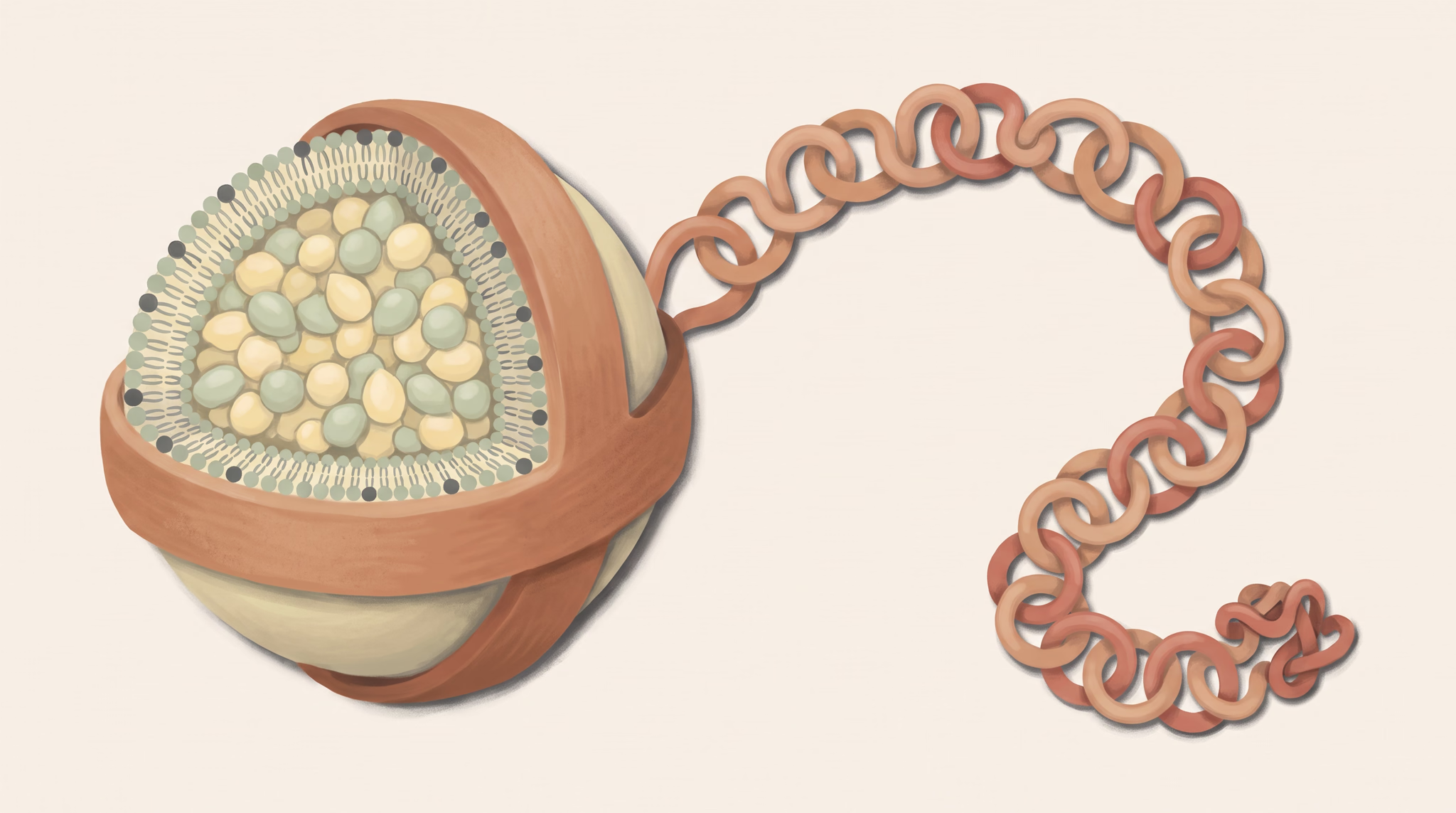
Lp(a) is a cholesterol-carrying particle built like LDL, with one extra protein, apolipoprotein(a), tied to its ApoB. It is measured separately from LDL cholesterol, and a standard cholesterol panel does not include it.
Lp(a) is said "L-P-little-a." Each particle has the same core as an LDL particle: cholesterol and fat wrapped in a shell with one apolipoprotein B (ApoB) molecule. What makes it Lp(a) is a second, much larger protein called apolipoprotein(a), or apo(a), linked to ApoB by a single chemical bond [12].
Kåre Berg described the particle in 1963 as a new inherited serum type [13]. Sixty years later, expert groups in Europe, North America and Japan agree that high Lp(a) is a common, mostly genetic and causal risk factor for heart disease [2][1][14].
Three facts make Lp(a) unusual among blood markers:
- Genes set the level. About 70% to over 90% of the difference between people comes from genetics, mainly the LPA gene [1].
- It stays put. Levels are highly consistent within a person over years [15], so one test in adulthood answers the question for most people [2].
- Lifestyle does little. Diet and exercise move Lp(a) far less than LDL cholesterol. See can you lower Lp(a)?.
About 1 in 5 people have an elevated level [3], yet testing is rare: in one US health system, 0.3% of 5.5 million adults had ever been tested between 2012 and 2021 [4]. Start with who should get an Lp(a) test.
How is Lp(a) different from LDL?
Lp(a) is an LDL particle with apolipoprotein(a) attached. Apo(a) is built from repeating loops that resemble plasminogen, a clot-dissolving protein, and it carries pro-inflammatory oxidized phospholipids into artery walls and heart valves.
Apo(a) is built from repeating loops
Apo(a) closely resembles plasminogen. It is made of folded loops called kringles, and one type, kringle IV type 2 (KIV-2), repeats many times; the first sequenced apo(a) carried 37 copies of one kringle [12]. In Danish studies, the total number of KIV-2 repeats across both copies of the gene ranged from 6 to 99 [16].
Fewer repeats mean higher levels
The repeat count sets the size of apo(a). People with small apo(a), fewer than about 23 kringle IV repeats, tend to have much higher Lp(a) [2]. In Copenhagen, the quarter of people with the fewest KIV-2 repeats averaged 56 mg/dL, against 15 mg/dL in the quarter with the most, and had a 50% higher heart attack risk [16]. Repeat number explains roughly 30% to 70% of the variation depending on ancestry; other variants in the LPA gene on chromosome 6 explain more [2][6].
Why apo(a) adds risk
The American Heart Association describes three ways Lp(a) promotes disease: plaque build-up, inflammation and clotting [1].
- Plaque. Like LDL, Lp(a) enters the artery wall and leaves cholesterol behind. That is why it counts in an ApoB test.
- Inflammation. Lp(a) carries oxidized phospholipids. In 504 people having coronary angiography, these tracked closely with Lp(a) (r = 0.83), and both were linked to the extent of coronary disease [17]. Lp(a) itself rises only slightly during inflammation, measured as CRP [18]; see hs-CRP.
- Clotting. Its plasminogen-like shape led to the idea that it slows clot breakdown, but the 2022 EAS consensus found the evidence does not support Lp(a) as a cause of venous blood clots [2].
How Lp(a) differs from LDL
- Proteins
- LDL: One ApoB
- Lp(a): One ApoB plus apo(a), linked by one disulfide bond
- Extra cargo
- LDL: None
- Lp(a): Oxidized phospholipids, which are pro-inflammatory
- What sets the level
- LDL: Diet, weight, genes and drugs
- Lp(a): Mostly the LPA gene: 70% to over 90% genetic
- Effect of statins
- LDL: Lowers LDL cholesterol
- Lp(a): No fall; may rise 8.5% to 19.6%
- Counted in an ApoB test
- LDL: Yes
- Lp(a): Yes
| LDL | Lp(a) | |
|---|---|---|
| Proteins | One ApoB | One ApoB plus apo(a), linked by one disulfide bond |
| Extra cargo | None | Oxidized phospholipids, which are pro-inflammatory |
| What sets the level | Diet, weight, genes and drugs | Mostly the LPA gene: 70% to over 90% genetic |
| Effect of statins | Lowers LDL cholesterol | No fall; may rise 8.5% to 19.6% |
| Counted in an ApoB test | Yes | Yes |
Sources: McLean 1987, Tsimikas 2005, Reyes-Soffer 2022, Tsimikas 2020.
Why is high Lp(a) bad for your heart?
High Lp(a) raises the risk of heart attack, ischemic stroke and aortic valve stenosis, and genetic studies show it is a cause, not a bystander. People above the 95th percentile had about 3 to 4 times the heart attack risk of people with the lowest levels.
Population studies
A pooled analysis of 126,634 people in 36 studies found a continuous link: each 3.5-fold higher Lp(a) raised coronary risk by 13% after adjusting for other risk factors and ischemic stroke risk by 10%, with no link to cancer or other nonvascular deaths [15]. At the extremes the effect is large. In the Copenhagen City Heart Study, women and men with Lp(a) of 120 mg/dL or more had 3.6 and 3.7 times the heart attack risk of people below 5 mg/dL [19]. In 460,506 UK Biobank adults, risk rose in a straight line, by 11% for every 50 nmol/L [20].
Genetic evidence
Genes are handed out at conception, so a gene variant that raises Lp(a) works like a lifelong natural experiment, a method called Mendelian randomization. Two LPA variants raised coronary risk by 70% and 92%, and the link vanished once Lp(a) level was taken into account, which points to the particle itself [6]. Genetically raised Lp(a) carried a 22% higher heart attack risk per doubling [16].
Aortic valve stenosis
An LPA variant doubled the odds of aortic valve calcium per copy (odds ratio 2.05) and raised the risk of aortic stenosis by 68% per copy [7]. In 77,680 Danes, Lp(a) above 90 mg/dL predicted about three times the risk of aortic stenosis [21].
Risk on top of LDL
Lowering LDL cholesterol does not erase Lp(a) risk. In 27,658 people in statin trials, Lp(a) above 50 mg/dL raised risk even among those with the lowest achieved LDL cholesterol (hazard ratio 1.38) [22]. More detail is on what a high Lp(a) means.
Who should get an Lp(a) test, by guideline?
Most major guidelines now say every adult should have Lp(a) measured at least once, ideally with an early cholesterol test. HEART UK still recommends targeted testing, and every guideline puts people with early heart disease in the family, familial hypercholesterolemia or aortic stenosis first.
Advice has moved from selective to universal testing within seven years. The 2019 ESC/EAS guideline suggested one test for every adult [23]. The Canadian guideline followed in 2021 [24], the EAS consensus in 2022 [2], the National Lipid Association in 2024 [3], the ESC/EAS focused update in 2025 [5] and the ACC/AHA dyslipidemia guideline in 2026 [25][26]. HEART UK recommends targeted testing [27], and the 2026 Japanese consensus asks for one test in adulthood with a focus on high-risk groups [14].
The thresholds differ more than the testing advice. The table compiles each document's cutoffs as published; the 2018 ACC/AHA, 2019 NLA, 2019 ESC/EAS, HEART UK and Canadian rows follow the comparison by Kaur and colleagues [28][29][30]. The same 50 mg/dL appears as 100, 105 or 125 nmol/L, which shows how loose the conversion between units is.
Testing relatives pays off. In UK Biobank, 47% of first-degree relatives of someone with Lp(a) of 125 nmol/L or more also had a high level, against 16% of unrelated pairs [31]. Preparation, cost and repeat testing are covered in the Lp(a) test guide.
| Guideline | Who to test | Threshold, nmol/L | Threshold, mg/dL | How it is used |
|---|---|---|---|---|
| ACC/AHA cholesterol guideline (2018) | No testing directive; Lp(a) listed as a risk enhancer | 125 or more | 50 or more | Favors starting a statin at borderline or intermediate risk |
| ESC/EAS dyslipidaemia guidelines (2019) | Consider once in every adult's lifetime | Above 430 | Above 180 | Flags inherited risk similar to familial hypercholesterolemia |
| NLA scientific statement (2019) | Selected groups, such as early heart disease in the family or suspected FH | 100 or more | 50 or more | Risk enhancer |
| HEART UK consensus (2019) | Targeted: early heart disease, FH, aortic stenosis, relatives above 200 nmol/L, borderline risk | 32 to 90 minor, 90 to 200 moderate, 200 to 400 high, above 400 very high | Not stated in the sources we checked | Manage overall risk above 90 |
| Canadian Cardiovascular Society (2021) | Once in a lifetime, with the first lipid screen | 100 or more | 50 or more | Risk modifier at intermediate risk |
| EAS consensus statement (2022) | At least once in all adults; test relatives | Below 75 rule out, 75 to 125 grey zone, above 125 rule in | Below 30, 30 to 50, above 50 | Intensify risk factor care by overall risk and Lp(a) |
| NLA focused update (2024) | At least once in every adult; test relatives | Below 75 low, 75 to 125 intermediate, 125 or more high | Below 30, 30 to 50, 50 or more | Earlier, more intensive LDL lowering |
| ESC/EAS focused update (2025) | Consider at least once in every adult's lifetime | Slight rise from 62; above 105 clinically relevant | From 30; above 50 | Risk modifier, mainly at moderate risk |
| ACC/AHA dyslipidemia guideline (2026) | At least once in every adult; test relatives | Above 125 (about 1.4 times risk); above 250 (2 times or more) | Not stated in the summary we checked | Offer earlier risk reduction whatever the LDL |
| Japan expert consensus (2026) | At least once in adulthood, focus on high-risk groups | Below 25 low, 25 to 125 intermediate, 125 or more high | Not stated in the abstract we checked | Aggressive LDL lowering |
Lp(a) risk ranges and guideline cutoffs in nmol/L
- Low risk
- 0 to 75
- Grey zone
- 75 to 125
- High
- 125 to 250
- Very high
- 250 to 500
- 75 nmol/L: EAS, NLA low
- 105 nmol/L: ESC/EAS 2025
- 125 nmol/L: EAS, NLA, ACC/AHA high
- 200 nmol/L: HEART UK high
- 250 nmol/L: About 2x risk
- 430 nmol/L: ESC/EAS 2019
How do you read an Lp(a) result?
Check the unit first. Results in nmol/L count particles and are preferred; results in mg/dL weigh them, and because particle weight varies with apo(a) size, the two cannot be converted exactly. Below 75 nmol/L (30 mg/dL) is low risk, and 125 nmol/L (50 mg/dL) or more is high.
Why the units do not convert
A mass result (mg/dL) weighs the whole particle, and a molar result (nmol/L) counts particles. Apo(a) differs in size between people, and even between a person's two gene copies, so two samples with the same number of particles can weigh different amounts [32]. Many antibody tests also read large and small apo(a) differently, which adds error [32]. The EAS gives no official factor; as a rough guide it uses 2 to 2.5 nmol/L per mg/dL [2]. The ESC/EAS 2025 update prefers nmol/L but accepts mg/dL [5].
Ancestry changes the typical level, not the risk per unit
In UK Biobank, median Lp(a) was 16 nmol/L in Chinese, 19 in White, 31 in South Asian and 75 in Black participants. The added risk per 50 nmol/L was similar across groups, with hazard ratios of 1.11, 1.10 and 1.07 in White, South Asian and Black participants [20]. The same cutoffs therefore apply, but a higher share of people of African ancestry cross them.
Things that shift a result
- Kidney disease. Nephrotic syndrome raises Lp(a) 3 to 5 times [2].
- Thyroid. Low thyroid function raises it, and treatment lowers it by 5% to 20% [2]. See TSH.
- Menopause and pregnancy. Levels can rise after menopause and roughly double in pregnancy [2][5].
- Meals. Normal food intake does not change Lp(a) [18].
For the range chart and what counts as a good level, see what is a good Lp(a) level.

What raises or lowers Lp(a)?
Genes set the baseline and lifestyle barely moves it. Statins can nudge Lp(a) up, PCSK9 inhibitors lower it by about a quarter, and new gene-silencing drugs lower it by 80% to over 95%, though none has yet been shown to prevent heart attacks.
The table brings together the effect of every option on Lp(a), from the trial or review that measured it [8][33][28][2][3][34][35][36][37][38], with trial status from the sponsors and ClinicalTrials.gov [9][10][39][11].
Three points stand out:
- Statins do not lower Lp(a). They may raise it 8.5% to 19.6% [8], yet they remain the backbone of care because they lower LDL cholesterol and events [5].
- Diet effects are small and run the wrong way. Replacing saturated fat with carbohydrate or unsaturated fat raises Lp(a) by about 10% to 15% [2], while the same swap lowers LDL cholesterol.
- The new drugs work on the gene's message. Antisense and siRNA drugs block the liver from making apo(a), and muvalaplin, a pill, blocks assembly of the Lp(a) particle [40].
The full picture, including what people with high Lp(a) can do now, is on can you lower Lp(a).
| Therapy | Change in Lp(a) | Status |
|---|---|---|
| Statins | Up 8.5% to 19.6% in statin groups of six trials | Approved for LDL; not an Lp(a) treatment |
| PCSK9 inhibitor (evolocumab) | Down 26.9% (median, FOURIER) | Approved for LDL |
| Niacin | Down up to about 30% in older studies | No outcome benefit in HPS2-THRIVE; not advised for Lp(a) |
| Lipoprotein apheresis | Down 68.1% per session; about 30% averaged over time | US FDA indication in high-risk FH with Lp(a) 60 mg/dL or more |
| Postmenopausal hormone therapy | Down about 25% | Not used to treat Lp(a) |
| Pelacarsen (antisense injection) | Down 35% to 80% by dose (phase 2) | Phase 3 Lp(a)HORIZON missed its primary endpoint, September 2026 |
| Olpasiran (siRNA injection) | Down 70.5% to over 97% against placebo (phase 2) | Phase 3 OCEAN(a)-Outcomes, 7,297 enrolled, due 2028 |
| Lepodisiran (siRNA injection) | Down 93.9% against placebo at 400 mg (phase 2) | Phase 3 ACCLAIM-Lp(a), about 17,300 people, due 2029 |
| Zerlasiran (siRNA injection) | Down 81.3% to 85.6% against placebo (phase 2) | No phase 3 outcome trial found in ClinicalTrials.gov |
| Muvalaplin (daily pill) | Down 47.6% to 85.8% against placebo (phase 2) | Phase 3 MOVE-Lp(a) recruiting, due 2031 |
How much each therapy lowers Lp(a)
- PCSK9 inhibitor (evolocumab)26.9 % lower
Median, FOURIER trial; approved for LDL
- Niacin30 % lower
Up to 30% in older studies; no outcome benefit
- Lipoprotein apheresis68.1 % lower
Per session; about 30% averaged over time
- Pelacarsen (antisense)80 % lower
Phase 2, by dose; phase 3 missed its main goal
- Zerlasiran (siRNA)85.6 % lower
Phase 2, time-averaged, placebo-adjusted
- Muvalaplin (oral)85.8 % lower
Phase 2, intact Lp(a) assay, placebo-adjusted
- Lepodisiran (siRNA)93.9 % lower
Phase 2, 400 mg, placebo-adjusted
- Olpasiran (siRNA)97.4 % lower
Phase 2, 75 mg every 12 weeks, placebo-adjusted
Show the data
| Item | Value (% lower) | Low | High | Note |
|---|---|---|---|---|
| PCSK9 inhibitor (evolocumab) | 26.9 | Median, FOURIER trial; approved for LDL | ||
| Niacin | 30 | Up to 30% in older studies; no outcome benefit | ||
| Lipoprotein apheresis | 68.1 | 30 | 68.1 | Per session; about 30% averaged over time |
| Pelacarsen (antisense) | 80 | 35 | 80 | Phase 2, by dose; phase 3 missed its main goal |
| Zerlasiran (siRNA) | 85.6 | 81.3 | 85.6 | Phase 2, time-averaged, placebo-adjusted |
| Muvalaplin (oral) | 85.8 | 47.6 | 85.8 | Phase 2, intact Lp(a) assay, placebo-adjusted |
| Lepodisiran (siRNA) | 93.9 | 40.8 | 93.9 | Phase 2, 400 mg, placebo-adjusted |
| Olpasiran (siRNA) | 97.4 | 70.5 | 97.4 | Phase 2, 75 mg every 12 weeks, placebo-adjusted |
What does the evidence not show yet?
No trial has yet shown that lowering Lp(a) prevents heart attacks or strokes. The first outcome trial, of pelacarsen in 8,323 people with heart disease, lowered Lp(a) but missed its main goal, and results for three more drugs are due between 2028 and 2031.
Lp(a) was discovered in 1963, and the first test of whether lowering it prevents events read out in 2026. What is still unknown:
- Whether lowering Lp(a) prevents events. Lp(a)HORIZON enrolled 8,323 people and did not meet its primary endpoint, a composite of cardiovascular death, heart attack, stroke and urgent coronary revascularization [9][41]. Full results are pending. Proposed explanations include treating people late, after decades of exposure and with advanced disease, strong background therapy and too little Lp(a) lowering [42].
- How much lowering is enough. Genetic modeling suggests Lp(a) must fall by about 101.5 mg/dL to match the benefit of lowering LDL cholesterol by 38.67 mg/dL (1 mmol/L)1 mmol/L (38.67 mg/dL) [43]. Drugs that lower it by over 90% are now in outcome trials [10][39].
- Whether valves benefit. No trial has shown that lowering Lp(a) slows aortic stenosis [2].
- Whether very low levels carry their own risk. Very low Lp(a) has been linked to diabetes, which needs more study [2].
- One threshold for everyone. Guidelines still disagree on whether high starts at 100, 105 or 125 nmol/L, and repeat tests can move people across those lines [44].
This page will be updated as the remaining trials report.
Lp(a) from discovery to outcome trials
1963
Kåre Berg describes the Lp(a) particle as a new inherited serum type
1987
Apo(a) is sequenced and found to resemble plasminogen
2005
Lp(a) is shown to carry pro-inflammatory oxidized phospholipids
2009
Genetic studies show high Lp(a) causes coronary disease
2013
An LPA variant is linked to aortic valve calcium and stenosis
2019
ESC/EAS advise one Lp(a) test in every adult's lifetime
2020
Pelacarsen lowers Lp(a) by up to 80% in a phase 2 trial
2022
EAS consensus sets 75 and 125 nmol/L cutoffs; olpasiran lowers Lp(a) by over 97%
2025
Lepodisiran lowers Lp(a) by 93.9% in a phase 2 trial
2026
ACC/AHA recommend testing every adult once; pelacarsen misses its outcome goal
2028
Olpasiran outcome trial due to finish
2029
Lepodisiran outcome trial due to finish
2031
Muvalaplin outcome trial due to finish
The research
Foundational studies
The work that established what this marker means.
- 1963A new serum type system in man: the Lp system.Acta Pathol Microbiol ScandFirst described Lp(a) as an inherited variant among human serum lipoproteins.
- 1987cDNA sequence of human apolipoprotein(a) is homologous to plasminogen.NatureSequenced apolipoprotein(a), showed it closely resembles plasminogen and found one kringle domain repeated 37 times.
- 2005Oxidized phospholipids, Lp(a) lipoprotein, and coronary artery disease.N Engl J MedFound that oxidized phospholipids track closely with Lp(a) and that both were linked to the presence and extent of coronary artery disease.
- 2008Extreme lipoprotein(a) levels and risk of myocardial infarction in the general population: the Copenhagen City Heart Study.CirculationPeople with Lp(a) of 120 mg/dL or more had 3 to 4 times the heart attack risk of people below 5 mg/dL, with no threshold effect.
- 2009Lipoprotein(a) concentration and the risk of coronary heart disease, stroke, and nonvascular mortality.JAMAIn 126,634 people from 36 studies, Lp(a) was stable within people and continuously linked to coronary disease and ischemic stroke, but not to nonvascular death.
- 2009Genetically elevated lipoprotein(a) and increased risk of myocardial infarction.JAMAPeople with fewer KIV-2 repeats had higher Lp(a) and more heart attacks, consistent with a causal effect.
- 2009Genetic variants associated with Lp(a) lipoprotein level and coronary disease.N Engl J MedTwo LPA gene variants raised both Lp(a) and coronary risk, and the link disappeared after accounting for Lp(a) level, supporting causality.
- 2013Genetic associations with valvular calcification and aortic stenosis.N Engl J MedAn LPA variant was the strongest genetic signal for aortic valve calcium and predicted incident aortic stenosis.
- 2014Elevated lipoprotein(a) and risk of aortic valve stenosis in the general population.J Am Coll CardiolIn 77,680 Danes, Lp(a) above 90 mg/dL predicted about three times the risk of aortic valve stenosis.
- 2018Association of LPA Variants With Risk of Coronary Disease and the Implications for Lipoprotein(a)-Lowering Therapies: A Mendelian Randomization Analysis.JAMA CardiolEstimated that Lp(a) must fall by about 101.5 mg/dL to match the coronary benefit of lowering LDL cholesterol by 38.67 mg/dL (1 mmol/L)1 mmol/L (38.67 mg/dL).
Guidelines and reviews
Where expert bodies and systematic reviews have landed.
- 2016Lipoprotein (a) measurements for clinical application.J Lipid ResExplained how apo(a) size varies between and within people and makes many Lp(a) assays inaccurate and hard to compare.
- 2018Baseline and on-statin treatment lipoprotein(a) levels for prediction of cardiovascular events: individual patient-data meta-analysis of statin outcome trials.LancetIn 29,069 statin-trial patients, Lp(a) of 50 mg/dL or more on a statin carried a 43% higher risk of cardiovascular events.
- 20192018 AHA/ACC/AACVPR/AAPA/ABC/ACPM/ADA/AGS/APhA/ASPC/NLA/PCNA Guideline on the Management of Blood Cholesterol: A Report of the American College of Cardiology/American Heart Association Task Force on Clinical Practice Guidelines.CirculationListed Lp(a) of 50 mg/dL (125 nmol/L) or more as a risk-enhancing factor that favors starting a statin in borderline or intermediate risk.
- 2019Use of Lipoprotein(a) in clinical practice: A biomarker whose time has come. A scientific statement from the National Lipid Association.J Clin LipidolEstimated that about 20% of people have elevated Lp(a) and set out which patients to test and how to use the result.
- 2019HEART UK consensus statement on Lipoprotein(a): A call to action.AtherosclerosisRecommended targeted Lp(a) testing in adults with early heart disease in themselves or family, familial hypercholesterolemia, aortic stenosis, relatives above 200 nmol/L or borderline risk, and graded risk from 32 to above 400 nmol/L.
- 20202019 ESC/EAS Guidelines for the management of dyslipidaemias: lipid modification to reduce cardiovascular risk.Eur Heart JAdvised considering one Lp(a) measurement in every adult's lifetime to find people with very high inherited levels above 180 mg/dL (430 nmol/L).
- 2020Statin therapy increases lipoprotein(a) levels.Eur Heart JIn 5,256 trial patients, Lp(a) rose by 8.5% to 19.6% on statins against slight falls on placebo.
- 20212021 Canadian Cardiovascular Society Guidelines for the Management of Dyslipidemia for the Prevention of Cardiovascular Disease in Adults.Can J CardiolRecommended measuring Lp(a) once in a lifetime as part of the first lipid screen.
- 2022Lipoprotein(a): A Genetically Determined, Causal, and Prevalent Risk Factor for Atherosclerotic Cardiovascular Disease: A Scientific Statement From the American Heart Association.Arterioscler Thromb Vasc BiolConcluded that genes explain about 70% to over 90% of the variation in Lp(a) and that it is an independent, causal risk factor even when LDL cholesterol is well lowered.
- 2022Lipoprotein(a) in atherosclerotic cardiovascular disease and aortic stenosis: a European Atherosclerosis Society consensus statement.Eur Heart JRecommended testing Lp(a) at least once in all adults, with below 30 mg/dL (75 nmol/L) ruling out and above 50 mg/dL (125 nmol/L) ruling in raised risk.
- 2024A focused update to the 2019 NLA scientific statement on use of lipoprotein(a) in clinical practice.J Clin LipidolRecommended measuring Lp(a) at least once in every adult, with below 75 nmol/L low risk, 75 to 125 nmol/L intermediate and 125 nmol/L or more high risk.
- 2024Lipoprotein(a): Emerging insights and therapeutics.Am J Prev CardiolCompiled guideline thresholds and the Lp(a) effects of existing therapies, including apheresis (68.1% per session) and niacin (up to 30%).
- 2025Independence of Lipoprotein(a) and Low-Density Lipoprotein Cholesterol-Mediated Cardiovascular Risk: A Participant-Level Meta-Analysis.CirculationLp(a) above 50 mg/dL raised risk even in statin users with the lowest achieved LDL cholesterol (hazard ratio 1.38).
- 20252025 Focused Update of the 2019 ESC/EAS Guidelines for the management of dyslipidaemias.Eur Heart JAdvised considering Lp(a) at least once in every adult and treating levels above 50 mg/dL (105 nmol/L) as a risk modifier, with more intensive LDL lowering for people with high Lp(a).
- 20262026 ACC/AHA/AACVPR/ABC/ACPM/ADA/AGS/APhA/ASPC/NLA/PCNA Guideline on the Management of Dyslipidemia: A Report of the American College of Cardiology/American Heart Association Joint Committee on Clinical Practice Guidelines.CirculationReplaced the 2018 cholesterol guideline and added recommendations for evaluating and managing elevated Lp(a).
- 2026Lipoprotein(a) in Japan: An Expert Consensus Statement.J Atheroscler ThrombProposed low (below 25 nmol/L), intermediate (25 to 125 nmol/L) and high (125 nmol/L or more) Lp(a) categories for Japan and testing at least once in adulthood.
- 2026Efficacy and tolerability of targeted lipoprotein(a)-lowering therapies: A systematic review.J Clin LipidolFound that pelacarsen lowered Lp(a) by up to 80% and siRNA drugs by 80% to 95%, mostly with mild injection-site reactions, pending outcome trials.
Recent research
Notable work from the last three years.
- 2023Concordance of a High Lipoprotein(a) Concentration Among Relatives.JAMA Cardiol47% of first-degree and 32% of second-degree relatives of people with high Lp(a) also had high Lp(a), against 16% of unrelated pairs.
- 2023Lipoprotein(a) Testing Trends in a Large Academic Health System in the United States.J Am Heart AssocOnly 0.3% of 5.5 million adults seen in the University of California health system from 2012 to 2021 had an Lp(a) test.
- 2024Zerlasiran-A Small-Interfering RNA Targeting Lipoprotein(a): A Phase 2 Randomized Clinical Trial.JAMAZerlasiran lowered time-averaged Lp(a) by 81.3% to 85.6% against placebo over 36 weeks.
- 2025Oral Muvalaplin for Lowering of Lipoprotein(a): A Randomized Clinical Trial.JAMAThe daily pill muvalaplin lowered Lp(a) by 47.6% to 85.8% against placebo at 12 weeks, depending on dose and assay.
- 2025Lepodisiran - A Long-Duration Small Interfering RNA Targeting Lipoprotein(a).N Engl J MedLepodisiran 400 mg lowered time-averaged Lp(a) by 93.9% against placebo from day 60 to day 180.
- 2026Intraindividual variability in lipoprotein(a).J Clin LipidolRepeat Lp(a) tests varied by about 19% within a person and moved 12.4% of people across NLA thresholds, so repeats matter mainly near cutoffs.
- 2026Prioritizing Health | Lower Sooner: How the 2026 Dyslipidemia Guideline Changes PracticeACC.orgSummarized the 2026 ACC/AHA guideline as recommending Lp(a) measurement at least once in every adult, with levels above 125 and 250 nmol/L linked to 1.4-fold and at least 2-fold higher risk.
- 2026Novartis announces Lp(a)HORIZON Phase III topline results for pelacarsen in patients with elevated Lp(a) and established cardiovascular disease (CVD)Novartis media releaseReported on September 4, 2026 that pelacarsen lowered Lp(a) in 8,323 patients but did not meet the primary endpoint of fewer cardiovascular events.
- 2026Pelacarsen and Lp(a)HORIZON: Interpreting the Disconnect Between Lipoprotein(a) Lowering and Cardiovascular Outcomes.Am J MedDiscussed why Lp(a)HORIZON was neutral, including late treatment after decades of exposure, advanced disease, intensive background therapy and the size of Lp(a) lowering.
- 2026Olpasiran Trials of Cardiovascular Events and Lipoprotein(a) Reduction (OCEAN(a)) - Outcomes Trial, NCT05581303ClinicalTrials.govLists 7,297 enrolled participants, active and not recruiting, with primary completion estimated for March 2028.
- 2026A Study to Investigate the Effect of Lepodisiran on the Reduction of Major Adverse Cardiovascular Events in Adults With Elevated Lipoprotein(a) - ACCLAIM-Lp(a), NCT06292013ClinicalTrials.govLists an estimated 17,300 participants, active and not recruiting, with primary completion estimated for March 2029.
- 2026Assessing the Impact of Muvalaplin on Major Cardiovascular Events in Adults With Elevated Lipoprotein(a) (MOVE-Lp(a)), NCT07157774ClinicalTrials.govLists a phase 3 outcome trial recruiting an estimated 10,450 participants, with primary completion estimated for March 2031.
What well-known voices say about Lp(a)
Their positions, summarized in our words. Follow each link for the full context.
Steven NissenCardiologist and Chief Academic Officer, Cleveland Clinic Heart, Vascular and Thoracic Institute
Nissen argues that clinicians should start measuring Lp(a) now rather than waiting for drugs, because knowing a patient has high Lp(a) is a reason to treat all their other risk factors much more aggressively and to consider clinical trials. He has called elevated Lp(a) one of the last untreatable frontiers of cardiovascular risk and is enthusiastic about long-acting siRNA drugs such as lepodisiran, which he helped test.
Benoît ArsenaultResearch scientist in cardiology and assistant professor of medicine, Université Laval, Quebec City
On The Drive with Peter Attia, Arsenault describes Lp(a) as the single most important inherited trait for atherosclerotic heart disease, notes that about one in five people worldwide are in a higher-risk range, with the highest levels in people of African ancestry, and argues that simply getting people to measure Lp(a) would be a large step forward.
Watch
Talks and explainers worth your time. Nothing loads from YouTube until you press play.
What is Lipoprotein(a)?
American Heart AssociationAmerican Heart Association@american_heartSubscribers257KStartedSeptember 2007CountryUnited StatesVideos5KTotal views120.7MNew videos, last 30 days91New videos, last year500+From YouTube, 2026-10-31Open on YouTube
A short, plain-language primer from the American Heart Association on what Lp(a) is and why it matters.
Lipoprotein(a) & 2026 ACC/AHA Guideline on the Management of Dyslipidemia
American Heart AssociationAmerican Heart Association@american_heartSubscribers257KStartedSeptember 2007CountryUnited StatesVideos5KTotal views120.7MNew videos, last 30 days91New videos, last year500+From YouTube, 2026-10-31Open on YouTube
Explains what the 2026 ACC/AHA guideline changed for Lp(a), including testing every adult once.
Explaining Lipoprotein (a) | Preventive Cardiology
UT Southwestern Medical CenterUT Southwestern Medical Center@utswmedSubscribers70.8KStartedMarch 2012CountryUnited StatesVideos1.4KTotal views27MNew videos, last 30 days22New videos, last year119From YouTube, 2026-10-31Open on YouTube
UT Southwestern's preventive cardiology team explains what Lp(a) is and why it matters.
What is Lp(a) and why should you care about it.
Cleveland ClinicCleveland Clinic@clevelandclinicSubscribers761KStartedFebruary 2007CountryUnited StatesVideos6.6KTotal views396.5MNew videos, last 30 days64New videos, last year500+From YouTube, 2026-10-31Open on YouTube
A short Cleveland Clinic explainer on what Lp(a) is and why it is worth testing.
Lipoprotein (a) Elevation What Does it do to Increase CV Risk and What to Know About Treatment
Mayo ClinicMayo Clinic@mayoclinicSubscribers1.3MStartedJune 2006CountryUnited StatesVideos12.6KTotal views501.8MNew videos, last 30 days61New videos, last year500+From YouTube, 2026-10-31Open on YouTube
Mayo Clinic covers how high Lp(a) raises cardiovascular risk and what to know about treatment.
210 - Lp(a) and its impact on heart disease | Benoît Arsenault, Ph.D.& Peter Attia, M.D.
Peter Attia MDPeter Attia MD@peterattiamdSubscribers1MStartedJuly 2015CountryNot statedVideos1.8KTotal views137.4MNew videos, last 30 days7New videos, last year105From YouTube, 2026-10-31Open on YouTube
A long-form conversation on the genetics, biology and management of Lp(a) for readers who want depth.
Protocols that act on Lp(a)
Common questions
Is Lp(a) the same as apolipoprotein B?
What is the difference between Lp(a) and apolipoprotein A1?
They are unrelated despite the similar names. Apo(a) is the protein that defines Lp(a) and resembles plasminogen [12]; apolipoprotein A1 is the main protein of HDL cholesterol particles.
Is Lp(a) part of a standard cholesterol test?
No. A standard panel measures total, LDL and HDL cholesterol and triglycerides, so Lp(a) must be ordered separately. That is one reason only 0.3% of adults in one large US health system had ever been tested [4].
Does Lp(a) cause high cholesterol?
Not directly, but Lp(a) particles contain cholesterol, so very high Lp(a) adds to a measured LDL cholesterol value. Its main harm is independent of LDL: risk stays raised even when LDL cholesterol is very low on a statin [22].
Does Lp(a) change over time?
What is the ACCLAIM Lp(a) study?
What is the Amgen Lp(a) study?
Sources
- 1.Reyes-Soffer G, Ginsberg HN, Berglund L, et al. Lipoprotein(a): A Genetically Determined, Causal, and Prevalent Risk Factor for Atherosclerotic Cardiovascular Disease: A Scientific Statement From the American Heart Association. Arterioscler Thromb Vasc Biol, 2022. doi:10.1161/ATV.0000000000000147
- 2.Kronenberg F, Mora S, Stroes ESG, et al. Lipoprotein(a) in atherosclerotic cardiovascular disease and aortic stenosis: a European Atherosclerosis Society consensus statement. Eur Heart J, 2022. doi:10.1093/eurheartj/ehac361
- 3.Koschinsky ML, Bajaj A, Boffa MB, et al. A focused update to the 2019 NLA scientific statement on use of lipoprotein(a) in clinical practice. J Clin Lipidol, 2024. doi:10.1016/j.jacl.2024.03.001
- 4.Bhatia HS, Hurst S, Desai P, Zhu W, Yeang C. Lipoprotein(a) Testing Trends in a Large Academic Health System in the United States. J Am Heart Assoc, 2023. doi:10.1161/JAHA.123.031255
- 5.Mach F, Koskinas KC, Roeters van Lennep JE, et al. 2025 Focused Update of the 2019 ESC/EAS Guidelines for the management of dyslipidaemias. Eur Heart J, 2025. doi:10.1093/eurheartj/ehaf190
- 6.Clarke R, Peden JF, Hopewell JC, et al. Genetic variants associated with Lp(a) lipoprotein level and coronary disease. N Engl J Med, 2009. doi:10.1056/NEJMoa0902604
- 7.Thanassoulis G, Campbell CY, Owens DS, et al. Genetic associations with valvular calcification and aortic stenosis. N Engl J Med, 2013. doi:10.1056/NEJMoa1109034
- 8.Tsimikas S, Gordts PLSM, Nora C, Yeang C, Witztum JL. Statin therapy increases lipoprotein(a) levels. Eur Heart J, 2020. doi:10.1093/eurheartj/ehz310
- 9.Novartis. Novartis announces Lp(a)HORIZON Phase III topline results for pelacarsen in patients with elevated Lp(a) and established cardiovascular disease (CVD). Novartis media release, 2026. Link
- 10.Amgen. Olpasiran Trials of Cardiovascular Events and Lipoprotein(a) Reduction (OCEAN(a)) - Outcomes Trial, NCT05581303. ClinicalTrials.gov, 2026. Link
- 11.Eli Lilly and Company. Assessing the Impact of Muvalaplin on Major Cardiovascular Events in Adults With Elevated Lipoprotein(a) (MOVE-Lp(a)), NCT07157774. ClinicalTrials.gov, 2026. Link
- 12.McLean JW, Tomlinson JE, Kuang WJ, et al. cDNA sequence of human apolipoprotein(a) is homologous to plasminogen. Nature, 1987. doi:10.1038/330132a0
- 13.Berg K. A new serum type system in man: the Lp system. Acta Pathol Microbiol Scand, 1963. doi:10.1111/j.1699-0463.1963.tb01808.x
- 14.Yoshida M, Ogura M, Tada H, et al. Lipoprotein(a) in Japan: An Expert Consensus Statement. J Atheroscler Thromb, 2026. doi:10.5551/jat.66330
- 15.Emerging Risk Factors Collaboration, Erqou S, Kaptoge S, et al. Lipoprotein(a) concentration and the risk of coronary heart disease, stroke, and nonvascular mortality. JAMA, 2009. doi:10.1001/jama.2009.1063
- 16.Kamstrup PR, Tybjaerg-Hansen A, Steffensen R, Nordestgaard BG. Genetically elevated lipoprotein(a) and increased risk of myocardial infarction. JAMA, 2009. doi:10.1001/jama.2009.801
- 17.Tsimikas S, Brilakis ES, Miller ER, et al. Oxidized phospholipids, Lp(a) lipoprotein, and coronary artery disease. N Engl J Med, 2005. doi:10.1056/NEJMoa043175
- 18.Langsted A, Kamstrup PR, Nordestgaard BG. Lipoprotein(a): fasting and nonfasting levels, inflammation, and cardiovascular risk. Atherosclerosis, 2014. doi:10.1016/j.atherosclerosis.2014.01.049
- 19.Kamstrup PR, Benn M, Tybjaerg-Hansen A, Nordestgaard BG. Extreme lipoprotein(a) levels and risk of myocardial infarction in the general population: the Copenhagen City Heart Study. Circulation, 2008. doi:10.1161/CIRCULATIONAHA.107.715698
- 20.Patel AP, Wang M, Pirruccello JP, et al. Lp(a) (Lipoprotein[a]) Concentrations and Incident Atherosclerotic Cardiovascular Disease: New Insights From a Large National Biobank. Arterioscler Thromb Vasc Biol, 2021. doi:10.1161/ATVBAHA.120.315291
- 21.Kamstrup PR, Tybjaerg-Hansen A, Nordestgaard BG. Elevated lipoprotein(a) and risk of aortic valve stenosis in the general population. J Am Coll Cardiol, 2014. doi:10.1016/j.jacc.2013.09.038
- 22.Bhatia HS, Wandel S, Willeit P, et al. Independence of Lipoprotein(a) and Low-Density Lipoprotein Cholesterol-Mediated Cardiovascular Risk: A Participant-Level Meta-Analysis. Circulation, 2025. doi:10.1161/CIRCULATIONAHA.124.069556
- 23.Mach F, Baigent C, Catapano AL, et al. 2019 ESC/EAS Guidelines for the management of dyslipidaemias: lipid modification to reduce cardiovascular risk. Eur Heart J, 2020. doi:10.1093/eurheartj/ehz455
- 24.Pearson GJ, Thanassoulis G, Anderson TJ, et al. 2021 Canadian Cardiovascular Society Guidelines for the Management of Dyslipidemia for the Prevention of Cardiovascular Disease in Adults. Can J Cardiol, 2021. doi:10.1016/j.cjca.2021.03.016
- 25.Writing Committee Members, Blumenthal RS, Morris PB, et al. 2026 ACC/AHA/AACVPR/ABC/ACPM/ADA/AGS/APhA/ASPC/NLA/PCNA Guideline on the Management of Dyslipidemia: A Report of the American College of Cardiology/American Heart Association Joint Committee on Clinical Practice Guidelines. Circulation, 2026. doi:10.1161/CIR.0000000000001423
- 26.American College of Cardiology. Prioritizing Health | Lower Sooner: How the 2026 Dyslipidemia Guideline Changes Practice. ACC.org, 2026. Link
- 27.Cegla J, Neely RDG, France M, et al. HEART UK consensus statement on Lipoprotein(a): A call to action. Atherosclerosis, 2019. doi:10.1016/j.atherosclerosis.2019.10.011
- 28.Kaur G, Abdelrahman K, Berman AN, et al. Lipoprotein(a): Emerging insights and therapeutics. Am J Prev Cardiol, 2024. doi:10.1016/j.ajpc.2024.100641
- 29.Grundy SM, Stone NJ, Bailey AL, et al. 2018 AHA/ACC/AACVPR/AAPA/ABC/ACPM/ADA/AGS/APhA/ASPC/NLA/PCNA Guideline on the Management of Blood Cholesterol: A Report of the American College of Cardiology/American Heart Association Task Force on Clinical Practice Guidelines. Circulation, 2019. doi:10.1161/CIR.0000000000000625
- 30.Wilson DP, Jacobson TA, Jones PH, et al. Use of Lipoprotein(a) in clinical practice: A biomarker whose time has come. A scientific statement from the National Lipid Association. J Clin Lipidol, 2019. doi:10.1016/j.jacl.2019.04.010
- 31.Reeskamp LF, Tromp TR, Patel AP, et al. Concordance of a High Lipoprotein(a) Concentration Among Relatives. JAMA Cardiol, 2023. doi:10.1001/jamacardio.2023.3548
- 32.Marcovina SM, Albers JJ. Lipoprotein (a) measurements for clinical application. J Lipid Res, 2016. doi:10.1194/jlr.R061648
- 33.O'Donoghue ML, Fazio S, Giugliano RP, et al. Lipoprotein(a), PCSK9 Inhibition, and Cardiovascular Risk. Circulation, 2019. doi:10.1161/CIRCULATIONAHA.118.037184
- 34.Tsimikas S, Karwatowska-Prokopczuk E, Gouni-Berthold I, et al. Lipoprotein(a) Reduction in Persons with Cardiovascular Disease. N Engl J Med, 2020. doi:10.1056/NEJMoa1905239
- 35.O'Donoghue ML, Rosenson RS, Gencer B, et al. Small Interfering RNA to Reduce Lipoprotein(a) in Cardiovascular Disease. N Engl J Med, 2022. doi:10.1056/NEJMoa2211023
- 36.Nissen SE, Ni W, Shen X, et al. Lepodisiran - A Long-Duration Small Interfering RNA Targeting Lipoprotein(a). N Engl J Med, 2025. doi:10.1056/NEJMoa2415818
- 37.Nissen SE, Wang Q, Nicholls SJ, et al. Zerlasiran-A Small-Interfering RNA Targeting Lipoprotein(a): A Phase 2 Randomized Clinical Trial. JAMA, 2024. doi:10.1001/jama.2024.21957
- 38.Nicholls SJ, Ni W, Rhodes GM, et al. Oral Muvalaplin for Lowering of Lipoprotein(a): A Randomized Clinical Trial. JAMA, 2025. doi:10.1001/jama.2024.24017
- 39.Eli Lilly and Company. A Study to Investigate the Effect of Lepodisiran on the Reduction of Major Adverse Cardiovascular Events in Adults With Elevated Lipoprotein(a) - ACCLAIM-Lp(a), NCT06292013. ClinicalTrials.gov, 2026. Link
- 40.Alebna PL, Campbell MK, Harley K, et al. Efficacy and tolerability of targeted lipoprotein(a)-lowering therapies: A systematic review. J Clin Lipidol, 2026. doi:10.1016/j.jacl.2026.08.005
- 41.Novartis Pharmaceuticals. Assessing the Impact of Lipoprotein (a) Lowering With Pelacarsen (TQJ230) on Major Cardiovascular Events in Patients With CVD (Lp(a)HORIZON), NCT04023552. ClinicalTrials.gov, 2026. Link
- 42.Sabouret P, Giamundo DM, Asher E, et al. Pelacarsen and Lp(a)HORIZON: Interpreting the Disconnect Between Lipoprotein(a) Lowering and Cardiovascular Outcomes. Am J Med, 2026. doi:10.1016/j.amjmed.2026.10.005
- 43.Burgess S, Ference BA, Staley JR, et al. Association of LPA Variants With Risk of Coronary Disease and the Implications for Lipoprotein(a)-Lowering Therapies: A Mendelian Randomization Analysis. JAMA Cardiol, 2018. doi:10.1001/jamacardio.2018.1470
- 44.Lakkineni L, Waite M, David A, Jones B, Cegla J. Intraindividual variability in lipoprotein(a). J Clin Lipidol, 2026. doi:10.1016/j.jacl.2026.01.016
- 45.Willeit P, Ridker PM, Nestel PJ, et al. Baseline and on-statin treatment lipoprotein(a) levels for prediction of cardiovascular events: individual patient-data meta-analysis of statin outcome trials. Lancet, 2018. doi:10.1016/S0140-6736(18)31652-0
- 46.HPS2-THRIVE Collaborative Group, Landray MJ, Haynes R, et al. Effects of extended-release niacin with laropiprant in high-risk patients. N Engl J Med, 2014. doi:10.1056/NEJMoa1300955