
Thyroid-stimulating hormone (TSH)
Updated October 31, 2026 · 41 sources · Written by the AumniVIDA team
UnitsWhat is TSH?
TSH (thyroid-stimulating hormone) is the pituitary hormone that tells the thyroid how much T4 and T3 to make . A TSH blood test is the standard first check of thyroid function. Most labs call about 0.4 to 4.0 or 4.5 mIU/L normal; high TSH usually means an underactive thyroid, low TSH an overactive one .
Questions people ask about TSH
- 01What does a low TSH mean?A low TSH, below about 0.4 mIU/L, usually means the thyroid is making too much hormone or a person takes more thyroid hormone than needed . With high free T4 or T3 it is overt hyperthyroidism; with normal levels it is subclinical. Values below 0.1 mIU/L carry the clearest heart and bone risks .Read the answer
- 02What does a high TSH mean?A high TSH, above about 4.0 to 4.5 mIU/L, usually means the thyroid is underactive and the pituitary is pushing harder . With low free T4 it is overt hypothyroidism; with normal free T4 it is subclinical. Mild rises often settle on repeat testing, and guidelines act most clearly above 10 mIU/L .Read the answer
- 03What is a normal TSH level?Most labs use a normal adult TSH range of about 0.4 to 4.0 or 4.5 mIU/L, but the upper limit rises with age: in NHANES III it was 3.56 mIU/L at age 20 to 29 and 7.49 at 80 and over .Read the answer
- 04TSH test: fasting, timing and reflex testingA TSH test is a routine blood draw that usually needs no fasting, but TSH is higher in the morning and falls after a meal .Read the answer
- 05TSH vs free T4: how they work togetherTSH is the pituitary's signal to the thyroid; free T4 is the unbound hormone the thyroid releases in response.Read the answer
Key takeaways
- 1
TSH is the single best first test for primary thyroid disease [1].
- 2
- 3
One abnormal result is usually repeated after 2 to 3 months before any label [4].
- 4
- 5
Treating mild subclinical hypothyroidism did not improve symptoms in adults over 65 [7].
- 6
The upper limit rises with age, so an older person's high result may be normal for age [8].
What is TSH?
TSH is a hormone made by the pituitary gland at the base of the brain. It tells the thyroid to make thyroxine (T4) and some triiodothyronine (T3). Doctors measure it in blood because it is the most sensitive single signal of how the thyroid is working.
TSH stands for thyroid-stimulating hormone. Its older scientific name is thyrotropin, which is why papers and guidelines often use that word.
The thyroid is a butterfly-shaped gland at the front of the neck. It makes T4, the main hormone it releases, and a smaller amount of T3, the active form. Tissues convert T4 to T3 as they need it.
The American Association of Clinical Endocrinologists and the American Thyroid Association (ATA) call serum TSH the single best screening test for primary thyroid dysfunction in most outpatient settings [1]. Primary means the problem sits in the thyroid itself, which covers the large majority of cases.
A TSH test does not measure thyroid hormone directly. It measures how hard the pituitary is pushing the thyroid. That is why the result moves in the opposite direction to thyroid hormone:
- High TSH usually means the thyroid is underactive (hypothyroidism), so the pituitary pushes harder. See what a high TSH means.
- Low TSH usually means the thyroid is overactive (hyperthyroidism), or that someone takes more thyroid hormone than they need. See what a low TSH means.
In the US NHANES III survey of 17,353 people aged 12 and over, 4.6% had hypothyroidism (0.3% overt, 4.3% subclinical) and 1.3% had hyperthyroidism (0.5% overt, 0.7% subclinical), most of them undiagnosed [9].
How the test developed
Utiger's 1965 radioimmunoassay first measured TSH in human plasma [10]. Early assays could not tell a low TSH from a normal one.
Spencer's 1990 chemiluminometric assay reached a functional sensitivity of about 0.018 mU/L, roughly 100 times better than first-generation assays, and the authors called it the first third-generation TSH assay [11]. Once low values were measurable, studies such as Framingham could link low TSH with atrial fibrillation [5].
NHANES III then described TSH across the US population [9], which set off the 2005 debate over the upper limit [12][13] and the 2007 age-specific analysis [8]. The most recent milestones are trials and guidelines: TRUST [7], the BMJ panel [14] and the 2026 ATA pregnancy guideline [15].
From the first TSH assay to the TRUST trial
1965
Radioimmunoassay measures TSH in human plasma
1990
First third-generation TSH assay measures values near 0.02 mU/L
1994
Low TSH linked to threefold atrial fibrillation risk in older adults
2002
NHANES III maps TSH in 17,353 Americans
2005
Debate over lowering the upper limit to 2.5 mIU/L
2007
Age-specific TSH centiles published from NHANES III
2012
AACE and ATA hypothyroidism guideline
2013
ETA guideline on subclinical hypothyroidism
2017
TRUST trial finds no benefit of levothyroxine in older adults with subclinical hypothyroidism
2019
BMJ panel recommends against routine treatment of subclinical hypothyroidism
2026
Updated ATA guideline for thyroid disease in pregnancy
How does TSH control the thyroid?
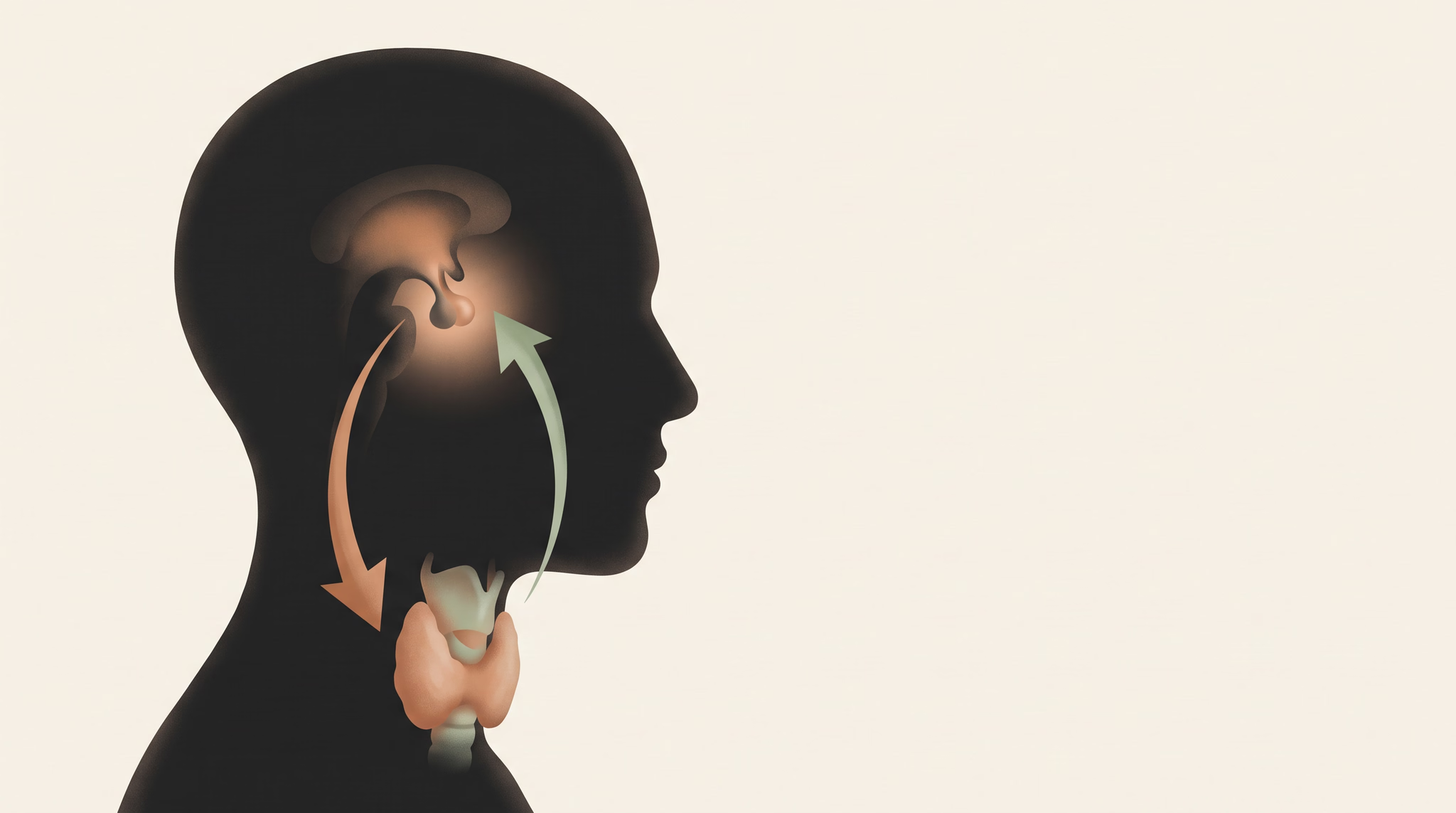
The hypothalamus releases TRH, which tells the pituitary to release TSH, which tells the thyroid to release T4 and T3. Thyroid hormone then switches TSH down. Because TSH responds to free T4 on a logarithmic scale, a small change in thyroid hormone produces a large change in TSH.
This loop is called the hypothalamic-pituitary-thyroid axis. It works like a thermostat:
- The hypothalamus senses thyroid hormone and releases thyrotropin-releasing hormone (TRH).
- TRH tells the pituitary to release TSH.
- TSH binds to the thyroid and drives it to make and release T4 and some T3.
- Rising T4 and T3 signal back to the pituitary and hypothalamus to release less TRH and TSH.
Why TSH is so sensitive
In 1990, Spencer and colleagues used a new, much more sensitive TSH assay to plot TSH against free T4 in healthy people. They found an inverse log-linear relationship: free T4 changes in a straight line while TSH changes on a logarithmic scale [11]. In plain terms, a modest dip in free T4 can multiply TSH several times over.
That amplification is why TSH often turns abnormal before free T4 leaves its own reference range. A raised TSH with a normal free T4 is called subclinical hypothyroidism; a low TSH with normal free T4 and T3 is subclinical hyperthyroidism.
Each person has a set point
When Danish researchers tested 16 healthy men every month for a year, each man's TSH moved within a band about half as wide as the population range [16]. A single TSH result described a person's own set point only to within about plus or minus 50%, and a change of about 0.75 mU/L (range 0.2 to 1.6) was needed before a repeat result could be called a real change [16].
For the full picture of how TSH, free T4 and T3 relate, read TSH vs free T4.
Why small T4 changes move TSH a lot
- Negative feedback
- 1HypothalamusSenses thyroid hormone and releases TRH.
- 2PituitaryTRH tells it to release TSH.
- 3ThyroidTSH drives it to make T4 and some T3; tissues convert T4 to T3.
- 4T4 and T3 signal backRising levels tell the pituitary and hypothalamus to release less TRH and TSH.
- Back to step 1
TSH responds to free T4 on a logarithmic scale (Spencer 1990): a small change in free T4 within its range can move TSH several fold.
Why does TSH matter for health?
Overt thyroid disease affects the heart, bones, weight, mood, fertility and energy, and it is treatable. Persistently very low TSH is linked to atrial fibrillation and fractures, and TSH above 10 mIU/L to heart disease. Mild TSH changes carry far less risk, and trials show little benefit from treating them in older adults.
Overt disease matters
Untreated hypothyroidism can cause fatigue, weight gain, memory and concentration problems, menstrual changes, infertility and heart failure; in rare severe cases it progresses to myxedema coma, which carries a mortality of up to 30% [2]. Hashimoto thyroiditis, an autoimmune disease, causes up to 85% of primary hypothyroidism where iodine intake is adequate [2].
Hyperthyroidism affects about 2.5% of adults worldwide and is linked to arrhythmias, heart failure, osteoporosis, adverse pregnancy outcomes and higher mortality; Graves disease is the most common cause [17].
Low TSH and the heart and bones
- In the Framingham study of 2,007 adults aged 60 and over, a TSH of 0.1 mU/L or lower carried a 28% ten-year incidence of atrial fibrillation versus 11% with normal TSH, a relative risk of 3.1 [5].
- Pooled data on 52,674 adults linked endogenous subclinical hyperthyroidism with higher total mortality (hazard ratio 1.24) and atrial fibrillation (1.68), with the highest risks below 0.10 mIU/L [18].
- Among 70,298 adults in 13 cohorts, TSH below 0.10 mIU/L carried a hazard ratio of 1.61 for hip fracture and 3.57 for spine fracture [6].
High TSH and the heart
Pooled data on 55,287 adults found no excess coronary risk at TSH 4.5 to 6.9 mIU/L, but an 89% higher risk of coronary events at 10 to 19.9 mIU/L [19]. Hypothyroidism also raises cholesterol: treating overt hypothyroidism lowered LDL cholesterol by about 41 mg/dL and ApoB by about 34 mg/dL in a meta-analysis [20]. That is one reason a thyroid check often comes up when LDL cholesterol or ApoB is unexpectedly high.
Treating mild changes: the TRUST trial
The TRUST trial randomized 737 adults aged 65 and over with persistent TSH of 4.60 to 19.99 mIU/L to levothyroxine or placebo. Levothyroxine brought mean TSH to 3.63 mIU/L versus 5.48 with placebo, yet symptom and tiredness scores did not differ at one year [7]. A meta-analysis of 21 trials with 2,192 adults reached the same conclusion for quality of life and thyroid symptoms [21], and a BMJ guideline panel then recommended against routine treatment for most adults with subclinical hypothyroidism [14].
How do you read a TSH result?
Compare the number with the reference interval printed on your report, which is usually about 0.4 to 4.0 or 4.5 mIU/L. Then read it with free T4, your age, pregnancy status and medications. Guidelines treat very low (below 0.1) and clearly high (10 or more) values differently from mild changes.
Labs set their own reference intervals from their own assay and population, so always read your result against the range printed beside it. Large studies commonly use about 0.45 to 4.49 mIU/L as normal [19][18], and the ETA describes mild subclinical hypothyroidism as TSH 4.0 to 10.0 mU/L [4]. Note that 1 mIU/L is the same as 1 µIU/mL, and mU/L means the same thing.
The table below lines up the main thresholds. Sources: ETA [4][22], NICE [3], AACE and ATA [1], the BMJ panel [14], pooled cohorts [19][18][6], NHANES III [8], the ATA pregnancy guideline as summarized by the Consortium on Thyroid and Pregnancy [23][24].
Four rules that change how a number reads
- One abnormal result is a starting point. The ETA asks for a repeat TSH and free T4 after 2 to 3 months before calling a raised TSH subclinical hypothyroidism [4], and NICE bases treatment decisions on two tests 3 months apart [3]. In older adults with one raised TSH, 60.8% returned to normal within about a year without treatment [25].
- Free T4 decides overt versus subclinical. A high TSH with low free T4 is overt hypothyroidism; with normal free T4 it is subclinical [2][26].
- Age shifts the range. The upper limit rises with age (see the chart in what a normal TSH is) [8].
- Pregnancy has its own ranges. Trimester-specific ranges from the local population are the standard [23][15].
None of this replaces a clinician's reading. Diagnosis, and any decision about levothyroxine or its dose, belongs with the person who knows your history.
| Source | Group | What it says |
|---|---|---|
| ETA 2013 | Nonpregnant adults | Mild subclinical hypothyroidism 4.0 to 10.0; more severe above 10; treat under 65 to 70 if above 10 |
| ETA 2015 | Nonpregnant adults | Grade 1 low TSH 0.1 to 0.39; grade 2 below 0.1; treat grade 2 over 65 |
| NICE NG145 (2019) | Adults | Consider levothyroxine at 10 or higher on 2 tests 3 months apart; under 65 with symptoms, a 6-month trial if above range but below 10 |
| NICE NG145 (2019) | Adults | Specialist advice if 2 TSH readings below 0.1 at least 3 months apart plus thyroid disease or symptoms |
| AACE and ATA 2012 | Adults | Individual decision to treat subclinical hypothyroidism below 10 |
| BMJ Rapid Recommendation 2019 | Most adults | Against thyroid hormone for subclinical hypothyroidism; not for TSH above 20 or those trying to conceive |
| Pooled cohort studies 2010 to 2015 | Adults | Normal 0.45 to 4.49; subclinical hypothyroidism 4.5 to 19.9; subclinical hyperthyroidism below 0.45 |
| NHANES III (Surks 2007) | US adults by age | 97.5th centile 3.56 at 20 to 29; 7.49 at 80 and over |
| ATA pregnancy 2017 | Pregnancy, no local range | Upper limit about 4.0, or nonpregnant upper limit minus 0.5 in the first trimester |
| Consortium on Thyroid and Pregnancy 2022 | First trimester | Upper limits across 22 cohorts ranged from 2.24 to 6.02 |
TSH bands and guideline thresholds
- Suppressed
- 0 to 0.1
- Low
- 0.1 to 0.4
- Typical lab range
- 0.4 to 4
- Mildly raised
- 4 to 10
- Raised above 10
- 10 to 12
- 0.1 mIU/L: ETA grade 2 low TSH
- 0.45 mIU/L: Lower limit in pooled cohorts
- 2.5 mIU/L: Proposed narrower upper limit
- 4.5 mIU/L: Upper limit in pooled cohorts
- 10 mIU/L: NICE and ETA treatment threshold
What do TSH and free T4 patterns mean together?
TSH and free T4 together point to a short list of explanations. High TSH with low free T4 suggests primary hypothyroidism; low TSH with high free T4 suggests hyperthyroidism. Mismatched patterns, such as low TSH with low free T4, raise pituitary disease, illness or a lab interference.
This grid compiles patterns described across guidelines and reviews. The cascade itself comes from NICE: measure TSH first, add free T4 when TSH is high, and add free T4 and free T3 when TSH is low [3]. Overt hyperthyroidism means suppressed TSH with high T3, high free T4, or both [17]. Overt primary hypothyroidism means high TSH with low free T4 [2].
The mismatched patterns deserve care:
- Critical illness often produces low T3, low T4 and a normal or slightly low TSH [27]. During recovery TSH can rise above normal for a while before T4 catches up [28].
- Biotin supplements at 10 mg a day distorted 9 of 23 biotin-based immunoassays, pushing competitive assays such as free T4 falsely high and sandwich assays such as TSH falsely low [29]. That can look exactly like hyperthyroidism.
- Medicines such as glucocorticoids, dopamine agonists and somatostatin analogues can suppress TSH at the pituitary [30].
The repeat interval in the table follows the ETA for raised TSH [4] and NICE for low TSH [3].
| TSH | Free T4 | Usual meaning | What often comes next |
|---|---|---|---|
| High | Low | Overt primary hypothyroidism | TPO antibodies; clinician review of treatment |
| High | Normal | Subclinical hypothyroidism, or recovery from illness | Repeat TSH and free T4 in 2 to 3 months with TPO antibodies |
| High | High | Uncommon: assay interference, inconsistent levothyroxine use, or a rare pituitary cause | Repeat on another assay; specialist review |
| Normal | Low | Possible central (pituitary) hypothyroidism or non-thyroidal illness | Clinician review; pituitary assessment if suspected |
| Normal | Normal | Normal thyroid function in most people | No further thyroid test unless symptoms change |
| Low | Normal | Subclinical hyperthyroidism, T3 toxicosis if T3 is high, or steroids, illness or biotin | Free T3 in the same sample; repeat in about 3 months |
| Low | High | Overt hyperthyroidism or thyroiditis | Free T3 and TSH receptor antibodies; clinician review |
| Low | Low | Central hypothyroidism or critical illness | Clinician review; pituitary assessment |
TSH and free T4 patterns
Free T4 down, TSH across
Free T4 high
- TSH lowOvert hyperthyroidism
- TSH normalAssay interference, biotin, or a recent levothyroxine dose
- TSH highRare: assay interference, inconsistent levothyroxine, or a TSH-secreting pituitary tumour
Free T4 normal
- TSH lowSubclinical hyperthyroidism; T3 toxicosis if T3 is high; or illness, steroids or biotin
- TSH normalNormal thyroid function
- TSH highSubclinical hypothyroidism, or recovery from illness
Free T4 low
- TSH lowCentral hypothyroidism or non-thyroidal illness
- TSH normalCentral hypothyroidism or illness: needs pituitary review
- TSH highOvert primary hypothyroidism
| TSH low | TSH normal | TSH high | |
|---|---|---|---|
| Free T4 high | Overt hyperthyroidism | Assay interference, biotin, or a recent levothyroxine dose | Rare: assay interference, inconsistent levothyroxine, or a TSH-secreting pituitary tumour |
| Free T4 normal | Subclinical hyperthyroidism; T3 toxicosis if T3 is high; or illness, steroids or biotin | Normal thyroid function | Subclinical hypothyroidism, or recovery from illness |
| Free T4 low | Central hypothyroidism or non-thyroidal illness | Central hypothyroidism or illness: needs pituitary review | Overt primary hypothyroidism |
Darker cells are overt patterns, lighter ones mild or uncertain. A clinician confirms the cause.
What can change a TSH result?
Time of day, recent food, acute illness and recovery, biotin supplements, several medicines, iodine intake, age and pregnancy all move TSH. Many of these shifts are large enough to push a borderline result across a reference limit, which is why a single mildly abnormal value is usually repeated.
Sources for the table: time of day [31][13], meals [32], illness [27][3], recovery [28], biotin [29], lithium [33], amiodarone and checkpoint inhibitors [2], pituitary-acting drugs [30], iodine [34][2], age [8].
Time of day and sleep
TSH rises in a nightly surge. Surks and colleagues note that early morning values run higher than later ones and that sleep deprivation, strenuous exercise and night or evening shifts accentuate this [13]. If you track TSH over time, draw it at a similar time each visit. A steady sleep schedule helps make repeat results comparable; the sleep consistency protocol covers the basics.
Illness
NICE advises against testing thyroid function during an acute illness unless the illness itself may be thyroid-related [3].
Biotin
NICE asks clinicians to check biotin intake because high-dose supplements can give falsely high or low results [3]. Biotin is common in hair, skin and nail products.
Age
The chart compares TSH upper limits in young and old adults from three countries [8][35][36]. In iodine-rich Korea the range was higher at every age and did not climb with age [34].
| Factor | Effect on TSH | Evidence |
|---|---|---|
| Time of day | Highest at night and early morning, lower in the afternoon | Upper limit varies by hour across 465,593 results |
| A meal | Falls about 2 hours after eating | 15 of 20 fasting subclinical results in range after food (57 adults) |
| Acute illness | Often normal or slightly low with low T3 and T4 | Review of critical illness |
| Recovery from illness | Can rise above normal before T4 recovers | Above normal in 8 of 13 recovery episodes |
| Biotin 10 mg/day | Can read falsely low (sandwich assays) | 9 of 23 biotin-based assays affected |
| Lithium | Raises TSH; odds of hypothyroidism 5.78 | Meta-analysis of 385 studies |
| Amiodarone, immune checkpoint inhibitors | Can cause hypothyroidism | JAMA review 2025 |
| Glucocorticoids, dopamine agonists, somatostatin analogues | Can suppress TSH | Review 2009 |
| Iodine intake | Iodine-rich diet linked to a higher TSH range | Korean range 0.62 to 6.84 |
| Age | Upper limit rises with age | 3.56 at 20 to 29 vs 7.49 at 80 and over |
TSH upper reference limit by age
- US, age 20 to 293.56 mIU/L
NHANES III, 97.5th centile (Surks 2007)
- Australia, age 403.75 mIU/L
Western Australia laboratory data (Kahapola-Arachchige 2012)
- Scotland, age 31 to 403.98 mIU/L
Tayside TEARS study, 97.5th centile (Vadiveloo 2013)
- Australia, age 905 mIU/L
Western Australia laboratory data (Kahapola-Arachchige 2012)
- Scotland, over 905.94 mIU/L
Tayside TEARS study, 97.5th centile (Vadiveloo 2013)
- US, age 80 and over7.49 mIU/L
NHANES III, 97.5th centile (Surks 2007)
Show the data
| Item | Value (mIU/L) | Low | High | Note |
|---|---|---|---|---|
| US, age 20 to 29 | 3.56 | NHANES III, 97.5th centile (Surks 2007) | ||
| Australia, age 40 | 3.75 | Western Australia laboratory data (Kahapola-Arachchige 2012) | ||
| Scotland, age 31 to 40 | 3.98 | Tayside TEARS study, 97.5th centile (Vadiveloo 2013) | ||
| Australia, age 90 | 5 | Western Australia laboratory data (Kahapola-Arachchige 2012) | ||
| Scotland, over 90 | 5.94 | Tayside TEARS study, 97.5th centile (Vadiveloo 2013) | ||
| US, age 80 and over | 7.49 | NHANES III, 97.5th centile (Surks 2007) |
Is there an optimal TSH level?
No single optimal TSH applies to everyone. Some experts argue the upper limit should be about 2.5 mIU/L because most healthy people sit below it. Others, including most guideline panels, keep the wider range because no trial shows that treating people between 2.5 and 4.5 improves health.
The case for a narrower range
Wartofsky and Dickey argued in 2005 that older reference populations included people with unrecognized Hashimoto disease, which pushed the upper limit up. They cited laboratory guidance that more than 95% of normal people have TSH below 2.5 mU/L, and noted a mean TSH of 1.18 mU/L in Black Americans, a group with a low rate of Hashimoto disease [12].
The case for keeping the current range
Surks and colleagues replied that 85% of the NHANES III reference group was already below 2.5 mIU/L, and that lowering the limit would relabel the 9.7% between 2.5 and 4.5, about 20.6 million Americans, as diseased. Many of them have no thyroid disease, and no benefit from treatment has been shown [13]. They suggested rechecking TSH every 1 to 2 years instead [13].
Where the evidence points now
- Age matters more than a single target. TSH rises with age in people without thyroid disease, and age-specific ranges reduce diagnoses of subclinical hypothyroidism in older adults [8][37].
- Treatment trials do not support chasing a lower number in mild disease [7][21].
- Personal set points are real. Each person's TSH sits within a narrow personal band [16], which keeps the idea of an individual target alive in research, though no test yet tells you your set point in practice.
- For people already on levothyroxine, the ETA suggested aiming for the lower half of the reference range (0.4 to 2.5 mU/L) for most adults [4]. That target is set and adjusted by a clinician, never by changing a dose on your own.
See what a normal TSH level is for ranges by age, sex and pregnancy.
What does the evidence not show?
The evidence does not show that treating TSH between 4.5 and 10 improves symptoms in older adults, that a TSH in the upper normal range causes disease, or that a single optimal TSH exists. It also has thin data on treating subclinical disease in younger adults and on long-term harms of mild overtreatment.
- Younger adults with mild subclinical hypothyroidism. TRUST enrolled people aged 65 and over [7]. The BMJ panel noted its recommendation may not apply to young adults, such as those 30 and under, or to people with severe symptoms [14].
- Hard outcomes from treating subclinical hypothyroidism. Thyroid hormones may have little or no effect on cardiovascular events or mortality, but the evidence is low quality and harms were measured in only one trial [14].
- Treating subclinical hyperthyroidism. Fracture and heart risks are clear at TSH below 0.10 mIU/L, but whether treatment prevents fractures is still untested [6], and the ETA guideline was written without randomized trials [22].
- Pregnancy shortcuts. Fixed limits and adjusted nonpregnant ranges missed many women who needed treatment compared with trimester-specific ranges [38].
- Optimal ranges by ethnicity. TSH runs lower in Black Americans than in white Americans [9][39], and what that means clinically is still open [9].
- Persistent symptoms on treatment. Some people on levothyroxine with a normal TSH still report symptoms. Thyroid researchers such as Antonio Bianco argue that TSH alone may not capture hormone effects in tissues; this remains an open research question.
The research
Foundational studies
The work that established what this marker means.
- 1965Radioimmunoassay of human plasma thyrotropinJ Clin InvestUtiger described a radioimmunoassay that measured human TSH in plasma, the first practical blood test for the hormone.
- 1990Applications of a new chemiluminometric thyrotropin assay to subnormal measurementJ Clin Endocrinol MetabA chemiluminometric TSH assay with a functional sensitivity near 0.02 mU/L, called the first third-generation TSH assay, showed an inverse log-linear relation between TSH and free T4 and a normal TSH range of 0.39 to 4.6 mU/L.
- 1994Low serum thyrotropin concentrations as a risk factor for atrial fibrillation in older personsN Engl J MedIn 2,007 Framingham adults aged 60 and over, a TSH of 0.1 mU/L or lower carried a threefold higher 10-year risk of atrial fibrillation (28% vs 11%).
- 2002Serum TSH, T(4), and thyroid antibodies in the United States population (1988 to 1994): National Health and Nutrition Examination Survey (NHANES III)J Clin Endocrinol MetabNHANES III measured TSH in 17,353 Americans; hypothyroidism was found in 4.6% and hyperthyroidism in 1.3%, and TSH was higher in women, older people and white participants.
- 2002Narrow individual variations in serum T(4) and T(3) in normal subjects: a clue to the understanding of subclinical thyroid diseaseJ Clin Endocrinol MetabMonthly testing of 16 healthy men for a year showed each person's TSH varies in a band about half as wide as the population range, so a value inside the lab range may not be normal for that person.
- 2007Age-specific distribution of serum thyrotropin and antithyroid antibodies in the US population: implications for the prevalence of subclinical hypothyroidismJ Clin Endocrinol MetabIn NHANES III adults without thyroid disease, the 97.5th centile of TSH rose from 3.56 mIU/L at age 20 to 29 to 7.49 mIU/L at age 80 and over.
- 2010Subclinical hypothyroidism and the risk of coronary heart disease and mortalityJAMAPooled data on 55,287 adults linked TSH 10 to 19.9 mIU/L with an 89% higher risk of coronary heart disease events, with no excess risk at TSH 4.5 to 6.9.
- 2012Subclinical hyperthyroidism and the risk of coronary heart disease and mortalityArch Intern MedPooled data on 52,674 adults linked endogenous subclinical hyperthyroidism (TSH below 0.45 mIU/L) with higher total mortality (HR 1.24) and atrial fibrillation (HR 1.68).
Guidelines and reviews
Where expert bodies and systematic reviews have landed.
- 2005The evidence for a narrower thyrotropin reference range is compellingJ Clin Endocrinol MetabWartofsky and Dickey argued that the TSH upper limit should fall to about 2.5 mU/L because more than 95% of normal people are below it.
- 2005The thyrotropin reference range should remain unchangedJ Clin Endocrinol MetabSurks and colleagues argued against lowering the upper limit to 2.5 mIU/L, since 9.7% of the NHANES III reference group had TSH 2.5 to 4.5 and no treatment benefit has been shown for them.
- 2012Clinical practice guidelines for hypothyroidism in adults: cosponsored by the American Association of Clinical Endocrinologists and the American Thyroid AssociationThyroidThe AACE and ATA hypothyroidism guideline names serum TSH the single best screening test for primary thyroid dysfunction and says the decision to treat subclinical hypothyroidism below 10 mIU/L should be individual.
- 2012Lithium toxicity profile: a systematic review and meta-analysisLancetLithium raised the odds of clinical hypothyroidism about sixfold (OR 5.78) and raised TSH by about 4 units on average.
- 20132013 ETA Guideline: Management of Subclinical HypothyroidismEur Thyroid JThe ETA guideline splits subclinical hypothyroidism into TSH 4.0 to 10.0 and above 10 mU/L, asks for a repeat TSH and free T4 with TPO antibodies after 2 to 3 months, and favours a wait-and-see approach in people over 80 to 85 with TSH up to 10.
- 2015The 2015 European Thyroid Association Guidelines on Diagnosis and Treatment of Endogenous Subclinical HyperthyroidismEur Thyroid JThe ETA guideline grades subclinical hyperthyroidism as grade 1 (TSH 0.1 to 0.39 mIU/L) or grade 2 (below 0.1), and links grade 2 with atrial fibrillation, heart failure, fractures and excess mortality.
- 2015Subclinical thyroid dysfunction and fracture risk: a meta-analysisJAMAAmong 70,298 adults in 13 cohorts, subclinical hyperthyroidism raised hip fracture risk (HR 1.36), and TSH below 0.10 mIU/L raised it further (HR 1.61).
- 20162016 American Thyroid Association Guidelines for Diagnosis and Management of Hyperthyroidism and Other Causes of ThyrotoxicosisThyroidThe ATA hyperthyroidism guideline covers how to evaluate a low TSH and how to manage Graves disease, toxic nodules and other causes of thyrotoxicosis.
- 20172017 Guidelines of the American Thyroid Association for the Diagnosis and Management of Thyroid Disease During Pregnancy and the PostpartumThyroidThe 2017 ATA pregnancy guideline recommends population and trimester-specific TSH ranges, and when those are unavailable a fixed upper limit of about 4.0 mIU/L or the nonpregnant upper limit minus 0.5 mIU/L in the first trimester.
- 2018Association of Thyroid Hormone Therapy With Quality of Life and Thyroid-Related Symptoms in Patients With Subclinical Hypothyroidism: A Systematic Review and Meta-analysisJAMAIn 21 trials with 2,192 adults, thyroid hormone lowered TSH in subclinical hypothyroidism but did not improve quality of life or thyroid-related symptoms.
- 2019Thyroid hormones treatment for subclinical hypothyroidism: a clinical practice guidelineBMJA BMJ Rapid Recommendation panel made a strong recommendation against thyroid hormones for most adults with subclinical hypothyroidism, excluding people trying to conceive and those with TSH above 20 mIU/L.
- 2019Thyroid disease: assessment and management (NICE guideline NG145)NICENICE advises TSH alone first with free T4 added in the same sample when TSH is abnormal, no testing during acute illness, asking about biotin, and considering levothyroxine when TSH is 10 mIU/L or higher on two tests 3 months apart.
- 2019Subclinical Hypothyroidism: A ReviewJAMASubclinical hypothyroidism affects up to 10% of adults, is most often autoimmune, and most people with it can be observed without treatment.
- 2020Treatment of Thyroid Dysfunction and Serum Lipids: A Systematic Review and Meta-analysisJ Clin Endocrinol MetabLevothyroxine for overt hypothyroidism lowered LDL cholesterol by about 41 mg/dL and ApoB by about 34 mg/dL, with smaller changes in subclinical hypothyroidism.
- 2022TSH and FT4 Reference Intervals in Pregnancy: A Systematic Review and Individual Participant Data Meta-AnalysisJ Clin Endocrinol MetabAcross 22 pregnancy cohorts with 63,198 women, the first-trimester TSH upper limit ranged from 2.24 to 6.02 mU/L, showing why local, trimester-specific ranges matter.
Recent research
Notable work from the last three years.
- 2023Hyperthyroidism: A ReviewJAMAHyperthyroidism affects about 2.5% of adults; Graves disease is the most common cause, and treatment of subclinical disease is advised mainly when TSH stays below 0.1 mIU/L or the person is over 65.
- 2024TSH and FT4 Reference Interval Recommendations and Prevalence of Gestational Thyroid Dysfunction: Quantification of Current Diagnostic ApproachesJ Clin Endocrinol MetabCompared with trimester-specific ranges, shortcuts such as fixed limits or adjusted nonpregnant ranges detected only 63% to 82% of pregnant women with a treatment indication.
- 2024Incidence and Determinants of Spontaneous Normalization of Subclinical Hypothyroidism in Older AdultsJ Clin Endocrinol MetabIn older adults with one raised TSH, 60.8% normalized without treatment within about a year, and 39.9% normalized even after a confirming second test.
- 2024Age-Specific Reference Intervals for Thyroid-Stimulating Hormones and Free Thyroxine to Optimize Diagnosis of Thyroid DiseaseThyroidUsing 7.6 million Dutch TSH results, TSH upper limits rose from age 50 in women and 60 in men, and age-specific ranges reduced diagnoses of subclinical hypothyroidism.
- 2025Hypothyroidism: A ReviewJAMAHypothyroidism affects 0.3% to 12% of people depending on iodine intake; Hashimoto thyroiditis causes up to 85% of cases where iodine is adequate, and TSH should be checked 6 to 8 weeks after any levothyroxine change.
- 2026American Thyroid Association 2026 Guidelines for Thyroid Disease in Preconception, Pregnancy, and PostpartumThyroidThe 2026 ATA guideline updates recommendations on thyroid function testing, hypothyroidism, hypothyroxinemia and hyperthyroidism before, during and after pregnancy, using GRADE methods.
- 2026Management of thyroid emergencies: joint consensus statement on management of thyroid stormEur Thyroid JA joint consensus statement on thyroid storm describes it as a rare, life-threatening emergency that needs high-dependency or intensive care.
What well-known voices say about TSH
Their positions, summarized in our words. Follow each link for the full context.
Martin SurksEndocrinologist, Montefiore Medical Center and Albert Einstein College of Medicine
Argues that the TSH upper limit should stay near 4.5 mIU/L, because lowering it to 2.5 would label millions of healthy people as having thyroid disease without evidence that treatment helps; he favours rechecking TSH every one to two years instead. His later work showed TSH rises with age in people without thyroid disease.
The thyrotropin reference range should remain unchanged (J Clin Endocrinol Metab, 2005)
Leonard WartofskyEndocrinologist, MedStar Washington Hospital Center
Argues the TSH reference range is too wide because older reference groups included people with undiagnosed Hashimoto disease, and that a true normal upper limit sits near 2.5 mU/L.
Antonio BiancoPhysician-scientist in thyroid physiology, interviewed on The Peter Attia Drive
Discusses the shortcomings of relying on TSH alone, explains how deiodinase enzymes change thyroid hormone activity in tissues, and argues that normalizing TSH is not always enough for patients who stay symptomatic on treatment.
The Peter Attia Drive #373, Thyroid function and hypothyroidism (November 2025)
Peter AttiaPhysician and host of The Peter Attia Drive
Explains why thyroid diagnosis is unusually complex, why symptoms alone are not enough for a diagnosis, and how hypothyroidism can be both underdiagnosed and overtreated, with a framework for reading TSH, free T4 and free T3 together.
The Peter Attia Drive AMA #89, Thyroid health (September 2026)
Watch
Talks and explainers worth your time. Nothing loads from YouTube until you press play.
TSH and Thyroid Function Tests | UCLA Endocrine Center
UCLA HealthUCLA Health@uclahealthSubscribers583KStartedSeptember 2007CountryUnited StatesVideos3.1KTotal views137.1MNew videos, last 30 days6New videos, last year109From YouTube, 2026-10-31Open on YouTube
An academic endocrine center walks through what TSH and the other thyroid function tests show.
Thyroid Function Testing: A Brief Update [Hot Topic]
Mayo Clinic LaboratoriesMayo Clinic Laboratories@mayocliniclaboratoriesSubscribers25.6KStartedMay 2014CountryUnited StatesVideos691Total views2.3MNew videos, last 30 days4New videos, last year70From YouTube, 2026-10-31Open on YouTube
A short update on thyroid function testing from a major reference laboratory.
Understanding Thyroid Function Tests
Zero To FinalsZero To Finals@zerotofinalsSubscribers1.2MStartedAugust 2016CountryUnited KingdomVideos208Total views86.1MNew videos, last 30 days0New videos, last year3From YouTube, 2026-10-31Open on YouTube
A clear medical-student explainer of TSH and free T4 patterns, matching the grid on this page.
How is the thyroid regulated?
Zero To FinalsZero To Finals@zerotofinalsSubscribers1.2MStartedAugust 2016CountryUnited KingdomVideos208Total views86.1MNew videos, last 30 days0New videos, last year3From YouTube, 2026-10-31Open on YouTube
A short visual of the hypothalamic-pituitary-thyroid feedback loop.
How to identify subclinical hypothyroidism.
MedmasteryMedmastery@medmasterySubscribers204KStartedDecember 2013CountryAustriaVideos798Total views27.2MNew videos, last 30 days7New videos, last year45From YouTube, 2026-10-31Open on YouTube
A clinician-training clip on recognizing subclinical hypothyroidism from TSH and free T4.
373: Thyroid function & hypothyroidism: how new approaches are transforming care
Peter Attia MDPeter Attia MD@peterattiamdSubscribers1MStartedJuly 2015CountryNot statedVideos1.8KTotal views137.4MNew videos, last 30 days7New videos, last year105From YouTube, 2026-10-31Open on YouTube
A long-form interview with thyroid researcher Antonio Bianco on the limits of TSH alone.
Common questions
What does TSH mean in a blood test?
TSH stands for thyroid-stimulating hormone, the pituitary signal that drives the thyroid. A TSH blood test is the standard first check of thyroid function [1].
Why is TSH high in hypothyroidism?
When the thyroid makes too little hormone, the pituitary loses its brake and releases more TSH to push the thyroid harder. Because of the log-linear link, a small fall in free T4 raises TSH a lot [11].
Does TSH increase with age?
Yes. In NHANES III adults without thyroid disease, the 97.5th centile rose from 3.56 mIU/L at age 20 to 29 to 7.49 mIU/L at 80 and over [8].
Can TSH levels fluctuate daily?
Can TSH be normal with Hashimoto's?
Does biotin affect TSH?
Is TSH the same as testosterone?
No. TSH is a pituitary hormone that controls the thyroid; testosterone is a sex hormone made mainly by the testes and ovaries. The letters are sometimes confused in searches.
What is a high-sensitivity TSH test?
Third-generation TSH assays can measure values near 0.02 mU/L, which lets them tell a truly suppressed TSH from a low-normal one [11].
Can you lower TSH naturally?
No diet or supplement has trial evidence for lowering a raised TSH caused by thyroid disease. A mildly raised TSH often returns to normal on its own on repeat testing [25]; anything beyond that is a decision for your clinician.
Sources
- 1.Garber JR, Cobin RH, Gharib H, et al. Clinical practice guidelines for hypothyroidism in adults: cosponsored by the American Association of Clinical Endocrinologists and the American Thyroid Association. Thyroid, 2012. doi:10.1089/thy.2012.0205
- 2.Chaker L, Papaleontiou M. Hypothyroidism: A Review. JAMA, 2025. doi:10.1001/jama.2025.13559
- 3.National Institute for Health and Care Excellence. Thyroid disease: assessment and management (NICE guideline NG145). NICE, 2019. Link
- 4.Pearce SH, Brabant G, Duntas LH, et al. 2013 ETA Guideline: Management of Subclinical Hypothyroidism. Eur Thyroid J, 2013. doi:10.1159/000356507
- 5.Sawin CT, Geller A, Wolf PA, et al. Low serum thyrotropin concentrations as a risk factor for atrial fibrillation in older persons. N Engl J Med, 1994. doi:10.1056/NEJM199411103311901
- 6.Blum MR, Bauer DC, Collet TH, et al. Subclinical thyroid dysfunction and fracture risk: a meta-analysis. JAMA, 2015. doi:10.1001/jama.2015.5161
- 7.Stott DJ, Rodondi N, Kearney PM, et al. Thyroid Hormone Therapy for Older Adults with Subclinical Hypothyroidism. N Engl J Med, 2017. doi:10.1056/NEJMoa1603825
- 8.Surks MI, Hollowell JG. Age-specific distribution of serum thyrotropin and antithyroid antibodies in the US population: implications for the prevalence of subclinical hypothyroidism. J Clin Endocrinol Metab, 2007. doi:10.1210/jc.2007-1499
- 9.Hollowell JG, Staehling NW, Flanders WD, et al. Serum TSH, T(4), and thyroid antibodies in the United States population (1988 to 1994): National Health and Nutrition Examination Survey (NHANES III). J Clin Endocrinol Metab, 2002. doi:10.1210/jcem.87.2.8182
- 10.Utiger rd. Radioimmunoassay of human plasma thyrotropin. J Clin Invest, 1965. doi:10.1172/JCI105234
- 11.Spencer CA, LoPresti JS, Patel A, et al. Applications of a new chemiluminometric thyrotropin assay to subnormal measurement. J Clin Endocrinol Metab, 1990. doi:10.1210/jcem-70-2-453
- 12.Wartofsky L, Dickey RA. The evidence for a narrower thyrotropin reference range is compelling. J Clin Endocrinol Metab, 2005. doi:10.1210/jc.2005-0455
- 13.Surks MI, Goswami G, Daniels GH. The thyrotropin reference range should remain unchanged. J Clin Endocrinol Metab, 2005. doi:10.1210/jc.2005-0170
- 14.Bekkering GE, Agoritsas T, Lytvyn L, et al. Thyroid hormones treatment for subclinical hypothyroidism: a clinical practice guideline. BMJ, 2019. doi:10.1136/bmj.l2006
- 15.Korevaar TIM, Leung AM, Alexander EK, et al. American Thyroid Association 2026 Guidelines for Thyroid Disease in Preconception, Pregnancy, and Postpartum. Thyroid, 2026. doi:10.1177/10507256261445624
- 16.Andersen S, Pedersen KM, Bruun NH, et al. Narrow individual variations in serum T(4) and T(3) in normal subjects: a clue to the understanding of subclinical thyroid disease. J Clin Endocrinol Metab, 2002. doi:10.1210/jcem.87.3.8165
- 17.Lee SY, Pearce EN. Hyperthyroidism: A Review. JAMA, 2023. doi:10.1001/jama.2023.19052
- 18.Collet TH, Gussekloo J, Bauer DC, et al. Subclinical hyperthyroidism and the risk of coronary heart disease and mortality. Arch Intern Med, 2012. doi:10.1001/archinternmed.2012.402
- 19.Rodondi N, den Elzen WP, Bauer DC, et al. Subclinical hypothyroidism and the risk of coronary heart disease and mortality. JAMA, 2010. doi:10.1001/jama.2010.1361
- 20.Kotwal A, Cortes T, Genere N, et al. Treatment of Thyroid Dysfunction and Serum Lipids: A Systematic Review and Meta-analysis. J Clin Endocrinol Metab, 2020. doi:10.1210/clinem/dgaa672
- 21.Feller M, Snel M, Moutzouri E, et al. Association of Thyroid Hormone Therapy With Quality of Life and Thyroid-Related Symptoms in Patients With Subclinical Hypothyroidism: A Systematic Review and Meta-analysis. JAMA, 2018. doi:10.1001/jama.2018.13770
- 22.Biondi B, Bartalena L, Cooper DS, et al. The 2015 European Thyroid Association Guidelines on Diagnosis and Treatment of Endogenous Subclinical Hyperthyroidism. Eur Thyroid J, 2015. doi:10.1159/000438750
- 23.Alexander EK, Pearce EN, Brent GA, et al. 2017 Guidelines of the American Thyroid Association for the Diagnosis and Management of Thyroid Disease During Pregnancy and the Postpartum. Thyroid, 2017. doi:10.1089/thy.2016.0457
- 24.Osinga JAJ, Derakhshan A, Palomaki GE, et al. TSH and FT4 Reference Intervals in Pregnancy: A Systematic Review and Individual Participant Data Meta-Analysis. J Clin Endocrinol Metab, 2022. doi:10.1210/clinem/dgac425
- 25.van der Spoel E, van Vliet NA, Poortvliet RKE, et al. Incidence and Determinants of Spontaneous Normalization of Subclinical Hypothyroidism in Older Adults. J Clin Endocrinol Metab, 2024. doi:10.1210/clinem/dgad623
- 26.Biondi B, Cappola AR, Cooper DS. Subclinical Hypothyroidism: A Review. JAMA, 2019. doi:10.1001/jama.2019.9052
- 27.Fliers E, Bianco AC, Langouche L, et al. Thyroid function in critically ill patients. Lancet Diabetes Endocrinol, 2015. doi:10.1016/S2213-8587(15)00225-9
- 28.Hamblin PS, Dyer SA, Mohr VS, et al. Relationship between thyrotropin and thyroxine changes during recovery from severe hypothyroxinemia of critical illness. J Clin Endocrinol Metab, 1986. doi:10.1210/jcem-62-4-717
- 29.Li D, Radulescu A, Shrestha RT, et al. Association of Biotin Ingestion With Performance of Hormone and Nonhormone Assays in Healthy Adults. JAMA, 2017. doi:10.1001/jama.2017.13705
- 30.Haugen BR. Drugs that suppress TSH or cause central hypothyroidism. Best Pract Res Clin Endocrinol Metab, 2009. doi:10.1016/j.beem.2009.08.003
- 31.Ehrenkranz J, Bach PR, Snow GL, et al. Circadian and Circannual Rhythms in Thyroid Hormones: Determining the TSH and Free T4 Reference Intervals Based Upon Time of Day, Age, and Sex. Thyroid, 2015. doi:10.1089/thy.2014.0589
- 32.Nair R, Mahadevan S, Muralidharan RS, et al. Does fasting or postprandial state affect thyroid function testing?. Indian J Endocrinol Metab, 2014. doi:10.4103/2230-8210.139237
- 33.McKnight RF, Adida M, Budge K, et al. Lithium toxicity profile: a systematic review and meta-analysis. Lancet, 2012. doi:10.1016/S0140-6736(11)61516-X
- 34.Kwon H, Kim WG, Jeon MJ, et al. Age-specific reference interval of serum TSH levels is high in adolescence in an iodine excess area: Korea national health and nutrition examination survey data. Endocrine, 2017. doi:10.1007/s12020-017-1375-5
- 35.Vadiveloo T, Donnan PT, Murphy MJ, et al. Age- and gender-specific TSH reference intervals in people with no obvious thyroid disease in Tayside, Scotland: the Thyroid Epidemiology, Audit, and Research Study (TEARS). J Clin Endocrinol Metab, 2013. doi:10.1210/jc.2012-3191
- 36.Kahapola-Arachchige KM, Hadlow N, Wardrop R, et al. Age-specific TSH reference ranges have minimal impact on the diagnosis of thyroid dysfunction. Clin Endocrinol (Oxf), 2012. doi:10.1111/j.1365-2265.2012.04463.x
- 37.Jansen HI, Dirks NF, Hillebrand JJ, et al. Age-Specific Reference Intervals for Thyroid-Stimulating Hormones and Free Thyroxine to Optimize Diagnosis of Thyroid Disease. Thyroid, 2024. doi:10.1089/thy.2024.0346
- 38.Osinga JAJ, Derakhshan A, Feldt-Rasmussen U, et al. TSH and FT4 Reference Interval Recommendations and Prevalence of Gestational Thyroid Dysfunction: Quantification of Current Diagnostic Approaches. J Clin Endocrinol Metab, 2024. doi:10.1210/clinem/dgad564
- 39.Boucai L, Surks MI. Reference limits of serum TSH and free T4 are significantly influenced by race and age in an urban outpatient medical practice. Clin Endocrinol (Oxf), 2009. doi:10.1111/j.1365-2265.2008.03390.x
- 40.Ross DS, Burch HB, Cooper DS, et al. 2016 American Thyroid Association Guidelines for Diagnosis and Management of Hyperthyroidism and Other Causes of Thyrotoxicosis. Thyroid, 2016. doi:10.1089/thy.2016.0229
- 41.Taylor P, Okosieme O, Effraimidis G, et al. Management of thyroid emergencies: joint consensus statement on management of thyroid storm. Eur Thyroid J, 2026. doi:10.1530/ETJ-26-0043