
Low-FODMAP diet
What is low-fodmap diet?
The low-FODMAP diet is a three-phase elimination diet for irritable bowel syndrome (IBS), developed at Monash University. You cut fermentable carbohydrates for 2 to 6 weeks, reintroduce them one group at a time, then keep only the restrictions you need. In trials about 50% to 80% of people with IBS improve, but it is not meant as a lifelong diet.

Gastroenterology and dietetics guidelines in the UK and US recommend a dietitian-led low FODMAP diet for IBS when first-line advice fails, and it is the most studied IBS diet. The evidence is rated low to moderate quality because blinding a diet is hard, most trials last only 4 weeks, and simpler advice performed about as well in several head-to-head trials. Long-term strict restriction is not recommended.
The rules
The rules ofLow-FODMAP diet
- 1Use it only after a clinician has diagnosed IBS and ruled out other causes, such as celiac disease and inflammatory bowel disease.
- 2Phase 1: replace high FODMAP foods with low FODMAP alternatives for 2 to 6 weeks, using lab-tested food ratings such as the Monash app.
- 3Stop the diet if symptoms have not improved after 4 to 6 weeks of restriction.
- 4Phase 2: while staying on the base diet, reintroduce one FODMAP group at a time, eating a food rich in only that group each day for 3 days in rising portions, and record symptoms.
- 5Phase 3: eat all tolerated foods freely and limit only the groups and amounts that trigger symptoms; retest them from time to time.
- 6Keep fiber, calcium and overall food variety up throughout, ideally with a specialist dietitian.
Share these rules as an image or a link.
| Monash 3-step diet | Restrict for 2 to 6 weeks, run 3-day challenges for each FODMAP group, then personalize, guided by the Monash app and a dietitian. |
|---|---|
| Simplified or top-down | Cut only the biggest sources, such as wheat, onion, garlic, legumes and milk, instead of every high FODMAP food; used when full restriction is too hard or risky. |
| Low FODMAP plus traditional advice | The CARIBS trial version: low FODMAP combined with NICE advice on regular meals, smaller portions and less fat, caffeine and alcohol. |
| Single-group restriction | Limit one FODMAP group known to cause problems, such as lactose or polyols, without a full elimination. |
| AumniVIDA low-FODMAP protocol | At least 3 meals a day, at least 20 g of fiber a day from tolerated foods, no sugar-alcohol sweeteners, and a trigger list you record yourself. |
What it aims to do
- Reduce IBS symptoms: bloating, abdominal pain, wind and urgency or constipation.
- Find your own trigger foods and the amounts you can tolerate.
- End up eating as varied a diet as possible, limiting only what you need to.
- Give people with IBS a sense of control over symptoms through food.
- Avoid or reduce the need for medication where diet is enough.
What it claims, and what the evidence shows
Grades reflect evidence in people. Animal and cell results alone never earn more than limited.
Gut health
Moderate evidenceGut health
Moderate evidenceGut health
Mixed evidenceGut health
Limited evidenceGut health
Mixed evidenceMood and stress
Limited evidenceInflammation
Limited evidenceCalms gut inflammation
Rat studies show less gut inflammation and barrier damage on a low FODMAP diet; in people the only support is lower fecal lipopolysaccharide in a small substudy. [23]
Body fat and weight
Not enough evidenceHelps with weight loss
The diet was not designed or tested for weight loss, and the Monash team says it is not a weight-loss diet.
Key takeaways
What is the low FODMAP diet and what is it used for?
It is a short elimination diet followed by structured reintroduction, used mainly to manage IBS symptoms such as bloating, pain, wind and changes in bowel habit. It treats symptoms, not the cause of IBS, and it is not a weight-loss or general health diet.
FODMAP stands for fermentable oligosaccharides, disaccharides, monosaccharides and polyols. These are short-chain carbohydrates that the small intestine absorbs poorly. Peter Gibson and Sue Shepherd at Monash University coined the term in 2005 [24], and their group then showed in feeding trials that cutting these carbohydrates eased IBS symptoms [25] [12].
The groups and their main sources, from the Monash team's food lists:
| FODMAP group | What it is | Common high sources |
|---|---|---|
| Fructans | Chains of fructose | Wheat, rye, onion, garlic, leek |
| GOS (galacto-oligosaccharides) | Plant sugars in pulses | Kidney beans, split peas, baked beans, cashews |
| Lactose | Milk sugar | Milk, yoghurt, soft cheese |
| Excess fructose | Fructose beyond glucose | Apples, pears, mango, honey |
| Polyols | Sugar alcohols | Sorbitol, mannitol, xylitol; apples, stone fruit, mushrooms |
The diet is the second step in UK and US care, not the first. The British Dietetic Association and NICE put general IBS advice first (regular meals, less alcohol and fizzy drinks, 3 cups of tea or coffee a day at most) and keep the low FODMAP diet for people whose symptoms persist, delivered by a dietitian [26] [9]. The American College of Gastroenterology recommends a limited trial of the diet for global IBS symptoms [10].
People also search for it for SIBO, endometriosis, acid reflux and weight loss. Trials have tested it mostly in IBS; the guidelines above do not recommend it for those other uses, and the Monash team states plainly that it is not a weight-loss diet.
The five FODMAP groups and where they are found
Fructans
Swaps: oats, rice, quinoa, potatoes
- Wheat
- Rye
- Onion
- Garlic
- Leek
GOS
Swaps: firm tofu, tempeh, eggs
- Kidney beans
- Split peas
- Baked beans
- Cashews
Lactose
Swaps: lactose-free milk, hard cheese, calcium-fortified plant milk
- Milk
- Yoghurt
- Soft cheese
Excess fructose
Swaps: oranges, kiwifruit, pineapple
- Apples
- Pears
- Mango
- Honey
Polyols
Sorbitol, mannitol, xylitol. Swaps: blueberries, carrots, cucumber
- Apples
- Stone fruit
- Mushrooms
- Sugar-free gum and sweets
FODMAP stands for fermentable oligosaccharides, disaccharides, monosaccharides and polyols. Food examples follow the Monash University food lists; portion size matters.
What are the three phases of the low FODMAP diet?
Restrict all high FODMAP foods for 2 to 6 weeks, then reintroduce one FODMAP group at a time over about 3 days each, then personalize: eat freely what you tolerate and limit only your proven triggers.
Most guidance describes the same three stages, delivered over at least two dietitian appointments [1]:
- Restrict (2 to 6 weeks). Swap high FODMAP foods for low FODMAP ones, using the Monash app's traffic-light ratings. The American Gastroenterological Association says restriction should last no more than 4 to 6 weeks and should stop if it does not help [2]. If symptoms do not improve, the diet is not the answer and you move to another treatment.
- Reintroduce. Stay on the base diet and test one FODMAP group at a time. Monash suggests eating a food rich in only one FODMAP group each day for 3 days, in rising portions, and recording symptoms before moving to the next group. Blinded rechallenge studies show why this works: in people who had responded, fructose brought symptoms back in 70% and fructans in 77%, versus 14% for glucose [25].
- Personalize (long term). Bring back everything you tolerate and limit only the groups and amounts that cause trouble. Retest poorly tolerated foods from time to time, because tolerance can change.
The common failure is getting stuck in phase 1. In an Australian clinic cohort, only 23% of people taught the diet had dietitian-guided progression through reintroduction and personalization, and 12% were still on strict restriction about 7 years later [8].
The three phases over about 12 weeks
- 1. Restrict
- Week 0Swap high FODMAP foods for low onesUse lab-tested ratings such as the Monash app, and keep fiber up.
- Weeks 2 to 6Check: are symptoms better?No: stop and try soluble fiber, gut-directed therapy or medication. Yes: move to phase 2.
- 2. Reintroduce
- Weeks 6 to 12Test one FODMAP group at a timeEat a food rich in one group for 3 days in rising portions and record symptoms.
- 3. Personalize
- Long termEat freely what you tolerateLimit only proven triggers, and retest them from time to time.
The AGA advises restricting for no more than 4 to 6 weeks. Strict restriction lowers gut bifidobacteria, and personalization appears to restore them.
Does the low FODMAP diet work for IBS?
Yes, for many people: it is the most studied diet for IBS and beats a habitual diet for overall symptoms, pain and bloating. The evidence is rated low to moderate quality, and simpler diets sometimes do about as well.
Two network meta-analyses frame the evidence. In 13 trials with 944 patients the diet ranked first for global symptoms, pain and bloating, with a relative risk of symptoms not improving of 0.67 against habitual diet [11]. A 2025 update pooled 28 trials of 11 diets with 2,338 patients: the low FODMAP diet had by far the most trials (24) and a relative risk of 0.51, and it was the only diet that beat habitual diet for bloating [3].
Key trials, in order of how strict the comparison was:
| Trial | Comparison | Result |
|---|---|---|
| Halmos 2014 | Provided low FODMAP versus typical diet, crossover | Symptom score 22.8 versus 44.9 mm |
| Staudacher 2017 | Low FODMAP versus sham diet | Adequate relief 57% versus 38%, not significant |
| Böhn 2015 | Low FODMAP versus traditional IBS advice | 50% versus 46% responders, no difference |
| Rej 2022 | Versus traditional advice and gluten-free | 55% versus 42% and 58%, no difference |
| Nybacka 2024 | Versus low-carb diet and drug treatment | 76% versus 71% and 58% |
The pattern is consistent: the diet clearly beats doing nothing, and it beats a sham diet on symptom scores [12] [13], but its edge over traditional IBS advice is small or absent in head-to-head trials [4] [5]. An earlier meta-analysis noted that trials with the most rigorous control diets showed the smallest effects and rated the evidence very low quality [15]. A 2021 review put the response rate in trials at 50% to 80% [27].
For pain and bloating specifically, the diet looks stronger. In US adults with diarrhea-predominant IBS, overall relief did not differ from modified NICE advice, but 51% versus 23% had a meaningful fall in pain [16].
What the evidence does not show: that the restriction phase alone is the cure (most trials last 4 weeks and stop before reintroduction [11]), or that it helps people without gut symptoms.
Share of people responding after 4 weeks in the CARIBS trial
- Low FODMAP plus traditional advice76 % responders
- Low-carbohydrate diet71 % responders
- Optimized medical treatment58 % responders
Show the data
| Item | Value (% responders) | Low | High | Note |
|---|---|---|---|---|
| Low FODMAP plus traditional advice | 76 | |||
| Low-carbohydrate diet | 71 | |||
| Optimized medical treatment | 58 |
Why does the low FODMAP diet work?
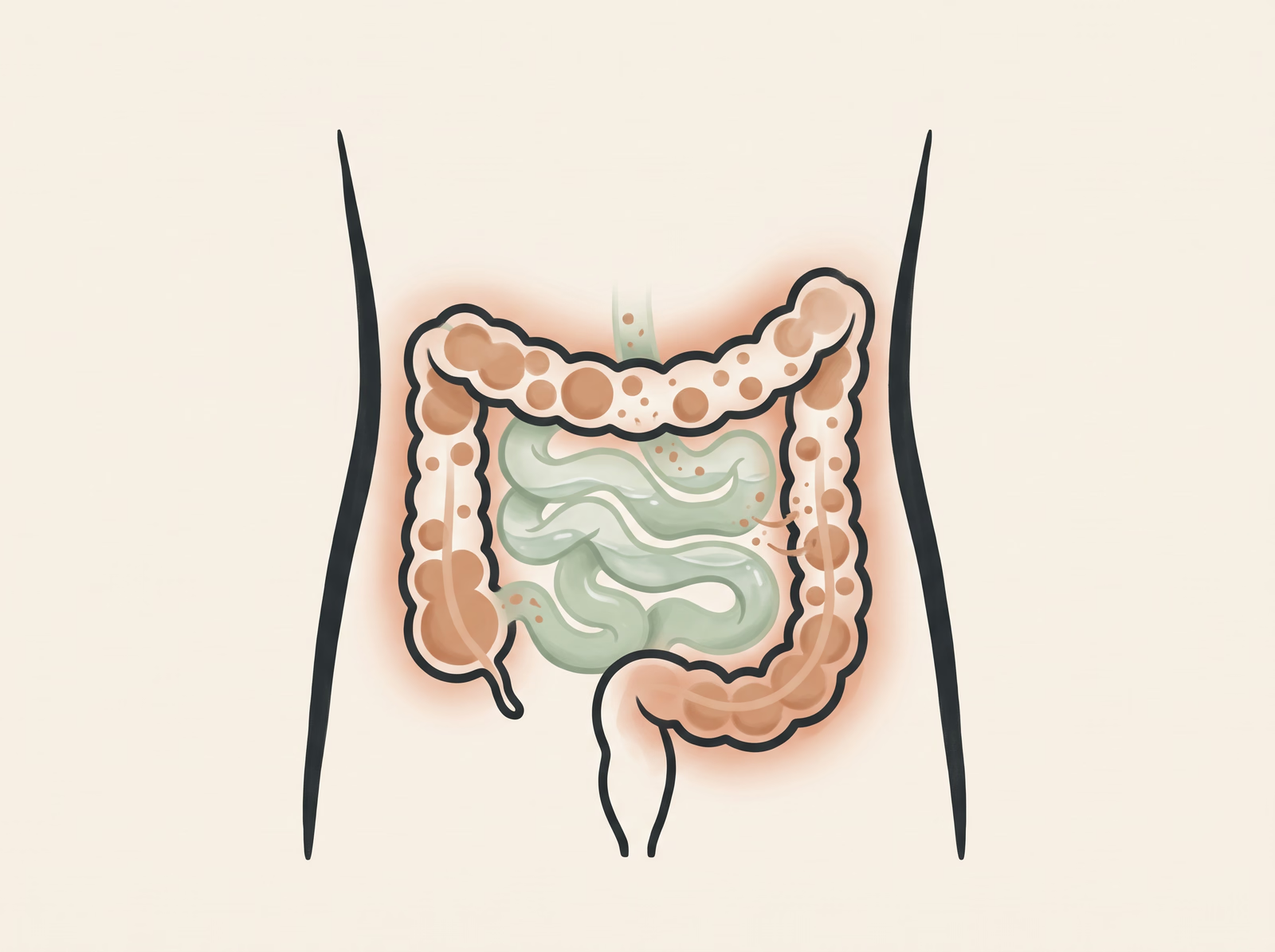
FODMAPs draw water into the small intestine and are fermented into gas in the colon. People with IBS make about the same amount of gas and water as anyone else but feel it more, so cutting the load reduces symptoms.
MRI studies show two separate effects. In healthy adults, 40 g of fructose drew water into the small bowel, while 40 g of inulin, a fructan, filled the colon with gas [28]. When the same test was run in 29 people with IBS and 29 controls, both groups produced similar water and gas, but more people with IBS developed symptoms [29]. The authors concluded that a sensitive gut, not excess gas, drives the symptoms.
That explains why the diet helps symptoms without curing IBS, and why gut-directed hypnotherapy, which targets gut sensitivity, matched the diet in a randomized trial: 72% improved with hypnotherapy and 71% with the diet [22].
The microbiome may also matter. In one UK study, half of IBS cases had a pathogenic-like gut microbiome that shifted toward a healthy profile on the diet, and those people responded better [21]. In rats, a high FODMAP diet raised bacterial lipopolysaccharide and gut inflammation, which a low FODMAP diet reversed [23]. These findings are interesting but early, and the rat results may not apply to people.
Is the low FODMAP diet bad for your gut microbiome?
Strict restriction consistently lowers bifidobacteria, a group of bacteria usually seen as beneficial, within 4 weeks. Reintroduction and personalization appear to bring them back, which is a main reason the strict phase should be short.
Many FODMAPs, such as fructans and GOS, are prebiotics: they feed bacteria in the colon. Removing them changes the microbiota quickly.
- Bifidobacteria fall. The first trial to measure it found lower bifidobacteria after 4 weeks [19]. A 2026 analysis of 12 randomized trials found a decrease in 9 of 11 that measured bifidobacteria and no increase in any; effects on Faecalibacterium prausnitzii, a butyrate producer, were inconsistent [6].
- Total bacteria fall. In a feeding trial that cut FODMAPs from about 23.7 g to 3.05 g a day, total bacterial abundance fell and the typical diet increased butyrate producers and Akkermansia [20].
- Diversity does not obviously collapse. In the sham-controlled trial, diversity did not change, and a probiotic restored bifidobacteria [13].
- Personalization seems to help. Twelve months after starting, people on a personalized diet had bifidobacteria back at baseline levels, though short-chain fatty acids were lower [7].
Nobody yet knows whether a short drop in bifidobacteria harms health in the long run, and no study has followed strict restriction for years with health outcomes. That uncertainty is why researchers who developed and tested the diet stress that it is not a lifetime diet [20] [27]. Gastroenterologist Will Bulsiewicz makes a similar point: use it short term to find triggers, then rebuild fiber and variety, for example with a Mediterranean or plant-rich pattern.
How long should you stay on a low FODMAP diet?
The strict phase lasts 2 to 6 weeks. After reintroduction, most people settle on a personalized diet that limits only one or a few FODMAP groups, and long-term studies suggest that this keeps symptoms controlled.
Long-term data come from follow-up cohorts rather than trials:
- In 103 UK patients, satisfactory relief was 12% at baseline, 61% after restriction and 57% after reintroduction; 82% kept an adapted diet that stayed nutritionally adequate, though it cost more and affected social eating [17].
- After a mean of 7.1 years in 74 Australian patients, 64% reported satisfactory relief; 62% ate a personalized diet, 26% had gone back to their habitual diet and 12% still restricted strictly. Symptoms were similar across groups, but strict restricters had low food-related quality of life [8].
- A meta-analysis of 5 studies of 6 months or longer found improvements in gut symptoms, anxiety, depression and quality of life, but not sleep [18].
The message is consistent: long-term strict restriction is not needed for symptom control, and it carries social and quality-of-life costs. If the diet is not working after 4 to 6 weeks, guidelines say to stop and try something else, such as a different diet, soluble fiber, medication or gut-directed psychological therapy [2] [22].
What people ate about 7 years after low FODMAP education
- Personalized diet62 % of participants
- Back to habitual diet26 % of participants
- Still strictly restricting12 % of participants
Show the data
| Item | Value (% of participants) | Low | High | Note |
|---|---|---|---|---|
| Personalized diet | 62 | |||
| Back to habitual diet | 26 | |||
| Still strictly restricting | 12 |
Why should a dietitian guide the low FODMAP diet?
Because the diet is complex, easy to do too strictly and can cut fiber, calcium and food variety. Every major guideline recommends a dietitian, and disordered eating is common in people with IBS, which makes screening important.
NICE says only a professional with expertise in dietary management should give low FODMAP advice [9], and the British Dietetic Association places it with dietitians [26]. The American Gastroenterological Association lists people who are poor candidates: those who eat few trigger foods, are at risk of malnutrition, are food insecure, or have an eating disorder or uncontrolled psychiatric condition [2].
Disordered eating is a real concern. About 7 years after FODMAP education, screening tools flagged disordered eating behaviors in 38% of one cohort, including avoidant/restrictive food intake risk in 24%. These tracked with psychological distress and symptom severity rather than with how strictly people ate, and no new eating disorders were diagnosed [30].
Practical points a dietitian covers:
- Rule out other causes first. Guidelines suggest testing for celiac disease and inflammatory bowel disease in people with diarrhea [10]. Celiac blood tests need gluten in the diet, so test before cutting wheat.
- Keep fiber up. Oats, potatoes, rice, quinoa, carrots, oranges, kiwifruit and firm tofu are low FODMAP. AumniVIDA's protocol targets at least 20 g of fiber a day from tolerated foods.
- Keep calcium up. Lactose-free milk and hard cheeses are low FODMAP; choose calcium-fortified plant milks.
- Use tested data. Internet food lists are often inaccurate; the Monash team has lab-tested hundreds of foods.
- Eat enough. Restriction can quietly cut energy. In one case report, an ultramarathon runner with IBS kept symptoms down on about 3.9 g of FODMAPs a day but ate less energy and carbohydrate than she needed [31].
Self-guided apps and books can help, but the trials that show the diet works mostly used specialist dietitians [11].
What are the alternatives to the low FODMAP diet?
Traditional IBS diet advice, soluble fiber, a starch- and sucrose-reduced diet, a low-carbohydrate diet, gut-directed hypnotherapy and medication all help some people. Several did about as well as the low FODMAP diet in head-to-head trials.
| Option | What the evidence shows |
|---|---|
| Traditional IBS advice (regular meals, smaller portions, less fat, caffeine and gas-producing foods) | As effective as low FODMAP in two trials and easier to follow |
| Starch- and sucrose-reduced diet | Ranked first for global symptoms in a 2025 network analysis, but only two trials |
| Low-carbohydrate, high-protein and fat diet | 71% response versus 76% for low FODMAP in CARIBS |
| Gluten-free diet | 58% response, similar to low FODMAP, in one trial; mixed overall |
| Gut-directed hypnotherapy | Matched the diet for gut symptoms and improved anxiety more |
| Optimized medication | 58% response in CARIBS, lower than the diets |
Sources for the table: traditional advice [4] [5], starch- and sucrose-reduced [3], low-carb and medication [14], hypnotherapy [22]. A sensible order, which most guidelines follow, is general advice first, then a dietitian-led low FODMAP trial, with psychological therapy and medication as parallel options [26] [2]. Researchers at Sheffield argue that traditional advice should be the first choice because it is cheaper and easier [5].
Low FODMAP is also unrelated to keto or low histamine diets, though they overlap: a ketogenic diet cuts many FODMAP-rich grains and fruits by accident, and a low-carbohydrate diet performed nearly as well in CARIBS. For general gut health in people without symptoms, an anti-inflammatory or Mediterranean pattern rich in fiber is the better fit.
The studies, by type
Strongest designs first. Scroll each row; every card links to the paper and says whether it supports the protocol.
Systematic reviews and meta-analyses (5)
Randomized controlled trials (10)
Large observational studies in people (4)
Mechanistic studies in people (3)
Animal and cell studies (1)
Case reports and N-of-1 experiments (1)
Hypotheses and expert reviews (7)
Who follows it, who backs it, who doubts it
Public positions summarized in our words. Follow each link for the full context.
Support it
Peter GibsonGastroenterologist at Monash University and The Alfred; co-developer of the low FODMAP diet
Describes the strict phase as a test of sensitivity followed by gradual reintroduction to find each person's threshold, says most people can loosen the diet considerably, insists on dietitian guidance and says it should not be used by people with disordered eating or poor nutrition.
Andrew Weil Center for Integrative Medicine podcast, Episode 17
Jane VarneyResearch dietitian, Monash University FODMAP team
Argues that the diet is far from a lifetime diet: strict restriction should be trialed with a dietitian for only 2 to 6 weeks, followed by systematic rechallenge so most people can widen what they eat.
Mixed or cautious
Kevin WhelanProfessor of dietetics at King's College London
Co-authored a review that calls the diet clinically effective with a 50% to 80% response rate in trials, while setting out its downsides: changes to the gut microbiota, lower diet quality, complexity and the need for proper support.
Proceedings of the Nutrition Society review (Wilson, Cox, Whelan 2021)
Will BulsiewiczGastroenterologist, author of Fiber Fueled and US medical director at ZOE
Sees a place for it in people with digestive symptoms, short term and with a dietitian, but says people without symptoms have no reason to try it and that staying on it permanently can harm the gut microbiome.
Oppose or doubt it
David SandersGastroenterologist at Sheffield Teaching Hospitals, senior author of a three-diet IBS trial
Opposes the low FODMAP diet as the first dietary step: his team's trial found traditional advice about as effective, cheaper and easier, and recommends keeping low FODMAP for patients who prefer it, with specialist dietitian input.
Public examples
- Monash University 3-step FODMAP diet guide
The developers' own guide to restriction, challenges and personalization.
- Monash University FODMAP Diet app
Traffic-light ratings for lab-tested foods, used in most dietitian-led programs.
- FODMAP Friendly certification
A separate program that lab-tests and certifies packaged foods as low FODMAP.
- NICE guideline CG61
The UK guideline that places the low FODMAP diet after general advice, delivered by a professional with dietary expertise.
How to follow it
- See a clinician first to confirm IBS and rule out other causes; get celiac blood tests done before you cut wheat.
- If general IBS advice (regular meals, less alcohol and fizzy drinks, limited caffeine) has not helped, ask for a referral to a dietitian trained in the low FODMAP diet.
- Restrict for 2 to 6 weeks using lab-tested ratings such as the Monash app, keeping fiber up with oats, rice, potatoes, quinoa, carrots, oranges and kiwifruit.
- If symptoms improve, reintroduce one FODMAP group at a time over 3 days each, in rising portions, and log symptoms; if they do not improve after 4 to 6 weeks, stop and discuss other treatments.
- Personalize: return all tolerated foods, limit only your triggers to the level that keeps you comfortable, and retest them every few months.
- Watch for signs that eating has become anxious or overly restricted, and raise them with your clinician or dietitian.
How to know you are following it
During restriction, log meals and score symptoms daily (for example pain, bloating and stool form on a 0 to 10 scale) and check them against the Monash app ratings. During reintroduction, record each challenge food, portion and symptoms over 3 days. Long term, track your trigger list, fiber intake (AumniVIDA targets at least 20 g a day) and how many foods you avoid; a growing list is a warning sign.
Common mistakes
- Starting without a diagnosis, which can delay finding celiac disease, inflammatory bowel disease or cancer.
- Staying on strict restriction for months or years instead of moving to reintroduction.
- Using inaccurate internet food lists instead of lab-tested data.
- Letting fiber fall by cutting all grains, legumes and many fruits without replacements.
- Testing several FODMAP groups at once, so you cannot tell which one caused symptoms.
- Forgetting hidden sources such as garlic and onion in sauces, and sorbitol or xylitol in sugar-free gum and sweets.
- Expecting it to work for weight loss, or for gut health in people without symptoms.
Who should be careful
Check with a clinician first if you
- Red flags need a clinician before any diet: rectal bleeding, unintended weight loss, anaemia, symptoms that wake you at night, fever, a lump in the abdomen, or new bowel symptoms after age 50.
- A family history of bowel or ovarian cancer, inflammatory bowel disease or celiac disease: get checked first.
- You have or have had an eating disorder, or eating already feels anxious or restricted.
- You are underweight, at risk of malnutrition or food insecure.
- You are pregnant, or it is for a child: only with a dietitian.
- You have not been tested for celiac disease: test before cutting wheat, because the test needs gluten in the diet.
Possible side effects
- Lower fiber intake and constipation if replacements are not planned.
- Lower calcium intake when dairy is cut without fortified alternatives.
- A fall in bifidobacteria and other gut bacteria during strict restriction.
- Higher food costs, harder social eating and lower food-related quality of life with long strict restriction.
- Food anxiety or disordered eating in people at risk.
Follow it in AumniVIDA
Manage IBS with regular meals, fiber kept up during elimination, sugar-alcohol sweeteners tracked and a trigger list you record yourself through restriction, reintroduction and personalization.
The targets
AumniVIDA scores these from your logged meals and measurements, and shows the evidence grade for each protocol.
Targets
- Fiber: at least 20 g/day
Limits
- No sugar-alcohol sweeteners
Timing
- At least: 3 meals a day
How AumniVIDA follows it with your data
- Record your own triggers. Add the foods you notice upset your gut. AumniVIDA never declares a food a trigger from the data alone.
- See meal regularity. Your logs show how regular your meals are, which helps on its own.
- Keep fiber up. The scorecard keeps fiber at 20 g a day or more with foods you tolerate.
- FODMAP levels are estimates. AumniVIDA labels its estimated FODMAP levels on foods as estimates.
Follow up to five protocols on the free plan, or the full library with Pro. Rank them, and when two protocols disagree, the higher-ranked one guides the app.
Watch
Talks and explainers worth your time. Nothing loads from YouTube until you press play.
IBS Symptom relief using the FODMAP diet & Monash FODMAP app
Monash FODMAPMonash FODMAP@monashlowfodmapSubscribers3.2KStartedDecember 2018CountryNot statedVideos61Total views498.8KNew videos, last 30 days4New videos, last year32From YouTube, 2026-10-31Open on YouTube
The developers explain how the diet was built and why it works for IBS.
IBS symptoms, the low FODMAP diet and the Monash app that can help
Translational Medicine, Monash UniversityTranslational Medicine, Monash University@monashstmSubscribers9.9KStartedMay 2012CountryAustraliaVideos245Total views2.2MNew videos, last 30 days0New videos, last year6From YouTube, 2026-10-31Open on YouTube
A short overview from Monash of IBS symptoms and the three-step approach.
Getting enough Fibre on the Low FODMAP Diet with Monash University
A Little Bit YummyA Little Bit Yummy@alittlebityummySubscribers771StartedMarch 2015CountryNot statedVideos40Total views59.2KNew videos, last 30 days1New videos, last year11From YouTube, 2026-10-31Open on YouTube
Covers the most common nutritional gap on the diet: keeping fiber up.
The Latest Research + Updates on the Low FODMAP Diet
Dr. Schär InstituteDr. Schär Institute@drschaerinstituteSubscribers1.8KStartedFebruary 2013CountryNot statedVideos145Total views224.5KNew videos, last 30 days1New videos, last year17From YouTube, 2026-10-31Open on YouTube
A professional talk on newer research, aimed at clinicians and curious readers.
What is the low-FODMAP diet, and should you try it?
Dr Will Bulsiewicz | ZOEZOE@joinzoeSubscribers939KStartedJanuary 2020CountryUnited KingdomVideos531Total views96.5MNew videos, last 30 days5New videos, last year51From YouTube, 2026-10-31Open on YouTube
A gastroenterologist's more cautious take, focused on who should and should not try it.
Common questions
What can you eat on a low FODMAP diet?
Plain meat, fish, eggs, firm tofu and tempeh; rice, oats, potatoes and quinoa; carrots, cucumber, green beans, lettuce and aubergine; oranges, kiwifruit, pineapple and blueberries; hard cheeses and lactose-free milk. Portion size matters, so check a lab-tested app.
What foods should you avoid on a low FODMAP diet?
During restriction: wheat and rye bread, onion, garlic, leek, most beans and lentils, milk and yoghurt, apples, pears, mango, watermelon, honey, cashews, mushrooms and sugar-free sweets with sorbitol or xylitol. Most of these come back during reintroduction.
How long does it take for the low FODMAP diet to work?
Trials measure response after about 3 to 4 weeks, and many people notice changes within the first weeks. If symptoms have not improved after 4 to 6 weeks of careful restriction, guidelines advise stopping and trying another approach.
Can you stay on a low FODMAP diet long term?
Strict restriction is not meant to be long term because it lowers beneficial gut bacteria and makes eating harder. A personalized version that limits only your triggers is meant to be long term, and follow-up studies suggest it keeps symptoms controlled.
Why is my low FODMAP diet not working?
Common reasons are hidden FODMAPs such as garlic in sauces, large portions of low FODMAP foods, inaccurate food lists, or that FODMAPs are not your trigger. About 20% to 50% of people do not respond in trials; fiber, psychological therapy or medication may help instead.
Can you lose weight on a low FODMAP diet?
It is not designed for weight loss and has not been tested for it. Some people eat less while restricting, but the goal is symptom relief with enough energy and nutrients.
Is the low FODMAP diet good for SIBO?
Some clinicians use it to ease symptoms, but the trials behind it were done in IBS, and guidelines do not recommend it as a treatment for small intestinal bacterial overgrowth. Ask your clinician.
Do I need a dietitian for the low FODMAP diet?
UK and US guidelines recommend one, and most trials used specialist dietitians. A dietitian helps you keep fiber and calcium up, avoid unnecessary restriction and move through reintroduction.
Is low FODMAP the same as gluten-free?
No. Low FODMAP limits wheat because of its fructans, not its gluten, so small amounts of wheat and gluten-free products made from other grains may be fine. People with celiac disease need a strict gluten-free diet instead.
Sources
- 1.Whelan K, Martin LD, Staudacher HM, et al. The low FODMAP diet in the management of irritable bowel syndrome: an evidence-based review of FODMAP restriction, reintroduction and personalisation in clinical practice. Journal of Human Nutrition and Dietetics, 2018. doi:10.1111/jhn.12530
- 2.Chey WD, Hashash JG, Manning L, et al. AGA Clinical Practice Update on the Role of Diet in Irritable Bowel Syndrome: Expert Review. Gastroenterology, 2022. doi:10.1053/j.gastro.2021.12.248
- 3.Cuffe MS, Staudacher HM, Aziz I, et al. Efficacy of dietary interventions in irritable bowel syndrome: a systematic review and network meta-analysis. The Lancet Gastroenterology and Hepatology, 2025. doi:10.1016/S2468-1253(25)00054-8
- 4.Böhn L, Störsrud S, Liljebo T, et al. Diet low in FODMAPs reduces symptoms of irritable bowel syndrome as well as traditional dietary advice: a randomized controlled trial. Gastroenterology, 2015. doi:10.1053/j.gastro.2015.07.054
- 5.Rej A, Sanders DS, Shaw CC, et al. Efficacy and Acceptability of Dietary Therapies in Non-Constipated Irritable Bowel Syndrome: A Randomized Trial of Traditional Dietary Advice, the Low FODMAP Diet, and the Gluten-Free Diet. Clinical Gastroenterology and Hepatology, 2022. doi:10.1016/j.cgh.2022.02.045
- 6.Cao B, Zhou L, Hu S, et al. Evidence consistency analysis of the effect of a low-FODMAP diet on the abundance of Bifidobacterium and Faecalibacterium prausnitzii in patients with irritable bowel syndrome. Frontiers in Microbiology, 2026. doi:10.3389/fmicb.2026.1948754
- 7.Staudacher HM, Rossi M, Kaminski T, et al. Long-term personalized low FODMAP diet improves symptoms and maintains luminal Bifidobacteria abundance in irritable bowel syndrome. Neurogastroenterology and Motility, 2022. doi:10.1111/nmo.14241
- 8.Silva H, Porter J, Barrett J, et al. Dietary Intake, Symptom Control and Quality of Life After Dietitian-Delivered Education on a FODMAP Diet for Irritable Bowel Syndrome: A 7-Year Follow Up. Neurogastroenterology and Motility, 2025. doi:10.1111/nmo.70116
- 9.National Institute for Health and Care Excellence. Irritable bowel syndrome in adults: diagnosis and management (CG61). NICE clinical guideline, 2017. Link
- 10.Lacy BE, Pimentel M, Brenner DM, et al. ACG Clinical Guideline: Management of Irritable Bowel Syndrome. American Journal of Gastroenterology, 2021. doi:10.14309/ajg.0000000000001036
- 11.Black CJ, Staudacher HM, Ford AC. Efficacy of a low FODMAP diet in irritable bowel syndrome: systematic review and network meta-analysis. Gut, 2022. doi:10.1136/gutjnl-2021-325214
- 12.Halmos EP, Power VA, Shepherd SJ, et al. A diet low in FODMAPs reduces symptoms of irritable bowel syndrome. Gastroenterology, 2014. doi:10.1053/j.gastro.2013.09.046
- 13.Staudacher HM, Lomer MCE, Farquharson FM, et al. A Diet Low in FODMAPs Reduces Symptoms in Patients With Irritable Bowel Syndrome and A Probiotic Restores Bifidobacterium Species: A Randomized Controlled Trial. Gastroenterology, 2017. doi:10.1053/j.gastro.2017.06.010
- 14.Nybacka S, Törnblom H, Josefsson A, et al. A low FODMAP diet plus traditional dietary advice versus a low-carbohydrate diet versus pharmacological treatment in irritable bowel syndrome (CARIBS): a single-centre, single-blind, randomised controlled trial. The Lancet Gastroenterology and Hepatology, 2024. doi:10.1016/S2468-1253(24)00045-1
- 15.Dionne J, Ford AC, Yuan Y, et al. A Systematic Review and Meta-Analysis Evaluating the Efficacy of a Gluten-Free Diet and a Low FODMAPs Diet in Treating Symptoms of Irritable Bowel Syndrome. American Journal of Gastroenterology, 2018. doi:10.1038/s41395-018-0195-4
- 16.Eswaran SL, Chey WD, Han-Markey T, et al. A Randomized Controlled Trial Comparing the Low FODMAP Diet vs. Modified NICE Guidelines in US Adults with IBS-D. American Journal of Gastroenterology, 2016. doi:10.1038/ajg.2016.434
- 17.O'Keeffe M, Jansen C, Martin L, et al. Long-term impact of the low-FODMAP diet on gastrointestinal symptoms, dietary intake, patient acceptability, and healthcare utilization in irritable bowel syndrome. Neurogastroenterology and Motility, 2018. doi:10.1111/nmo.13154
- 18.Pouladi A, Arabpour E, Bahrami O, et al. Impacts of the Long-Term Low-FODMAP Diet in Patients With Irritable Bowel Syndrome: A Systematic Review and Meta-Analysis. Journal of Human Nutrition and Dietetics, 2025. doi:10.1111/jhn.70105
- 19.Staudacher HM, Lomer MC, Anderson JL, et al. Fermentable carbohydrate restriction reduces luminal bifidobacteria and gastrointestinal symptoms in patients with irritable bowel syndrome. Journal of Nutrition, 2012. doi:10.3945/jn.112.159285
- 20.Halmos EP, Christophersen CT, Bird AR, et al. Diets that differ in their FODMAP content alter the colonic luminal microenvironment. Gut, 2015. doi:10.1136/gutjnl-2014-307264
- 21.Vervier K, Moss S, Kumar N, et al. Two microbiota subtypes identified in irritable bowel syndrome with distinct responses to the low FODMAP diet. Gut, 2022. doi:10.1136/gutjnl-2021-325177
- 22.Peters SL, Yao CK, Philpott H, et al. Randomised clinical trial: the efficacy of gut-directed hypnotherapy is similar to that of the low FODMAP diet for the treatment of irritable bowel syndrome. Alimentary Pharmacology and Therapeutics, 2016. doi:10.1111/apt.13706
- 23.Zhou SY, Gillilland M, Wu X, et al. FODMAP diet modulates visceral nociception by lipopolysaccharide-mediated intestinal inflammation and barrier dysfunction. Journal of Clinical Investigation, 2018. doi:10.1172/JCI92390
- 24.Gibson PR, Shepherd SJ. Personal view: food for thought--western lifestyle and susceptibility to Crohn's disease. The FODMAP hypothesis. Alimentary Pharmacology and Therapeutics, 2005. doi:10.1111/j.1365-2036.2005.02506.x
- 25.Shepherd SJ, Parker FC, Muir JG, et al. Dietary triggers of abdominal symptoms in patients with irritable bowel syndrome: randomized placebo-controlled evidence. Clinical Gastroenterology and Hepatology, 2008. doi:10.1016/j.cgh.2008.02.058
- 26.McKenzie YA, Bowyer RK, Leach H, et al. British Dietetic Association systematic review and evidence-based practice guidelines for the dietary management of irritable bowel syndrome in adults (2016 update). Journal of Human Nutrition and Dietetics, 2016. doi:10.1111/jhn.12385
- 27.Wilson B, Cox SR, Whelan K. Challenges of the low FODMAP diet for managing irritable bowel syndrome and approaches to their minimisation and mitigation. Proceedings of the Nutrition Society, 2021. doi:10.1017/S0029665120006990
- 28.Murray K, Wilkinson-Smith V, Hoad C, et al. Differential effects of FODMAPs (fermentable oligo-, di-, mono-saccharides and polyols) on small and large intestinal contents in healthy subjects shown by MRI. American Journal of Gastroenterology, 2014. doi:10.1038/ajg.2013.386
- 29.Major G, Pritchard S, Murray K, et al. Colon Hypersensitivity to Distension, Rather Than Excessive Gas Production, Produces Carbohydrate-Related Symptoms in Individuals With Irritable Bowel Syndrome. Gastroenterology, 2017. doi:10.1053/j.gastro.2016.09.062
- 30.Silva H, Knowles SR, Porter J, et al. Disordered Eating Behaviors Many Years After Education in a Low FODMAP Diet in Patients With Irritable Bowel Syndrome. JGH Open, 2026. doi:10.1002/jgh3.70467
- 31.Gaskell SK, Costa RJS. Applying a Low-FODMAP Dietary Intervention to a Female Ultraendurance Runner With Irritable Bowel Syndrome During a Multistage Ultramarathon. International Journal of Sport Nutrition and Exercise Metabolism, 2019. doi:10.1123/ijsnem.2017-0398
AumniVIDA explains health information for general wellness. Talk to your clinician before changing your diet, training or medication for a health condition.