
Ketogenic diet
What is ketogenic diet?
A ketogenic diet keeps carbohydrate under about 20 to 50 g a day so the body burns fat and makes ketones, defined in supervised programs as blood BHB of 0.5 to 3.0 mmol/L. It is an established epilepsy treatment, lowers HbA1c in type 2 diabetes, matches other diets for weight loss and often raises LDL cholesterol.

Keto is well accepted as a supervised therapy for drug-resistant epilepsy in children. For weight loss, mainstream reviews find it works about as well as other diets, not better. For type 2 diabetes it is accepted as one option with supervision. The open dispute is long-term heart risk, because LDL and ApoB rise in many people and sometimes very steeply.
The rules
The rules ofKetogenic diet
- 1Eat less than 50 g of total carbohydrate a day; most programs aim for 20 to 30 g.
- 2Get most daily energy from fat, at least 60% of calories in the AumniVIDA protocol.
- 3Keep protein moderate, about 1.2 to 2.0 g per kg of body weight a day.
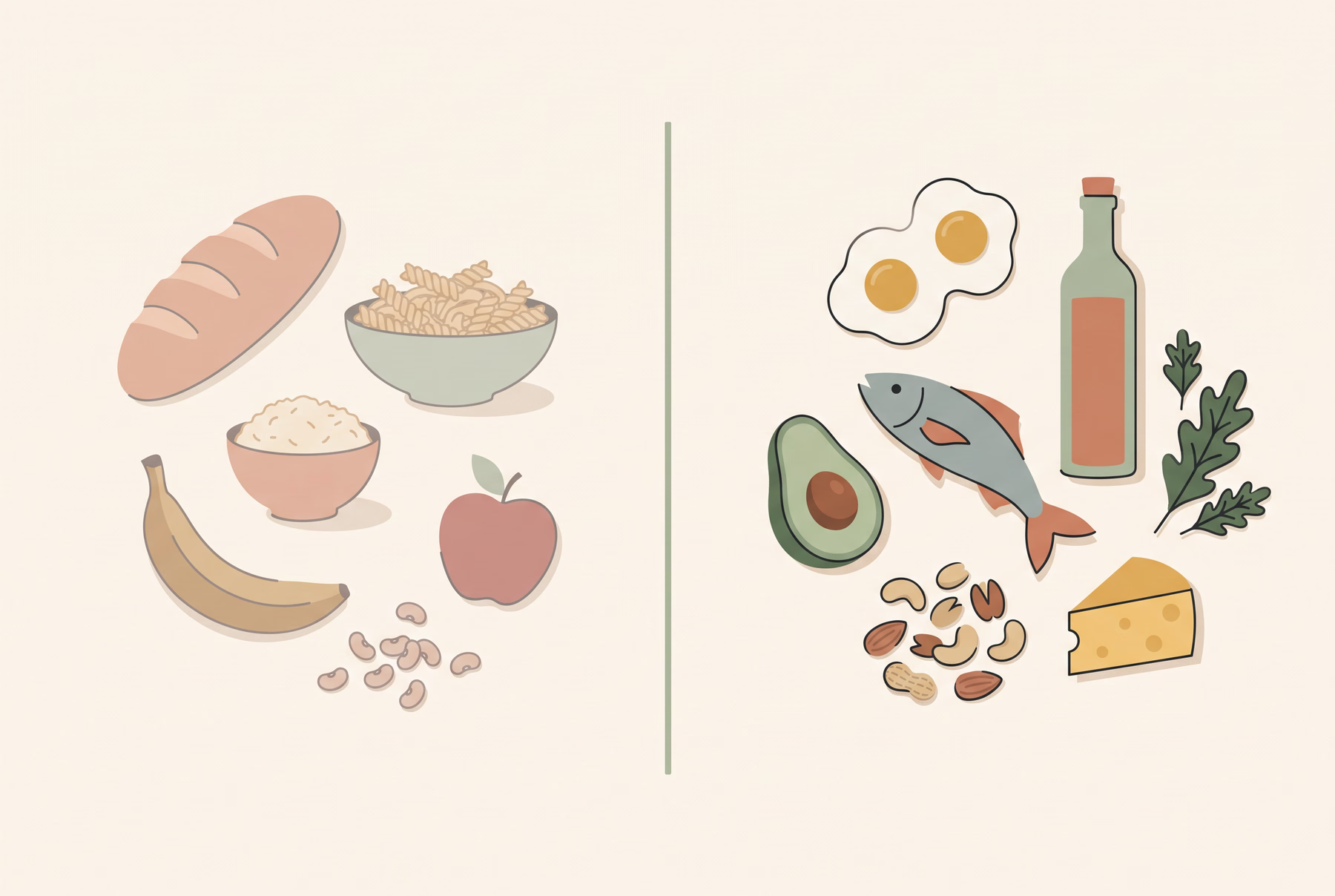
- 4Leave out sugar, sweetened drinks, grains, starchy vegetables, legumes and most fruit.
- 5Eat non-starchy vegetables daily for fiber, aiming for at least 20 g of fiber a day.
- 6Optionally confirm ketosis with blood beta-hydroxybutyrate of 0.5 to 3.0 mmol/L.
Share these rules as an image or a link.
| Classic 4:1 ketogenic diet | 4 g of fat for every 1 g of protein plus carbohydrate, weighed, under a hospital epilepsy team. |
|---|---|
| MCT ketogenic diet | Medium-chain triglyceride oil supplies much of the fat, which allows slightly more carbohydrate. |
| Modified Atkins diet | Carbohydrate strictly limited and fat encouraged, without weighing protein; used for epilepsy in older children and adults. |
| Well-formulated ketogenic diet | Whole-food keto under about 30 g carbohydrate with protein near 1.5 g/kg, used in supervised diabetes programs. |
| Atkins 20 | A commercial starting phase capped at 20 g of net carbohydrate a day. |
What it aims to do
- Shift the body's main fuel from glucose to fat and ketones.
- Reduce seizures in drug-resistant epilepsy.
- Lower blood sugar, insulin and HbA1c in type 2 diabetes and reduce medication need.
- Cut appetite to make weight loss easier.
- Lower triglycerides and raise HDL cholesterol.
What it claims, and what the evidence shows
Grades reflect evidence in people. Animal and cell results alone never earn more than limited.
Brain and cognition
Moderate evidenceBlood sugar and insulin
Moderate evidenceBody fat and weight
Mixed evidenceHeart and blood vessels
Mixed evidenceInflammation
Limited evidenceLowers inflammation
hsCRP fell 39% in a non-randomized diabetes program, but weight loss could explain it. [5]
Mood and stress
Not enough evidenceImproves serious mental illness
One small single-arm pilot reported better symptoms and metabolic health; controlled trials are needed. [16]
Lifespan and mortality
Not enough evidence
Key takeaways
- 1
Keto means under about 20 to 50 g of carbohydrate a day; supervised programs target blood BHB of 0.5 to 3.0 mmol/L.
- 2
It is an established, evidence-based therapy for drug-resistant epilepsy in children.
- 3
For weight loss it beats low-fat diets by only 1 to 2 kg in long trials and shows no fat-burning advantage at equal calories.
- 4
It lowers HbA1c in type 2 diabetes, but needs a medication plan and is unsafe with SGLT2 inhibitors.
- 5
LDL and ApoB often rise, sometimes steeply in lean people; whether that is harmless is unproven, and the key plaque follow-up paper was retracted.
What is the keto diet and what are its rules?
A ketogenic diet cuts carbohydrate low enough, usually under 20 to 50 g a day, that the liver switches to making ketones from fat. Fat supplies most energy, protein stays moderate, and grains, sugar, starchy foods and most fruit are left out.
The diet was designed in the 1920s to copy the metabolism of fasting for children with epilepsy [19]. Today the same rule, very low carbohydrate, is used in two very different settings: as supervised medical therapy for epilepsy, and as a self-directed diet for weight loss and blood sugar.
Trials define a very-low-carbohydrate ketogenic diet as no more than 50 g of carbohydrate a day [7]. Supervised diabetes programs often aim lower: the Virta program asked patients to keep total carbohydrate under 30 g a day, with protein around 1.5 g/kg of reference weight [5]. AumniVIDA's keto protocol scores the same pattern: carbohydrate at most 30 g a day, protein 1.2 to 2.0 g/kg, fat at least 60% of energy and at least 20 g of fiber from non-starchy vegetables.
The versions people follow
| Version | Main rule | Typical use |
|---|---|---|
| Classic 4:1 | 4 g of fat for every 1 g of protein plus carbohydrate, weighed | Drug-resistant epilepsy, under a hospital team |
| MCT diet | Medium-chain triglyceride oil supplies much of the fat | Epilepsy, allows a little more carbohydrate |
| Modified Atkins | Carbohydrate limited, fat encouraged, protein not weighed | Epilepsy in older children and adults |
| Well-formulated keto | Under 20 to 50 g carbohydrate, moderate protein, whole foods | Weight loss and type 2 diabetes |
| Low-carb (not keto) | Under about 130 g carbohydrate a day | Weight and glucose, without aiming for ketosis |
The Cochrane review of epilepsy trials pooled classic, MCT and modified Atkins versions [2]. The 130 g line comes from the diabetes remission meta-analysis, which treated anything under 130 g a day as low carbohydrate and under 10% of calories as very low [4].
How do you know if you are in ketosis?
Supervised programs define nutritional ketosis as a blood beta-hydroxybutyrate (BHB) level of 0.5 to 3.0 mmol/L. A finger-stick blood meter is the most direct check. In practice, many people on keto run lower: one diabetes program measured an average of 0.31 mmol/L at one year.
Ketones rise when carbohydrate and insulin fall. The Virta diabetes study set a target of 0.5 to 3.0 mmol/L blood BHB and adjusted carbohydrate and protein to reach it [5]. Phinney and Volek, who designed that program, advise that protein above about 2.0 g/kg can push ketones down, and that ketones stuck below 0.5 mmol/L despite tight carbohydrate limits are a reason to look at protein (Virta Health).
Real-world ketosis is often lighter than the target. In the same program, laboratory BHB at one year averaged 0.31 mmol/L, below the 0.5 mmol/L goal, even though HbA1c and weight improved [5]. Being in strict ketosis every day may matter less for these outcomes than staying low in carbohydrate.
Nutritional ketosis is not ketoacidosis. Diabetic ketoacidosis is a medical emergency that happens when insulin is missing. People with working insulin rarely get there on diet alone. The exception to know about is the SGLT2 inhibitor class of diabetes drugs: case reports describe ketoacidosis with near-normal blood glucose in people who combined these drugs with a ketogenic diet, in one case within a week [20].
Urine strips and breath meters are cheaper but less direct. If a number matters to you, a blood meter is the one trials use.
Blood ketone levels, from normal to ketoacidosis
- Below 0.5 mmol/L: not in nutritional ketosis
- 0.5 to 3.0 mmol/L: nutritional ketosis target
- 0.31 mmol/L: average at 1 yearLab BHB in the Virta diabetes study, below target even as HbA1c and weight improved.
- 0.5 mmol/L: bottom of the targetKetones stuck below this despite tight carbohydrate limits are a reason to look at protein.
- 3.0 mmol/L: top of the targetThe Virta program adjusted carbohydrate and protein to stay in this band.
- Diabetic ketoacidosis, far higherA medical emergency when insulin is missing; reported with SGLT2 inhibitor drugs plus keto.
Urine strips and breath meters are cheaper but less direct. A finger-stick blood meter is the one trials use.
Does the keto diet work for epilepsy?
Yes, for drug-resistant epilepsy in children it is an established treatment. In the first randomized trial, 38% of children on the diet had their seizures cut by more than half after 3 months, versus 6% of controls. It should be started and monitored by a specialist team.
This is the original use of the diet and the one with the clearest evidence. The UK trial randomized 145 children who had failed at least two drugs. After 3 months, average seizure frequency was 62% of baseline on the diet versus 137% in controls [1].
The Cochrane review pooled 13 randomized trials with 932 participants. Compared with usual care, ketogenic diets made seizure freedom about 3 times more likely and halving seizures about 6 times more likely in children. Up to 55% of children on a classic 4:1 diet were seizure free at 3 months. Evidence in adults was thinner, and the reviewers rated certainty low to very low because families and doctors always knew who was on the diet [2].
The International Ketogenic Diet Study Group guideline covers who should try it, how to start, which supplements to give, how to handle side effects and when to stop [3]. Families can find hospital programs through the Charlie Foundation.
The common side effects in trials were constipation, vomiting, low energy and hunger [1]. This is a medical therapy, not a diet to start for a child at home.
Seizure control in the first randomized keto trial
- Over 50% fewer seizures, keto diet38 % of children
- Over 50% fewer seizures, usual care6 % of children
- Over 90% fewer seizures, keto diet7 % of children
- Over 90% fewer seizures, usual care0 % of children
Show the data
| Item | Value (% of children) | Low | High | Note |
|---|---|---|---|---|
| Over 50% fewer seizures, keto diet | 38 | |||
| Over 50% fewer seizures, usual care | 6 | |||
| Over 90% fewer seizures, keto diet | 7 | |||
| Over 90% fewer seizures, usual care | 0 |
Is keto better than other diets for weight loss?
Keto produces weight loss, but in long trials it beats low-fat diets by only about 1 to 2 kg, and some trials find no difference. Tightly controlled studies show no fat-burning advantage at equal calories. Its main benefit for some people is less hunger.
Two meta-analyses of randomized trials found a small edge: 0.91 kg more weight loss than low-fat diets at 12 months or more [7], and 2.17 kg more at 6 months or more [8]. The DIETFITS trial of 609 adults found no meaningful difference between a healthy low-carbohydrate and a healthy low-fat diet at 12 months (6.0 kg vs 5.3 kg lost), and neither genes nor insulin response predicted who did better [9].
The metabolic advantage debate
The carbohydrate-insulin model holds that high-glycemic diets raise insulin, which locks calories into fat cells and drives hunger, so cutting carbohydrate should help weight loss beyond its calories [21]. Metabolic ward studies have tested this directly:
- At equal calories, switching men to a ketogenic diet did not speed fat loss. Energy expenditure rose by about 57 to 151 kcal a day, near the limit of what can be measured [10].
- When people could eat freely, they ate 689 kcal a day less on a plant-based low-fat diet than on an animal-based ketogenic diet, the opposite of what the model predicts [11].
The National Lipid Association concluded that very-low-carbohydrate diets are not superior for weight loss but may help with appetite control [22]. For a person who finds keto easy to follow and feels less hungry, it can work. It is not a shortcut around energy balance.
Can the keto diet reverse type 2 diabetes?
Low-carbohydrate and ketogenic diets lower HbA1c and can bring it under 6.5% for some people, especially in the first 6 months. Effects tend to shrink by 12 months, and a Mediterranean diet matched keto on HbA1c in a head-to-head trial. Medication changes need a clinician.
A BMJ meta-analysis of 23 randomized trials found that 57% of people on low-carbohydrate diets reached an HbA1c under 6.5% at 6 months, versus 31% on control diets. Remission without diabetes medication was less common, benefits faded by 12 months, and very-low-carbohydrate diets did not beat less strict ones [4].
The Virta program, a non-randomized study funded by the company, combined nutritional ketosis with remote medical supervision. At one year, HbA1c fell from 7.6% to 6.3%, weight fell 13.8 kg, and insulin was reduced or stopped in 94% of those using it. Triglycerides fell 24%, HDL rose 18%, hsCRP fell 39%, and LDL cholesterol rose 10% while ApoB did not change [5].
Stanford's Keto-Med trial gave the same people 12 weeks of a well-formulated keto diet and 12 weeks of a Mediterranean diet. HbA1c improved equally on both. Keto lowered triglycerides more but raised LDL 10%, lowered fiber and several nutrients, and most people drifted back toward Mediterranean eating afterward [6].
Why supervision matters. Blood sugar can drop quickly when carbohydrate falls, so insulin and sulfonylureas often need cutting at the start [5]. SGLT2 inhibitors combined with keto have caused ketoacidosis [20]. See the HbA1c and fasting insulin hubs for what these tests show.
Does the keto diet raise cholesterol?
Often, yes. Pooled trials show a small average LDL rise of about 5 to 6 mg/dL, while triglycerides fall and HDL rises, but responses vary widely: in lean young women LDL rose about 70 mg/dL in 4 weeks. Checking LDL and ApoB before and after starting is sensible.
Keto changes blood lipids in two directions at once. Meta-analyses show lower triglycerides and higher HDL, alongside higher LDL cholesterol [7] [8].
Averages hide the spread. In a Swedish feeding trial, every one of 17 healthy normal-weight women saw LDL rise on a 4-week ketogenic diet, by about 70 mg/dL (1.82 mmol/L)1.82 mmol/L (about 70 mg/dL) on average, with ApoB rising too [12]. In people with diabetes or obesity the rise is usually smaller: 10% in both the Virta study and Keto-Med [5] [6].
Does it matter for heart disease? No randomized trial has followed keto dieters to heart attacks. In the UK Biobank, people whose food records matched a low-carbohydrate high-fat pattern had higher LDL and ApoB and about twice the rate of major cardiovascular events over 11.8 years (HR 2.18), though diet was self-reported and observational [13]. Low-carbohydrate eating built on animal fat and protein was linked to higher mortality in cohort data, while plant-based versions were linked to lower mortality [18].
The practical levers within keto are fat type and fiber: swapping butter and fatty meat for olive oil, nuts, avocado and fish, and adding non-starchy vegetables. For how to read your results, see the LDL cholesterol, ApoB and triglycerides hubs.
How much keto raises LDL cholesterol in trials
- 13 trials, 12+ months (Bueno 2013)4.6 mg/dL0.1 mmol/L
0.12 mmol/L; adults with obesity
- 11 trials, 6+ months (Mansoor 2016)6.2 mg/dL0.2 mmol/L
0.16 mmol/L; healthy adults
- Lean young women, 4 weeks (Burén 2021)70 mg/dL1.8 mmol/L
1.82 mmol/L; every participant rose
Show the data
| Item | Value (mg/dL) | Low | High | Note |
|---|---|---|---|---|
| 13 trials, 12+ months (Bueno 2013) | 4.6 | 1.5 | 7.7 | 0.12 mmol/L; adults with obesity |
| 11 trials, 6+ months (Mansoor 2016) | 6.2 | 0.1 | 12.8 | 0.16 mmol/L; healthy adults |
| Lean young women, 4 weeks (Burén 2021) | 70 | 1.82 mmol/L; every participant rose |
What is a lean mass hyper-responder, and is the high LDL dangerous?
A lean mass hyper-responder is a lean, fit person whose LDL cholesterol soars on strict carbohydrate restriction, with high HDL and low triglycerides. Supporters argue this LDL reflects fat transport and is benign; lipid specialists say ApoB particles cause atherosclerosis regardless of cause. The evidence does not settle it.
The term comes from a 2022 analysis of 548 low-carbohydrate eaters. Lower BMI and a lower triglyceride to HDL ratio predicted bigger LDL rises. The authors defined the phenotype as LDL of 200 mg/dL or more, HDL of 80 mg/dL or more and triglycerides of 70 mg/dL or less, and found 100 people who met it. Modest carbohydrate reintroduction lowered LDL sharply in their case series [23]. One case report describes LDL rising from 95 to 545 mg/dL on a ketogenic diet low in saturated fat [24].
What the plaque studies show
- Cross-sectional: 80 people with diet-induced LDL of 190 mg/dL or more (mean 272 mg/dL, for a mean 4.7 years) had no more coronary plaque on CT than matched controls with a mean LDL of 123 mg/dL [14].
- Longitudinal: a 2025 paper reported that ApoB did not predict 1-year plaque progression in 100 such people. It was retracted in 2026 at the request of the authors and editors because of methodological errors [25].
- Case series: German clinicians described 3 patients with LDL of 364 to 682 mg/dL on keto who were referred for suspected familial hypercholesterolemia. LDL fell after modest carbohydrate reintroduction, and the authors warn that severe diet-induced ApoB elevation should not be assumed benign [15].
What is known and not known. It is well established that a subset of lean people see very large LDL rises on keto. It is not known whether that LDL carries the same risk as LDL from other causes, because no outcome trial exists. Mainstream lipidology treats ApoB-containing particles as causal at any level. Anyone in this range has a decision to make with a clinician, and the ApoB and lipoprotein(a) hubs explain the tests involved.
Who becomes a lean mass hyper-responder
Who it happens to
Predictors of a bigger LDL rise
- Strict carbohydrate restriction
- Lean, fit body, lower BMI
- Low triglyceride to HDL ratio
The lipid pattern
All three criteria
- LDL 200 mg/dL or more
- HDL 80 mg/dL or more
- Triglycerides 70 mg/dL or less
Two readings
Same numbers, opposite conclusions
- Lipid energy model: a sign of fat transport, argued to be benign
- Mainstream lipidology: ApoB particles cause atherosclerosis whatever the cause
What studies show
No outcome trial yet
- Cross-sectional: no more coronary plaque than matched controls
- Longitudinal plaque paper: retracted in 2026
- Case series: LDL of 364 to 682 mg/dL referred as suspected familial hypercholesterolemia
- Modest carbohydrate reintroduction lowered LDL
Whether this LDL carries the same risk as LDL from other causes is not known. Anyone in this range has a decision to make with a clinician.
What else is keto claimed to do, and what is the evidence?
Keto is promoted for mental health, brain health, inflammation and longevity. The evidence for these is early: a small uncontrolled pilot in serious mental illness, lower inflammation markers in a diabetes program, and longer lifespan in mice. Human longevity data point the other way for animal-based versions.
Mental health. Stanford researchers gave a ketogenic diet to 23 people with schizophrenia or bipolar disorder who also had metabolic problems. After 4 months, none met metabolic syndrome criteria and clinical severity scores improved 31% on average. There was no control group, so placebo, attention and weight loss could explain part of it [16].
Inflammation. In the Virta program, hsCRP fell 39% at one year, alongside large weight loss [5]. Separating the diet from the weight loss is not possible in that design. See the hs-CRP hub.
Longevity. Mice started on a ketogenic diet in middle age lived longer and stayed fitter than controls [17]. Mouse lifespan results often fail to carry over to people. In human cohorts, both very low and very high carbohydrate intakes were linked to higher mortality, with the lowest risk at 50 to 55% of energy from carbohydrate, and animal-based low-carbohydrate patterns linked to higher risk [18]. These are observational and cannot prove cause, but they give no support to keto as a longevity diet.
How keto compares with related protocols
- Carnivore diet: removes all plants, usually ketogenic, with far less evidence.
- High-protein diet: shares the appetite benefit without needing ketosis.
- Mediterranean diet: matched keto on HbA1c in Keto-Med with lower LDL [6].
- Intermittent fasting: another route to periodic ketosis.
The studies, by type
Strongest designs first. Scroll each row; every card links to the paper and says whether it supports the protocol.
Systematic reviews and meta-analyses (4)
Randomized controlled trials (5)
Large observational studies in people (7)
Mechanistic studies in people (1)
Animal and cell studies (1)
Case reports and N-of-1 experiments (3)
Hypotheses and expert reviews (4)
Who follows it, who backs it, who doubts it
Public positions summarized in our words. Follow each link for the full context.
Support it
Stephen PhinneyPhysician-scientist, co-founder of Virta Health
Co-author with Jeff Volek of the well-formulated ketogenic diet; recommends protein of about 1.2 to 2.0 g/kg of reference weight and ketones of at least 0.5 mM, and treats keto as a supervised tool for type 2 diabetes.
Virta Health: How much protein do you need in nutritional ketosis?
David LudwigEndocrinologist, Boston Children's Hospital and Harvard Medical School
Lead author of the carbohydrate-insulin model, which argues that high-glycemic diets drive fat storage and hunger through insulin, the main scientific case for cutting carbohydrate for weight control.
Nick NorwitzPhysician-scientist, lean mass hyper-responder researcher
Argues that the LDL surge in lean people on keto is driven by carbohydrate restriction and fat trafficking rather than saturated fat, and points to carbohydrate reintroduction lowering LDL.
Lean Mass Hyper-Responder: Is it the saturated fat? (Cholesterol Code, 2022)
Mixed or cautious
Christopher GardnerNutrition scientist, Stanford University
Led trials in which keto matched a Mediterranean diet on HbA1c and a low-fat diet on weight, but raised LDL, cut fiber and nutrients and proved hard to sustain; he favors cutting added sugar and refined grains rather than whole food groups.
Stanford Medicine: Keto and Mediterranean diets both help manage diabetes (2022)
Peter AttiaPhysician, author of Outlive
Spent about three years in strict nutritional ketosis and credits it with improving his metabolic health, but has not followed it regularly since 2014 and warns against simple claims about ketosis.
Oppose or doubt it
Kevin HallMetabolism researcher, formerly at the US National Institutes of Health
Ran inpatient trials in which a ketogenic diet gave no extra fat loss at equal calories and led to higher calorie intake than a low-fat diet, results he concluded were inconsistent with the carbohydrate-insulin model.
Plant-based low-fat vs animal-based ketogenic diet (Nature Medicine, 2021)
Benjamin LechnerLipid specialist, LMU University Hospital Munich
Reported keto-induced LDL of 364 to 682 mg/dL that mimicked familial hypercholesterolemia and argues severe diet-induced ApoB elevation should not be assumed benign.
Severe diet-induced hypercholesterolemia in lean mass hyper-responders (J Clin Lipidol, 2026)
Public examples
- Charlie Foundation
Nonprofit that promotes medically supervised ketogenic diet therapies and lists hospital epilepsy diet programs.
- Virta Health
Remote clinical program for type 2 diabetes built on nutritional ketosis with medication management; publishes its trial results.
- Atkins 20 (KickStart)
Commercial low-carbohydrate plan whose strictest phase caps net carbohydrate at 20 g a day.
How to follow it
- If you take diabetes or blood pressure medication, especially insulin, sulfonylureas or an SGLT2 inhibitor, plan the change with your clinician first.
- Get baseline labs: lipid panel with LDL and ApoB, HbA1c, and kidney and liver function.
- Set a daily carbohydrate cap of 20 to 30 g and log meals for the first weeks to learn where carbohydrate hides.
- Build meals around protein (about 1.2 to 2.0 g/kg a day), non-starchy vegetables and fats such as olive oil, nuts, avocado and fish.
- Drink enough fluid and keep sodium and potassium up in the first weeks, when water loss is largest.
- Recheck lipids 6 to 12 weeks in; if LDL or ApoB rises sharply, discuss fat sources, fiber or adding some carbohydrate back.
How to know you are following it
Track daily carbohydrate grams against your cap from logged meals. Optional: a finger-stick blood ketone meter, where 0.5 to 3.0 mmol/L BHB marks nutritional ketosis. AumniVIDA scores days under 30 g carbohydrate, protein per kilogram, fat share and fiber.
Common mistakes
- Treating keto as permission for unlimited butter, bacon and processed meat, which pushes LDL higher.
- Skipping vegetables and fiber, which leads to constipation.
- Eating so little protein that muscle is lost, or so much that ketones stay low.
- Starting on insulin or SGLT2 drugs without a medication plan.
- Chasing high ketone numbers when the carbohydrate cap is what drives results.
- Never rechecking LDL and ApoB after starting.
Who should be careful
Check with a clinician first if you
- You take an SGLT2 inhibitor (such as empagliflozin or dapagliflozin): the combination can cause ketoacidosis with normal glucose.
- You use insulin or sulfonylureas, unless a clinician adjusts doses, because of hypoglycemia risk.
- You have type 1 diabetes, pancreatitis, liver failure, a fat metabolism disorder or porphyria.
- You have familial hypercholesterolemia, high lipoprotein(a) or known heart disease, without close lipid monitoring.
- You are pregnant or breastfeeding, have kidney disease or a history of kidney stones, or have an eating disorder.
- For a child with epilepsy, only under a specialist ketogenic diet team.
Possible side effects
- Fatigue, headache and dizziness in the first week or two, often eased by fluids and salt.
- Constipation, vomiting or diarrhea.
- Rises in LDL cholesterol and ApoB, sometimes to levels that mimic familial hypercholesterolemia.
- Lower intake of fiber, thiamin, vitamins B6, C, D and E compared with a Mediterranean diet.
- Hunger and low energy, reported in the first months of the epilepsy trial.
Follow it in AumniVIDA
Keep carbohydrate under 30 g on most days with protein of 1.2 to 2.0 g/kg, fat as the main energy source and daily non-starchy vegetables, and keep your LDL trend in view.
The targets
AumniVIDA scores these from your logged meals and measurements, and shows the evidence grade for each protocol.
Targets
- Carbohydrate: at most 30 g/day
- Protein: 1.2 to 2.0 g/kg
- Fat: at least 60 % of energy
- Fiber: at least 20 g/day
Limits
- No sugar-sweetened drinks
How AumniVIDA follows it with your data
- Track the trend. Carbohydrate is judged per day against your cap, 30 g by default. One higher day is noise; a trend is information.
- Scale protein to your weight. Protein targets are per kilogram, so they need a recent weight. Without one, the scorecard says so.
- Keep LDL visible. If your LDL rises, the coach offers options within keto, such as different fat sources and more soluble fiber, without lecturing.
- Mind electrolytes early. In the first weeks, the coach reminds you about fluids, sodium and potassium.
Follow up to five protocols on the free plan, or the full library with Pro. Rank them, and when two protocols disagree, the higher-ranked one guides the app.
Watch
Talks and explainers worth your time. Nothing loads from YouTube until you press play.
Diet Therapy for Adults and Children with Epilepsy
Johns Hopkins MedicineJohns Hopkins Medicine@johnshopkinsmedicineSubscribers497KStartedDecember 2008CountryUnited StatesVideos5KTotal views138.2MNew videos, last 30 days22New videos, last year364From YouTube, 2026-10-31Open on YouTube
The medical origin of keto, explained by the hospital that runs one of the oldest diet therapy programs.
This is what the keto diet does to your body | Professor Christopher Gardner
ZOEZOE@joinzoeSubscribers939KStartedJanuary 2020CountryUnited KingdomVideos531Total views96.5MNew videos, last 30 days5New videos, last year51From YouTube, 2026-10-31Open on YouTube
A Stanford trialist walks through what keto changes and where he sees the trade-offs.
Dr. Stephen Phinney on Nutritional Ketosis and Ketogenic Diets (Part 1)
Virta HealthVirta Health@virtahealthSubscribers57.5KStartedJanuary 2017CountryUnited StatesVideos388Total views6.3MNew videos, last 30 days10New videos, last year83From YouTube, 2026-10-31Open on YouTube
The case for a well-formulated ketogenic diet from one of its main designers.
STUDY: Animal-Based Keto vs Low-Fat Plant-Based (Vegan) Diets for 28 Days. with Kevin Hall.
Viva Longevity!Viva Longevity!@viva-longevitySubscribers226KStartedJuly 2020CountryUnited StatesVideos134Total views19.9MNew videos, last 30 days1New videos, last year19From YouTube, 2026-10-31Open on YouTube
Kevin Hall discusses his inpatient trial that challenged the carbohydrate-insulin model.
THIS is Why There is Confusion about Lean Mass Hyper-Responders with high LDL on Ketogenic Diets
Nick Norwitz MD PhDNick Norwitz MD PhD@nicknorwitzmdphdSubscribers1.3MStartedOctober 2013CountryUnited StatesVideos578Total views107.1MNew videos, last 30 days15New videos, last year228From YouTube, 2026-10-31Open on YouTube
The lean mass hyper-responder argument from one of its main researchers.
Keto Cholesterol study SHOCKS scientific community | LMHRs & heart disease
Nutrition Made Simple!Nutrition Made Simple!@nutritionmadesimpleSubscribers404KStartedMay 2014CountryUnited StatesVideos477Total views45.5MNew videos, last 30 days4New videos, last year133From YouTube, 2026-10-31Open on YouTube
A critical scientist's reading of the KETO plaque study, for the other side of the LDL debate.
Biomarkers it can move
- LDL cholesterolLDL cholesterol (LDL-C) is the cholesterol carried inside low-density lipoprotein particles, the main particles that deliver cholesterol to tissues and lodge in artery walls.
- ApoBApoB (apolipoprotein B) is the protein on every LDL, VLDL, IDL and Lp(a) particle, one per particle, so a blood ApoB test counts the particles that drive atherosclerosis.
- TriglyceridesTriglycerides are the main form of fat in the body and in the blood, carried by VLDL from the liver and chylomicrons from the gut.
- HbA1cHbA1c (A1c) is the percentage of hemoglobin in red blood cells that has glucose attached.
- Fasting insulinFasting insulin is the level of insulin in your blood after at least 8 hours without food.
- Lp(a)Lp(a), or lipoprotein(a), is an LDL-like particle with an extra protein, apolipoprotein(a), attached.
- hs-CRPhs-CRP is a blood test that measures C-reactive protein, an inflammation protein made by the liver, at very low levels.
Common questions
How many carbs can you eat on keto?
Can the keto diet cause ketoacidosis?
In people with working insulin, nutritional ketosis rarely becomes ketoacidosis. The known exception is combining keto with an SGLT2 inhibitor, which has caused ketoacidosis with near-normal glucose [20]. People with type 1 diabetes need specialist guidance.
Does keto raise cholesterol?
Is keto better than a calorie deficit for weight loss?
Is keto good for type 2 diabetes?
It lowers HbA1c, and 57% reached an HbA1c under 6.5% at 6 months in trials versus 31% on control diets, with benefits fading by 12 months [4]. Medication doses often need changing, so it should be planned with a clinician.
What is the difference between keto and low carb?
Low-carbohydrate diets allow up to about 130 g of carbohydrate a day; very-low-carbohydrate or ketogenic diets go under about 10% of calories, or 20 to 50 g [4]. Only the stricter version reliably produces ketosis.
Does keto lower blood pressure?
Slightly. In a meta-analysis of trials lasting 12 months or more, diastolic blood pressure fell 1.43 mmHg more on keto than on low-fat diets [7].
Does keto cause constipation?
Sources
- 1.Neal EG, Chaffe H, Schwartz RH, et al. The ketogenic diet for the treatment of childhood epilepsy: a randomised controlled trial. Lancet Neurology, 2008. doi:10.1016/S1474-4422(08)70092-9
- 2.Martin-McGill KJ, Bresnahan R, Levy RG, et al. Ketogenic diets for drug-resistant epilepsy. Cochrane Database of Systematic Reviews, 2020. doi:10.1002/14651858.CD001903.pub5
- 3.Kossoff EH, Zupec-Kania BA, Auvin S, et al. Optimal clinical management of children receiving dietary therapies for epilepsy: Updated recommendations of the International Ketogenic Diet Study Group. Epilepsia Open, 2018. doi:10.1002/epi4.12225
- 4.Goldenberg JZ, Day A, Brinkworth GD, et al. Efficacy and safety of low and very low carbohydrate diets for type 2 diabetes remission: systematic review and meta-analysis of published and unpublished randomized trial data. BMJ, 2021. doi:10.1136/bmj.m4743
- 5.Hallberg SJ, McKenzie AL, Williams PT, et al. Effectiveness and Safety of a Novel Care Model for the Management of Type 2 Diabetes at 1 Year: An Open-Label, Non-Randomized, Controlled Study. Diabetes Therapy, 2018. doi:10.1007/s13300-018-0373-9
- 6.Gardner CD, Landry MJ, Perelman D, et al. Effect of a ketogenic diet versus Mediterranean diet on glycated hemoglobin in individuals with prediabetes and type 2 diabetes mellitus: The interventional Keto-Med randomized crossover trial. American Journal of Clinical Nutrition, 2022. doi:10.1093/ajcn/nqac154
- 7.Bueno NB, de Melo IS, de Oliveira SL, et al. Very-low-carbohydrate ketogenic diet v. low-fat diet for long-term weight loss: a meta-analysis of randomised controlled trials. British Journal of Nutrition, 2013. doi:10.1017/S0007114513000548
- 8.Mansoor N, Vinknes KJ, Veierød MB, et al. Effects of low-carbohydrate diets v. low-fat diets on body weight and cardiovascular risk factors: a meta-analysis of randomised controlled trials. British Journal of Nutrition, 2016. doi:10.1017/S0007114515004699
- 9.Gardner CD, Trepanowski JF, Del Gobbo LC, et al. Effect of Low-Fat vs Low-Carbohydrate Diet on 12-Month Weight Loss in Overweight Adults and the Association With Genotype Pattern or Insulin Secretion: The DIETFITS Randomized Clinical Trial. JAMA, 2018. doi:10.1001/jama.2018.0245
- 10.Hall KD, Chen KY, Guo J, et al. Energy expenditure and body composition changes after an isocaloric ketogenic diet in overweight and obese men. American Journal of Clinical Nutrition, 2016. doi:10.3945/ajcn.116.133561
- 11.Hall KD, Guo J, Courville AB, et al. Effect of a plant-based, low-fat diet versus an animal-based, ketogenic diet on ad libitum energy intake. Nature Medicine, 2021. doi:10.1038/s41591-020-01209-1
- 12.Burén J, Ericsson M, Damasceno NRT, et al. A Ketogenic Low-Carbohydrate High-Fat Diet Increases LDL Cholesterol in Healthy, Young, Normal-Weight Women: A Randomized Controlled Feeding Trial. Nutrients, 2021. doi:10.3390/nu13030814
- 13.Iatan I, Huang K, Vikulova D, et al. Association of a Low-Carbohydrate High-Fat Diet With Plasma Lipid Levels and Cardiovascular Risk. JACC: Advances, 2024. doi:10.1016/j.jacadv.2024.100924
- 14.Budoff M, Manubolu VS, Kinninger A, et al. Carbohydrate Restriction-Induced Elevations in LDL-Cholesterol and Atherosclerosis: The KETO Trial. JACC: Advances, 2024. doi:10.1016/j.jacadv.2024.101109
- 15.Lechner B, Lechner K, Rubinstein G, et al. Severe diet-induced hypercholesterolemia mimicking familial hypercholesterolemia in atypical lean mass hyper-responders on ketogenic diets: A case series. Journal of Clinical Lipidology, 2026. doi:10.1016/j.jacl.2026.09.002
- 16.Sethi S, Wakeham D, Ketter T, et al. Ketogenic Diet Intervention on Metabolic and Psychiatric Health in Bipolar and Schizophrenia: A Pilot Trial. Psychiatry Research, 2024. doi:10.1016/j.psychres.2024.115866
- 17.Roberts MN, Wallace MA, Tomilov AA, et al. A Ketogenic Diet Extends Longevity and Healthspan in Adult Mice. Cell Metabolism, 2017. doi:10.1016/j.cmet.2017.08.005
- 18.Seidelmann SB, Claggett B, Cheng S, et al. Dietary carbohydrate intake and mortality: a prospective cohort study and meta-analysis. Lancet Public Health, 2018. doi:10.1016/S2468-2667(18)30135-X
- 19.Wheless JW. History of the ketogenic diet. Epilepsia, 2008. doi:10.1111/j.1528-1167.2008.01821.x
- 20.Mistry S, Eschler DC. Euglycemic Diabetic Ketoacidosis Caused by SGLT2 Inhibitors and a Ketogenic Diet: A Case Series and Review of Literature. AACE Clinical Case Reports, 2021. doi:10.1016/j.aace.2020.11.009
- 21.Ludwig DS, Aronne LJ, Astrup A, et al. The carbohydrate-insulin model: a physiological perspective on the obesity pandemic. American Journal of Clinical Nutrition, 2021. doi:10.1093/ajcn/nqab270
- 22.Kirkpatrick CF, Bolick JP, Kris-Etherton PM, et al. Review of current evidence and clinical recommendations on the effects of low-carbohydrate and very-low-carbohydrate (including ketogenic) diets for the management of body weight and other cardiometabolic risk factors: A scientific statement from the National Lipid Association Nutrition and Lifestyle Task Force. Journal of Clinical Lipidology, 2019. doi:10.1016/j.jacl.2019.08.003
- 23.Norwitz NG, Feldman D, Soto-Mota A, et al. Elevated LDL Cholesterol with a Carbohydrate-Restricted Diet: Evidence for a "Lean Mass Hyper-Responder" Phenotype. Current Developments in Nutrition, 2022. doi:10.1093/cdn/nzab144
- 24.Norwitz NG, Soto-Mota A, Feldman D, et al. Case Report: Hypercholesterolemia "Lean Mass Hyper-Responder" Phenotype Presents in the Context of a Low Saturated Fat Carbohydrate-Restricted Diet. Frontiers in Endocrinology, 2022. doi:10.3389/fendo.2022.830325
- 25.Soto-Mota A, Norwitz NG, Manubolu VS, et al. Longitudinal Data From the KETO-CTA Study: Plaque Predicts Plaque, ApoB Does Not. JACC: Advances, 2025. doi:10.1016/j.jacadv.2025.101686
AumniVIDA explains health information for general wellness. Talk to your clinician before changing your diet, training or medication for a health condition.