
Cold plunge and cold exposure
What is cold plunge and cold exposure?
A cold plunge is a brief, deliberate immersion in cold water, usually 50 to 59 °F (10 to 15 °C)10 to 15 °C (50 to 59 °F) for 1 to 5 minutes. It reliably triggers a stress hormone surge and helps muscle soreness, but two meta-analyses found weak evidence for mood benefits, and plunging right after strength training reduces muscle growth.
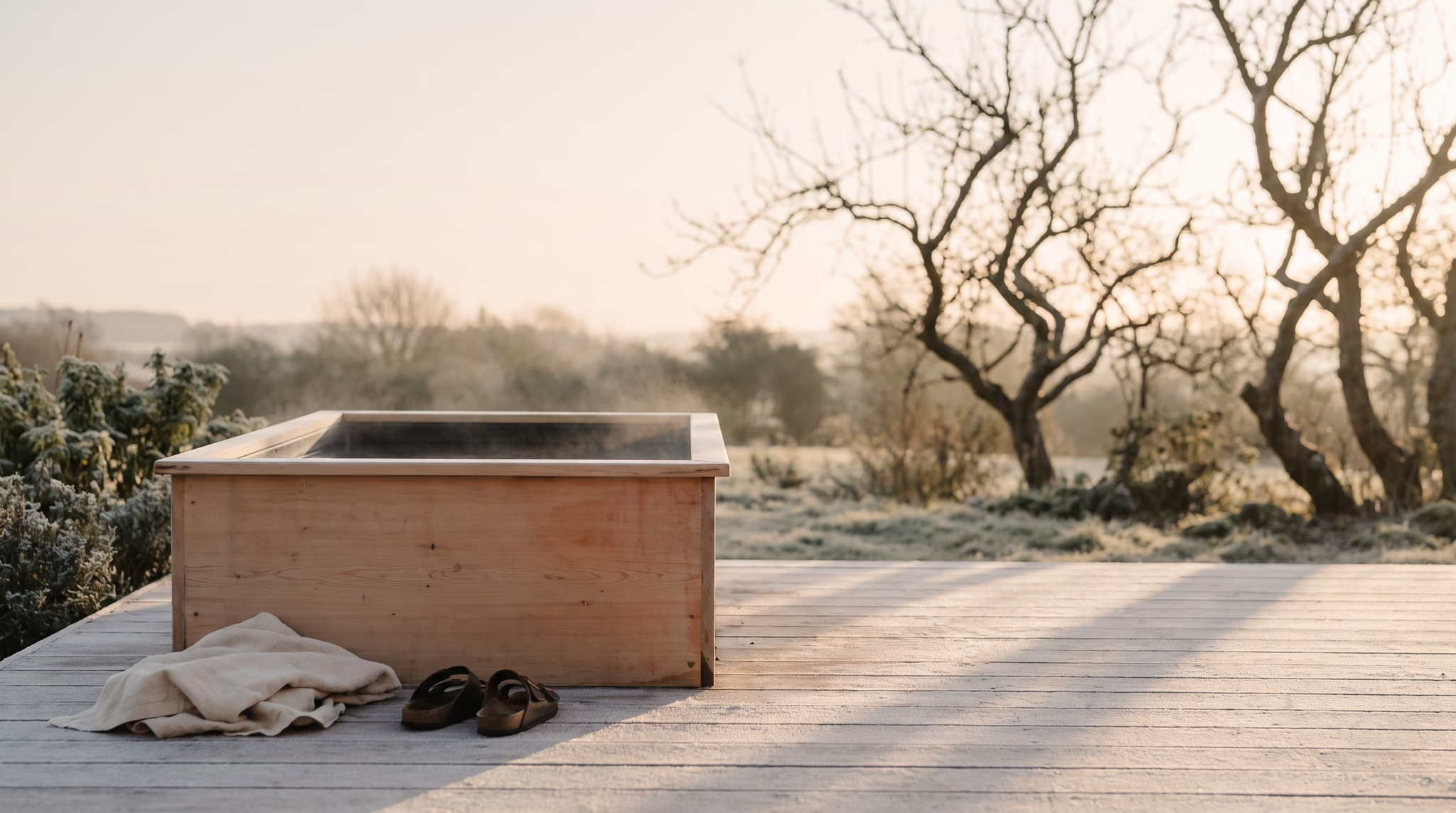
Physiologists agree that cold water triggers a strong cold shock and noradrenaline response and that immersion modestly reduces soreness after hard exercise. Beyond that, mood, immunity and fat loss claims rest on small or biased studies, and two meta-analyses, in 2025 and 2026, found the psychological evidence limited. Cold water also carries real cardiac and drowning risks.
The rules
The rules ofCold plunge and cold exposure
- 1Immerse the body up to the neck in water at or below 59 °F (15 °C)15 °C (59 °F); most protocols use 50 to 59 °F (10 to 15 °C)10 to 15 °C (50 to 59 °F).
- 2Stay in for a set time, usually 1 to 5 minutes for general use or up to 15 minutes for recovery after exercise.
- 3Keep your head above water and enter slowly rather than jumping in.
- 4Repeat on a schedule, commonly 2 to 4 sessions a week totaling about 11 minutes.
- 5Keep cold immersion away from strength training sessions if muscle growth is a goal.
Share these rules as an image or a link.
| Ice bath or tub plunge | A tub or barrel at a controlled 50 to 59 °F (10 to 15 °C)10 to 15 °C (50 to 59 °F) for 1 to 5 minutes. |
|---|---|
| Winter or open water swimming | Dips in natural water, often below 41 °F (5 °C)5 °C (41 °F) in winter, usually 1 to 2 minutes per dip and often alternated with sauna. |
| Cold shower | End a warm shower with 30 to 90 seconds of the coldest water available, daily. |
| Post-exercise recovery immersion | Sit in water at 52 to 59 °F (11 to 15 °C)11 to 15 °C (52 to 59 °F) for 10 to 15 minutes after hard competition or endurance sessions. |
| Contrast therapy | Alternate sauna and cold water, often ending on cold, as practiced by Scandinavian winter swimmers. |
| Wim Hof method | Cold showers or ice water combined with a cyclic hyperventilation breathing practice and meditation. |
What it aims to do
- Feel more alert and lift mood through a surge of noradrenaline and dopamine.
- Reduce muscle soreness and speed recovery between hard sessions or games.
- Activate brown fat and raise energy use.
- Build tolerance to stress and to cold itself.
- Lower inflammation and support immunity.
What it claims, and what the evidence shows
Grades reflect evidence in people. Animal and cell results alone never earn more than limited.
Athletic performance
Moderate evidenceMuscle and strength
Evidence againstMood and stress
Limited evidenceBlood sugar and insulin
Limited evidenceBody fat and weight
Not enough evidenceInflammation
Mixed evidenceSleep
Limited evidenceImproves sleep
The 2025 meta-analysis found improvements in sleep quality in some studies, but few trials measured sleep and none used objective measures as a main outcome. [7]
Key takeaways
- 1
Most studies use 50 to 59 °F (10 to 15 °C)10 to 15 °C (50 to 59 °F); colder is not needed for the measured effects.
- 2
"11 minutes a week" describes what seven Danish winter swimmers did, not a tested dose.
- 3
The 250% dopamine rise came from a full hour at 14°C, not a 2 minute plunge.
- 4
Meta-analyses find modest soreness relief but weak evidence for mood and immunity.
- 5
Cold water right after lifting reduces muscle growth; space them apart.
- 6
Cold shock is dangerous for some hearts: enter slowly, head out, never alone.
What does a cold plunge do to your body?
A cold plunge triggers the cold shock response: a gasp, fast breathing and a sharp rise in heart rate, followed by a large release of noradrenaline. Over longer exposures, metabolic rate climbs to make heat.
The first minute is a reflex. Skin cold receptors fire, you gasp, breathing speeds up and heart rate and blood pressure jump [17]. That response settles as the receptors adapt, usually within about a minute.
What follows is a stress hormone response. In a classic laboratory study, young men sat up to the neck in water for one hour. At 57 °F (14 °C)14 °C (57 °F), plasma noradrenaline rose by 530%, dopamine by 250% and metabolic rate by 350%, while cortisol did not rise [18]. At 90 °F (32 °C)32 °C (90 °F), the same immersion lowered heart rate and blood pressure, which shows that water pressure and cold act separately.
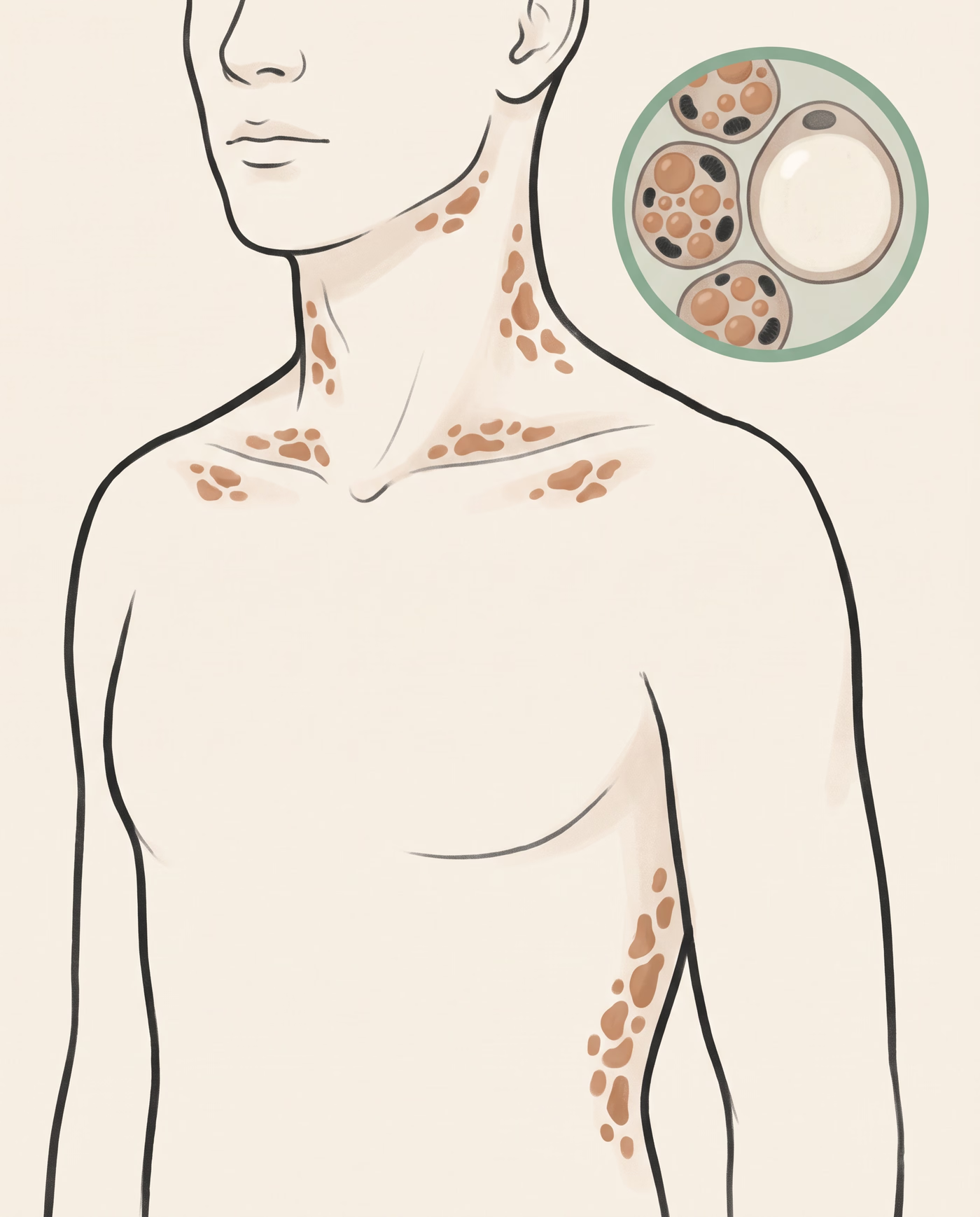
Most claims about cold plunging trace back to this hormone surge and to brown fat, the heat-producing fat that adults keep above the collarbones and along the spine [14].
What temperature should a cold plunge be?
Most studies use water between 50 and 59 °F (10 and 15 °C)10 and 15 °C (50 and 59 °F). The 2025 meta-analysis counted anything at or below 15°C, and the soreness research found the best results at 11 to 15°C.
There is no single correct temperature, but the research clusters in a narrow band:
- 50 to 59 °F (10 to 15 °C)10 to 15 °C (50 to 59 °F) is the range most trials use. A meta-analysis of soreness trials found the best results at 11 to 15°C for 11 to 15 minutes [1].
- About 59 °F (15 °C)15 °C (59 °F) or colder is how reviews define cold water: below 15°C in the Cochrane review and 15°C or below in the 2025 meta-analysis [3] [7]. The trials in that meta-analysis ran from 7 to 15°C.
- Below 41 °F (5 °C)5 °C (41 °F) is winter swimming territory. It is not needed for the effects that have been measured, and it makes the cold shock stronger.
Colder water lets you get the same stimulus in less time. Huberman's public protocol says to pick water that is uncomfortably cold but safe to stay in for a few minutes, which for some people is about 60 °F (15 °C)15 °C (60 °F) and for others about 45 °F (7 °C)7 °C (45 °F) (Huberman Lab).
Cold plunge water temperatures used in studies
- Ice water and winter swimming (32 to 41°F)
- 320 to 415
- Very cold (41 to 50°F)
- 415 to 5010
- Typical plunge range (50 to 59°F)
- 5010 to 5915
- Cool, not a plunge (59 to 77°F)
- 5915 to 7725
- 45 °F7 °C: Coldest water in the 2025 meta-analysis
- 50 °F10 °C: 15 minutes after lifting blunted fiber growth
- 52 °F11 °C: Best soreness relief from 11 to 15°C
- 57 °F14 °C: 1 hour raised noradrenaline 530%
- 59 °F15 °C: Upper limit counted as cold water
How long should you cold plunge, and where does "11 minutes a week" come from?
The 11 minutes figure is how much cold water seven Danish winter swimmers reported in a 2021 study by Susanna Søberg. It describes their habit, not a dose that was tested against other doses.
The study compared 7 young men who winter swim with 8 matched controls. The swimmers went 2 to 3 times a week, did about 2 to 3 dips per visit and stayed in for about 1.4 minutes per dip. That added up to about 11 minutes of cold water and 57 minutes of sauna a week [12]. In the cold, they raised their energy expenditure more than the controls did, but their brown fat glucose uptake rose to a similar degree.
Huberman turned that observation into a public guideline of 11 minutes a week split into 2 to 4 sessions of 1 to 5 minutes (Huberman Lab). That is a reasonable starting point, but no trial has compared 11 minutes a week with 5 or 30.
For muscle soreness, longer immersions of 10 to 15 minutes are what trials used [1]. For mood, a single 5 minute immersion was enough to lift self-reported positive feelings in a brain imaging study [9].
| Goal | Temperature | Time per session | Source |
|---|---|---|---|
| Habit seen in winter swimmers | Danish winter water | About 1.4 minutes per dip, 11 minutes a week | [12] |
| Soreness after hard exercise | 52 to 59 °F (11 to 15 °C)11 to 15 °C (52 to 59 °F) | 11 to 15 minutes | [1] |
| Mood in a lab study | Cold water, head out | 5 minutes | [9] |
| Cold shower habit | Hot then cold shower | 30 to 90 seconds daily | [16] |
Does a cold plunge boost dopamine and mood?
A full hour at 14°C raised dopamine by 250%, but that is far longer than a typical plunge. Two meta-analyses found the mood evidence weak: stress fell only at 12 hours in one, and the other concluded a benefit is not established.
The often repeated dopamine figure comes from one study of an hour of immersion at 57 °F (14 °C)14 °C (57 °F) [18]. Nobody has shown the same rise from 2 minutes in a tub, so the number should not be attached to a short plunge.
The mood research is larger but weaker than social media suggests:
- A 2025 meta-analysis of 11 randomized studies found lower stress 12 hours after immersion, but no effect at other time points and no effect on mood. It also found better sleep quality and quality of life in some studies [7].
- A 2026 meta-analysis of 13 studies (4,105 adults) found estimates that leaned toward benefit for depressive symptoms and stress, but most studies had high risk of bias and the effects shrank in controlled studies. The authors concluded the evidence does not establish that cold water improves mood [8].
- A brain imaging study found that people felt more alert and less distressed after 5 minutes in cold water [9], and a case report described a woman whose depression eased with weekly open water swimming [10].
People do report feeling good after a plunge, and that feeling is real. Whether it changes mood over weeks, or treats depression, is not yet shown.
What one hour in 14°C water did to hormones and metabolism
- Noradrenaline (norepinephrine)530 % increase
- Metabolic rate350 % increase
- Dopamine250 % increase
Show the data
| Item | Value (% increase) | Low | High | Note |
|---|---|---|---|---|
| Noradrenaline (norepinephrine) | 530 | |||
| Metabolic rate | 350 | |||
| Dopamine | 250 |
Does cold exposure burn fat and help with weight loss?
Cold activates brown fat and raises energy use, and 10 days of mild cold improved insulin sensitivity by about 43% in eight people with type 2 diabetes. No trial shows that cold plunging causes meaningful weight loss.
Adults have brown fat, and mild cold switches it on in most young men, though less in people with obesity [14]. In a small study, 10 days of mild cold acclimation at 57 to 59 °F (14 to 15 °C)14 to 15 °C (57 to 59 °F) improved insulin sensitivity by about 43% in eight people with type 2 diabetes, mostly through muscle rather than brown fat [11]. That was hours of mild cold a day, not brief plunges.
Winter swimmers in the Søberg study burned more energy during cooling than controls [12], and a review of 104 studies suggested cold water may change body fat and improve insulin sensitivity [13]. Those are small, often uncontrolled studies in people who already exercise a lot.
One caution comes from animals: in mice prone to atherosclerosis, constant cold raised small LDL particles and made plaques grow [19]. Mice are not people, and constant cold is not a brief plunge, but it is a reminder that "more brown fat" is not automatically good for the heart.
Should you cold plunge after lifting weights?
Not if muscle growth is the goal. Ten to fifteen minutes of cold water after strength sessions reduced muscle growth in two training trials, and a 2024 meta-analysis of 8 studies came to the same conclusion.
This is the most consistent finding in cold water research:
- Men who sat in cold water for 10 minutes after each session for 12 weeks gained less muscle and strength than men who did active recovery [4].
- Fifteen minutes at 50 °F (10 °C)10 °C (50 °F) after each session for 7 weeks blunted growth of type II muscle fibers, though leg press strength rose similarly [5].
- A 2024 meta-analysis of 8 studies found more muscle growth with training alone than with training plus cold immersion [6].
Cold water does help some kinds of recovery. After hard exercise it reduced soreness and helped muscular power recover by 24 hours, though it did not help strength recover [2] [3]. That makes it useful between games in a tournament and a poor choice after a session meant to build muscle.
Huberman suggests waiting 6 to 8 hours or more after training, or plunging before training (Huberman Lab). The exact safe gap has not been tested.
When to plunge if you also lift weights
What is the plunge for?
- Building muscle with strength trainingSkip cold water right after lifting. Plunge on rest days or before training instead.
- Recovering between games or hard sessions10 to 15 minutes at 52 to 59 °F (11 to 15 °C)11 to 15 °C (52 to 59 °F) eases soreness and helps power recover by 24 hours.
- Mood or habitShort dips of 1 to 5 minutes, away from lifting. The mood evidence is weak.
The safe gap after lifting has not been tested; Huberman suggests waiting 6 to 8 hours or more.
Can a cold plunge be dangerous or cause a heart attack?
Yes, for some people. Cold shock raises heart rate and blood pressure within seconds, and combining sudden immersion with breath holding can trigger dangerous heart rhythms. People with heart disease should ask a clinician before trying it.
Cold water kills mainly through cold shock, not hypothermia. Hypothermia takes at least 30 minutes to become fatal; cold shock can incapacitate within the first minute, as Mike Tipton explains in an article for The Conversation (PBS NewsHour).
Putting your face under while holding your breath adds a second reflex, the diving response, which slows the heart. When both fire at once, the conflict between them can cause arrhythmias, which may explain some sudden deaths blamed on drowning [20]. Tipton's review lists cold water as a precursor to drowning, cardiac arrest and hypothermia [17].
The good news is that the response adapts. A meta-analysis found that after about four immersions the heart rate jump fell by about 14 beats per minute and the breathing jump by about 8 breaths per minute [21].
Practical rules that follow: enter slowly, keep your head above water, never plunge alone or after alcohol, and stop if you feel chest pain, dizziness or numbness that does not pass.
The first three minutes in cold water
- One plunge
- EntryYou gaspSkin cold receptors fire in water at 50 to 59 °F (10 to 15 °C)10 to 15 °C (50 to 59 °F).
- First secondsHeart rate and blood pressure jumpBreathing speeds up. A breath hold with the face under adds the diving reflex, which can trigger arrhythmias.
- First minutePeak dangerCold shock can incapacitate within the first minute. This, not hypothermia, kills most people in cold water.
- About 1 minBreathing settlesThe response fades as the skin receptors adapt.
- With practice
- About 4 dipsThe response shrinksHeart rate jump about 14 beats per minute smaller, breathing jump about 8 breaths per minute smaller.
Enter slowly, keep your head above water, and never plunge alone or after alcohol. People with heart disease should ask a clinician first.
Cold plunge vs cold shower vs sauna: which should you choose?
A cold shower is the cheapest entry point: 30 to 90 seconds a day cut sickness absence by 29% in a trial of 3,018 adults. A plunge gives a stronger, more controlled stimulus. Sauna has the better long-term evidence for heart health.
Cold showers have the largest randomized trial in this field. Adults who ended their shower with 30, 60 or 90 seconds of cold for 30 days took 29% fewer sick days off work, although they did not report fewer days feeling ill [16]. Longer cold showers did not do better than 30 seconds.
A plunge immerses more skin at a known temperature, so it produces a stronger and more repeatable cold shock. That matters for recovery protocols, which used immersion, not showers [2].
The Wim Hof method combines cold with breathing and meditation. In a trial, 10 days of that training reduced the inflammatory response to an injected bacterial toxin [15]. Because it bundled three practices, the trial cannot say how much the cold itself contributed.
If your aim is heart health and longevity, the sauna guide covers stronger long-term evidence. Many people pair the two, as the Danish winter swimmers did [12]. Track recovery markers such as hs-CRP and fasting insulin if you want to see whether either changes anything for you.
The studies, by type
Strongest designs first. Scroll each row; every card links to the paper and says whether it supports the protocol.
Systematic reviews and meta-analyses (7)
Randomized controlled trials (4)
Large observational studies in people (1)
Mechanistic studies in people (4)
Animal and cell studies (1)
Case reports and N-of-1 experiments (1)
Hypotheses and expert reviews (3)
Who follows it, who backs it, who doubts it
Public positions summarized in our words. Follow each link for the full context.
Follow it
Wim HofFounder of the Wim Hof Method
His method pairs cold showers and ice water with breathing and meditation, and its site credits cold with better metabolism, sleep, focus and immunity; the claims go further than the controlled evidence.
Support it
Andrew HubermanNeuroscientist at Stanford and host of the Huberman Lab podcast
Recommends about 11 minutes of uncomfortably cold water a week in 2 to 4 short sessions for alertness and mood, and advises keeping immersion several hours away from strength training.
Huberman Lab: The Science and Use of Cold Exposure for Health and Performance
Susanna SøbergMetabolism scientist, lead author of the 2021 winter swimming study and author of Winter Swimming
Advocates short cold dips alternated with sauna and ending on cold, which she calls the Søberg principle, and cautions against very long exposures of 20 to 30 minutes.
Mixed or cautious
Mike TiptonProfessor of human and applied physiology, University of Portsmouth
Coined the term cold shock and explains that the first minute, not hypothermia, is what kills most people in cold water; he notes that six 3 minute head-out dips can halve the response. His 2017 review found some claimed benefits rest only on anecdote.
Peter AttiaPhysician and author of Outlive
In a hot and cold therapy episode he called the evidence for cold improving mental health lackluster and noted that commonly cited benefits came almost entirely from heat studies.
Public examples
- Huberman cold exposure protocol
About 11 minutes a week of uncomfortably cold water, split into 2 to 4 sessions of 1 to 5 minutes, kept away from strength training.
- Wim Hof Method
Cold showers and ice baths combined with breathing exercises and meditation, sold as courses including a 20 day cold shower challenge.
- Søberg Institute contrast courses
Courses built on alternating cold and heat and ending on cold, based on Søberg's 2021 winter swimming study.
How to follow it
- Check with a clinician first if you have heart disease, high blood pressure, Raynaud's or a heart rhythm problem.
- Start with a cold shower finish of 30 seconds for a week or two before trying a tub.
- Set the water to 50 to 59 °F (10 to 15 °C)10 to 15 °C (50 to 59 °F) and measure it with a thermometer.
- Enter slowly, keep your head out and breathe out slowly through the first minute of gasping.
- Stay in for 1 to 3 minutes at first, and build toward a weekly total of about 11 minutes across 2 to 4 sessions.
- Get out, dry off and rewarm with movement or clothing rather than a hot shower if you want the afterdrop.
- If you lift for muscle growth, plunge on rest days, before training, or many hours after training.
How to know you are following it
Log each session with water temperature (°C or °F), minutes immersed and time since your last strength session. Adherence is the number of sessions and total cold minutes per week compared with your target, such as 11 minutes across 3 sessions.
Common mistakes
- Plunging right after strength training when the goal is muscle growth.
- Going colder than needed; 10 to 15°C is enough for the measured effects.
- Jumping in head first or holding your breath under water.
- Plunging alone, after alcohol, or in open water without a safe exit.
- Treating a 2 minute plunge as if it delivers the dopamine rise measured after an hour in 14°C water.
- Pushing through shivering, numbness or chest pain.
Who should be careful
Check with a clinician first if you
- You have coronary heart disease, heart failure, a heart rhythm disorder or uncontrolled high blood pressure, unless a clinician approves it.
- You have Raynaud's phenomenon, cold urticaria or cold agglutinin disease.
- You are pregnant, unless your clinician agrees.
- You have been drinking alcohol.
- You would be alone in or near open water.
Possible side effects
- Cold shock: gasping, hyperventilation and a sharp rise in heart rate and blood pressure in the first minute.
- Heart rhythm disturbances, especially with face immersion and breath holding.
- Numbness, skin pain and, with long exposures, hypothermia or nonfreezing cold injury.
- Afterdrop: core temperature keeps falling for a while after you get out.
- Reduced muscle growth if used right after strength training.
Watch
Talks and explainers worth your time. Nothing loads from YouTube until you press play.
Using Deliberate Cold Exposure for Health and Performance | Huberman Lab
Andrew HubermanAndrew Huberman@hubermanlabSubscribers8MStartedApril 2013CountryUnited StatesVideos548Total views533.7MNew videos, last 30 days14New videos, last year133From YouTube, 2026-10-31Open on YouTube
The episode that popularized the 11 minutes a week guideline, with the protocol and its caveats about strength training.
How to Use Cold & Heat Exposure to Improve Your Health | Dr. Susanna Søberg
Andrew HubermanAndrew Huberman@hubermanlabSubscribers8MStartedApril 2013CountryUnited StatesVideos548Total views533.7MNew videos, last 30 days14New videos, last year133From YouTube, 2026-10-31Open on YouTube
The lead author of the winter swimming study explains what her group measured and how she applies it.
Cold Water Immersion Benefits and Risks, Professor Mike Tipton, MBE | Reason & Wellbeing 14
Greg PotterGreg Potter@gregpotterphdSubscribers1.7KStartedMay 2023CountryUnited KingdomVideos40Total views87.1KNew videos, last 30 days0New videos, last year4From YouTube, 2026-10-31Open on YouTube
A long interview with the physiologist who named cold shock, covering both the claimed benefits and the risks.
Immersion in cold water: sudden death and prolonged survival
The Physiological SocietyThe Physiological Society@physoctvSubscribers28.9KStartedMarch 2010CountryNot statedVideos807Total views4.5MNew videos, last 30 days0New videos, last year26From YouTube, 2026-10-31Open on YouTube
A lecture from a scientific society on why cold water kills and how some people survive it.
Why ICE BATHS are FREEZING your GAINS (Science Explained)
Dr. Milo WolfDr. Milo Wolf@drmilowolfSubscribers127KStartedJanuary 2016CountryNot statedVideos709Total views24MNew videos, last 30 days8New videos, last year160From YouTube, 2026-10-31Open on YouTube
A hypertrophy researcher walks through why cold water after lifting may blunt muscle growth.
Biomarkers it can move
- hs-CRPhs-CRP is a blood test that measures C-reactive protein, an inflammation protein made by the liver, at very low levels.
- Fasting insulinFasting insulin is the level of insulin in your blood after at least 8 hours without food.
- HbA1cHbA1c (A1c) is the percentage of hemoglobin in red blood cells that has glucose attached.
Common questions
What temperature is a cold plunge?
Most studies use 50 to 59 °F (10 to 15 °C)10 to 15 °C (50 to 59 °F). Systematic reviews define cold water immersion as about 59 °F (15 °C)15 °C (59 °F) or colder, and winter swimmers often use water below 41 °F (5 °C)5 °C (41 °F), which is not needed for the measured effects.
How long should I stay in a cold plunge?
For general use, 1 to 5 minutes per session and about 11 minutes a week is a common target. For soreness after hard exercise, trials used 10 to 15 minutes at 11 to 15°C. Beginners should start with 1 minute or less.
Is the 11 minutes a week rule proven?
No. It is the average weekly cold time reported by seven young Danish winter swimmers in Søberg's 2021 study. It is a sensible starting point, but no trial has compared it with other weekly totals.
Does a cold plunge raise dopamine?
One study found a 250% rise in plasma dopamine after a full hour of immersion at 57 °F (14 °C)14 °C (57 °F). Nobody has shown the same rise from a 2 to 3 minute plunge.
Should I cold plunge before or after a workout?
If muscle growth is a goal, not straight after strength training: trials found less muscle gain when men sat in cold water after each session. Plunge before training, on rest days or many hours later. After hard competition or endurance sessions, cold water can reduce soreness.
Is a cold shower as good as a cold plunge?
A cold shower is milder and easier to start with. In a trial of 3,018 adults, 30 to 90 seconds of cold at the end of a daily shower cut sickness absence by 29%. Recovery studies used full immersion, so showers may not match those effects.
Can a cold plunge cause a heart attack?
It can trigger heart rhythm problems and sharp rises in blood pressure in vulnerable people, especially with face immersion and breath holding. If you have heart disease or high blood pressure, talk to a clinician first.
Does cold plunging help you lose weight?
Cold activates brown fat and raises energy use for a while, but no trial has shown meaningful weight or fat loss from cold plunging.
Should I cold plunge when sick?
No study supports plunging during an illness, and fever or dehydration makes the cardiovascular strain harder to tolerate. Most practitioners advise waiting until you have recovered.
Sources
- 1.Machado AF, Ferreira PH, Micheletti JK, et al. Can Water Temperature and Immersion Time Influence the Effect of Cold Water Immersion on Muscle Soreness? A Systematic Review and Meta-Analysis. Sports Med, 2016. doi:10.1007/s40279-015-0431-7
- 2.Moore E, Fuller JT, Buckley JD, et al. Impact of Cold-Water Immersion Compared with Passive Recovery Following a Single Bout of Strenuous Exercise on Athletic Performance in Physically Active Participants: A Systematic Review with Meta-analysis and Meta-regression. Sports Med, 2022. doi:10.1007/s40279-022-01644-9
- 3.Bleakley C, McDonough S, Gardner E, et al. Cold-water immersion (cryotherapy) for preventing and treating muscle soreness after exercise. Cochrane Database Syst Rev, 2012. doi:10.1002/14651858.CD008262.pub2
- 4.Roberts LA, Raastad T, Markworth JF, et al. Post-exercise cold water immersion attenuates acute anabolic signalling and long-term adaptations in muscle to strength training. J Physiol, 2015. doi:10.1113/JP270570
- 5.Fyfe JJ, Broatch JR, Trewin AJ, et al. Cold water immersion attenuates anabolic signaling and skeletal muscle fiber hypertrophy, but not strength gain, following whole-body resistance training. J Appl Physiol (1985), 2019. doi:10.1152/japplphysiol.00127.2019
- 6.Piñero A, Burke R, Augustin F, et al. Throwing cold water on muscle growth: A systematic review with meta-analysis of the effects of postexercise cold water immersion on resistance training-induced hypertrophy. Eur J Sport Sci, 2024. doi:10.1002/ejsc.12074
- 7.Cain T, Brinsley J, Bennett H, et al. Effects of cold-water immersion on health and wellbeing: A systematic review and meta-analysis. PLoS One, 2025. doi:10.1371/journal.pone.0317615
- 8.Ngandeu Schepanski S, Batta F, Schröter M, et al. Cold-water exposure and psychological outcomes in adults: a systematic review and meta-analysis. Front Physiol, 2026. doi:10.3389/fphys.2026.1926423
- 9.Yankouskaya A, Williamson R, Stacey C, et al. Short-Term Head-Out Whole-Body Cold-Water Immersion Facilitates Positive Affect and Increases Interaction between Large-Scale Brain Networks. Biology (Basel), 2023. doi:10.3390/biology12020211
- 10.van Tulleken C, Tipton M, Massey H, et al. Open water swimming as a treatment for major depressive disorder. BMJ Case Rep, 2018. doi:10.1136/bcr-2018-225007
- 11.Hanssen MJ, Hoeks J, Brans B, et al. Short-term cold acclimation improves insulin sensitivity in patients with type 2 diabetes mellitus. Nat Med, 2015. doi:10.1038/nm.3891
- 12.Søberg S, Löfgren J, Philipsen FE, et al. Altered brown fat thermoregulation and enhanced cold-induced thermogenesis in young, healthy, winter-swimming men. Cell Rep Med, 2021. doi:10.1016/j.xcrm.2021.100408
- 13.Esperland D, de Weerd L, Mercer JB. Health effects of voluntary exposure to cold water - a continuing subject of debate. Int J Circumpolar Health, 2022. doi:10.1080/22423982.2022.2111789
- 14.van Marken Lichtenbelt WD, Vanhommerig JW, Smulders NM, et al. Cold-activated brown adipose tissue in healthy men. N Engl J Med, 2009. doi:10.1056/NEJMoa0808718
- 15.Kox M, van Eijk LT, Zwaag J, et al. Voluntary activation of the sympathetic nervous system and attenuation of the innate immune response in humans. Proc Natl Acad Sci U S A, 2014. doi:10.1073/pnas.1322174111
- 16.Buijze GA, Sierevelt IN, van der Heijden BC, et al. The Effect of Cold Showering on Health and Work: A Randomized Controlled Trial. PLoS One, 2016. doi:10.1371/journal.pone.0161749
- 17.Tipton MJ, Collier N, Massey H, et al. Cold water immersion: kill or cure?. Exp Physiol, 2017. doi:10.1113/EP086283
- 18.Srámek P, Simecková M, Janský L, et al. Human physiological responses to immersion into water of different temperatures. Eur J Appl Physiol, 2000. doi:10.1007/s004210050065
- 19.Dong M, Yang X, Lim S, et al. Cold exposure promotes atherosclerotic plaque growth and instability via UCP1-dependent lipolysis. Cell Metab, 2013. doi:10.1016/j.cmet.2013.06.003
- 20.Shattock MJ, Tipton MJ. 'Autonomic conflict': a different way to die during cold water immersion?. J Physiol, 2012. doi:10.1113/jphysiol.2012.229864
- 21.Barwood MJ, Eglin C, Hills SP, et al. Habituation of the cold shock response: A systematic review and meta-analysis. J Therm Biol, 2024. doi:10.1016/j.jtherbio.2023.103775
AumniVIDA explains health information for general wellness. Talk to your clinician before changing your diet, training or medication for a health condition.