
Sauna
What is sauna?
Sauna bathing means sitting in dry heat, usually 176 to 212 °F (80 to 100 °C)80 to 100 °C (176 to 212 °F), for 5 to 20 minutes or more. Finnish cohorts link 4 to 7 sessions a week to 63% lower sudden cardiac death, and trials show blood pressure falls 4 to 8 mmHg, but long-term benefits rest on observational data.
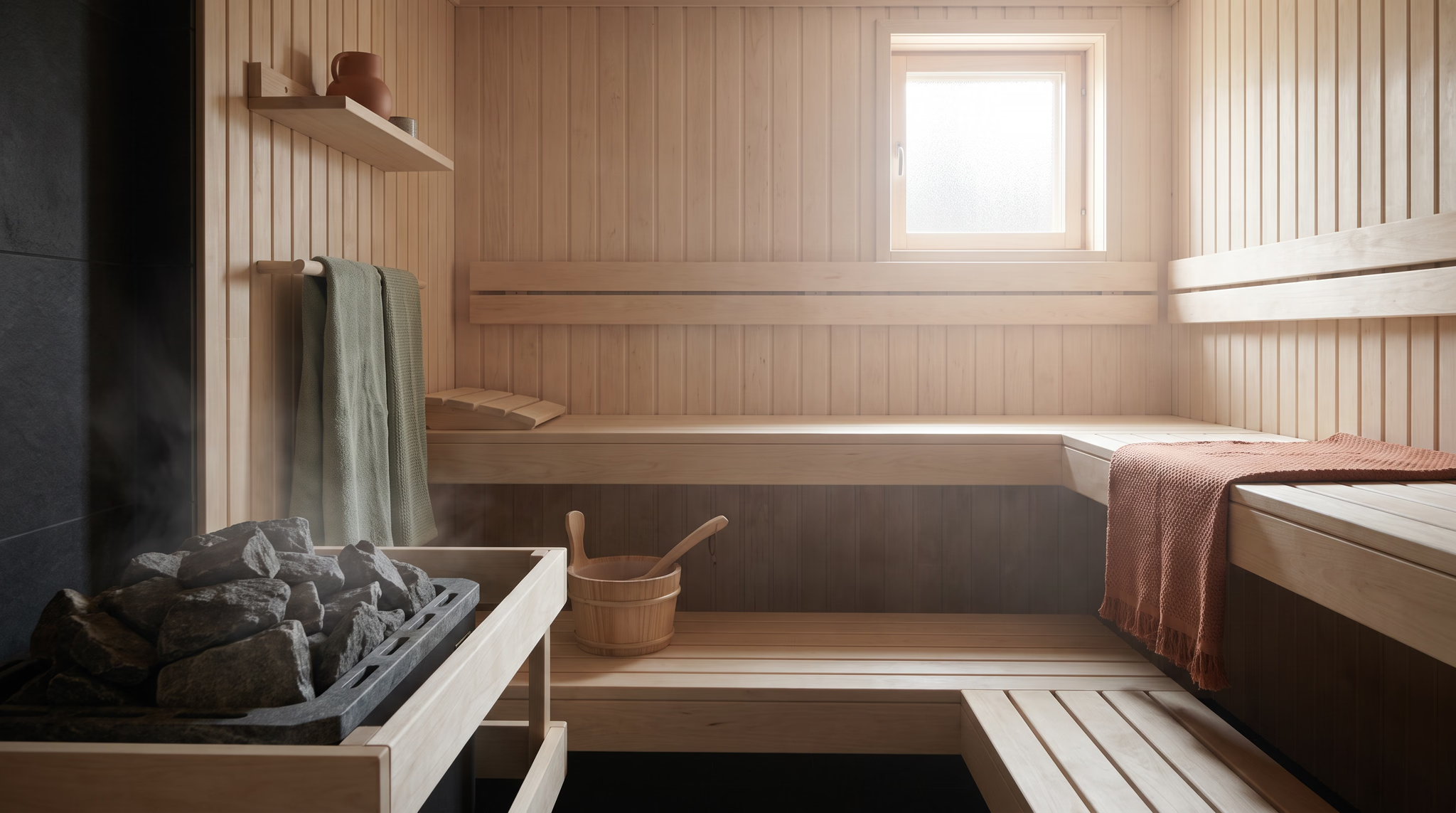
Sauna is safe for most healthy adults and has consistent evidence that it lowers blood pressure and improves blood vessel function in the short term. The striking mortality and dementia figures come from observational cohorts, almost all from one Finnish research group, so cause and effect are not proven. Mainstream cardiology treats it as a reasonable addition to exercise, not a substitute.
The rules
The rules ofSauna
- 1Sit in a heated room at about 176 to 212 °F (80 to 100 °C)80 to 100 °C (176 to 212 °F) for a Finnish sauna, or 113 to 140 °F (45 to 60 °C)45 to 60 °C (113 to 140 °F) for an infrared sauna.
- 2Stay for a planned time, commonly 5 to 20 minutes per round, with 1 to 3 rounds per visit.
- 3Cool down between rounds with air, a shower or cold water.
- 4Repeat on a weekly schedule; the Finnish data compare 1, 2 to 3, and 4 to 7 sessions a week.
- 5Rehydrate during and after, and never use a sauna after alcohol.
Share these rules as an image or a link.
| Finnish dry sauna | About 176 to 212 °F (80 to 100 °C)80 to 100 °C (176 to 212 °F) with low humidity and occasional steam from water on hot stones; the version studied in KIHD. |
|---|---|
| Infrared sauna | Infrared panels heat the body directly at 113 to 140 °F (45 to 60 °C)45 to 60 °C (113 to 140 °F) air temperature, usually for longer sessions. |
| Waon therapy | A Japanese medical protocol: 140 °F (60 °C)60 °C (140 °F) infrared sauna for 15 minutes, then 30 minutes resting under a blanket, daily. |
| Post-exercise sauna | A 15 to 30 minute sauna straight after a workout, as tested in an 8 week randomized trial. |
| Hot tub or hot bath | Immersion in water at about 104 °F (40 °C)40 °C (104 °F), as in Japanese daily bathing or lab heat therapy trials. |
| Contrast therapy | Alternating sauna with cold water immersion, often ending on cold. |
What it aims to do
- Lower blood pressure and improve blood vessel function.
- Reduce the risk of cardiovascular disease and death.
- Add a cardiovascular stimulus that complements exercise.
- Relax, lower stress and improve mood.
- Trigger heat shock proteins and other stress responses linked to healthy aging.
What it claims, and what the evidence shows
Grades reflect evidence in people. Animal and cell results alone never earn more than limited.
Heart and blood vessels
Moderate evidenceLifespan and mortality
Limited evidenceBrain and cognition
Limited evidenceLowers dementia and Alzheimer's risk
One cohort of 2,315 Finnish men linked 4 to 7 weekly sessions with a 66% lower dementia risk; no trials exist. [7]
Cardiorespiratory fitness
Limited evidenceImproves cardiorespiratory fitness
One 8 week randomized trial found sauna after exercise raised fitness by 2.7 mL/kg/min more than exercise alone. [2]
Mood and stress
Limited evidenceInflammation
Limited evidenceBlood sugar and insulin
Not enough evidenceImproves insulin sensitivity through heat shock proteins
Heat therapy protected mice from diet-induced insulin resistance via HSP72; human trials are lacking. [12]
Hormones
Evidence againstSafe for male fertility
Regular sauna at 80 to 90°C reversibly reduced sperm count and motility in a small study. [13]
Key takeaways
- 1
Finnish men using a sauna 4 to 7 times a week had a 63% lower risk of sudden cardiac death than once-weekly users; the data are observational.
- 2
Sessions over 19 minutes were linked to lower risk than sessions under 11 minutes.
- 3
Controlled studies show systolic blood pressure falls of about 4 to 8 mmHg with regular heat.
- 4
Most outcome data come from dry Finnish saunas at about 174 °F (79 °C)79 °C (174 °F) or hotter, not infrared cabins.
- 5
Alcohol is the main factor in sauna deaths; unstable heart disease, pregnancy and male fertility need care.
- 6
Detox and longevity gene claims go beyond the human evidence.
What are the proven benefits of sauna?
The best evidence links regular Finnish sauna to lower blood pressure and lower cardiovascular death. Short trials show blood pressure falls by about 4 to 8 mmHg; long-term benefits for death, dementia and stroke come from observational cohorts, mostly in one Finnish region.
Sauna evidence comes in three layers, and it helps to keep them apart:
- Large observational cohorts in eastern Finland link frequent sauna to lower risk of sudden cardiac death, cardiovascular death, dementia, stroke and high blood pressure [3] [7] [4] [5]. These show association, not cause.
- Short controlled trials show that repeated heat lowers blood pressure and improves blood vessel function [1] [2] [14].
- Mechanistic studies show what a session does: heart rate rises to the level of moderate exercise, blood pressure and arterial stiffness fall, and heat shock proteins rise [15] [11]. The KIHD group's own review proposes that these changes, plus better endothelial function, explain the cohort findings [16].
A 2018 systematic review of 40 clinical studies found mostly positive results, but only 13 were randomized and most had fewer than 40 participants [9]. So the direction is consistent, while the size of the long-term benefit is uncertain.
What happens in the body during a 30 minute sauna
- Core temperature
- Before: Baseline
- After 30 minutes at 163 °F (73 °C)73 °C (163 °F): About 0.8°C higher
- Heart rate
- Before: 65 beats per minute
- After 30 minutes at 163 °F (73 °C)73 °C (163 °F): 81 beats per minute; about 131 in a heat chamber study
- Systolic blood pressure
- Before: 137 mmHg
- After 30 minutes at 163 °F (73 °C)73 °C (163 °F): 130 mmHg
- Arterial stiffness (pulse wave velocity)
- Before: 9.8 m/s
- After 30 minutes at 163 °F (73 °C)73 °C (163 °F): 8.6 m/s
- Heat shock protein HSP72
- Before: Baseline
- After 30 minutes at 163 °F (73 °C)73 °C (163 °F): About 49% higher
- Fluid
- Before: Drink water before
- After 30 minutes at 163 °F (73 °C)73 °C (163 °F): Sweat loss: drink water after
| Before | After 30 minutes at 163 °F (73 °C)73 °C (163 °F) | |
|---|---|---|
| Core temperature | Baseline | About 0.8°C higher |
| Heart rate | 65 beats per minute | 81 beats per minute; about 131 in a heat chamber study |
| Systolic blood pressure | 137 mmHg | 130 mmHg |
| Arterial stiffness (pulse wave velocity) | 9.8 m/s | 8.6 m/s |
| Heat shock protein HSP72 | Baseline | About 49% higher |
| Fluid | Drink water before | Sweat loss: drink water after |
Averages from two studies: one session in 102 adults and a heat chamber study in 25 young adults. Individual responses vary.
What did the Finnish KIHD study find about sauna frequency and duration?
In 2,315 Finnish men followed for 20.7 years, 4 to 7 sessions a week was linked to a 63% lower risk of sudden cardiac death than one session, and sessions over 19 minutes to a 52% lower risk than sessions under 11 minutes.
The Kuopio Ischemic Heart Disease Risk Factor Study (KIHD) recruited men aged 42 to 60 in eastern Finland between 1984 and 1989 and asked about their sauna habits [3]. Compared with once-weekly users, after adjusting for cardiovascular risk factors:
| Outcome | 2 to 3 sessions a week | 4 to 7 sessions a week |
|---|---|---|
| Sudden cardiac death | HR 0.78 (0.57 to 1.07) | HR 0.37 (0.18 to 0.75) |
| Dementia | HR 0.78 (0.57 to 1.06) | HR 0.34 (0.16 to 0.71) |
| Alzheimer's disease | HR 0.80 (0.53 to 1.20) | HR 0.35 (0.14 to 0.90) |
| Incident high blood pressure | HR 0.76 (0.57 to 1.02) | HR 0.54 (0.32 to 0.91) |
Duration mattered too. Compared with sessions under 11 minutes, sessions of 11 to 19 minutes had a hazard ratio for sudden cardiac death of 0.93, and sessions over 19 minutes of 0.48 [3]. A later cohort that was half women found 4 to 7 weekly sessions linked to a 70 to 77% lower risk of cardiovascular death [6].
What the study cannot show. Only 201 men used the sauna 4 to 7 times a week. Men healthy enough to sit in a hot sauna daily may differ in ways the adjustments miss, and almost all results come from one research group and one region.
Sudden cardiac death risk by sauna sessions per week (KIHD)
- 1 session a week (reference)1 hazard ratio
- 2 to 3 sessions a week0.78 hazard ratio
Confidence interval crosses 1
- 4 to 7 sessions a week0.37 hazard ratio
Show the data
| Item | Value (hazard ratio) | Low | High | Note |
|---|---|---|---|---|
| 1 session a week (reference) | 1 | |||
| 2 to 3 sessions a week | 0.78 | 0.57 | 1.07 | Confidence interval crosses 1 |
| 4 to 7 sessions a week | 0.37 | 0.18 | 0.75 |
How hot, how long and how often should you use a sauna?
The Finnish data come from dry saunas of about 174 °F (79 °C)79 °C (174 °F) or hotter, used 2 to 7 times a week for 11 to 20 or more minutes. Trials that lowered blood pressure used 15 to 30 minutes per session.
The protocols with outcome data look like this:
| Protocol | Temperature | Time | Frequency | Source |
|---|---|---|---|---|
| KIHD lowest risk group | Finnish sauna, about 174 °F (79 °C)79 °C (174 °F) | Over 19 minutes | 4 to 7 a week | [3] |
| Sauna after exercise trial | Finnish sauna | 15 minutes | After each workout, 8 weeks | [2] |
| Single session study | 163 °F (73 °C)73 °C (163 °F), 10 to 20% humidity | 30 minutes | Once | [15] |
| Waon therapy for heart failure | 140 °F (60 °C)60 °C (140 °F) infrared | 15 minutes plus 30 minutes rest | Daily for 10 days | [17] |
| Hot water immersion | 105 °F (40.5 °C)40.5 °C (105 °F) bath | Enough to hold core temperature at 101.3 °F (38.5 °C)38.5 °C (101.3 °F) or more for 60 minutes | 4 to 5 a week, 8 weeks | [14] |
The average KIHD sauna temperature of about 79°C comes from Jari Laukkanen's interview on FoundMyFitness (FoundMyFitness). Huberman's public protocol suggests 176 to 212 °F (80 to 100 °C)80 to 100 °C (176 to 212 °F) for 5 to 20 minutes, 2 to 7 times a week, or about 1 hour a week in total (Huberman Lab).
If you are new to sauna, start at the lower bench, 5 to 10 minutes, and build up over weeks. Heat tolerance improves with use.
Does sauna lower blood pressure?
Yes, modestly. A meta-analysis of heat therapy found systolic blood pressure about 4 mmHg lower than control, and an 8 week trial found a 15 minute sauna after exercise lowered systolic pressure 8 mmHg more than exercise alone.
A single 30 minute session at 163 °F (73 °C)73 °C (163 °F) lowered systolic pressure from 137 to 130 mmHg and the effect lasted through 30 minutes of recovery [15]. Repeated use seems to carry over:
- A meta-analysis of controlled studies found heat therapy lowered systolic pressure by about 3.9 mmHg and diastolic by about 3.9 mmHg, and improved flow-mediated dilation [1].
- In a randomized trial of 47 inactive adults with a cardiovascular risk factor, exercise plus a 15 minute sauna for 8 weeks lowered systolic pressure by 8 mmHg more than exercise alone, and raised fitness by 2.7 mL/kg/min more [2].
- Eight weeks of hot baths at 40.5°C lowered mean arterial pressure from 83 to 78 mmHg and reduced arterial stiffness compared with a sham [14].
Not every measure moved. The same research group found that adding sauna to exercise did not improve heart rate variability [18]. In advanced heart failure, 10 days of infrared sauna improved walking distance, but the main blood marker endpoint did not differ from control [17].
If you track blood pressure, LDL cholesterol and hs-CRP, sauna is one of the few lifestyle habits with data on all three [2] [10].
Blood pressure changes from heat in controlled studies
- Heat therapy vs control, meta-analysis of 10 studies3.9 mmHg lower systolic
- Exercise plus 15 minute sauna vs exercise alone, 8 weeks8 mmHg lower systolic
Lee 2022
Show the data
| Item | Value (mmHg lower systolic) | Low | High | Note |
|---|---|---|---|---|
| Heat therapy vs control, meta-analysis of 10 studies | 3.9 | 0.7 | 7.2 | |
| Exercise plus 15 minute sauna vs exercise alone, 8 weeks | 8 | 1.4 | 14.6 | Lee 2022 |
What are heat shock proteins, and does sauna raise them?
Heat shock proteins are chaperones that help other proteins keep their shape under stress. Thirty minutes at 73°C raised blood levels of HSP72 by about 49%, but no human study links that rise to longer life.
When cells heat up, they make more heat shock proteins. In a randomized crossover study, 30 minutes in a 163 °F (73 °C)73 °C (163 °F) chamber raised core temperature by 0.8°C, norepinephrine by 58% and HSP72 by about 49% [11].
Why that might matter comes mostly from animals. In mice, raising HSP72 by heat therapy, genes or a drug protected against insulin resistance on a high-fat diet [12]. Advocates also connect heat shock proteins to long life; the FoundMyFitness sauna page cites HSP70 gene variants linked to longevity in a Danish cohort (FoundMyFitness).
The chain from "sauna raises HSP72" to "sauna slows aging" has not been tested in people. Treat it as a plausible mechanism, not an established benefit.
Is sauna good for the brain and mood?
Possibly. KIHD men using a sauna 4 to 7 times a week had a 66% lower dementia risk than once-weekly users, and one session of whole-body hyperthermia eased depression in a small sham-controlled trial. Neither finding has been widely replicated.
The dementia finding comes from the same Finnish cohort: 4 to 7 sessions a week was linked to a hazard ratio of 0.34 for dementia and 0.35 for Alzheimer's disease, compared with one session [7]. Because people in early cognitive decline may stop using the sauna, some of that link could run backwards.
For mood, a double-blind trial gave 30 adults with major depression either one session of whole-body hyperthermia or a sham. Depression scores fell about 6 points more with heat at one week, and about 4 points more at six weeks [8]. Whole-body hyperthermia uses a medical device rather than a sauna, and the trial was small.
Who should not use a sauna, and what are the risks?
Sauna is safe for most healthy adults. The main dangers are alcohol, dehydration, unstable heart disease and medicines that cause low blood pressure. Pregnant people and men trying to conceive should talk to a clinician first.
- Alcohol. Deaths in Finnish saunas are rare, under 2 per 100,000 people a year, but half of those who died were under the influence of alcohol [19].
- Heart disease. A review found sauna well tolerated by people with treated, stable high blood pressure, coronary disease and heart failure. Blood pressure medicines can cause dizziness on standing after a session [20]. Unstable angina, a recent heart attack or severe aortic stenosis are reasons to ask a cardiologist first. Laukkanen warns that moving from heat straight into cold water can trigger coronary spasm in unstable heart disease (FoundMyFitness).
- Pregnancy. A core temperature of 102.2 °F (39.0 °C)39.0 °C (102.2 °F) is the threshold linked to birth defects. In a systematic review, no pregnant woman reached it, and dry sauna at 158 °F (70 °C)70 °C (158 °F) for up to 20 minutes kept core temperature below it [21]. Some public protocols still advise pregnant people to avoid saunas altogether (Huberman Lab); this is a decision for you and your clinician.
- Male fertility. Two 15 minute sessions a week at 80 to 90°C for 3 months sharply reduced sperm count and motility in 10 men; it fully recovered 6 months after stopping [13].
- Dehydration and heat illness. You can lose a lot of fluid in a session. Drink water before and after, and get out if you feel dizzy, nauseous or confused.
Who should check before using a sauna
Do not
Half of the people who died in Finnish saunas had been drinking.
- Use a sauna after drinking alcohol
- Stay in if you feel dizzy, nauseous or confused
Ask a clinician first
Treated, stable heart disease is usually well tolerated.
- Unstable angina or a recent heart attack
- Severe aortic stenosis
- Blood pressure medicines that cause dizziness on standing
- Pregnancy: 158 °F (70 °C)70 °C (158 °F) for up to 20 minutes kept core temperature under 102.2 °F (39.0 °C)39.0 °C (102.2 °F)
Know the trade-off
Effects that are temporary but real.
- Trying to conceive: sperm count fell after 3 months of twice-weekly sessions and recovered by 6 months
- Fever, an acute illness or dehydration: wait until it passes
Sauna is safe for most healthy adults. If you have a heart condition or are pregnant, decide with your clinician.
Infrared sauna vs Finnish sauna vs steam room vs hot tub: which is best?
Most outcome data come from Finnish dry saunas at about 176 °F (80 °C)80 °C (176 °F). Infrared saunas run cooler, at about 45 to 60°C, and have small trials in heart failure. Daily hot tub bathing has its own cohort data from Japan.
- Finnish sauna (dry heat, 80 to 100°C or 176 to 212°F, with occasional steam from water on the stones) is the version behind the KIHD findings [3].
- Infrared sauna heats the body directly at lower air temperatures. Japanese Waon therapy uses 140 °F (60 °C)60 °C (140 °F) for 15 minutes; it improved symptoms and endothelial function in heart failure in small studies [22] [17]. No long-term mortality data exist for home infrared cabins.
- Hot water immersion at 105 °F (40.5 °C)40.5 °C (105 °F) improved vascular function in a controlled trial [14], and Japanese adults who bathed in a hot tub almost daily had a 28% lower risk of cardiovascular disease [23].
- Steam rooms run cooler, at high humidity, and have little outcome data.
Detox claims are the weakest. Neurologist Steven Novella argues that sweat removes negligible amounts of toxins and that the liver and kidneys do that work (Science-Based Medicine). Bryan Johnson's Blueprint reports drops in some urinary toxins after 15 sessions, but that is one person's before-and-after data (Blueprint).
People who also cold plunge can read the cold plunge guide; the Danish winter swimmers who inspired the "11 minutes" figure also logged about 57 minutes of sauna a week.
The studies, by type
Strongest designs first. Scroll each row; every card links to the paper and says whether it supports the protocol.
Systematic reviews and meta-analyses (3)
Randomized controlled trials (4)
Large observational studies in people (8)
Mechanistic studies in people (5)
Animal and cell studies (1)
Hypotheses and expert reviews (2)
Who follows it, who backs it, who doubts it
Public positions summarized in our words. Follow each link for the full context.
Follow it
Rhonda PatrickBiomedical scientist and host of FoundMyFitness
Uses a traditional sauna at about 186 °F (86 °C)86 °C (186 °F) for 20 to 30 minutes roughly four times a week, usually after exercise, and replaces lost electrolytes afterwards.
Bryan JohnsonEntrepreneur, founder of Blueprint
Uses a dry sauna at 175 °F (about 79 °C)about 79 °C (175 °F) for 20 minutes daily with an ice pack on the groin to protect fertility, and reports personal drops in blood pressure and urinary toxins that have not been tested in trials.
Support it
Jari LaukkanenCardiologist and epidemiologist, University of Eastern Finland, lead investigator of the KIHD sauna studies
Reports that more frequent and longer sessions are linked to lower cardiovascular and all-cause mortality, while stressing that the findings are observational and come from middle-aged Finnish men.
Andrew HubermanNeuroscientist at Stanford and host of the Huberman Lab podcast
Recommends 80 to 100°C sauna for 5 to 20 minutes, 2 to 7 times a week, or about an hour a week in total, and warns about dehydration, sperm count and use in pregnancy.
Huberman Lab: Deliberate Heat Exposure Protocols for Health and Performance
Peter AttiaPhysician and author of Outlive
Reviewed the sauna longevity studies and their limits in a hot and cold therapy episode, considered dry sauna worth adding to his longevity toolkit, and noted that most benefits credited to hot and cold therapy came from heat studies.
Oppose or doubt it
Steven NovellaNeurologist at Yale School of Medicine and founder of Science-Based Medicine
Argues that infrared sauna detox claims have no basis, that short-term blood pressure changes may reflect dehydration, and that the evidence for lasting benefit is sparse and inconsistent.
Public examples
- Bryan Johnson's Blueprint sauna protocol
Daily 20 minute dry sauna with groin ice packs and mineral rehydration; suggests 3 to 5 sessions of 15 to 20 minutes at 80 to 90°C for others.
- Huberman heat exposure protocols
Three published protocols for cardiovascular health, general health and growth hormone, from 5 to 30 minute sessions at 80 to 100°C.
- Rhonda Patrick's sauna routine
About four post-exercise sessions a week at about 86°C for 20 to 30 minutes, with a gap before any cold plunge.
How to follow it
- Check with a clinician first if you have heart disease, low blood pressure, take blood pressure medicines, are pregnant or are trying to conceive.
- Drink a glass of water beforehand and skip the sauna after alcohol or when ill.
- Start with 5 to 10 minutes on a lower bench at about 158 to 176 °F (70 to 80 °C)70 to 80 °C (158 to 176 °F).
- Cool off for a few minutes between rounds, and stand up slowly when you leave.
- Build toward 15 to 20 minutes per session, 2 to 4 times a week, adding sessions as tolerance grows.
- Rehydrate afterwards with water and, after long sweaty sessions, some electrolytes.
How to know you are following it
Log each session with sauna type, temperature (°C or °F), minutes in the heat and rounds. Adherence is sessions per week and minutes per session against your target, for example 3 sessions of 15 to 20 minutes at about 80°C.
Common mistakes
- Drinking alcohol before or during a sauna.
- Staying in past dizziness, nausea or a pounding headache.
- Standing up quickly after a session, which can cause fainting.
- Assuming infrared cabins at 45 to 60°C deliver the same effects as the Finnish saunas in the cohort studies.
- Using a sauna as a substitute for exercise rather than an addition.
- Expecting sweat to detoxify the body.
Who should be careful
Check with a clinician first if you
- You have unstable angina, a recent heart attack, severe aortic stenosis or uncontrolled heart failure, unless a cardiologist approves it.
- You have been drinking alcohol.
- You have a fever, an acute illness or are dehydrated.
- You are pregnant, unless your clinician agrees and you keep sessions short and cooler.
- You take medicines that lower blood pressure or affect sweating, unless your clinician agrees.
- You are a man trying to conceive, since sperm counts can fall for months.
Possible side effects
- Dizziness or fainting from low blood pressure, especially on standing.
- Dehydration and, rarely, heat exhaustion or heat stroke.
- Temporary, reversible reduction in sperm count and motility.
- Skin irritation in people with some skin conditions.
- Rarely, sudden cardiac events in people with unstable heart disease, most often with alcohol.
Watch
Talks and explainers worth your time. Nothing loads from YouTube until you press play.
Dr. Jari Laukkanen on Sauna Use for the Prevention of Cardiovascular & Alzheimer's Disease
FoundMyFitnessFoundMyFitness@foundmyfitnessSubscribers736KStartedJune 2013CountryUnited StatesVideos153Total views40MNew videos, last 30 days2New videos, last year18From YouTube, 2026-10-31Open on YouTube
The lead KIHD investigator explains the cohort, the frequency and duration findings, and their limits.
The Science & Health Benefits of Deliberate Heat Exposure
Andrew HubermanAndrew Huberman@hubermanlabSubscribers8MStartedApril 2013CountryUnited StatesVideos548Total views533.7MNew videos, last 30 days14New videos, last year133From YouTube, 2026-10-31Open on YouTube
A long walkthrough of heat physiology, heat shock proteins and published sauna protocols.
Does regular sauna use provide health benefits? | The Peter Attia Drive Podcast
Peter Attia MDPeter Attia MD@peterattiamdSubscribers1MStartedJuly 2015CountryNot statedVideos1.8KTotal views137.4MNew videos, last 30 days7New videos, last year105From YouTube, 2026-10-31Open on YouTube
A physician's short take on how much weight to give the sauna studies.
Sauna Benefits Deep Dive and Optimal Use with Dr. Rhonda Patrick & MedCram
MedCram - Medical Lectures Explained CLEARLYMedCram - Medical Lectures Explained CLEARLY@medcramSubscribers1.8MStartedMarch 2012CountryUnited StatesVideos665Total views184MNew videos, last 30 days0New videos, last year44From YouTube, 2026-10-31Open on YouTube
A physician and a biomedical scientist discuss the research and how Finnish and infrared saunas differ.
How to Use Cold & Heat Exposure to Improve Your Health | Dr. Susanna Søberg
Andrew HubermanAndrew Huberman@hubermanlabSubscribers8MStartedApril 2013CountryUnited StatesVideos548Total views533.7MNew videos, last 30 days14New videos, last year133From YouTube, 2026-10-31Open on YouTube
Covers how sauna and cold water are combined in Scandinavian contrast practice.
Biomarkers it can move
- hs-CRPhs-CRP is a blood test that measures C-reactive protein, an inflammation protein made by the liver, at very low levels.
- LDL cholesterolLDL cholesterol (LDL-C) is the cholesterol carried inside low-density lipoprotein particles, the main particles that deliver cholesterol to tissues and lodge in artery walls.
Common questions
How long should you stay in a sauna to get benefits?
In the Finnish KIHD study, sessions over 19 minutes were linked to the lowest risk of sudden cardiac death. Trials that lowered blood pressure used 15 to 30 minutes. Beginners should start with 5 to 10 minutes.
How often should you use a sauna?
The KIHD data compared 1, 2 to 3 and 4 to 7 sessions a week, and risk was lowest at 4 to 7. Two to three sessions a week is a common, practical target.
What is the best sauna temperature for health benefits?
The Finnish studies used dry saunas averaging about 174 °F (79 °C)79 °C (174 °F). Most protocols use 176 to 212 °F (80 to 100 °C)80 to 100 °C (176 to 212 °F). Infrared saunas run at 113 to 140 °F (45 to 60 °C)45 to 60 °C (113 to 140 °F) and have less outcome data.
Is it safe to use a sauna every day?
For healthy adults who stay hydrated and avoid alcohol, daily use appears well tolerated; 4 to 7 sessions a week was the most frequent group in the Finnish studies. People with heart disease or who are pregnant should ask a clinician first.
Are sauna benefits scientifically proven?
The short-term effects on blood pressure and blood vessel function are shown in trials. The large drops in death and dementia risk come from observational studies, so they show association, not proof of cause.
Does sauna help with weight loss?
Weight lost in a sauna is mostly water and returns when you drink. No trial shows sauna causes fat loss.
Is sauna or cold plunge better?
Sauna has stronger evidence for blood pressure and cardiovascular outcomes. Cold plunging has better evidence for post-exercise soreness. Many people use both, often alternating them.
Does sauna affect fertility?
Yes, in men. Two 15 minute sessions a week at 80 to 90°C for 3 months sharply reduced sperm count and motility in a small study, with full recovery about 6 months after stopping.
Can you use a sauna when pregnant?
A systematic review found that dry sauna at 158 °F (70 °C)70 °C (158 °F) for up to 20 minutes kept core temperature below the 39.0°C threshold linked to birth defects, but some guidance still advises avoiding it. Decide with your clinician.
Should you sauna before or after a workout?
The randomized trial that lowered blood pressure used a 15 minute sauna after exercise. Using it afterwards also avoids starting a workout dehydrated.
Sources
- 1.Pizzey FK, Smith EC, Ruediger SL, et al. The effect of heat therapy on blood pressure and peripheral vascular function: A systematic review and meta-analysis. Exp Physiol, 2021. doi:10.1113/EP089424
- 2.Lee E, Kolunsarka I, Kostensalo J, et al. Effects of regular sauna bathing in conjunction with exercise on cardiovascular function: a multi-arm, randomized controlled trial. Am J Physiol Regul Integr Comp Physiol, 2022. doi:10.1152/ajpregu.00076.2022
- 3.Laukkanen T, Khan H, Zaccardi F, et al. Association between sauna bathing and fatal cardiovascular and all-cause mortality events. JAMA Intern Med, 2015. doi:10.1001/jamainternmed.2014.8187
- 4.Kunutsor SK, Khan H, Zaccardi F, et al. Sauna bathing reduces the risk of stroke in Finnish men and women: A prospective cohort study. Neurology, 2018. doi:10.1212/WNL.0000000000005606
- 5.Zaccardi F, Laukkanen T, Willeit P, et al. Sauna Bathing and Incident Hypertension: A Prospective Cohort Study. Am J Hypertens, 2017. doi:10.1093/ajh/hpx102
- 6.Laukkanen T, Kunutsor SK, Khan H, et al. Sauna bathing is associated with reduced cardiovascular mortality and improves risk prediction in men and women: a prospective cohort study. BMC Med, 2018. doi:10.1186/s12916-018-1198-0
- 7.Laukkanen T, Kunutsor S, Kauhanen J, et al. Sauna bathing is inversely associated with dementia and Alzheimer's disease in middle-aged Finnish men. Age Ageing, 2017. doi:10.1093/ageing/afw212
- 8.Janssen CW, Lowry CA, Mehl MR, et al. Whole-Body Hyperthermia for the Treatment of Major Depressive Disorder: A Randomized Clinical Trial. JAMA Psychiatry, 2016. doi:10.1001/jamapsychiatry.2016.1031
- 9.Hussain J, Cohen M. Clinical Effects of Regular Dry Sauna Bathing: A Systematic Review. Evid Based Complement Alternat Med, 2018. doi:10.1155/2018/1857413
- 10.Laukkanen JA, Laukkanen T. Sauna bathing and systemic inflammation. Eur J Epidemiol, 2018. doi:10.1007/s10654-017-0335-y
- 11.Iguchi M, Littmann AE, Chang SH, et al. Heat stress and cardiovascular, hormonal, and heat shock proteins in humans. J Athl Train, 2012. doi:10.4085/1062-6050-47.2.184
- 12.Chung J, Nguyen AK, Henstridge DC, et al. HSP72 protects against obesity-induced insulin resistance. Proc Natl Acad Sci U S A, 2008. doi:10.1073/pnas.0705799105
- 13.Garolla A, Torino M, Sartini B, et al. Seminal and molecular evidence that sauna exposure affects human spermatogenesis. Hum Reprod, 2013. doi:10.1093/humrep/det020
- 14.Brunt VE, Howard MJ, Francisco MA, et al. Passive heat therapy improves endothelial function, arterial stiffness and blood pressure in sedentary humans. J Physiol, 2016. doi:10.1113/JP272453
- 15.Lee E, Laukkanen T, Kunutsor SK, et al. Sauna exposure leads to improved arterial compliance: Findings from a non-randomised experimental study. Eur J Prev Cardiol, 2018. doi:10.1177/2047487317737629
- 16.Laukkanen JA, Laukkanen T, Kunutsor SK. Cardiovascular and Other Health Benefits of Sauna Bathing: A Review of the Evidence. Mayo Clin Proc, 2018. doi:10.1016/j.mayocp.2018.04.008
- 17.Tei C, Imamura T, Kinugawa K, et al. Waon Therapy for Managing Chronic Heart Failure - Results From a Multicenter Prospective Randomized WAON-CHF Study. Circ J, 2016. doi:10.1253/circj.CJ-16-0051
- 18.Lee E, Ketelhut S, Wiklund P, et al. Regular postexercise sauna bathing does not improve heart rate variability: A multi-arm randomized controlled trial. Physiol Rep, 2025. doi:10.14814/phy2.70449
- 19.Kenttämies A, Karkola K. Death in sauna. J Forensic Sci, 2008. doi:10.1111/j.1556-4029.2008.00703.x
- 20.Kukkonen-Harjula K, Kauppinen K. Health effects and risks of sauna bathing. Int J Circumpolar Health, 2006. doi:10.3402/ijch.v65i3.18102
- 21.Ravanelli N, Casasola W, English T, et al. Heat stress and fetal risk. Environmental limits for exercise and passive heat stress during pregnancy: a systematic review with best evidence synthesis. Br J Sports Med, 2019. doi:10.1136/bjsports-2017-097914
- 22.Kihara T, Biro S, Imamura M, et al. Repeated sauna treatment improves vascular endothelial and cardiac function in patients with chronic heart failure. J Am Coll Cardiol, 2002. doi:10.1016/s0735-1097(01)01824-1
- 23.Ukai T, Iso H, Yamagishi K, et al. Habitual tub bathing and risks of incident coronary heart disease and stroke. Heart, 2020. doi:10.1136/heartjnl-2019-315752
AumniVIDA explains health information for general wellness. Talk to your clinician before changing your diet, training or medication for a health condition.