
Zone 2 cardio
What is zone 2 cardio?
Zone 2 cardio is steady aerobic exercise held just below the first lactate threshold, where blood lactate stays near 2 mmol/L and you can still talk in full sentences. Advocates say it builds mitochondria and fat burning. Trials show it improves fitness and health, but not that it beats other intensities minute for minute.

Mainstream science fully accepts that regular moderate aerobic exercise improves fitness, blood pressure and survival, and elite endurance athletes do most of their training at this intensity. What is debated is the popular claim that zone 2 is a uniquely powerful or optimal intensity for mitochondria, fat oxidation and longevity. A 2025 review argued the evidence does not support that claim for the general public, and an expert panel said zone 2 adaptations may not be unique to zone 2.
The rules
The rules ofZone 2 cardio
- 1Exercise continuously at an intensity just below your first lactate or ventilatory threshold, where blood lactate stays at or under about 2 mmol/L.
- 2Stay at a pace where you can speak in full sentences but conversation feels slightly strained.
- 3Use sustained, rhythmic activity such as cycling, brisk or uphill walking, easy running, rowing, swimming or an elliptical.
- 4Hold the effort in long, unbroken bouts, often about an hour.
- 5Accumulate the volume over the week; popular plans range from the guideline 150 minutes to 180 to 200 minutes or more.
- 6Keep easy sessions easy: if heart rate, breathing or lactate drift up, slow down rather than push through.
Share these rules as an image or a link.
| Lab-defined zone 2 | Intensity set from a lactate or gas-exchange test, just below the first threshold (often near 2 mmol/L lactate). |
|---|---|
| Heart rate zone 2 | A fixed band of maximum heart rate set by a watch or app; simple but imprecise for individuals. |
| Talk test zone 2 | The fastest pace at which you can still talk in full sentences without gasping. |
| Polarized or 80/20 training | About 80% of sessions at low intensity like zone 2 and about 20% with hard intervals, the pattern seen in elite endurance athletes. |
| Walking zone 2 | Brisk, often uphill or loaded walking for people whose fitness puts their first threshold at walking speeds. |
What it aims to do
- Build an aerobic base: more mitochondria, more capillaries and a heart that pumps more blood per beat.
- Improve the muscles' ability to burn fat and clear lactate at a given workload (metabolic flexibility).
- Raise cardiorespiratory fitness, a strong predictor of long-term survival.
- Lower blood pressure and improve blood sugar and blood lipids.
- Add a large volume of training that is easy to recover from, so it can sit alongside strength training and hard intervals.
What it claims, and what the evidence shows
Grades reflect evidence in people. Animal and cell results alone never earn more than limited.
Cardiorespiratory fitness
Moderate evidenceBlood sugar and insulin
Mixed evidenceHeart and blood vessels
Strong evidenceLifespan and mortality
Moderate evidenceBody fat and weight
Mixed evidenceAthletic performance
Moderate evidence
Key takeaways
- 1
Zone 2 is steady exercise just below the first lactate threshold, near 2 mmol/L lactate, where you can talk in full sentences.
- 2
Heart rate zones are rough: the first threshold fell anywhere between 60% and 90% of maximum heart rate in one lab study of 100 adults [1].
- 3
- 4
The claim that zone 2 is the optimal intensity for mitochondria and fat burning is not supported by current trials [4].
- 5
Elite athletes do about 80% of sessions at low intensity and 20% hard; the mix, not zone 2 alone, is what the evidence supports [5].
- 6
If your weekly time is limited, combining zone 2 with some harder intervals gives more fitness per minute [6].
What is zone 2 cardio?
Zone 2 is the highest steady effort you can hold while blood lactate stays near its resting level, at or just below the first lactate or ventilatory threshold. In practice that is a pace where you can still hold a conversation that feels slightly strained.
Exercise physiologists split intensity into domains by what happens in the blood and breath. As effort rises, lactate stays near baseline at first, then starts to climb at the first lactate threshold (also called the aerobic threshold or, measured by breath, the first ventilatory threshold). Higher still, it rises steeply at the second threshold. Popular "zone 2" sits just under the first threshold.
In 2025 a panel of 14 sport scientists and professional coaches agreed on exactly that definition: zone 2 is best done at intensities immediately below the first lactate or ventilatory threshold, as continuous, variable or interval-style sessions [20]. The same panel noted there was no clear consensus before, which is why apps, coaches and podcasts often mean slightly different things by it.
A source of confusion is that zone numbering differs between systems:
| System | What "zone 2" means |
|---|---|
| Five-zone heart rate models (watches, apps) | A band of maximum heart rate set by the device |
| Lactate-based models (San-Millán and others) | Highest steady output with lactate near 2 mmol/L or a little under |
| Seiler's three-zone research model | "Zone 1" is below the first threshold (popular zone 2 lives here); "zone 2" is between thresholds |
So when Stephen Seiler's research reports that athletes do little "zone 2", it means the hard-ish middle zone, not the easy zone that podcasts call zone 2 [18].
The lactate figure most people quote is about 2 mmol/L. In junior cross-country skiers, 71% of sampled sessions stayed at or under 2.0 mmol/L lactate [18], and Seiler's review describes the low-intensity work of elite athletes as about 2 mmol/L [5].
Blood lactate rises in two steps
- Lactate near resting
- Between the thresholds
- Above the second threshold
- Zone 2The highest steady effort with lactate near 2 mmol/L or a little under.
- First lactate thresholdLactate starts to climb; at 61% of VO2max in 33 trained athletes.
- Peak fat burningAt 63% of VO2max in the same athletes, close to the first threshold.
- Second thresholdLactate rises steeply above this point.
Positions are illustrative. Thresholds differ between people: in 100 adults, the first fell between 45% and 74% of VO2max.
What is my zone 2 heart rate, and how accurate is it?
A rough zone 2 heart rate is a band of your maximum heart rate, but the true first threshold varies widely between people. In one study of 100 adults it fell anywhere between 60% and 90% of maximum heart rate, so treat any calculator as a starting guess and check it with the talk test.
Heart rate zones need a maximum heart rate, and the classic 220 minus age formula is a poor fit. A meta-analysis of 351 studies with 18,712 people found that 208 minus 0.7 times age predicts maximum heart rate better, and that 220 minus age underestimates it in older adults [21]. Norway's HUNT study measured 3,320 healthy adults and found 211 minus 0.64 times age, with a standard error of 10.8 beats per minute [22]. That error means roughly a third of people sit more than 10 beats per minute away from any age-based prediction.
| Age | 220 minus age | Tanaka: 208 minus 0.7 x age | HUNT: 211 minus 0.64 x age |
|---|---|---|---|
| 30 | 190 | 187 | 192 |
| 40 | 180 | 180 | 185 |
| 50 | 170 | 173 | 179 |
| 60 | 160 | 166 | 173 |
| 70 | 150 | 159 | 166 |
The second problem is bigger. Even with a measured maximum, the first threshold does not sit at a fixed percentage. In a lab study of 46 women and 54 men, the lactate threshold occurred between 45% and 74% of VO2max and between 60% and 90% of maximum heart rate [1]. A review of intensity methods concluded that fixed percentages of maximum heart rate or VO2max have little merit for placing people in the right domain, while the first lactate, gas exchange and ventilatory thresholds work better [23].
What this means in practice:
- A watch's zone 2 can be too easy for a fit person and too hard for a beginner.
- Fitter people tend to have their first threshold at a higher share of their maximum.
- Heart rate drifts upward over a long session at the same pace, especially in heat.
- Beta blockers and some other drugs change heart rate, so zones do not apply.
The cheapest check is the talk test. In a series of experiments, the last stage at which people could still speak comfortably tracked the ventilatory threshold, even when that threshold was moved by training or blood donation [24]. If you can say a full sentence but would rather not sing, you are close.
Where the first lactate threshold fell, as % of maximum heart rate
- Below the observed range
- 50 to 60
- Range of individual lactate thresholds
- 60 to 90
- Above the observed range
- 90 to 100
- 70 % of maximum heart rate: Long slow distance in a 4x4 trial
Why do people say zone 2 builds mitochondria and burns fat?
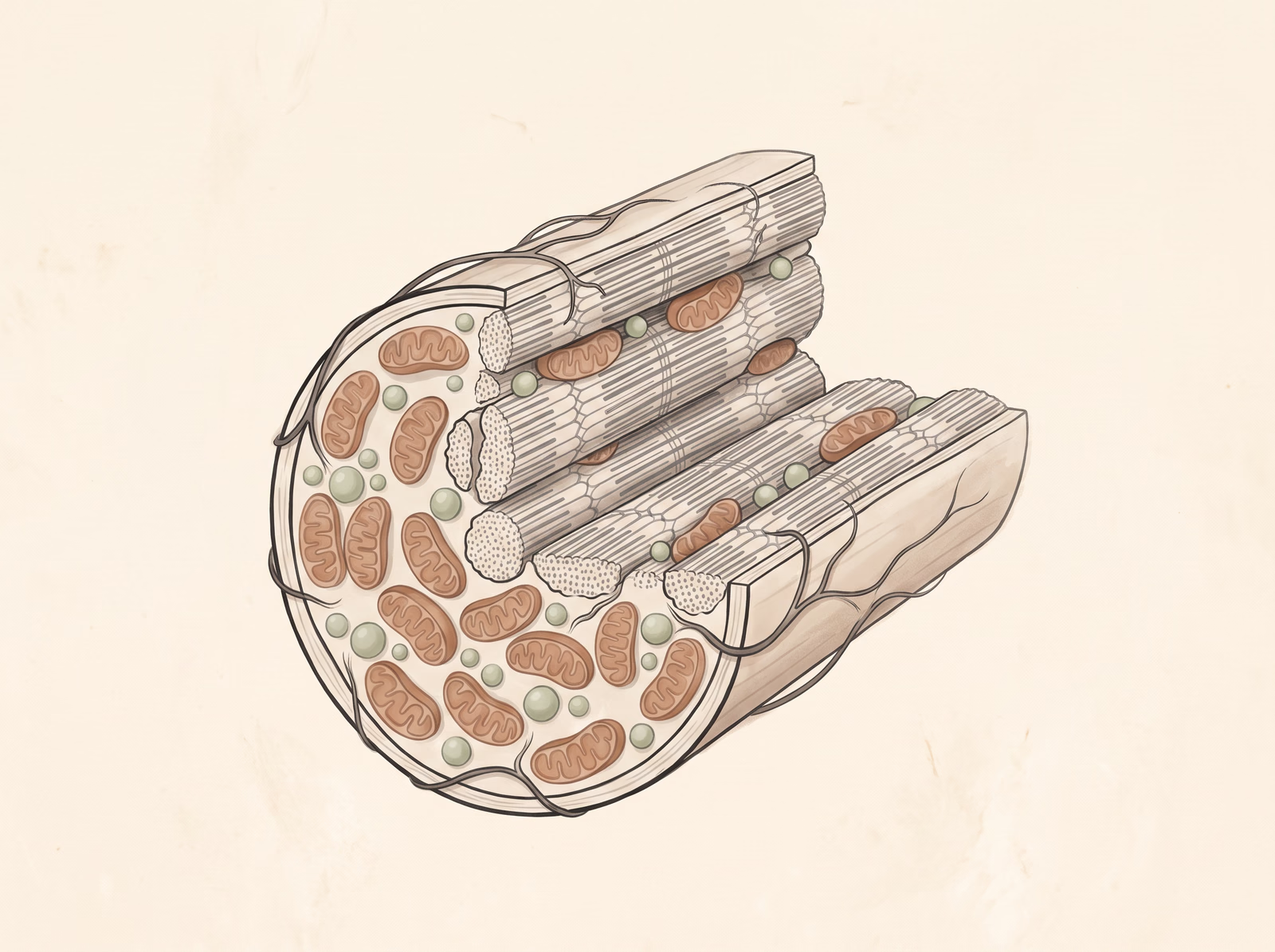
The idea comes from exercise physiologist Iñigo San-Millán and others: at the top of zone 2, muscles burn fat at their highest rate while lactate stays low, and both depend on mitochondria. Fit athletes burn more fat at the same lactate than sedentary people, so training there is said to build that capacity.
Mitochondria are the parts of muscle cells that burn fat and also clear lactate, a fuel made when glucose is broken down. San-Millán and George Brooks tested professional endurance athletes, moderately active people and people with metabolic syndrome. The athletes burned more fat and had lower lactate at the same workloads, and in every group fat burning fell as lactate rose (r = -0.76 across all data) [9]. They proposed that lactate and fat oxidation during exercise give an indirect read of mitochondrial function and "metabolic flexibility".
The intensity of peak fat burning also lines up with the first lactate rise. In 33 trained athletes, maximal fat oxidation happened at 63% of VO2max, close to where lactate first rose above baseline at 61% [17]. That overlap is why zone 2 is often described as the "fat max" zone.
San-Millán argues more broadly that mitochondrial dysfunction runs through type 2 diabetes, heart disease, metabolic syndrome and other common diseases, and that physical inactivity is one of its main drivers [25]. The basic biology is old and solid: in 1967, John Holloszy showed that running training increased mitochondrial oxygen use and respiratory enzymes in rat muscle [12].
What this chain of reasoning does not show is that zone 2 is the best way to get those adaptations. The athlete data are cross-sectional: athletes have high fat oxidation after years of mixed training that includes hard intervals, so the comparison cannot isolate zone 2. The next section covers what training trials found.
What does the research show about zone 2, outcome by outcome?
Moderate continuous exercise reliably improves fitness, blood pressure and markers of metabolic health, and cohorts link it to longer life. Trials comparing intensities find that harder intervals raise VO2max a little more and improve mitochondrial respiration more, so the evidence supports zone 2 as useful but not uniquely superior.
Fitness. A meta-analysis of 28 controlled trials in 723 healthy adults found continuous endurance training raised VO2max by 4.9 mL/kg/min and interval training by 5.5 mL/kg/min versus no exercise, a small extra 1.2 mL/kg/min for intervals [6]. In a well-known Norwegian trial with total work matched, long slow running at 70% of maximum heart rate did not raise VO2max significantly in 8 weeks, while 4 x 4-minute intervals raised it 7.2% [7]. In 48 already-trained athletes, a 9-week high-volume, low-intensity block gave no further gains, while a polarized block raised VO2peak by 11.7% [8].
Mitochondria. A review of training studies concluded that training volume drives mitochondrial content, while relative intensity drives mitochondrial respiratory function [10]. In a 4-week biopsy study, maximal mitochondrial respiration rose 25% only after sprint intervals; continuous cycling below the lactate threshold did not change it [11]. The 2025 review "Much Ado About Zone 2" concluded that current evidence does not support zone 2 as the optimal intensity for mitochondrial or fat oxidation capacity, and that higher intensities matter more at lower training volumes [4].
Blood pressure. Across 93 randomized trials, endurance training lowered blood pressure by 3.5/2.5 mm Hg overall and 8.3/5.2 mm Hg in people with hypertension [2]. Most of these programs were moderate continuous exercise, much of it in or near zone 2.
Fat loss. In 13 trials in adults with overweight or obesity, moderate continuous training and interval training reduced fat mass and waist size equally; intervals took about 40% less time [16]. Burning a higher share of fat during the session does not translate into more fat lost over weeks.
Survival. Pooled cohorts of 661,137 adults linked meeting one to two times the guideline minimum with 31% lower mortality, levelling off at three to five times the minimum [3]. Accelerometer data show light activity counts too [14]. No trial has compared zone 2 with other intensities for mortality.
For related lab markers, see triglycerides, HbA1c, fasting insulin and hs-CRP.
How elite junior skiers split their training
- Below first threshold (popular zone 2 and easier)75 % of endurance sessions (heart rate method)
- Between thresholds (tempo)8 % of endurance sessions (heart rate method)
- Above second threshold (hard intervals)17 % of endurance sessions (heart rate method)
Show the data
| Item | Value (% of endurance sessions (heart rate method)) | Low | High | Note |
|---|---|---|---|---|
| Below first threshold (popular zone 2 and easier) | 75 | |||
| Between thresholds (tempo) | 8 | |||
| Above second threshold (hard intervals) | 17 |
How much zone 2 cardio should you do per week?
WHO recommends 150 to 300 minutes of moderate activity a week, which zone 2 sessions can fill. Popular advice of 180 to 200 minutes sits within that range. There is no trial showing a specific zone 2 dose is needed; mortality benefits in cohorts level off at about three to five times the minimum.
The public health baseline is clear: all adults should do 150 to 300 minutes of moderate or 75 to 150 minutes of vigorous aerobic activity a week, or a mix, plus muscle strengthening [13]. Zone 2 sessions are moderate-intensity minutes, so they count toward that.
Popular advocates go higher. Andrew Huberman recommends 180 to 200 minutes of zone 2 a week, and Peter Attia and Iñigo San-Millán discuss zone 2 dose and frequency at length (see the people and videos below). Elite endurance athletes train far more, 10 to 13 sessions a week, with about 80% at low intensity [5].
What the evidence supports:
- The first 150 minutes give the largest return. Below the minimum, risk was already 20% lower than doing nothing; one to two times the minimum gave 31%; three to five times gave 39%, with no further gain and no harm beyond that [3].
- Volume matters for mitochondrial content, so more easy hours do add something if you have the time [10].
- With limited time, mix intensities. The 2025 review argued that people training only a few hours a week get more from including higher intensities than from zone 2 alone [4].
A practical template for a healthy adult with 3 to 4 hours a week: two or three zone 2 sessions of 45 to 60 minutes, one interval session such as the Norwegian 4x4 or a short sprint session, and two strength sessions.
Is zone 2 better than HIIT?
Neither is better for everything. Minute for minute, intervals raise VO2max slightly more and are more time-efficient, while zone 2 adds volume you can recover from and repeat. Elite athletes and most coaches combine both, roughly 80% easy and 20% hard.
The comparison is often framed as a contest, but the research mostly shows complementary tools. Intervals give a little more VO2max per session [6] and much more per minute. Zone 2 gives volume at low stress, and volume drives mitochondrial content [10].
The strongest training pattern in endurance sport combines them. Elite athletes across sports do about 80% of sessions at low intensity and about 20% with periods of hard work near 90% of VO2max [5]. A small meta-analysis found this polarized pattern improved time-trial performance more than threshold-heavy training [19], though only 3 to 4 low-quality trials were available.
One practical reason to keep zone 2: hard sessions are harder to repeat. People can do many easy hours a week without heavy fatigue, while two or three hard interval sessions is usually the ceiling. For more on the hard end, see Norwegian 4x4 intervals and sprint training.
| Outcome | Zone 2 or moderate continuous | Intervals | Source |
|---|---|---|---|
| VO2max, healthy adults | +4.9 mL/kg/min vs control | +5.5 mL/kg/min vs control | Milanović 2015 |
| VO2max, trained men, 8 weeks | No significant rise at 70% HRmax | +7.2% with 4 x 4 minutes | Helgerud 2007 |
| Mitochondrial respiration, 4 weeks | No significant change below threshold | +25% with sprint intervals | Granata 2016 |
| Fat mass, overweight adults | Similar reduction | Similar reduction, about 40% less time | Wewege 2017 |
| Endurance performance, athletes | No extra gain from volume alone | Best results when combined (polarized) | Stöggl 2014 |
Is zone 2 overrated? What do critics say?
Critics accept that easy aerobic exercise is healthy, but argue that the claims for zone 2 come mostly from observations of elite athletes and that trials do not show it is the best intensity for mitochondria, fat burning or fitness in ordinary people. Supporters reply that it is the volume people can actually sustain.
The debate is about emphasis, not about whether easy exercise works.
The case for. Iñigo San-Millán's lab work links low lactate and high fat oxidation to mitochondrial health [9], and he argues mitochondrial dysfunction underlies many chronic diseases [25]. Elite endurance athletes self-organize toward large volumes of low-intensity training [5]. Physicians such as Peter Attia and podcasters such as Andrew Huberman present zone 2 as a cornerstone of longevity training.
The case against. Kristi Storoschuk, Martin Gibala, Brendon Gurd and colleagues reviewed the evidence in 2025 and concluded the popular message rests largely on observational data from elite athletes, and that it contradicts substantial evidence for higher intensities in improving mitochondrial capacity and cardiometabolic health [4]. Even the expert panel that defined zone 2 said its expected adaptations might not be unique to it and could come from slightly higher or lower intensities [20].
Where they agree. Both sides accept that people who do more aerobic exercise live longer [3], that fitness strongly predicts survival [15], and that hard intervals and easy volume both have a place. The practical disagreement is about people with little time: critics say that group should prioritize some higher-intensity work.
What the evidence does not show
- No trial shows zone 2 extends life more than other intensities.
- No trial shows zone 2 builds mitochondrial function better than intervals in untrained adults.
- No study validates a single universal heart rate band for zone 2.
- Fat burned during a session is not the same as fat lost over time.
What counts as zone 2 exercise? Is walking zone 2?
Any steady activity that keeps you just below the first threshold counts: cycling, uphill or brisk walking, easy jogging, rowing, swimming or an elliptical. Whether ordinary walking is zone 2 depends on fitness; for many unfit or older adults a brisk or uphill walk is, while fit people usually need to jog or cycle.
Because zone 2 is defined by your physiology, the same activity can be zone 2 for one person and too easy for another. The test is the same: steady breathing that is deeper than at rest, a slightly strained conversation, and a pace you could hold for an hour.
Good options:
- Stationary or road cycling. Easy to hold steady and low impact, which is why most lab studies use it.
- Incline treadmill or hill walking. Lets fit people reach zone 2 without running; adding a weighted pack (rucking) does the same.
- Easy running. Many runners must slow down a lot, sometimes to a jog-walk, to stay under the threshold at first.
- Rowing, elliptical, swimming. Useful when joints need a break.
For most fit adults, flat walking at a normal pace is below zone 2. For people starting from low fitness, older adults or those with heart or lung disease, brisk walking can already reach the first threshold. Device-measured studies show even light activity is linked to lower mortality compared with sitting [14], so walking is valuable whether or not it reaches zone 2.
The studies, by type
Strongest designs first. Scroll each row; every card links to the paper and says whether it supports the protocol.
Systematic reviews and meta-analyses (6)
Randomized controlled trials (2)
Large observational studies in people (5)
Mechanistic studies in people (5)
Animal and cell studies (1)
Hypotheses and expert reviews (7)
Who follows it, who backs it, who doubts it
Public positions summarized in our words. Follow each link for the full context.
Follow it
Peter AttiaPhysician and host of The Drive podcast
Treats zone 2 as a core part of his own training and explains how to find it without a lactate meter, using a conversation that feels a bit strained and perceived exertion.
How to find your zone 2 without using a lactate meter (peterattiamd.com)
Andrew HubermanNeuroscientist and host of the Huberman Lab podcast
Recommends 180 to 200 minutes of zone 2 cardio a week for health and longevity, including a long weekend session, at a pace where talking is possible but harder effort would stop it.
Huberman Lab: Fitness Toolkit: Protocol and Tools to Optimize Physical Health (2022)
Support it
Iñigo San-MillánExercise physiologist, University of Colorado School of Medicine
Argues that zone 2 training improves mitochondrial function and metabolic flexibility, and uses blood lactate and fat and carbohydrate burning during exercise to estimate them.
The Peter Attia Drive #201: Deep dive back into Zone 2 (2022)
Stephen SeilerSport scientist who described the 80/20 intensity distribution of elite endurance athletes
Showed that elite endurance athletes do about 80% of sessions at low intensity and about 20% hard, and that this mix, rather than more intervals, fits long-term performance in trained athletes.
What is best practice for training intensity and duration distribution in endurance athletes? (2010)
Mixed or cautious
Sergio SitkoLead author of the 2025 expert panel on zone 2
With 13 other scientists and coaches, defined zone 2 as just below the first threshold, while noting that its expected adaptations may also come from slightly higher or lower intensities.
Oppose or doubt it
Brendon GurdExercise physiologist, Queen's University
Senior author of a 2025 review arguing that the public message on zone 2 rests on observations of elite athletes and that trials favor higher intensities for mitochondria and cardiometabolic health.
Martin GibalaExercise physiologist, McMaster University
Co-authored the 2025 review concluding that zone 2 is not the optimal intensity for mitochondrial or fat oxidation capacity, especially for people with limited training time.
Public examples
- 80/20 Endurance (Matt Fitzgerald)
Training plans built on roughly 80% low-intensity and 20% high-intensity work, the balance seen in elite endurance athletes.
- Huberman Lab Fitness Toolkit
A weekly template with 180 to 200 minutes of zone 2, including a 60 to 75 minute weekend session, alongside strength and interval days.
- Peter Attia's zone 2 topic guide
A collection of episodes and clips on zone 2, which his site defines as the highest output you can sustain with lactate below 2 mmol/L.
How to follow it
- Pick a steady activity you can do for 30 to 90 minutes without stopping, such as cycling, uphill walking, easy running or rowing.
- Find your intensity with the talk test: go as fast as you can while still speaking in full sentences; if you can only get out a few words, you are above zone 2.
- If you use heart rate, estimate your maximum with 208 minus 0.7 times age, or better, measure it, and treat any zone 2 band as a starting guess that may be off by 10 beats per minute or more.
- Check the guess against how you feel: breathing deeper than at rest but steady, and a pace you could hold for an hour.
- For precision, get a lactate or gas-exchange test from a sports lab, or use a finger-prick lactate meter and aim for a steady value near 2 mmol/L.
- Start with what you can do now, such as two or three 30-minute sessions a week, and add about 10 to 15 minutes per session before adding sessions.
- Expect heart rate to drift up over long sessions; slow down to hold the same breathing and talk test rather than chasing the number.
- Pair it with strength training and, if healthy and cleared, one weekly session of harder intervals such as the [Norwegian 4x4](/protocols/norwegian-4x4).
How to know you are following it
Track weekly minutes in zone 2 from a heart rate strap or watch, and check the trend over four weeks rather than any single session. A simple target is the share of planned minutes completed and whether easy sessions stayed easy (talk test passed, no drift into tempo). If you train with a lactate meter, log the reading at 20 and 40 minutes. AumniVIDA's [Zone 2 base building](/protocols/zone-2-cardio) protocol reads weeks by accumulated easy volume and expects moderate readiness dips during load weeks.
Common mistakes
- Going too hard: drifting into tempo pace on easy days, the most common base-phase mistake.
- Trusting the 220 minus age formula, which underestimates maximum heart rate in older adults, or a watch zone without checking the talk test.
- Judging a session by average heart rate, which can hide long stretches above zone 2.
- Thinking that a higher share of fat burned during exercise equals more fat lost.
- Doing only zone 2 when time is short; with 2 to 3 hours a week, some harder work raises fitness more.
- Chasing a lab number so strictly that sessions become stressful instead of easy and repeatable.
Who should be careful
Check with a clinician first if you
- Chest pain, pressure, fainting, unusual breathlessness or palpitations during exertion: stop and see a clinician before training.
- Known heart disease, heart failure, arrhythmia or uncontrolled high blood pressure: get clinician clearance and, ideally, a supervised exercise test first.
- Diabetes treated with insulin or drugs that can cause low blood sugar: plan glucose checks and snacks with your care team.
- Beta blockers or other drugs that change heart rate: heart rate zones do not apply; use the talk test and perceived effort.
- Pregnancy, recent surgery, or a recent illness with fever: check with your clinician about intensity and volume.
Possible side effects
- Overuse injuries such as tendon or shin pain when weekly volume rises too fast.
- Boredom and time cost, which are common reasons people stop.
- Low energy availability if large volumes are added without eating enough.
- Very low acute cardiac risk; vigorous exertion raises the short-term risk of sudden death far more than moderate exercise, and habitual exercisers have the smallest rise [@albert2000].
Follow it in AumniVIDA
Build an aerobic base with high-volume Zone 2 at a conversational pace, judge weeks by accumulated easy volume, and read the readiness dips a training block brings without overreacting.
How AumniVIDA follows it with your data
- Expect readiness dips. Moderate dips during load weeks are a normal training response. The protocol raises the readiness dip alert to 15 points, so only sustained suppression alongside poor sleep or a raised resting heart rate suggests backing off.
- Judge the week, not the workout. The coach looks at accumulated easy volume, not the speed of a single session.
- Plan recovery weeks. The coach suggests a recovery week every three to four weeks.
- Stay conversational. If you report drifting into tempo effort, the coach brings you back down.
Follow up to five protocols on the free plan, or the full library with Pro. Rank them, and when two protocols disagree, the higher-ranked one guides the app.
Watch
Talks and explainers worth your time. Nothing loads from YouTube until you press play.
Zone 2 Training: Dose, Frequency, and Duration | Iñigo San-Millán, Ph.D. & Peter Attia, M.D.
Peter Attia MDPeter Attia MD@peterattiamdSubscribers1MStartedJuly 2015CountryNot statedVideos1.8KTotal views137.4MNew videos, last 30 days7New videos, last year105From YouTube, 2026-10-31Open on YouTube
San-Millán explains how often and how long he thinks zone 2 sessions should be, in his own words.
How to find your “Zone 2” without using a lactate meter | The Peter Attia Drive Podcast
Peter Attia MDPeter Attia MD@peterattiamdSubscribers1MStartedJuly 2015CountryNot statedVideos1.8KTotal views137.4MNew videos, last 30 days7New videos, last year105From YouTube, 2026-10-31Open on YouTube
A short clip on the talk test and perceived effort as practical stand-ins for lactate testing.
Zone 2 & Beyond: Training Secrets From Dr Iñigo San Millán (Tadej Pogačar’s Coach)
Global Cycling NetworkGlobal Cycling Network@gcnSubscribers3.7MStartedJuly 2012CountryUnited StatesVideos9.3KTotal views1.6BNew videos, last 30 days50New videos, last year500+From YouTube, 2026-10-31Open on YouTube
Shows how zone 2 fits into a full training plan with harder work for cyclists.
Much Ado About Zone 2
Exercise ScienceExercise Science@realexercisescienceSubscribers1.7KStartedFebruary 2026CountryNot statedVideos113Total views76.6KNew videos, last 30 days11New videos, last year112From YouTube, 2026-10-31Open on YouTube
Discusses the 2025 review that challenges the claim that zone 2 is the optimal intensity.
What To Do Instead of Zone 2 for Cardio? | Mike Joyner, Mayo Clinic
Exercise ScienceExercise Science@realexercisescienceSubscribers1.7KStartedFebruary 2026CountryNot statedVideos113Total views76.6KNew videos, last 30 days11New videos, last year112From YouTube, 2026-10-31Open on YouTube
Mayo Clinic physician and researcher Mike Joyner discusses alternatives to zone 2 for building cardio fitness.
Biomarkers it can move
- TriglyceridesTriglycerides are the main form of fat in the body and in the blood, carried by VLDL from the liver and chylomicrons from the gut.
- HbA1cHbA1c (A1c) is the percentage of hemoglobin in red blood cells that has glucose attached.
- Fasting insulinFasting insulin is the level of insulin in your blood after at least 8 hours without food.
- hs-CRPhs-CRP is a blood test that measures C-reactive protein, an inflammation protein made by the liver, at very low levels.
Common questions
What is zone 2 cardio in simple terms?
Steady exercise at a pace where you can still talk in full sentences but would rather not. Physiologically it sits just below the first lactate threshold, where blood lactate stays near 2 mmol/L [20].
What is my zone 2 heart rate by age?
Does zone 2 cardio burn fat?
Does zone 2 cardio improve VO2max?
Does zone 2 cardio lower blood pressure and resting heart rate?
Endurance training lowers blood pressure by 3.5/2.5 mm Hg on average and more in people with hypertension [2]. Resting heart rate usually falls as fitness improves, though individual responses vary.
Is walking zone 2?
It depends on your fitness. Brisk or uphill walking reaches zone 2 for many beginners and older adults; fit people usually need to jog, cycle or walk uphill. Light walking still lowers mortality risk compared with sitting [14].
How many minutes of zone 2 a week?
Is zone 2 better than HIIT?
Does zone 2 cardio burn muscle or lower testosterone?
We found no trial showing that moderate weekly amounts of zone 2 cause muscle loss or lower testosterone. Most programs pair zone 2 with strength training and enough food, and the strength training guide covers how to keep muscle.
Sources
- 1.Iannetta D, Inglis EC, Mattu AT, et al. A Critical Evaluation of Current Methods for Exercise Prescription in Women and Men. Medicine and Science in Sports and Exercise, 2020. doi:10.1249/MSS.0000000000002147
- 2.Cornelissen VA, Smart NA. Exercise training for blood pressure: a systematic review and meta-analysis. Journal of the American Heart Association, 2013. doi:10.1161/JAHA.112.004473
- 3.Arem H, Moore SC, Patel A, et al. Leisure time physical activity and mortality: a detailed pooled analysis of the dose-response relationship. JAMA Internal Medicine, 2015. doi:10.1001/jamainternmed.2015.0533
- 4.Storoschuk KL, Moran-MacDonald A, Gibala MJ, Gurd BJ. Much Ado About Zone 2: A Narrative Review Assessing the Efficacy of Zone 2 Training for Improving Mitochondrial Capacity and Cardiorespiratory Fitness in the General Population. Sports Medicine, 2025. doi:10.1007/s40279-025-02261-y
- 5.Seiler S. What is best practice for training intensity and duration distribution in endurance athletes?. International Journal of Sports Physiology and Performance, 2010. doi:10.1123/ijspp.5.3.276
- 6.Milanović Z, Sporiš G, Weston M. Effectiveness of High-Intensity Interval Training (HIT) and Continuous Endurance Training for VO2max Improvements: A Systematic Review and Meta-Analysis of Controlled Trials. Sports Medicine, 2015. doi:10.1007/s40279-015-0365-0
- 7.Helgerud J, Høydal K, Wang E, et al. Aerobic high-intensity intervals improve VO2max more than moderate training. Medicine and Science in Sports and Exercise, 2007. doi:10.1249/mss.0b013e3180304570
- 8.Stöggl T, Sperlich B. Polarized training has greater impact on key endurance variables than threshold, high intensity, or high volume training. Frontiers in Physiology, 2014. doi:10.3389/fphys.2014.00033
- 9.San-Millán I, Brooks GA. Assessment of Metabolic Flexibility by Means of Measuring Blood Lactate, Fat, and Carbohydrate Oxidation Responses to Exercise in Professional Endurance Athletes and Less-Fit Individuals. Sports Medicine, 2018. doi:10.1007/s40279-017-0751-x
- 10.Granata C, Jamnick NA, Bishop DJ. Training-Induced Changes in Mitochondrial Content and Respiratory Function in Human Skeletal Muscle. Sports Medicine, 2018. doi:10.1007/s40279-018-0936-y
- 11.Granata C, Oliveira RS, Little JP, et al. Training intensity modulates changes in PGC-1α and p53 protein content and mitochondrial respiration, but not markers of mitochondrial content in human skeletal muscle. FASEB Journal, 2016. doi:10.1096/fj.15-276907
- 12.Holloszy JO. Biochemical adaptations in muscle. Effects of exercise on mitochondrial oxygen uptake and respiratory enzyme activity in skeletal muscle. Journal of Biological Chemistry, 1967. PubMed 4290225
- 13.Bull FC, Al-Ansari SS, Biddle S, et al. World Health Organization 2020 guidelines on physical activity and sedentary behaviour. British Journal of Sports Medicine, 2020. doi:10.1136/bjsports-2020-102955
- 14.Ekelund U, Tarp J, Steene-Johannessen J, et al. Dose-response associations between accelerometry measured physical activity and sedentary time and all cause mortality: systematic review and harmonised meta-analysis. BMJ, 2019. doi:10.1136/bmj.l4570
- 15.Mandsager K, Harb S, Cremer P, et al. Association of Cardiorespiratory Fitness With Long-term Mortality Among Adults Undergoing Exercise Treadmill Testing. JAMA Network Open, 2018. doi:10.1001/jamanetworkopen.2018.3605
- 16.Wewege M, van den Berg R, Ward RE, et al. The effects of high-intensity interval training vs. moderate-intensity continuous training on body composition in overweight and obese adults: a systematic review and meta-analysis. Obesity Reviews, 2017. doi:10.1111/obr.12532
- 17.Achten J, Jeukendrup AE. Relation between plasma lactate concentration and fat oxidation rates over a wide range of exercise intensities. International Journal of Sports Medicine, 2004. doi:10.1055/s-2003-45231
- 18.Seiler KS, Kjerland GØ. Quantifying training intensity distribution in elite endurance athletes: is there evidence for an "optimal" distribution?. Scandinavian Journal of Medicine and Science in Sports, 2006. doi:10.1111/j.1600-0838.2004.00418.x
- 19.Rosenblat MA, Perrotta AS, Vicenzino B. Polarized vs. Threshold Training Intensity Distribution on Endurance Sport Performance: A Systematic Review and Meta-Analysis of Randomized Controlled Trials. Journal of Strength and Conditioning Research, 2019. doi:10.1519/JSC.0000000000002618
- 20.Sitko S, Artetxe X, Bonnevie-Svendsen M, et al. What Is "Zone 2 Training"?: Experts' Viewpoint on Definition, Training Methods, and Expected Adaptations. International Journal of Sports Physiology and Performance, 2025. doi:10.1123/ijspp.2024-0303
- 21.Tanaka H, Monahan KD, Seals DR. Age-predicted maximal heart rate revisited. Journal of the American College of Cardiology, 2001. doi:10.1016/s0735-1097(00)01054-8
- 22.Nes BM, Janszky I, Wisløff U, et al. Age-predicted maximal heart rate in healthy subjects: The HUNT fitness study. Scandinavian Journal of Medicine and Science in Sports, 2013. doi:10.1111/j.1600-0838.2012.01445.x
- 23.Jamnick NA, Pettitt RW, Granata C, et al. An Examination and Critique of Current Methods to Determine Exercise Intensity. Sports Medicine, 2020. doi:10.1007/s40279-020-01322-8
- 24.Foster C, Porcari JP, Anderson J, et al. The talk test as a marker of exercise training intensity. Journal of Cardiopulmonary Rehabilitation and Prevention, 2008. doi:10.1097/01.HCR.0000311504.41775.78
- 25.San-Millán I. The Key Role of Mitochondrial Function in Health and Disease. Antioxidants, 2023. doi:10.3390/antiox12040782
- 26.Albert CM, Mittleman MA, Chae CU, et al. Triggering of sudden death from cardiac causes by vigorous exertion. New England Journal of Medicine, 2000. doi:10.1056/NEJM200011093431902
AumniVIDA explains health information for general wellness. Talk to your clinician before changing your diet, training or medication for a health condition.