
Strength training
What is strength training?
Strength training is exercise that makes muscles work against a load, such as weights, machines, bands or body weight, raised over time. Guidelines ask for at least two sessions a week. Cohort studies link 30 to 60 minutes a week to 10 to 20% lower risk of death, and trials show gains in muscle, strength and bone.
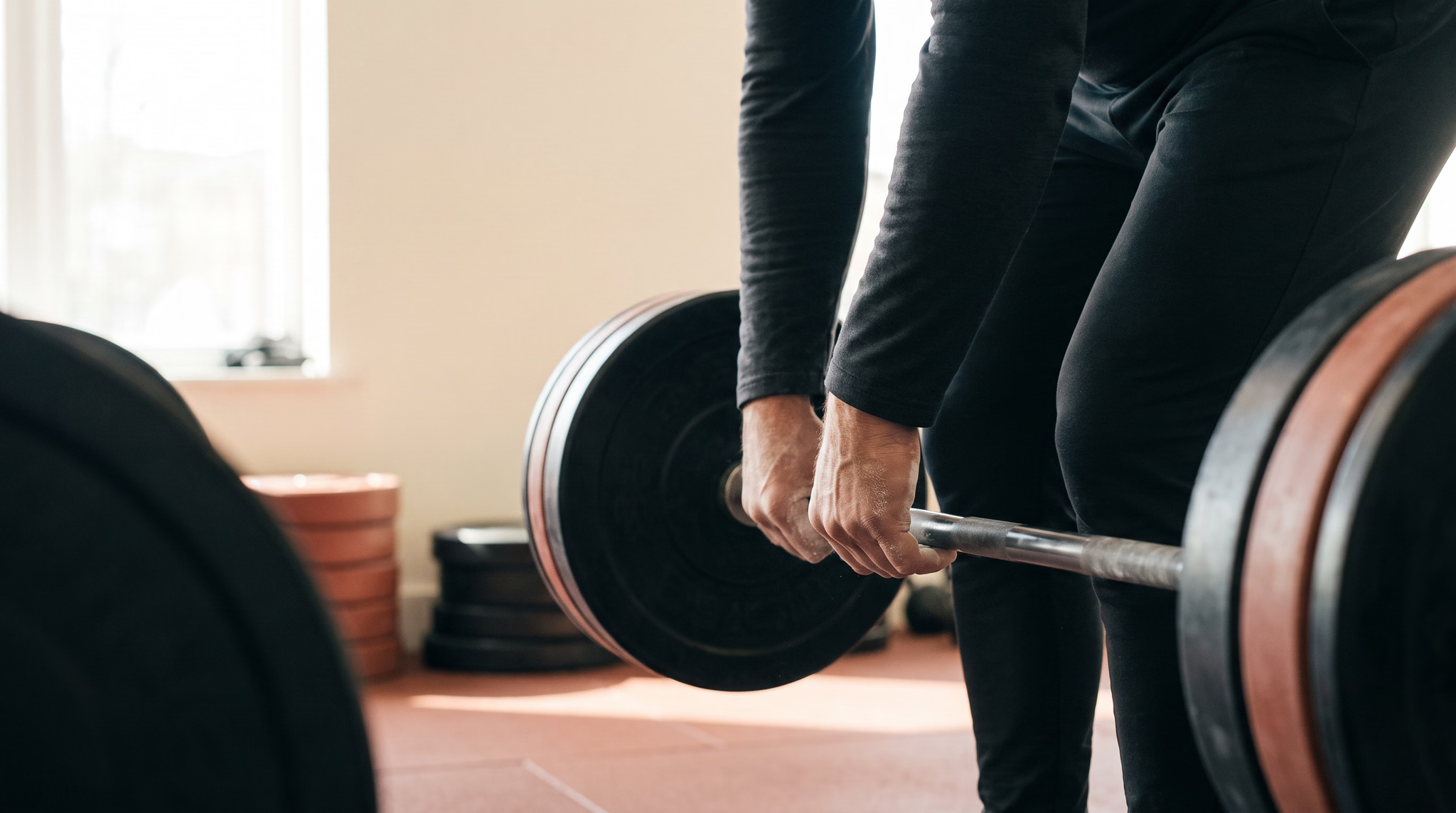
Every major guideline recommends muscle-strengthening activity at least twice a week. Randomized trials show clear gains in strength, muscle, function and bone, and smaller gains in blood pressure and blood sugar. The links with longer life come from observational cohorts, and the best dose above about an hour a week is still debated.
The rules
The rules ofStrength training
- 1Train all major muscle groups (legs, hips, back, chest, shoulders, arms, trunk) on at least 2 days a week.
- 2Use a load heavy enough that each set ends within about 1 to 3 repetitions of failure.
- 3Do at least 1 hard set per exercise; 2 to 3 sets for more strength.
- 4Raise load, repetitions or sets once the current target is met with good form (progressive overload).
- 5Rest each muscle group at least a day between hard sessions.
Share these rules as an image or a link.
| Minimum effective dose | 2 sessions a week, 1 hard set of 6 to 12 reps per major movement, about 30 to 60 minutes a week in total. |
|---|---|
| Maximal strength (powerlifting style) | Loads of 80 to 90% of 1RM or more, 2 to 6 reps, 2 to 5 sets, on the squat, bench press and deadlift. |
| Hypertrophy (bodybuilding style) | 10 to 20 sets per muscle per week, mostly 6 to 15 reps, close to failure. |
| High intensity training (HIT) | One all-out set to failure per exercise, few exercises, low weekly volume. |
| Body weight and bands | Push-ups, squats, lunges, rows and band work progressed by harder variations or more reps; no gym needed. |
| Heavy bone loading (LIFTMOR style) | Supervised heavy compound lifts and impact work, 5 sets of 5 at over 85% of 1RM, 30 minutes twice a week. |
| Isometric training | Static holds such as wall squats or hand-grip squeezes, used mainly to lower blood pressure. |
What it aims to do
- Build and keep muscle mass and strength across adult life.
- Slow age-related loss of bone density and lower fracture risk.
- Keep physical function: rising from a chair, climbing stairs, carrying shopping, balance.
- Improve blood pressure, blood sugar control and body composition.
- Lower the risk of early death, together with aerobic exercise.
- Reduce sports injuries and support mood.
What it claims, and what the evidence shows
Grades reflect evidence in people. Animal and cell results alone never earn more than limited.
Muscle and strength
Strong evidenceLifespan and mortality
Moderate evidenceBone health
Moderate evidenceHeart and blood vessels
Moderate evidenceLowers blood pressure and heart risk
Blood sugar and insulin
Moderate evidenceBody fat and weight
Moderate evidenceMood and stress
Moderate evidenceReduces depressive symptoms
A meta-analysis of 33 randomized trials found a moderate reduction in depressive symptoms, though blinding in exercise trials is impossible. [18]
Athletic performance
Moderate evidencePrevents sports injuries
Strength programs cut acute and overuse sports injuries to about one third in randomized trials of athletes aged 12 to 40. [19]
Key takeaways
- 1
Two sessions a week covering all major muscle groups meets UK guidance, and 30 to 60 minutes a week captures most of the measured health benefit [1].
- 2
- 3
- 4
Each 5 kg less grip strength goes with about 16% higher all-cause mortality, which makes grip a useful marker of overall strength [5].
- 5
Supervised heavy lifting raised spine bone density by 2.9% in women with low bone mass in a randomized trial [6].
- 6
Combine it with aerobic exercise: people who do both have the lowest mortality in every analysis [7].
What is strength training?
Strength training, also called resistance training, is any exercise where muscles work against a load heavy enough to fatigue them within a small number of repetitions. The load can be free weights, machines, bands or your own body weight, and it rises over time as you get stronger.
The terms overlap. Resistance training and weight training describe the method. Strength training in the narrow sense aims at the most force you can produce, usually with heavy loads and few repetitions, while hypertrophy training aims at muscle size with more sets in the moderate range. For health, the distinction matters less than people think: a review of 137 systematic reviews by the American College of Sports Medicine found that most programs improve strength, size, power, balance and gait speed compared with doing nothing [3].
Three features make it a protocol rather than just activity:
- Effort. Sets end close to the point where another clean repetition would not be possible.
- Coverage. The program works all major muscle groups: legs, hips, back, chest, shoulders, arms and trunk.
- Progression. Load, repetitions or sets rise as the body adapts, which is called progressive overload.
Public health guidelines treat it as a separate requirement from cardio. WHO recommends regular muscle-strengthening activity for every age group on top of 150 to 300 minutes of moderate aerobic activity a week [20], and the NHS asks adults to do strengthening activity that works all major muscle groups on at least 2 days a week. If you train for muscle size specifically, the app's hypertrophy protocol sets weekly volume targets.
How much strength training do you need each week?
For health, the evidence points to a small dose: two sessions a week, or about 30 to 60 minutes in total. Cohort studies find the largest drop in risk of death at that level, and trials show one hard set per exercise, two to three times a week, still builds strength.
The best known number comes from a 2022 meta-analysis of 16 cohort studies. Muscle-strengthening activity was linked to 10 to 17% lower risk of death, cardiovascular disease, cancer and diabetes, and the largest reduction, about 10 to 20%, sat at 30 to 60 minutes a week [1]. A second 2022 meta-analysis found the peak at about 60 minutes a week, a 27% lower risk of death from any cause, with smaller reductions at higher volumes [2].
Trials of strength itself agree that the floor is low. In trained men, a single set of 6 to 12 repetitions at about 70 to 85% of one-repetition maximum (1RM), 2 to 3 times a week, raised 1RM strength [10]. In an interview, hypertrophy researcher Brad Schoenfeld put the minimum effective dose for muscle growth at about 4 hard sets per muscle per week. Reviews of older adults reach the same conclusion: about 60 minutes or less across 2 days, on simple machines, delivers most of the benefit [21].
| Goal | Weekly dose that research supports | Source |
|---|---|---|
| Meet the UK guideline | 2 sessions, all major muscle groups | NHS guidance |
| Lowest risk of death in cohorts | About 30 to 60 minutes | [1][2] |
| Gain 1RM strength | 1 set of 6 to 12 reps, 2 to 3 times | [10] |
| Maximize muscle size | 10 or more sets per muscle | [22][3] |
Few people reach even the minimum. In a US survey of 30,162 adults aged 65 and older, only 9.6% reported strength training twice a week [23].
From minimum dose to full program
Step 1
Minimum
2 sessions a week
All major muscle groups: the UK guideline.
Step 2
Health sweet spot
30 to 60 minutes a week
Where cohort studies find the largest drop in risk of death.
Step 3
Strength focus
2 to 3 sets at 80% of 1RM or more
At least 2 sessions a week; heavier loads raised strength most.
Step 4
Muscle size focus
10 or more sets per muscle a week
Volume is the main dial for muscle growth.
Most of the measured health benefit sits on the first two steps; cohort risk reductions get smaller at higher volumes. Steps 3 and 4 build more strength and muscle.
How many sets and reps, and how heavy should you lift?
For strength, lift loads of about 80% of your one-repetition maximum or more, for 2 to 3 sets, at least twice a week. For muscle size, total weekly sets matter most, with 10 or more per muscle; loads from light to heavy work if sets end close to failure.
The 2026 ACSM position stand summarizes the variables that changed results across hundreds of trials [3]:
- Strength rose most with heavier loads (80% of 1RM or more), a full range of motion, 2 to 3 sets, lifting early in the session and 2 or more sessions a week.
- Size rose most with higher volume (10 or more sets a week) and with eccentric overload, the lowering phase done under heavier load.
- Power rose most with moderate loads (30 to 70% of 1RM) lifted fast.
- Training to complete failure, the type of equipment, time under tension and periodization did not consistently change outcomes.
Load and size are less tied than gym lore suggests. Heavy loads win for maximal strength, but muscle growth is similar across a wide range of loads when sets are taken close to failure [4]. In a biopsy study, sets at 30% of 1RM taken to failure raised muscle protein synthesis as much as sets at 90% of 1RM [24]. Lighter loads are a reasonable choice for joints that dislike heavy weights, at the cost of longer sets.
Each extra weekly set adds roughly 0.37% to muscle growth in the dose-response data [22], so volume is the main dial for size. Frequency matters mostly as a way to fit that volume in: with the same weekly sets, training a muscle once or three times a week gave similar growth [25].
Progressive overload in practice
Pick a load you can lift 6 to 12 times with good form. When you reach the top of that range on every set, add the smallest available step of load and drop back to the bottom of the range. Write it down; a training log is the simplest way to know you are progressing.
How progressive overload works
- Progressive overload
- 1Pick a loadOne you can lift 6 to 12 times with good form.
- 2Train close to failureEnd each set 1 to 3 reps short of failure.
- 3RecoverEat enough protein and sleep enough.
- 4Add loadAt the top of the range on every set, add the smallest step and drop to the bottom of the range.
- Back to step 1
Write each session down; a training log is the simplest way to know you are progressing. If progress stalls, check sleep and protein first.
Does strength training help you live longer?
People who strength train die less often over follow-up: pooled cohorts link it to about 15 to 21% lower all-cause mortality, and more when combined with aerobic exercise. These studies are observational, so healthier habits may explain part of the gap, and no trial has tested lifespan directly.
Three meta-analyses point the same way. Any resistance training was linked to 15% lower all-cause mortality [2]; another analysis of 370,256 adults found 21% lower mortality, and 40% lower when combined with aerobic exercise [7]. A pooled analysis of 11 British cohorts found 23% lower all-cause and 31% lower cancer mortality with any strength exercise [11].
The details are less tidy than the headlines:
- Cardiovascular death links are weaker and less consistent than for aerobic exercise. In one meta-analysis the link was borderline [7], and in the British cohorts the cardiovascular benefit came from aerobic activity [11].
- More is not clearly better. The curves are J-shaped, with the benefit shrinking beyond about 60 minutes a week [1][2]. That may reflect how people report long sessions, or real diminishing returns; nobody knows yet.
- Self-report and confounding. Exposure is usually one survey question. People who lift tend to be leaner, richer and more active in other ways, and adjustment never removes all of that.
What the evidence supports is a combination. The lowest risk in every analysis belongs to people who do both aerobic and muscle-strengthening activity [1][7]. Pair strength work with cardio such as zone 2 training, as longevity programs like the app's longevity focus do.
Lower risk of death with resistance training
- All-cause death, any training15 % lower risk
- Cardiovascular death, any training19 % lower risk
- Cancer death, any training14 % lower risk
- All-cause death, about 60 min a week27 % lower risk
Peak of the dose-response curve; benefit shrank at higher volumes
Show the data
| Item | Value (% lower risk) | Low | High | Note |
|---|---|---|---|---|
| All-cause death, any training | 15 | 7 | 23 | |
| Cardiovascular death, any training | 19 | 0 | 34 | |
| Cancer death, any training | 14 | 5 | 22 | |
| All-cause death, about 60 min a week | 27 | 14 | 36 | Peak of the dose-response curve; benefit shrank at higher volumes |
Why is grip strength a marker of health?
Grip strength is a quick, cheap measure of overall muscle strength, and it predicts death and heart disease in large cohorts. Each 5 kg lower grip goes with about 16% higher all-cause mortality, but grip is a marker of strength, not a separate target to train.
In the PURE study of 139,691 adults across high, middle and low income countries, each 5 kg reduction in grip strength was linked to 16% higher all-cause mortality and 17% higher cardiovascular mortality, and grip predicted death better than systolic blood pressure [5]. UK Biobank, with 502,293 adults, found 20% higher all-cause mortality in women and 16% in men per 5 kg lower grip, and set weakness thresholds at below 26 kg for men and 16 kg for women [26].
Grip works as a marker because it is easy to test and tracks whole-body strength. Physician Peter Attia makes the same point: he treats grip as a proxy for being strong overall and trains it through carries, pulls, deadlifts and hangs rather than with hand grippers. A higher grip number from squeezing a gadget would not necessarily carry the same meaning as one earned through full-body training.
If you track grip with a hand dynamometer, test the same hand, posture and time of day each time, take the best of three tries, and compare yourself against your own past results more than against cohort averages.
Higher risk for each 5 kg of lost grip
- Cardiovascular death17 % higher risk per 5 kg lower grip
- Non-cardiovascular death17 % higher risk per 5 kg lower grip
- All-cause death16 % higher risk per 5 kg lower grip
- Stroke9 % higher risk per 5 kg lower grip
- Heart attack7 % higher risk per 5 kg lower grip
Show the data
| Item | Value (% higher risk per 5 kg lower grip) | Low | High | Note |
|---|---|---|---|---|
| Cardiovascular death | 17 | 11 | 24 | |
| Non-cardiovascular death | 17 | 12 | 21 | |
| All-cause death | 16 | 13 | 20 | |
| Stroke | 9 | 5 | 15 | |
| Heart attack | 7 | 2 | 11 |
What does strength training do for muscle and bone as you age?
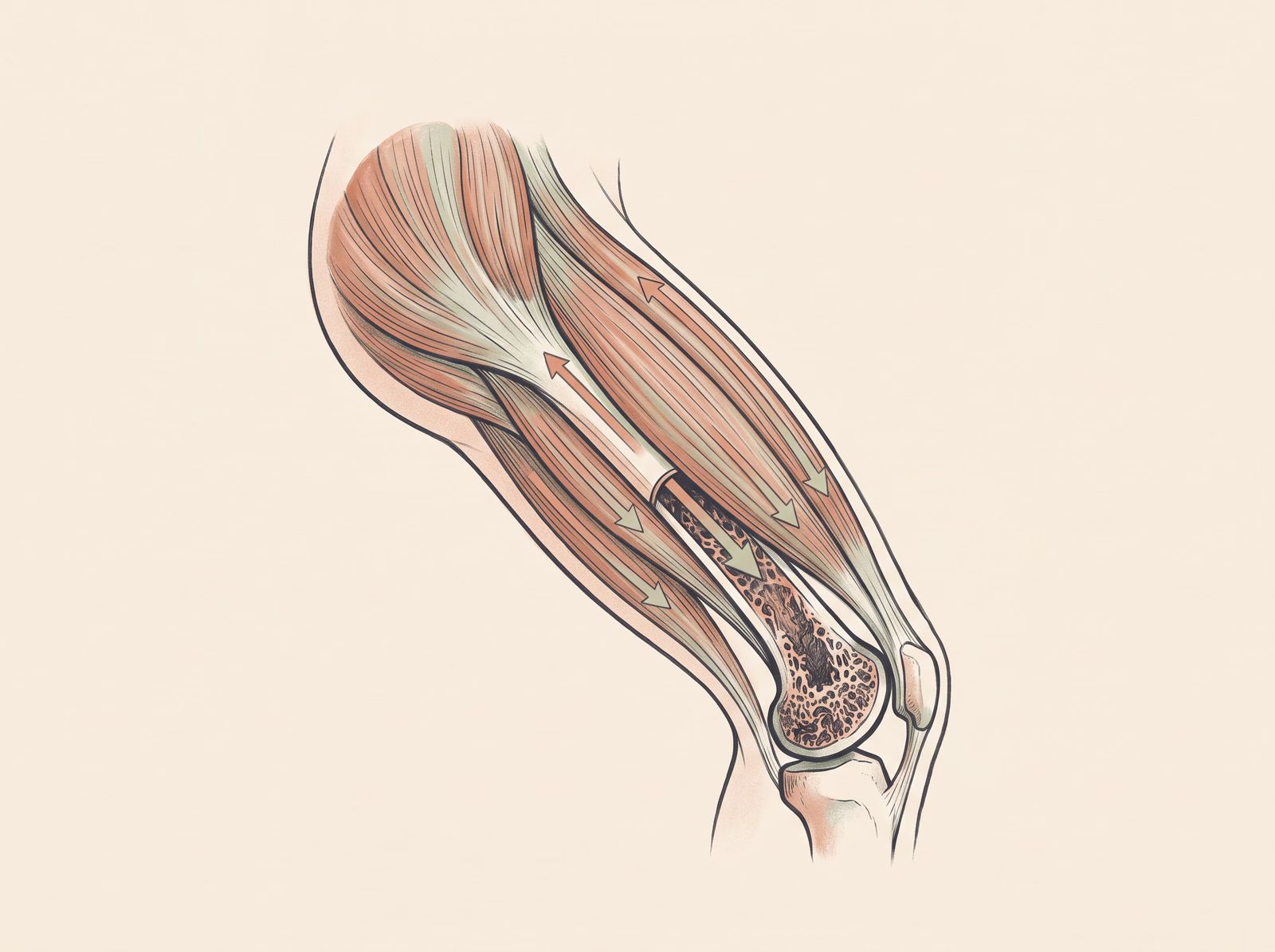
Inactive adults lose about 3 to 8% of their muscle mass per decade. Resistance training reverses part of that: adults over 50 gain about 1.1 kg of lean mass on average, and heavy, supervised lifting raised spine bone density in women with low bone mass.
Muscle loss with age is gradual but steady, at about 3 to 8% per decade in inactive adults [12]. Across 49 studies of adults aged 50 and older, resistance exercise added about 1.1 kg of lean body mass, with larger gains from higher-volume programs and smaller gains in the oldest groups [9]. A Cochrane review of 121 trials found a large effect on strength and better gait speed and chair rising in older adults [8], and the National Strength and Conditioning Association recommends supervised, progressive training for older adults [27].
Bone needs heavy, specific loading
Bone responds to high strain applied quickly, which light exercise does not provide. The LIFTMOR trial randomized 101 postmenopausal women with low bone mass to twice-weekly, 30-minute supervised sessions of heavy resistance and impact training at 5 sets of 5 repetitions above 85% of 1RM, or to low-intensity home exercise [6]. After 8 months:
| Measure | Heavy training | Low-intensity control |
|---|---|---|
| Lumbar spine bone density | +2.9% | -1.2% |
| Femoral neck bone density | +0.3% | -1.9% |
| Adverse events | 1 minor back spasm | not reported |
Belinda Beck, who led LIFTMOR, stresses that the program was supervised and progressed carefully; people at high fracture risk should not copy it alone. The rucking guide covers whether loaded walking adds a bone stimulus, and the high-protein diet and creatine guides cover the nutrition that supports muscle gain.
Does strength training lower blood pressure, blood sugar and body fat?
Yes, modestly. Dynamic resistance training lowers resting blood pressure by about 2 to 5 mm Hg systolic, lowers HbA1c by about 0.6 percentage points in type 2 diabetes, and reduces body fat by about 1 kg on its own, more when combined with eating less.
| Outcome | Effect of resistance training | Source |
|---|---|---|
| Resting blood pressure, dynamic lifting | -1.8/-3.2 to -4.55/-3.04 mm Hg | [14][13] |
| Resting blood pressure, isometric holds | -8.24/-4.00 to -10.9/-6.2 mm Hg | [13][14] |
| HbA1c in type 2 diabetes | -0.57 percentage points | [16] |
| Body fat, training alone | -1.6 percentage points, -1.0 kg fat | [17] |
| Body fat, with calorie restriction | -3.8 percentage points, -5.3 kg fat | [17] |
| Depressive symptoms | Moderate reduction, number needed to treat 4 | [18] |
Two points stand out. First, isometric exercise, such as wall squats and hand-grip holds, produced the largest blood pressure drops of any exercise type in a network meta-analysis of 270 trials [13]. Second, strength training on its own is a weak tool for weight loss; its value is in keeping muscle while fat comes off, which is why it pairs with calorie restriction [17]. For blood sugar, the HbA1c and fasting insulin guides explain what the numbers mean.
One result points the other way. A meta-analysis of 8 small trials found that resistance training raised arterial stiffness by about 14% in young adults, though not in middle-aged adults [15]. The finding is small and old, but it is one reason guidelines pair lifting with aerobic exercise rather than replacing it.
Is strength training safe?
For most people, yes. Supervised trials report few adverse events, even in older women with osteoporosis lifting above 85% of their maximum, and strength programs cut sports injuries to about a third. The rare serious risk is rhabdomyolysis from sudden, extreme sessions.
In randomized trials of athletes, strength training programs reduced sports injuries to about one third of the rate in controls (relative risk 0.338), and more volume meant fewer injuries [19]. In LIFTMOR, heavy lifting in women with low bone mass produced one minor adverse event [6]. The Cochrane review of older adults did note that trials often fail to report harms well [8], so the true rate of minor strains is uncertain.
The rare serious problem is exertional rhabdomyolysis, where damaged muscle floods the blood with creatine kinase and myoglobin. A case report describes a healthy 37-year-old man with creatine kinase of 95,100 U/L and dark urine after an intense resistance session; he recovered with intravenous fluids [28]. It usually follows a big jump in volume, often in new or returning lifters, and dark urine with severe muscle pain needs same-day medical care.
Practical rules that remove most risk: start with loads you can lift for 12 or more clean repetitions, progress gradually, learn the main lifts from a qualified coach, and avoid holding your breath through long heavy efforts if you have high blood pressure.
The studies, by type
Strongest designs first. Scroll each row; every card links to the paper and says whether it supports the protocol.
Systematic reviews and meta-analyses (17)
Randomized controlled trials (1)
Large observational studies in people (4)
Mechanistic studies in people (1)
Case reports and N-of-1 experiments (1)
Hypotheses and expert reviews (4)
Who follows it, who backs it, who doubts it
Public positions summarized in our words. Follow each link for the full context.
Support it
Peter AttiaPhysician, host of The Drive podcast and author of Outlive
Treats strength as a pillar of healthspan and argues it is likely causal, not just a marker. Uses grip strength as a proxy for overall strength and recommends training it with carries, pulls, deadlifts and hangs rather than hand grippers.
Brad SchoenfeldExercise scientist, Lehman College, CUNY
Says a short routine works if the sets are hard: about 4 sets per muscle per week is a minimum effective dose for growth, 10 to 20 sets is the range for maximizing it, and lighter loads work but take longer.
FoundMyFitness, the minimal effective dose for hypertrophy (December 2022)
Stuart PhillipsProfessor of kinesiology, McMaster University; senior author of the 2026 ACSM position stand
His team's overview of 137 systematic reviews concludes that healthy adults should do progressive resistance training, that heavier loads build the most strength and higher volume the most size, and that training to failure is not required.
ACSM position stand, Medicine and Science in Sports and Exercise (2026)
Belinda BeckBone researcher, Griffith University; led the LIFTMOR trial
Argues that bone is a use it or lose it tissue and that people with osteoporosis can build bone with heavy loading, against long-standing advice to avoid lifting, but only when the program is applied carefully under expert supervision.
Mixed or cautious
Haruki MommaEpidemiologist, Tohoku University; lead author of the 2022 dose meta-analysis
His meta-analysis supports muscle-strengthening up to about 60 minutes a week but concludes that the effect of higher volumes on death, heart disease and cancer is unclear because of the J-shaped curves.
Public examples
- NHS physical activity guidelines for adults
UK public health guidance: strengthening activities that work all major muscle groups on at least 2 days a week, alongside aerobic activity.
- NHS strength exercises at home
A beginner routine of seven chair, wall and water-bottle exercises, done at least twice a week, for people starting from zero.
- LIFTMOR heavy loading protocol
The published 8-month program of supervised deadlifts, squats, presses and jumps at 5 sets of 5 above 85% of 1RM, twice weekly, for women with low bone mass.
How to follow it
- Pick 5 to 8 movements that cover the body: a squat or leg press, a hip hinge such as a deadlift or hip thrust, a push, a pull, a carry and a trunk exercise.
- Schedule 2 sessions a week on non-consecutive days, 20 to 45 minutes each.
- Start with a load you can lift about 12 times with clean form, and stop each set 1 to 3 reps before failure.
- Do 1 set per movement for the first 2 to 4 weeks, then build to 2 or 3 sets if you want more strength or size.
- When you reach the top of your rep range on every set, add the smallest load step and go back to the bottom of the range.
- Keep aerobic exercise in the week; strength training adds to cardio rather than replacing it.
- Eat enough protein and sleep enough to recover; progress stalls without both.
How to know you are following it
Count sessions per week (target 2 or more) and hard sets per major muscle group, and log the load and reps of each main lift. Rising loads at the same reps over 8 to 12 weeks show the program is working. Grip strength measured with a dynamometer every few months is a simple outside check.
Common mistakes
- Sets that stop far from failure, so the muscle never gets a real stimulus.
- Adding load faster than form allows, especially on squats and deadlifts.
- Skipping legs and hips, the muscles that matter most for function with age.
- A big jump in volume after a break, the usual setting for severe soreness and rhabdomyolysis.
- Replacing all cardio with lifting, which leaves aerobic fitness and heart benefits on the table.
- Changing the program every week, which makes progress impossible to measure.
Who should be careful
Check with a clinician first if you
- have uncontrolled high blood pressure, recent heart symptoms or a heart condition
- have osteoporosis with a history of fractures and plan heavy lifting (seek a supervised program)
- are recovering from surgery, a hernia or a recent musculoskeletal injury
- are pregnant and new to lifting
- have had rhabdomyolysis before or take medicines that affect muscle, such as some statins, and notice unusual muscle pain
Possible side effects
- Delayed-onset muscle soreness for 1 to 3 days, worst in the first weeks.
- Joint and tendon aches if load rises too fast.
- Low back strain from poor hip hinge technique.
- Rarely, exertional rhabdomyolysis: severe muscle pain, swelling and dark urine after an extreme session, which needs urgent care.
- A temporary rise in blood creatine kinase after hard sessions, which can affect blood test results.
Follow it in AumniVIDA
Build muscle with progressive overload across weeks, roughly 10 to 20 hard sets per muscle group a week, and protein of 1.6 to 2.2 g/kg spread over three or more meals.
The targets
AumniVIDA scores these from your logged meals and measurements, and shows the evidence grade for each protocol.
Targets
- Protein: 1.6 to 2.2 g/kg/day
- Protein: at least 20 g at most meals
How AumniVIDA follows it with your data
- Track protein. The scorecard checks 1.6 to 2.2 g/kg a day, with at least 20 g at most meals.
- Find muscle groups below the mark. When your workout data shows a muscle group far below about 10 hard sets a week, the coach mentions it as an opportunity.
- Celebrate records. New rep or load records in your data get named, with the lift and the number.
- Train with reps in reserve. The coach suggests two to five reps in reserve on most working sets.
Follow up to five protocols on the free plan, or the full library with Pro. Rank them, and when two protocols disagree, the higher-ranked one guides the app.
Watch
Talks and explainers worth your time. Nothing loads from YouTube until you press play.
Large gains in minimal time: the minimal effective dose for hypertrophy│Dr. Brad Schoenfeld
FoundMyFitness ClipsFoundMyFitness Clips@foundmyfitnessclipsSubscribers554KStartedJanuary 2019CountryUnited StatesVideos2.1KTotal views161.7MNew videos, last 30 days38New videos, last year423From YouTube, 2026-10-31Open on YouTube
A hypertrophy researcher explains how few weekly sets still build muscle and how to save time without losing results.
322 - Bone health for life: building strong bones, preventing age-related loss, osteoporosis, & more
Peter Attia MDPeter Attia MD@peterattiamdSubscribers1MStartedJuly 2015CountryNot statedVideos1.8KTotal views137.4MNew videos, last 30 days7New videos, last year105From YouTube, 2026-10-31Open on YouTube
The LIFTMOR lead investigator explains why heavy, supervised loading builds bone and who should not try it alone.
Peter on exercise, important labs, building good habits, longevity research (Special AMA sneak peek)
Peter Attia MDPeter Attia MD@peterattiamdSubscribers1MStartedJuly 2015CountryNot statedVideos1.8KTotal views137.4MNew videos, last 30 days7New videos, last year105From YouTube, 2026-10-31Open on YouTube
Covers why grip strength tracks health and how to train it through full-body lifts and carries.
Biomarkers it can move
- HbA1cHbA1c (A1c) is the percentage of hemoglobin in red blood cells that has glucose attached.
- Fasting insulinFasting insulin is the level of insulin in your blood after at least 8 hours without food.
- TriglyceridesTriglycerides are the main form of fat in the body and in the blood, carried by VLDL from the liver and chylomicrons from the gut.
- LDL cholesterolLDL cholesterol (LDL-C) is the cholesterol carried inside low-density lipoprotein particles, the main particles that deliver cholesterol to tissues and lodge in artery walls.
Common questions
How many days a week should I do strength training?
Is strength training or cardio better for health?
Should I do strength training or cardio first?
If strength is the priority, lift first. The ACSM review found that strength rose more when resistance exercise came at the start of a session [3]. If endurance is the priority, the order can be reversed, or the two done on different days.
Can strength training help you lose weight or belly fat?
On its own, only a little: about 1 kg of fat and 1.6 percentage points of body fat in trials [17]. Its real value in weight loss is keeping muscle while you eat less; with calorie restriction, fat loss rose to about 5.3 kg. No exercise removes fat from one spot such as the belly.
Does strength training lower blood pressure?
Does strength training lower cholesterol?
The effect is small and less consistent than for blood pressure. Reviews report possible falls in LDL cholesterol and triglycerides [12], but diet and medication move lipids far more. See the LDL cholesterol and triglycerides guides.
Does strength training increase bone density?
Heavy, progressive loading can. In the LIFTMOR trial, supervised lifting above 85% of 1RM raised lumbar spine density by 2.9% in women with low bone mass, while the control group lost 1.2% [6]. Light exercise does not give the same stimulus.
Is strength training safe for women over 50 and older adults?
Can I strength train at home without equipment?
Yes. Body weight exercises such as squats, lunges, push-ups and chair dips count, as long as sets end close to failure and you make them harder over time. Muscle grows across a wide range of loads when effort is high [4].
Sources
- 1.Momma H, Kawakami R, Honda T, et al. Muscle-strengthening activities are associated with lower risk and mortality in major non-communicable diseases: a systematic review and meta-analysis of cohort studies. Br J Sports Med, 2022. doi:10.1136/bjsports-2021-105061
- 2.Shailendra P, Baldock KL, Li LSK, et al. Resistance Training and Mortality Risk: A Systematic Review and Meta-Analysis. Am J Prev Med, 2022. doi:10.1016/j.amepre.2022.03.020
- 3.Currier BS, D'Souza AC, Singh MAF, et al. American College of Sports Medicine Position Stand. Resistance Training Prescription for Muscle Function, Hypertrophy, and Physical Performance in Healthy Adults: An Overview of Reviews. Med Sci Sports Exerc, 2026. doi:10.1249/MSS.0000000000003897
- 4.Schoenfeld BJ, Grgic J, Ogborn D, et al. Strength and Hypertrophy Adaptations Between Low- vs. High-Load Resistance Training: A Systematic Review and Meta-analysis. J Strength Cond Res, 2017. doi:10.1519/JSC.0000000000002200
- 5.Leong DP, Teo KK, Rangarajan S, et al. Prognostic value of grip strength: findings from the Prospective Urban Rural Epidemiology (PURE) study. Lancet, 2015. doi:10.1016/S0140-6736(14)62000-6
- 6.Watson SL, Weeks BK, Weis LJ, et al. High-Intensity Resistance and Impact Training Improves Bone Mineral Density and Physical Function in Postmenopausal Women With Osteopenia and Osteoporosis: The LIFTMOR Randomized Controlled Trial. J Bone Miner Res, 2018. doi:10.1002/jbmr.3284
- 7.Saeidifard F, Medina-Inojosa JR, West CP, et al. The association of resistance training with mortality: A systematic review and meta-analysis. Eur J Prev Cardiol, 2019. doi:10.1177/2047487319850718
- 8.Liu CJ, Latham NK. Progressive resistance strength training for improving physical function in older adults. Cochrane Database Syst Rev, 2009. doi:10.1002/14651858.CD002759.pub2
- 9.Peterson MD, Sen A, Gordon PM. Influence of resistance exercise on lean body mass in aging adults: a meta-analysis. Med Sci Sports Exerc, 2011. doi:10.1249/MSS.0b013e3181eb6265
- 10.Androulakis-Korakakis P, Fisher JP, Steele J. The Minimum Effective Training Dose Required to Increase 1RM Strength in Resistance-Trained Men: A Systematic Review and Meta-Analysis. Sports Med, 2020. doi:10.1007/s40279-019-01236-0
- 11.Stamatakis E, Lee IM, Bennie J, et al. Does Strength-Promoting Exercise Confer Unique Health Benefits? A Pooled Analysis of Data on 11 Population Cohorts With All-Cause, Cancer, and Cardiovascular Mortality Endpoints. Am J Epidemiol, 2018. doi:10.1093/aje/kwx345
- 12.Westcott WL. Resistance training is medicine: effects of strength training on health. Curr Sports Med Rep, 2012. doi:10.1249/JSR.0b013e31825dabb8
- 13.Edwards JJ, Deenmamode AHP, Griffiths M, et al. Exercise training and resting blood pressure: a large-scale pairwise and network meta-analysis of randomised controlled trials. Br J Sports Med, 2023. doi:10.1136/bjsports-2022-106503
- 14.Cornelissen VA, Smart NA. Exercise training for blood pressure: a systematic review and meta-analysis. J Am Heart Assoc, 2013. doi:10.1161/JAHA.112.004473
- 15.Miyachi M. Effects of resistance training on arterial stiffness: a meta-analysis. Br J Sports Med, 2013. doi:10.1136/bjsports-2012-090488
- 16.Umpierre D, Ribeiro PA, Kramer CK, et al. Physical activity advice only or structured exercise training and association with HbA1c levels in type 2 diabetes: a systematic review and meta-analysis. JAMA, 2011. doi:10.1001/jama.2011.576
- 17.Lopez P, Taaffe DR, Galvão DA, et al. Resistance training effectiveness on body composition and body weight outcomes in individuals with overweight and obesity across the lifespan: A systematic review and meta-analysis. Obes Rev, 2022. doi:10.1111/obr.13428
- 18.Gordon BR, McDowell CP, Hallgren M, et al. Association of Efficacy of Resistance Exercise Training With Depressive Symptoms: Meta-analysis and Meta-regression Analysis of Randomized Clinical Trials. JAMA Psychiatry, 2018. doi:10.1001/jamapsychiatry.2018.0572
- 19.Lauersen JB, Andersen TE, Andersen LB. Strength training as superior, dose-dependent and safe prevention of acute and overuse sports injuries: a systematic review, qualitative analysis and meta-analysis. Br J Sports Med, 2018. doi:10.1136/bjsports-2018-099078
- 20.Bull FC, Al-Ansari SS, Biddle S, et al. World Health Organization 2020 guidelines on physical activity and sedentary behaviour. Br J Sports Med, 2020. doi:10.1136/bjsports-2020-102955
- 21.Fisher JP, Steele J, Gentil P, et al. A minimal dose approach to resistance training for the older adult; the prophylactic for aging. Exp Gerontol, 2017. doi:10.1016/j.exger.2017.09.012
- 22.Schoenfeld BJ, Ogborn D, Krieger JW. Dose-response relationship between weekly resistance training volume and increases in muscle mass: A systematic review and meta-analysis. J Sports Sci, 2017. doi:10.1080/02640414.2016.1210197
- 23.Kraschnewski JL, Sciamanna CN, Poger JM, et al. Is strength training associated with mortality benefits? A 15year cohort study of US older adults. Prev Med, 2016. doi:10.1016/j.ypmed.2016.02.038
- 24.Burd NA, West DW, Staples AW, et al. Low-load high volume resistance exercise stimulates muscle protein synthesis more than high-load low volume resistance exercise in young men. PLoS One, 2010. doi:10.1371/journal.pone.0012033
- 25.Schoenfeld BJ, Grgic J, Krieger J. How many times per week should a muscle be trained to maximize muscle hypertrophy? A systematic review and meta-analysis of studies examining the effects of resistance training frequency. J Sports Sci, 2019. doi:10.1080/02640414.2018.1555906
- 26.Celis-Morales CA, Welsh P, Lyall DM, et al. Associations of grip strength with cardiovascular, respiratory, and cancer outcomes and all cause mortality: prospective cohort study of half a million UK Biobank participants. BMJ, 2018. doi:10.1136/bmj.k1651
- 27.Fragala MS, Cadore EL, Dorgo S, et al. Resistance Training for Older Adults: Position Statement From the National Strength and Conditioning Association. J Strength Cond Res, 2019. doi:10.1519/JSC.0000000000003230
- 28.Honda S, Kawasaki T, Kamitani T, et al. Rhabdomyolysis after High Intensity Resistance Training. Intern Med, 2017. doi:10.2169/internalmedicine.56.7636
AumniVIDA explains health information for general wellness. Talk to your clinician before changing your diet, training or medication for a health condition.