
Sprint training
What is sprint training?
Sprint training means short, all-out efforts, usually 10 to 30 seconds, with full or near-full recovery. Sprint interval training such as three 20-second cycling sprints in a 10-minute session raised fitness and insulin sensitivity as much as 45-minute moderate sessions in a 12-week trial. Longevity claims rest on indirect evidence.
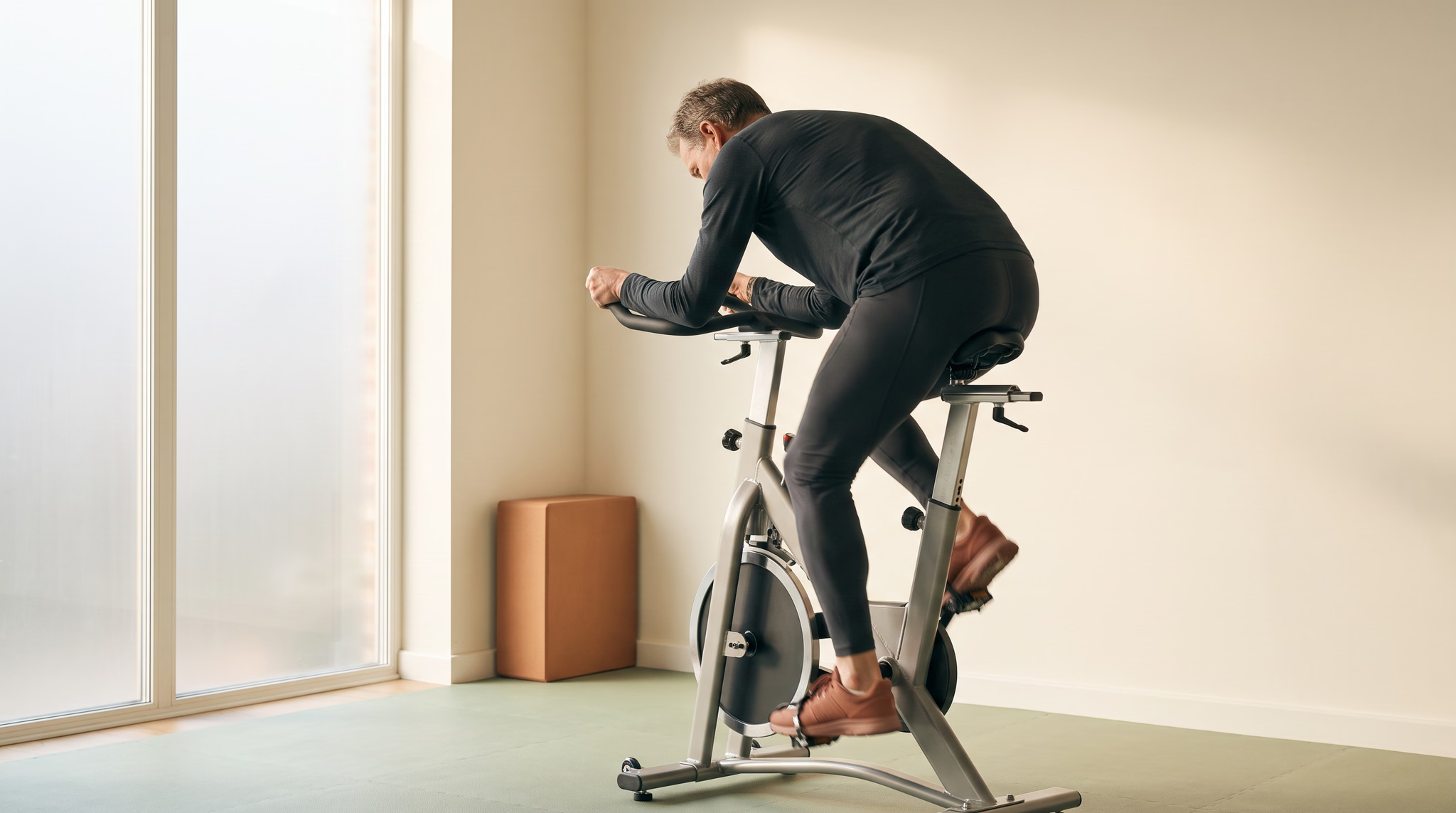
Randomized trials and meta-analyses consistently show that sprint interval training raises VO2max and improves insulin sensitivity with very little time, often matching moderate continuous training. Most trials are small, short and done on stationary bikes in young or middle-aged adults, so evidence for running sprints, older adults and long-term health outcomes is thin. Critics argue that all-out efforts are unpleasant and unlikely to be kept up by inactive people. Claims that sprinting extends life rest on observational data and studies of masters athletes.
The rules
The rules ofSprint training
- 1Warm up for at least 5 to 10 minutes with easy movement and a few short build-up efforts.
- 2Perform 2 to 6 sprints at maximal or near-maximal effort, each lasting about 10 to 30 seconds.
- 3Recover between sprints with easy movement for about 2 to 4 minutes, until breathing settles.
- 4Keep total sprint time short: as little as 1 minute in a 10-minute session (for example 3 x 20 seconds).
- 5Do 2 to 3 sessions a week with at least a day between them.
- 6Stop the session when speed or power drops clearly, or if technique breaks down.
Share these rules as an image or a link.
| One-minute workout (Gibala) | Three 20-second all-out cycling sprints with 2 minutes of easy cycling between them, inside a 10-minute session, 3 times a week. |
|---|---|
| REHIT (Vollaard and Metcalfe) | Two all-out cycling sprints of 10 to 20 seconds in a 10-minute easy ride, 3 times a week. |
| Classic Wingate SIT | Four to six 30-second all-out cycling sprints with about 4 minutes of recovery, the original lab protocol. |
| Running or hill sprints | Short runs of about 10 to 20 seconds, often uphill to limit speed and impact, with walk-back recovery. |
| Masters sprint training | Track sprint training and competition for adults in older age groups. |
| Vigorous lifestyle bursts | One to two minute bursts of vigorous everyday activity, such as fast stair climbing, spread through the day. |
What it aims to do
- Raise cardiorespiratory fitness (VO2max) in very little time.
- Improve insulin sensitivity and blood sugar control.
- Train fast-twitch muscle fibers, power and speed, which decline with age.
- Load bones with high forces.
- Fit vigorous exercise into a busy week.
What it claims, and what the evidence shows
Grades reflect evidence in people. Animal and cell results alone never earn more than limited.
Cardiorespiratory fitness
Strong evidenceBlood sugar and insulin
Moderate evidenceBody fat and weight
Mixed evidenceLifespan and mortality
Limited evidenceMuscle and strength
Limited evidenceBone health
Limited evidenceSprinting builds stronger bones.
Master sprinters have the strongest shin bones among masters athletes, but the evidence is cross-sectional. [15]
Hormones
Not enough evidenceAthletic performance
Moderate evidence
Key takeaways
- 1
Sprint training is short, all-out efforts of about 10 to 30 seconds with full recovery; sprint interval training (SIT) is the structured version.
- 2
Three 20-second sprints in a 10-minute session, 3 times a week, raised VO2peak by 19% and improved insulin sensitivity as much as 45-minute moderate sessions [1].
- 3
Across 93 trials, SIT raised VO2max by 8.3%, and more sprints per session added nothing meaningful [2].
- 4
Brief vigorous bursts in daily life were linked to 38% to 40% lower mortality in non-exercisers, but no trial shows sprinting extends life [3].
- 5
Hamstring strains and cardiac risk are the main concerns; bike sprints, gradual progression and clearance where needed reduce both.
- 6
Older adults can sprint safely on a bike or in other low-impact ways, and short interval programs raised fitness in men in their 60s [4].
What is sprint training?
Sprint training is exercise made of short, maximal or near-maximal efforts, usually 10 to 30 seconds, separated by enough rest to recover. In health research it usually means sprint interval training (SIT) on a stationary bike, such as three 20-second all-out sprints within a 10-minute session.
Exercise scientists separate two kinds of hard interval training:
| Sprint interval training (SIT) | High-intensity interval training (HIIT) | |
|---|---|---|
| Effort | All out, at or above the power that would bring you to VO2max | Hard but sustainable, near VO2max |
| Bout length | 10 to 30 seconds | 1 to 4 minutes |
| Typical session | 2 to 6 sprints, long recoveries | 4 to 10 intervals, shorter recoveries |
| Example | 3 x 20 s cycling sprints | Norwegian 4x4 |
The modern research began at McMaster University. In 2005, six sessions of 4 to 7 all-out 30-second sprints over 2 weeks raised a key muscle oxidative enzyme, citrate synthase, by 38% [19]. A year later, about 2.5 hours of sprint intervals over 2 weeks improved cycling time-trial performance as much as about 10.5 hours of continuous cycling, with about 90% less total work [18].
Later work trimmed the dose. The "one-minute workout" used three 20-second sprints with 2 minutes of easy cycling between them, inside a 10-minute session including warm-up and cool-down [1]. REHIT, from Niels Vollaard and Richard Metcalfe, uses just two sprints of up to 20 seconds in a 10-minute ride [7][20].
Track and hill sprinting, the kind athletes and masters sprinters do, is the same idea with running. It carries higher injury risk and has far fewer health trials.
The one-minute workout
- Warm-up
- 0:00Warm-up2 minutes of easy cycling.
- Sprints
- 2:00Sprint 120 seconds all out.
- 2:20Recover2 minutes of easy cycling.
- 4:20Sprint 220 seconds all out.
- 4:40Recover2 minutes of easy cycling.
- 6:40Sprint 320 seconds all out.
- Cool-down
- 7:00Cool-down3 minutes easy, ending at 10 minutes.
The moderate group in the same trial rode 45 minutes steady instead. REHIT is shorter still: two sprints of up to 20 seconds in a 10-minute ride.
What are the benefits of sprint training, according to the research?
Trials show sprint intervals raise VO2max by about 8% on average and improve insulin sensitivity, often matching moderate continuous training with a fraction of the time. Evidence for fat loss, longevity, bone and hormones is weaker.
Fitness. The largest meta-analysis so far pooled 93 trials from 78 studies (1,188 people) of repeated all-out cycling. Sprint interval training raised VO2max by 8.3%, and each extra week of training added about 0.7% [2]. Earlier meta-analyses found about 3.6 mL/kg/min, or 8%, with no difference from continuous endurance training [5], and gains of 4.2% to 13.4% after 2 to 8 weeks [6].
Head to head with moderate training. In the one-minute workout trial, 27 sedentary men did either three 20-second sprints or 45 minutes of moderate cycling, 3 times a week for 12 weeks. VO2peak rose 19% in both groups, insulin sensitivity improved similarly (from 4.9 to 7.5 units with sprints and 5.0 to 6.7 with moderate training), and muscle mitochondrial content rose similarly, despite five times less exercise in the sprint group [1].
Mitochondria. In a 4-week biopsy study, maximal mitochondrial respiration rose 25% only after sprint intervals, not after 4-minute intervals or continuous cycling below the lactate threshold [21].
Blood sugar. In REHIT, just two sprints per session for 6 weeks raised insulin sensitivity by 28% in men and VO2max by 15% in men and 12% in women [7]. Gibala and Little's review concludes that brief vigorous protocols of 15 minutes or less can improve glycemic control, though mechanisms are not fully known [8]. For related markers, see fasting insulin, HbA1c and triglycerides.
Performance. A meta-analysis of 55 studies found a medium improvement in physical performance (effect size 0.52), largest for anaerobic outcomes, but 42% of studies were low quality and most lasted 4 weeks or less [17].
Weekly training time for the same fitness gain
- Sprint intervals (3 x 20 s, 3 sessions)30 minutes per week including warm-up and cool-down
VO2peak +19%
- Moderate continuous (45 min, 3 sessions)150 minutes per week including warm-up and cool-down
VO2peak +19%
Show the data
| Item | Value (minutes per week including warm-up and cool-down) | Low | High | Note |
|---|---|---|---|---|
| Sprint intervals (3 x 20 s, 3 sessions) | 30 | VO2peak +19% | ||
| Moderate continuous (45 min, 3 sessions) | 150 | VO2peak +19% |
Sprint training vs HIIT vs steady cardio: which is better?
For time efficiency, sprint intervals win: a few minutes of sprints match much longer moderate sessions for VO2max. For the largest VO2max gains, longer intervals such as the 4x4 do better. Steady cardio adds volume and is easiest to keep up. They work best combined.
Sprint intervals and moderate training gave equal VO2max gains in a meta-analysis of head-to-head groups [5], and in the 12-week one-minute workout trial [1]. A meta-analysis of 53 randomized trials found that short intervals of 30 seconds or less and low volume improve VO2max, but only long intervals of 2 minutes or more and higher volume beat moderate continuous training [22].
So the choice depends on the goal:
- Least time: sprint intervals. Two or three sprints give most of the VO2max effect, and adding more sprints did not meaningfully raise gains [2].
- Most VO2max: longer intervals like the Norwegian 4x4.
- Most volume and easiest recovery: steady zone 2 cardio.
Across 28 trials in healthy adults, interval training of all kinds added a small 1.2 mL/kg/min of VO2max over continuous endurance training [23].
For fat loss, the differences are small. In 13 trials, interval and moderate training reduced fat mass equally, with intervals taking about 40% less time [10]. Another meta-analysis found interval training, and sprint intervals in a subgroup, reduced absolute fat mass more than moderate training, but body fat percentage fell equally; that paper carries an expression of concern from the journal, so treat its result with caution [9].
| Sprint intervals | Longer intervals (HIIT) | Steady moderate cardio | |
|---|---|---|---|
| Hard work per session | About 1 to 3 minutes | About 16 minutes (4x4) | None |
| VO2max gain | About 8% pooled | Largest with 2-minute plus bouts | Similar to SIT in head-to-head trials |
| Insulin sensitivity | Improves, similar to moderate | Improves | Improves |
| Fat mass | Similar to moderate | Similar to moderate | Similar, takes longer |
| Main downside | Very intense, strain risk if running | Hard to pace and recover from | Time |
Sprints, HIIT and zone 2 on one scale
- Zone 2 cardioLong, steady, easy sessions. Hard work per session: none.
- Norwegian 4x44 intervals of 4 minutes, hard but sustainable, near VO2max. Hard work: about 16 minutes.
- Sprint intervals2 to 6 all-out efforts of 10 to 30 seconds, long rests. Hard work: about 1 to 3 minutes.
Positions show order of intensity, not measured values. See the zone 2 cardio and Norwegian 4x4 guides for each protocol.
Does sprinting help you live longer?
Possibly, but it has not been tested. Wearable data link a few minutes a day of vigorous bursts to much lower mortality, and masters sprinters keep stronger bones and muscles than sedentary peers. These are associations, and running studies show slow running is linked to similar survival benefits.
The "sprinting for longevity" idea draws on three kinds of evidence, none of them trials with survival as the outcome.
Vigorous bursts in daily life. In 25,241 UK Biobank adults who said they did not exercise, wrist sensors picked up short bursts of vigorous activity such as fast stair climbing. About three bursts of 1 to 2 minutes a day were linked to 38% to 40% lower all-cause and cancer mortality and 48% to 49% lower cardiovascular mortality over 6.9 years [3]. These bursts were vigorous, not all-out sprints, and people who move this way may differ in other ways.
Masters sprinters. Kusy and Zieliński proposed that lifelong sprint training is at least as beneficial for healthy aging as endurance exercise [12]. Master sprinters had the strongest shin bones of any athletics group, with bone measures more than 13% (men) and 23% (women) above sedentary controls [15]. But even in sprint-trained men aged 18 to 84, fast muscle fibers shrank with age and explosive strength declined [13].
Running cohorts. In 55,137 adults, runners had 30% lower all-cause and 45% lower cardiovascular mortality than non-runners, and benefits were similar across running speeds, including slow running [11]. That argues against the idea that speed itself is what matters.
The honest summary: sprinting is one good way to get vigorous activity and train power, which declines with age. No study shows it adds years beyond other vigorous exercise.
How can older adults sprint safely?
Start with a clinician check if you have risk factors, then sprint on a stationary bike, rower, elliptical or in water rather than running. Begin with hard but not maximal efforts of 10 to 20 seconds, build over weeks, and add running sprints only with a long warm-up, hill sprints first and hamstring strengthening.
Older adults have the most to gain from power training, because fast-twitch fibers and explosive strength decline with age even in lifelong sprinters [13]. They also have the most to lose from a careless start.
What the studies in older people show:
- Lifelong sedentary men aged about 63 and lifelong exercisers aged about 61 both raised VO2max by about 4.6 to 4.9 mL/kg/min with low-volume interval training, and the sedentary group improved physical functioning [4].
- Masters endurance athletes aged about 60 raised peak power after nine sessions of six 30-second sprints over 6 weeks [14].
These studies used stationary bikes, which remove impact and hamstring strain risk. A practical progression:
- Weeks 1 to 2: bike, 2 sprints of 10 seconds at a hard but not all-out effort, 3 minutes easy between them, twice a week.
- Weeks 3 to 6: build to 2 or 3 sprints of 20 seconds, close to all out if it feels controlled.
- Later, if running: start with uphill strides at about 80% effort after a 10 to 15 minute warm-up; hills limit top speed and impact.
- Always: strength training for legs and hips, including hamstring work. In athletes, programs with the Nordic hamstring exercise cut hamstring injuries by about half [24].
Stop and get checked if you feel chest discomfort, unusual breathlessness, dizziness or palpitations. The short-term cardiac risk of vigorous exertion is real but small, and lower in people who exercise regularly [25].
What are the risks of sprint training?
The main risks are muscle strains, especially hamstrings with running sprints, a brief rise in cardiac risk during all-out effort in people with heart disease, and, rarely, muscle breakdown after unaccustomed long hard sessions. Bike sprints, gradual progression and medical clearance where needed lower these risks.
Muscle strains. Running at top speed puts the hamstrings under high load, and hamstring strains are a well-known risk of sprinting. In athletes, injury prevention programs that include the Nordic hamstring exercise cut hamstring injuries by about half (risk ratio 0.49) [24]. Cycling sprints carry far less strain risk.
Cardiac risk. In 21,481 male physicians, the risk of sudden cardiac death was 16.9 times higher during and up to 30 minutes after vigorous exertion than at other times. The absolute risk was very low, about 1 death per 1.51 million episodes, and habitual vigorous exercise reduced the rise [25]. The risk concentrates in people with undiagnosed heart disease, which is why symptoms and risk factors call for a check first.
Rhabdomyolysis. A hospital case series described previously fit adults admitted with muscle breakdown, weakness and dark urine within a week of their first hard indoor cycling class [26]. This followed long, unaccustomed sessions rather than three short sprints, but it shows why new hard training should build gradually.
Adherence and enjoyment. Some researchers argue that all-out sprints feel aversive and that inactive people will not keep them up [27]. Others point out that practical protocols use only two or three sprints, and that displeasure has been overstated [28]. Fewer sprints per session also seems to cost nothing in VO2max gains [2].
Does sprint training increase testosterone or growth hormone, or burn belly fat?
A 30-second sprint causes a short spike in growth hormone, and one small study found a slight rise in free testosterone after six weeks of sprint intervals. There is no evidence these short-lived changes improve health or body composition. For fat loss, sprints work about as well as other cardio.
Growth hormone. After a single 30-second cycling sprint, peak growth hormone was more than 450% higher than after a 6-second sprint and stayed raised for 90 to 120 minutes, with large differences between people [16]. Short exercise-induced rises like this are normal and have not been shown to change muscle or fat.
Testosterone. In 17 male masters athletes, six weeks of sprint intervals raised free testosterone slightly, from 7.0 to 7.5 ng/dL, while total testosterone did not change significantly [14]. The study had no control group.
Fat loss. Sprint and moderate training reduce body fat percentage similarly [9][10]. We found no evidence that sprints, or any exercise, burn fat from one chosen spot such as the belly.
Height. Searches ask whether sprinting makes you taller. There is no evidence that sprint training changes adult height.
The better-supported reasons to sprint are fitness, insulin sensitivity and power.
The studies, by type
Strongest designs first. Scroll each row; every card links to the paper and says whether it supports the protocol.
Systematic reviews and meta-analyses (9)
Randomized controlled trials (2)
Large observational studies in people (5)
Mechanistic studies in people (6)
Case reports and N-of-1 experiments (1)
Hypotheses and expert reviews (5)
Who follows it, who backs it, who doubts it
Public positions summarized in our words. Follow each link for the full context.
Support it
Martin GibalaExercise physiologist, McMaster University, co-author of The One-Minute Workout
Led the trial showing three 20-second sprints in a 10-minute session matched 45 minutes of moderate cycling for fitness gains, and argues brief intense bursts are a time-efficient way to train.
Niels VollaardExercise physiologist, University of Stirling, co-developer of REHIT
Argues that just two or three 20 to 30 second all-out sprints in a 10-minute session improve health and fitness and remove many barriers of longer interval protocols.
REHIT: a feasible approach for improving health and fitness? (2024)
Alan BatterhamResearcher, Teesside University
In a published debate, argued that practical, scalable interval protocols could work as a public health strategy and that their unpleasantness has been overstated.
Krzysztof KusyExercise scientist who studies masters sprinters and endurance runners
Proposes that lifelong sprint training is at least as good for healthy aging as moderate endurance exercise.
Sprinters versus long-distance runners: how to grow old healthy (2015)
Oppose or doubt it
Stuart BiddlePhysical activity and health researcher
In the same debate, argued that high-intensity intervals will not be adopted or kept up by enough people to help public health, and that effort should go into getting the least active moving.
Sarah HardcastleLead author of a commentary on sprint training for inactive people
Argues that all-out sprint interval training is too aversive to suit a largely sedentary population.
Public examples
- The one-minute workout (McMaster University)
Three 20-second all-out cycling sprints with 2 minutes of easy cycling between them, in a 10-minute session, 3 times a week.
- REHIT
Two all-out sprints of 20 to 30 seconds in a 10-minute session, developed by Richard Metcalfe and Niels Vollaard.
- World Masters Athletics
The governing body for masters track and field, with world championships, records and rankings open to recreational athletes as well as former elites.
How to follow it
- Get clinician clearance first if you have heart disease or symptoms, several risk factors, uncontrolled blood pressure, or if you are older and have not exercised hard in years.
- Start on a stationary bike: it removes impact and hamstring strain risk and is what most trials used. Running sprints come later, if at all.
- Warm up for 5 to 10 minutes, then do 2 or 3 sprints of 10 to 20 seconds with about 2 to 3 minutes of easy pedaling between them, and cool down.
- Find the intensity by feel, not heart rate: heart rate lags behind short sprints. Aim for the hardest effort you can hold for the full sprint without your form collapsing. Beginners can start at a hard but not maximal effort for the first two weeks.
- Do 2 to 3 sessions a week with a rest day between them; build sprint length from 10 to 20 seconds before adding sprints.
- If you run sprints, start with hill sprints or strides at about 80% effort, lengthen the warm-up, and add hamstring strengthening such as the Nordic hamstring exercise.
- Older adults can sprint on a bike, rower, elliptical or in a pool, or do fast uphill walking bursts, and progress slowly.
- Pair sprints with easy aerobic work like [zone 2 cardio](/protocols/zone-2-cardio) and strength training; sprints are a supplement, not the whole program.
How to know you are following it
Log sessions completed per week, number and length of sprints, and peak or average power (or distance covered) for each sprint. Progress shows as higher power at the same perceived effort, or a faster time on a fixed hill. A simple adherence measure is weekly vigorous minutes, including sprints, against your plan.
Common mistakes
- Starting with all-out running sprints after years without hard exercise, the classic way to strain a hamstring.
- Skipping the warm-up or doing sprints when tired or cold.
- Doing too many sprints: adding repetitions does not improve VO2max gains much, and it makes sessions harder to keep up.
- Short recoveries that turn sprint training into a long, grinding HIIT session.
- Jumping into a long, hard indoor cycling class as a first session, which has caused muscle breakdown (rhabdomyolysis) in previously fit adults.
- Treating sprints as a fat-loss shortcut; diet and total activity matter more.
Who should be careful
Check with a clinician first if you
- Chest pain, fainting, unexplained breathlessness or palpitations with exertion: stop and see a clinician first.
- Known coronary disease, heart failure, arrhythmia, valve disease or a recent cardiac event: all-out efforts only with clinician approval, if at all.
- Uncontrolled high blood pressure, aortic aneurysm, recent stroke, or retinal disease where straining is a concern.
- Inactive older adults or those with several risk factors: a check-up first, then start with bike sprints at less than maximal effort.
- A recent hamstring, calf or Achilles injury, or osteoporosis with fracture risk: avoid running sprints and use a bike or pool.
- Pregnancy: discuss intensity with your clinician.
Possible side effects
- Muscle strains, especially hamstrings, with running sprints; programs including the Nordic hamstring exercise roughly halve hamstring injury rates in athletes [@vandyk2019].
- A short-term rise in cardiac risk: vigorous exertion raised sudden death risk 16.9-fold for 30 minutes, though the absolute risk was about 1 per 1.51 million episodes and lower in regular exercisers [@albert2000].
- Exertional rhabdomyolysis (muscle breakdown) after unaccustomed, prolonged hard cycling, presenting as severe muscle pain, weakness and dark urine [@yow2021].
- Nausea, light-headedness and strong discomfort during and after all-out sprints, which reduce enjoyment for some people [@hardcastle2014].
Watch
Talks and explainers worth your time. Nothing loads from YouTube until you press play.
All You Need To Know About Interval Training | Prof Martin Gibala
Modern HealthspanModern Healthspan@modernhealthspanSubscribers115KStartedDecember 2019CountryHong Kong SAR ChinaVideos1.4KTotal views12.9MNew videos, last 30 days14New videos, last year230From YouTube, 2026-10-31Open on YouTube
The researcher behind the one-minute workout explains sprint and interval training for health.
Dr. Martin Gibala: The Science of Vigorous Exercise, From VO2 Max to Time Efficiency of HIIT
FoundMyFitnessFoundMyFitness@foundmyfitnessSubscribers736KStartedJune 2013CountryUnited StatesVideos153Total views40MNew videos, last 30 days2New videos, last year18From YouTube, 2026-10-31Open on YouTube
A long-form interview on the evidence for brief vigorous exercise and how to apply it.
This Is the Best Way to Increase VO2 Max (NOT zone 2) | Martin Gibala
FoundMyFitness ClipsFoundMyFitness Clips@foundmyfitnessclipsSubscribers554KStartedJanuary 2019CountryUnited StatesVideos2.1KTotal views161.7MNew videos, last 30 days38New videos, last year423From YouTube, 2026-10-31Open on YouTube
A short clip comparing intervals and zone 2 for raising VO2max.
Martin Gibala on high-intensity interval training
McMaster AlumniMcMaster Alumni@mcmasterutvSubscribers14.1KStartedNovember 2008CountryNot statedVideos754Total views3.3MNew videos, last 30 days2New videos, last year47From YouTube, 2026-10-31Open on YouTube
A brief university talk introducing the McMaster sprint interval research.
Biomarkers it can move
- Fasting insulinFasting insulin is the level of insulin in your blood after at least 8 hours without food.
- HbA1cHbA1c (A1c) is the percentage of hemoglobin in red blood cells that has glucose attached.
- TriglyceridesTriglycerides are the main form of fat in the body and in the blood, carried by VLDL from the liver and chylomicrons from the gut.
Common questions
What is sprint training for beginners?
Start on a stationary bike: after a warm-up, do 2 or 3 efforts of 10 to 20 seconds at a hard but controlled effort with 2 to 3 minutes of easy pedaling between them, twice a week. Trials such as REHIT used as few as two sprints [7].
How often should you do sprint training?
Does sprint training increase VO2max?
Does sprint training burn fat?
Sprint training vs HIIT: what is the difference?
Sprint intervals are all-out efforts of 10 to 30 seconds with long recoveries; HIIT uses hard but sustainable efforts of 1 to 4 minutes, like the Norwegian 4x4. Longer intervals give larger VO2max gains [22]; sprints save time.
Sprint training vs cardio or jogging: which is better?
Does sprint training increase testosterone or growth hormone?
Is there low-impact sprint training, and can I sprint on a treadmill?
Can older adults do sprint training?
Many can, after a clinician check where needed. Men in their early 60s raised VO2max with low-volume interval training on bikes [4]. Start below maximal effort and build slowly.
Sources
- 1.Gillen JB, Martin BJ, MacInnis MJ, et al. Twelve Weeks of Sprint Interval Training Improves Indices of Cardiometabolic Health Similar to Traditional Endurance Training despite a Five-Fold Lower Exercise Volume and Time Commitment. PLoS One, 2016. doi:10.1371/journal.pone.0154075
- 2.Hutchinson M, Kinghorn DJ, Hall ECR, et al. Number of Sprint Repetitions in a Sprint Interval Training Session Does Not Moderate Improvements in VO2max With Training: A Systematic Review and Meta-Analysis. Scandinavian Journal of Medicine and Science in Sports, 2026. doi:10.1111/sms.70347
- 3.Stamatakis E, Ahmadi MN, Gill JMR, et al. Association of wearable device-measured vigorous intermittent lifestyle physical activity with mortality. Nature Medicine, 2022. doi:10.1038/s41591-022-02100-x
- 4.Knowles AM, Herbert P, Easton C, et al. Impact of low-volume, high-intensity interval training on maximal aerobic capacity, health-related quality of life and motivation to exercise in ageing men. Age, 2015. doi:10.1007/s11357-015-9763-3
- 5.Gist NH, Fedewa MV, Dishman RK, et al. Sprint interval training effects on aerobic capacity: a systematic review and meta-analysis. Sports Medicine, 2014. doi:10.1007/s40279-013-0115-0
- 6.Sloth M, Sloth D, Overgaard K, et al. Effects of sprint interval training on VO2max and aerobic exercise performance: A systematic review and meta-analysis. Scandinavian Journal of Medicine and Science in Sports, 2013. doi:10.1111/sms.12092
- 7.Metcalfe RS, Babraj JA, Fawkner SG, et al. Towards the minimal amount of exercise for improving metabolic health: beneficial effects of reduced-exertion high-intensity interval training. European Journal of Applied Physiology, 2012. doi:10.1007/s00421-011-2254-z
- 8.Gibala MJ, Little JP. Physiological basis of brief vigorous exercise to improve health. Journal of Physiology, 2020. doi:10.1113/JP276849
- 9.Viana RB, Naves JPA, Coswig VS, et al. Is interval training the magic bullet for fat loss? A systematic review and meta-analysis comparing moderate-intensity continuous training with high-intensity interval training (HIIT). British Journal of Sports Medicine, 2019. doi:10.1136/bjsports-2018-099928
- 10.Wewege M, van den Berg R, Ward RE, et al. The effects of high-intensity interval training vs. moderate-intensity continuous training on body composition in overweight and obese adults: a systematic review and meta-analysis. Obesity Reviews, 2017. doi:10.1111/obr.12532
- 11.Lee DC, Pate RR, Lavie CJ, et al. Leisure-time running reduces all-cause and cardiovascular mortality risk. Journal of the American College of Cardiology, 2014. doi:10.1016/j.jacc.2014.04.058
- 12.Kusy K, Zieliński J. Sprinters versus long-distance runners: how to grow old healthy. Exercise and Sport Sciences Reviews, 2015. doi:10.1249/JES.0000000000000033
- 13.Korhonen MT, Cristea A, Alén M, et al. Aging, muscle fiber type, and contractile function in sprint-trained athletes. Journal of Applied Physiology, 2006. doi:10.1152/japplphysiol.00299.2006
- 14.Herbert P, Hayes LD, Sculthorpe NF, et al. HIIT produces increases in muscle power and free testosterone in male masters athletes. Endocrine Connections, 2017. doi:10.1530/EC-17-0159
- 15.Wilks DC, Winwood K, Gilliver SF, et al. Bone mass and geometry of the tibia and the radius of master sprinters, middle and long distance runners, race-walkers and sedentary control participants: a pQCT study. Bone, 2009. doi:10.1016/j.bone.2009.03.660
- 16.Stokes KA, Nevill ME, Hall GM, et al. The time course of the human growth hormone response to a 6 s and a 30 s cycle ergometer sprint. Journal of Sports Sciences, 2002. doi:10.1080/02640410252925152
- 17.Hall AJ, Aspe RR, Craig TP, et al. The Effects of Sprint Interval Training on Physical Performance: A Systematic Review and Meta-Analysis. Journal of Strength and Conditioning Research, 2023. doi:10.1519/JSC.0000000000004257
- 18.Gibala MJ, Little JP, van Essen M, et al. Short-term sprint interval versus traditional endurance training: similar initial adaptations in human skeletal muscle and exercise performance. Journal of Physiology, 2006. doi:10.1113/jphysiol.2006.112094
- 19.Burgomaster KA, Hughes SC, Heigenhauser GJ, et al. Six sessions of sprint interval training increases muscle oxidative potential and cycle endurance capacity in humans. Journal of Applied Physiology, 2005. doi:10.1152/japplphysiol.01095.2004
- 20.Metcalfe R, Vollaard N. Reduced-exertion high-intensity interval training (REHIT): a feasible approach for improving health and fitness?. Applied Physiology, Nutrition, and Metabolism, 2024. doi:10.1139/apnm-2024-0024
- 21.Granata C, Oliveira RS, Little JP, et al. Training intensity modulates changes in PGC-1α and p53 protein content and mitochondrial respiration, but not markers of mitochondrial content in human skeletal muscle. FASEB Journal, 2016. doi:10.1096/fj.15-276907
- 22.Wen D, Utesch T, Wu J, et al. Effects of different protocols of high intensity interval training for VO2max improvements in adults: A meta-analysis of randomised controlled trials. Journal of Science and Medicine in Sport, 2019. doi:10.1016/j.jsams.2019.01.013
- 23.Milanović Z, Sporiš G, Weston M. Effectiveness of High-Intensity Interval Training (HIT) and Continuous Endurance Training for VO2max Improvements: A Systematic Review and Meta-Analysis of Controlled Trials. Sports Medicine, 2015. doi:10.1007/s40279-015-0365-0
- 24.van Dyk N, Behan FP, Whiteley R. Including the Nordic hamstring exercise in injury prevention programmes halves the rate of hamstring injuries: a systematic review and meta-analysis of 8459 athletes. British Journal of Sports Medicine, 2019. doi:10.1136/bjsports-2018-100045
- 25.Albert CM, Mittleman MA, Chae CU, et al. Triggering of sudden death from cardiac causes by vigorous exertion. New England Journal of Medicine, 2000. doi:10.1056/NEJM200011093431902
- 26.Yow LPS, Ho HY, Lum IYW, et al. Exercise-Induced Rhabdomyolysis: A Case Series of Spin-Related Rhabdomyolysis. Cureus, 2021. doi:10.7759/cureus.16352
- 27.Hardcastle SJ, Ray H, Beale L, et al. Why sprint interval training is inappropriate for a largely sedentary population. Frontiers in Psychology, 2014. doi:10.3389/fpsyg.2014.01505
- 28.Biddle SJ, Batterham AM. High-intensity interval exercise training for public health: a big HIT or shall we HIT it on the head?. International Journal of Behavioral Nutrition and Physical Activity, 2015. doi:10.1186/s12966-015-0254-9
AumniVIDA explains health information for general wellness. Talk to your clinician before changing your diet, training or medication for a health condition.