
Creatine supplementation
What is creatine supplementation?
Creatine supplementation means taking 3 to 5 g of creatine monohydrate a day to fill muscle and brain phosphocreatine stores, which power short, intense efforts. Dozens of trials show it improves strength and lean mass with training. Evidence for memory, depression and aging is promising but preliminary, and it is safe in healthy people.
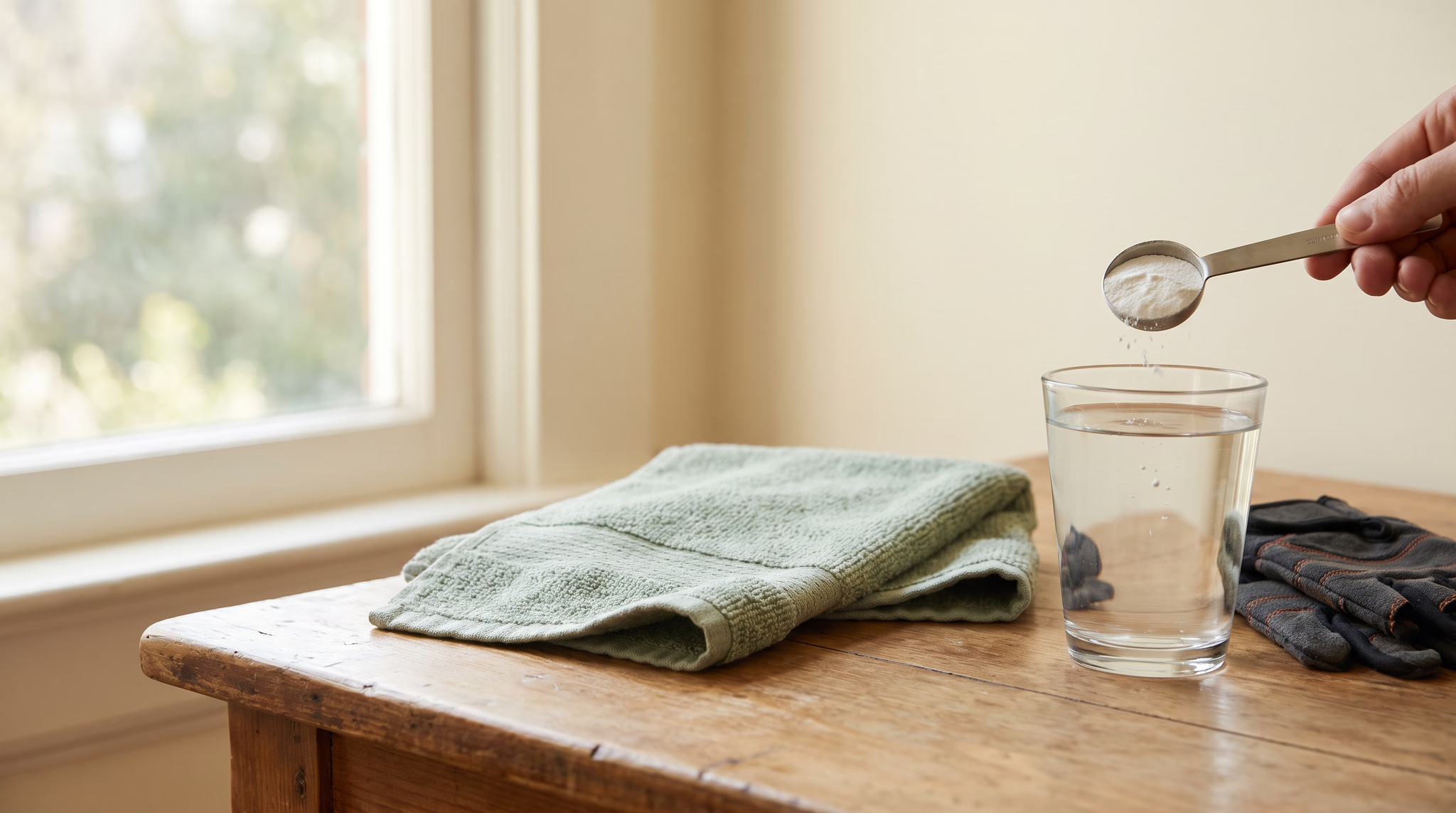
Sports nutrition bodies and meta-analyses agree that creatine improves strength, lean mass and high-intensity performance when combined with training, and that 3 to 5 g a day is safe in healthy adults. Claims for memory, depression and healthy aging rest on small trials and are best described as promising; trials in Parkinson disease and ALS were negative.
The rules
The rules ofCreatine supplementation
- 1Take 3 to 5 g of creatine monohydrate every day, or about 0.1 g per kg of body weight.
- 2Optionally load with 20 g a day split into four 5 g doses for 5 to 7 days, then continue at 3 to 5 g a day.
- 3Take it daily without cycling off; timing within the day is flexible.
- 4Combine it with resistance or high-intensity training to get the muscle and performance benefits.
Share these rules as an image or a link.
| Standard daily dose | 3 to 5 g a day with no loading phase; full stores in about 4 weeks. |
|---|---|
| Loading protocol | 20 g a day for 5 to 7 days, then 3 to 5 g a day. |
| Higher brain-focused dose | About 10 g a day, split into two 5 g doses, as used by some researchers and podcasters; experimental. |
| Acute sleep-loss dose | A single dose of about 0.35 g per kg during sleep deprivation, as used in one study; experimental. |
What it aims to do
- Increase strength, power and lean mass from resistance and sprint training.
- Improve repeated high-intensity exercise performance.
- Help older adults keep muscle and function as they age.
- Support memory and mental performance, especially under sleep loss, in vegetarians and in older adults.
- Support mood alongside standard depression treatment.
What it claims, and what the evidence shows
Grades reflect evidence in people. Animal and cell results alone never earn more than limited.
Muscle and strength
Strong evidenceAthletic performance
Strong evidenceBody fat and weight
Moderate evidenceBrain and cognition
Limited evidenceMood and stress
Limited evidenceBone health
Evidence againstImproves bone density
A 2-year trial in postmenopausal women found no change in bone mineral density, though some measures of hip geometry were preserved. [9]
Lifespan and mortality
Evidence against
Key takeaways
- 1
Creatine monohydrate at 3 to 5 g a day fills muscle stores in about 4 weeks; loading at 20 g a day does it in about a week [1].
- 2
- 3
- 4
- 5
What is creatine and what does it do?
Creatine is a compound made from amino acids that muscles and the brain store as phosphocreatine, a quick reserve that rebuilds ATP during hard efforts. The body makes about 1 g a day and food supplies about 1 g [13]. Supplements raise muscle stores by about 20% [1].
Creatine is not a steroid or a stimulant. The liver and kidneys make it from the amino acids arginine, glycine and methionine, and meat and fish provide more. A 5 g dose equals the creatine in about 1.1 kg of raw steak [20], which is why vegetarians usually start with lower muscle stores.
Inside muscle, creatine kinase turns creatine into phosphocreatine at rest. During a sprint, a heavy set or a jump, phosphocreatine hands its phosphate to ADP to rebuild ATP within seconds. More stored phosphocreatine means a little more work before fatigue in short, maximal efforts, and over weeks that adds up to more training volume [12].
How much do supplements raise stores?
- 5 g taken four to six times a day for 2 or more days raised muscle creatine, by up to 50% in people who started low [20].
- 20 g a day for 6 days raised it about 20%; 3 g a day for 28 days reached the same level [1].
- Stores fall back to baseline about 30 days after stopping [1].
Creatine versus creatinine
Creatinine is the breakdown product of creatine that kidneys clear. Supplements increase creatinine in urine [1] and can nudge blood creatinine up, which can make a routine kidney test look slightly worse without any kidney damage. Tell your clinician you take creatine before kidney tests.
The phosphocreatine energy system
- Phosphocreatine energy system
- 1Creatine comes inThe body makes about 1 g a day and food supplies about 1 g; supplements add 3 to 5 g.
- 2Stored as phosphocreatineAt rest, creatine kinase adds a phosphate in muscle and brain cells.
- 3A hard effort draws on itIn a sprint or heavy set, phosphocreatine gives its phosphate to ADP to rebuild ATP within seconds.
- 4Creatine is free againIt is recharged at rest. Some breaks down to creatinine, which the kidneys clear.
- Back to step 1
The brain uses the same system but makes some creatine itself and takes up less from the blood. Supplements can nudge blood creatinine up without kidney damage.
How much creatine should you take per day?
The standard protocol is 3 to 5 g of creatine monohydrate a day, or about 0.1 g per kg of body weight [21]. An optional loading phase of 20 g a day for 5 to 7 days fills muscle faster, but 3 g a day reaches the same level in about 4 weeks [1].
| Protocol | Dose | Time to full stores | Notes |
|---|---|---|---|
| Daily dose | 3 to 5 g a day | About 4 weeks | Simplest; fewest stomach issues [1] |
| Loading | 20 g a day in four 5 g doses for 5 to 7 days, then 3 to 5 g | About 1 week | Faster; more chance of bloating [1] [20] |
| Weight-based | 0.1 g per kg a day | About 4 weeks | About 7 g for a 70 kg person [21] |
| Experimental brain doses | 10 to 20 g a day | Unknown | Research use; see the brain section [17] |
Practical details
- Form. Creatine monohydrate is the form used in nearly all studies [4]. Other forms have far less research behind them and usually cost more.
- Timing. Take it at any time of day, with or without food. Consistency matters more than timing.
- Cycling. There is no need to cycle off. Doses up to 30 g a day for 5 years have been used safely in healthy people [12].
- Training. Creatine works with training, not instead of it. Its benefits come from letting you do a bit more work in each session.
Who follows it
Creatine is one of the few supplements that national sports bodies endorse; the Australian Institute of Sport lists it in Group A [13]. Popular health voices use more: Bryan Johnson's Blueprint lists 7.5 g a day, and researcher Darren Candow and podcaster Rhonda Patrick have said they take about 10 g a day for possible brain benefits.
Loading versus a steady daily dose
- 20 g a day for 6 days (loading)20 % rise in muscle total creatine
Maintained with 2 g a day afterwards
- 3 g a day for 28 days20 % rise in muscle total creatine
Same end point, reached more slowly
- 30 days after stopping0 % rise in muscle total creatine
Back to the starting level
Show the data
| Item | Value (% rise in muscle total creatine) | Low | High | Note |
|---|---|---|---|---|
| 20 g a day for 6 days (loading) | 20 | Maintained with 2 g a day afterwards | ||
| 3 g a day for 28 days | 20 | Same end point, reached more slowly | ||
| 30 days after stopping | 0 | Back to the starting level |
Does creatine build muscle and strength?
Yes, alongside training. Across 53 trials creatine improved upper body strength with an effect size of 0.32 [2], and in older adults it added fat-free mass and strength beyond resistance training alone [3]. It helps most in short, intense efforts.
Creatine is among the best-studied supplements in sport. The International Society of Sports Nutrition concludes that it raises muscle creatine and improves high-intensity exercise performance and training adaptations [12].
- Strength. A meta-analysis of 53 placebo-controlled trials with 1,138 people found effect sizes of 0.27 for bench press and 0.68 for chest press, with a global upper limb effect of 0.32. The benefit did not depend on age, sex, training status or dosing [2].
- Older adults. In 357 adults averaging about 64 years, creatine plus about 12.6 weeks of resistance training increased fat-free mass, chest press and leg press strength and 30-second chair stands more than training alone [3].
- Limits. In a 2-year trial in 237 postmenopausal women, creatine sped up walking but did not add strength on bench press or hack squat beyond training [9].
What it does not do
Creatine does not build muscle without training. Some early weight gain is water drawn into muscle cells, which is not fat. The benefits are clearest for sprints, lifting and repeated bursts; they are smaller for long endurance events.
Creatine pairs naturally with strength training and a high-protein diet.
Creatine and upper body strength
- Chest press0.68 effect size vs placebo
- All upper limb exercises0.32 effect size vs placebo
- Pectoral exercises0.29 effect size vs placebo
- Bench press0.27 effect size vs placebo
Show the data
| Item | Value (effect size vs placebo) | Low | High | Note |
|---|---|---|---|---|
| Chest press | 0.68 | 0.15 | 1.21 | |
| All upper limb exercises | 0.32 | 0.19 | 0.45 | |
| Pectoral exercises | 0.29 | 0.16 | 0.42 | |
| Bench press | 0.27 | 0.13 | 0.4 |
Does creatine help the brain, memory and cognition?
Possibly, modestly. A 2024 meta-analysis of 16 trials found small improvements in memory (effect size 0.31), attention and processing speed, but not overall cognition [4]. Effects seem larger in vegetarians, older adults and during sleep loss. Researchers call the brain evidence preliminary [6].
The brain uses the same phosphocreatine system as muscle. It makes some creatine itself and takes up less from the blood, so higher or longer dosing may be needed to change brain stores [6].
What trials show:
- Healthy adults. Six trials suggested better short-term memory and reasoning, with conflicting results elsewhere; vegetarians responded better on memory tasks [14]. The 2024 meta-analysis of 16 trials and 492 adults found benefits for memory, attention time and processing speed, but not for overall cognition or executive function [4].
- Vegetarians. 5 g a day for 6 weeks improved working memory and reasoning scores in 45 young vegetarians [15].
- Sleep loss. A single dose of 0.35 g per kg during 21 hours of sleep deprivation changed brain energy markers and improved processing speed [16]. That is about 25 g for a 70 kg person, far above the standard dose.
- Alzheimer's disease. In a single-arm pilot of 20 patients, 20 g a day for 8 weeks raised brain creatine 11% and was followed by better scores on some tests [17]. With no placebo group, this shows feasibility, not benefit.
What the evidence does not show
No trial shows that creatine prevents dementia. In Parkinson disease, 10 g a day for at least 5 years did not slow decline in 1,741 patients [7], and in ALS three trials found no effect on survival [8]. Creatine researchers themselves warn that brain creatine is hard to measure and that clinical results remain inconsistent [6].
Can creatine help with depression?
Two small randomized trials suggest creatine can boost standard depression treatment. Adding 5 g a day to an SSRI improved depression scores from week 2 in 52 women [5], and adding creatine to talk therapy lowered PHQ-9 scores by 5.12 more points than placebo in 100 adults [18].
The idea is that depression involves impaired brain energy metabolism, which creatine might support.
| Trial | People | Design | Result |
|---|---|---|---|
| Lyoo 2012 | 52 women with major depression | Escitalopram plus creatine 5 g a day or placebo, 8 weeks | Greater improvement on the Hamilton scale from week 2 to week 8 [5] |
| Sherpa 2025 | 100 adults with depression | CBT plus creatine or placebo, 8 weeks | PHQ-9 lowered 5.12 points more with creatine; similar side effects [18] |
Peter Attia's team has described the findings as promising but preliminary, and notes that people with bipolar disorder should check with a clinician before starting, since they may be at higher risk of adverse effects.
How to read this
- Both trials were small, short and used creatine on top of proven treatment, not instead of it.
- The second trial was labeled a pilot and hypothesis-generating by its authors [18].
- Reviewers count depression among conditions where creatine findings are still preliminary and inconsistent [6].
Creatine is not a substitute for depression treatment. Anyone with depression who wants to try it should discuss it with the clinician managing their care.
Is creatine safe for your kidneys and hair?
In healthy people, studies find no kidney damage at normal doses [10] [22], and a 12-week trial found no effect on DHT or hair [11]. People with kidney disease should avoid it unless their clinician agrees; a 1998 case report described kidney dysfunction in a creatine user [23].
Kidneys
- Athletes taking creatine for 10 months to 5 years had normal creatinine, urea and albumin clearance [22].
- A meta-analysis of 15 studies found no evidence of kidney damage at the doses and durations studied [10].
- Doses up to 30 g a day for 5 years were well tolerated in healthy people [12].
- The main caution comes from a 1998 case report of kidney dysfunction in a creatine user [23]. Case reports cannot show cause, but they are why people with kidney disease are told to avoid it.
Creatine raises creatinine, so a standard eGFR can read lower than true kidney function. Tell your clinician you take it.
Hair loss
The hair loss worry traces back to one 2009 study: in 20 rugby players, a 25 g a day loading week raised DHT, the hormone linked to male pattern baldness, by 56%, and it stayed 40% higher on 5 g a day [24]. Hair was never measured. A 2025 randomized trial in 45 resistance-trained men found 5 g a day for 12 weeks did not change DHT, the DHT to testosterone ratio, hair density, follicle counts or thickness [11].
Other side effects
- A small, early weight gain from water in muscle.
- Bloating or loose stools, mostly with large single doses during loading; splitting doses helps.
- Cramping and dehydration are among the myths an expert panel examined; it found creatine well tolerated at recommended doses [21].
There is little research in pregnancy, and some public protocols, such as Blueprint, list creatine among supplements to avoid during pregnancy.
Choosing a creatine protocol
What is your goal?
- Muscle and performance, no rush3 to 5 g a day, every day. Full stores in about 4 weeks.
- Full stores within about a weekLoad with 20 g a day in four 5 g doses for 5 to 7 days, then 3 to 5 g a day.
- Dosing by body weight0.1 g per kg a day, about 7 g for a 70 kg person.
- Brain or sleep-loss research doses10 to 20 g a day, or a single 0.35 g per kg dose in studies. Experimental.
Creatine monohydrate is the form used in nearly all studies. Take it at any time of day, with or without food; consistency matters more than timing.
Does creatine help with aging, bones and longevity?
It helps older adults gain more muscle and strength from training [3]. It did not improve bone density in a 2-year trial [9], and it did not slow Parkinson disease or ALS [7] [8]. Lifespan gains come only from mice [19].
Creatine is often pitched as a longevity supplement. The evidence sorts into three groups.
Supported: muscle and function in older adults. Creatine added to resistance training increased fat-free mass, strength and chair-stand performance more than training alone [3]. Because low muscle mass and strength predict disability, this is the most useful aging benefit.
Not supported: bone density and neurodegeneration.
- In 237 postmenopausal women, 2 years of creatine with exercise did not change bone mineral density at the hip or spine, though it preserved some measures of femoral neck geometry linked to bending strength [9].
- In Parkinson disease, 10 g a day for at least 5 years did not slow decline [7].
- In ALS, 5 to 10 g a day did not improve survival [8].
Animal only: lifespan. Aged mice fed creatine had a 9% longer median healthy lifespan [19]. No human study has tested lifespan.
The bottom line on aging
For an older adult who trains, 3 to 5 g a day is a low-cost way to get more from each session. Claims that creatine slows aging itself go beyond the human evidence.
The studies, by type
Strongest designs first. Scroll each row; every card links to the paper and says whether it supports the protocol.
Systematic reviews and meta-analyses (6)
Randomized controlled trials (8)
Large observational studies in people (1)
Mechanistic studies in people (2)
Animal and cell studies (1)
Case reports and N-of-1 experiments (2)
Hypotheses and expert reviews (4)
Who follows it, who backs it, who doubts it
Public positions summarized in our words. Follow each link for the full context.
Follow it
Rhonda PatrickBiomedical scientist and host of FoundMyFitness
Takes 10 g a day in two 5 g doses for possible brain benefits and has taken 15 to 20 g during sleep loss, while noting that her own experience could reflect placebo and that the brain dose is still an open question.
FoundMyFitness clip: How creatine dose shapes muscle and brain benefits
Bryan JohnsonEntrepreneur, founder of Blueprint
His published Blueprint routine includes 5 g of creatine plus 2.5 g in his Longevity Mix, 7.5 g a day in total, taken before morning exercise.
Support it
Darren CandowExercise scientist, University of Regina, and creatine researcher
Argues the brain may respond to creatine differently from muscle and may need higher or longer dosing; he takes about 10 g a day himself and presents that as personal practice while the research develops.
Peter AttiaPhysician and author of Outlive
His team calls creatine's low risk relative to benefit an intriguing option to consider alongside standard depression treatment, while stressing that the evidence is preliminary and that people with kidney issues or bipolar disorder should check with a clinician.
An emerging role for creatine supplementation in the treatment of depression, April 2025
Jose AntonioExercise scientist, Nova Southeastern University, and ISSN author
Led an expert panel that addressed the common myths about creatine, including kidney damage and hair loss, and concluded it is well tolerated at 3 to 5 g a day.
Journal of the International Society of Sports Nutrition, 2021
Mixed or cautious
Gil CarvalhoDoctor and host of the Nutrition Made Simple! channel
Explains in a video why he personally does not take creatine and argues that whether it is worth taking depends on the person, reviewing the evidence on muscle, cognition, glucose and kidney safety.
Public examples
- Blueprint (Bryan Johnson)
A public longevity routine that includes 7.5 g of creatine a day as part of a morning drink.
- Australian Institute of Sport supplement framework, Group A
Australia's national sports institute lists creatine monohydrate among supplements with strong evidence for use in specific sport situations.
How to follow it
- Choose plain creatine monohydrate, ideally a product with third-party testing for purity.
- Measure 3 to 5 g a day with a kitchen scale or the scoop that comes with the product, checking its stated weight.
- Mix it into water, coffee, a shake or food at any time of day.
- If you want faster results, load with four 5 g doses a day for 5 to 7 days, then drop to 3 to 5 g.
- Pair it with at least two resistance training sessions a week.
- Tell your clinician you take creatine before any kidney blood test.
How to know you are following it
Count days taken per week; aim for every day, since stores drift back to baseline within about a month of stopping. Track training performance, such as reps at a given load, over 4 to 8 weeks. A small early rise in body weight from water in muscle is expected.
Common mistakes
- Expecting creatine to work without training.
- Taking 20 g or more in one go and getting stomach upset; split large doses.
- Paying more for alternative forms with no proven advantage over monohydrate.
- Stopping after a few days because of water weight or because nothing changed yet.
- Not telling a clinician, which can lead to a raised creatinine being misread as kidney damage.
Who should be careful
Check with a clinician first if you
- People with chronic kidney disease or reduced kidney function, unless their nephrologist agrees.
- People taking medicines that strain the kidneys, such as regular high-dose NSAIDs, should check with a clinician first.
- People with bipolar disorder should talk to their psychiatrist before starting.
- Pregnant or breastfeeding people, because there is little research.
- Children and teenagers should use it only with medical guidance.
Possible side effects
- Early weight gain from water held in muscle.
- Bloating, cramps or loose stools with large single doses, mostly during loading.
- A small rise in blood creatinine that can make kidney function tests look worse.
Watch
Talks and explainers worth your time. Nothing loads from YouTube until you press play.
The Optimal Creatine Protocol for Strength, Brain, and Longevity | Darren Candow, PhD
FoundMyFitnessFoundMyFitness@foundmyfitnessSubscribers736KStartedJune 2013CountryUnited StatesVideos153Total views40MNew videos, last 30 days2New videos, last year18From YouTube, 2026-10-31Open on YouTube
A long interview with one of the most active creatine researchers on dosing for muscle, bone and the brain.
Creatine: Dose, Benefits & Safety | Dr. Rhonda Patrick & Dr. Andrew Huberman
Huberman Lab ClipsHuberman Lab Clips@hubermanlabclipsSubscribers1.5MStartedJuly 2021CountryUnited StatesVideos574Total views137.5MNew videos, last 30 days22New videos, last year204From YouTube, 2026-10-31Open on YouTube
A short clip on dosing and safety from two widely followed science communicators who take creatine.
Creatine: The Science Behind The Supplement
The Neuromuscular Junction with Dr. TarnopolskyThe Neuromuscular Junction with Dr. Tarnopolsky@dr.marktarnopolskySubscribers863StartedMarch 2023CountryCanadaVideos12Total views12.4KNew videos, last 30 days0New videos, last year0From YouTube, 2026-10-31Open on YouTube
A neuromuscular physician-researcher explains how creatine works and where it has been tested in disease.
Does Creatine Cause Hair Loss? (Science Explained)
Jeff NippardJeff Nippard@jeffnippardSubscribers8.8MStartedApril 2014CountryCanadaVideos630Total views2.3BNew videos, last 30 days3New videos, last year33From YouTube, 2026-10-31Open on YouTube
Walks through the single rugby study behind the hair loss worry and why it does not show hair loss.
Doctor Reveals: Why I do NOT take Creatine (+ who it IS and is NOT right for)
Nutrition Made Simple!Nutrition Made Simple!@nutritionmadesimpleSubscribers404KStartedMay 2014CountryUnited StatesVideos477Total views45.5MNew videos, last 30 days4New videos, last year133From YouTube, 2026-10-31Open on YouTube
A more skeptical take from a physician-scientist on who benefits and who may not need it.
Common questions
Do you need a creatine loading phase?
No. Loading with 20 g a day for about 6 days fills muscle stores in a week, but 3 g a day reaches the same level in about 4 weeks [1]. Loading is useful only if you want results quickly.
Does creatine cause hair loss?
Is creatine bad for your kidneys?
Is creatine good for women?
When should you take creatine?
Any time of day. What matters is taking 3 to 5 g daily so muscle stores stay full [21]. Taking it with a meal or after training is convenient but not required.
Does creatine make you gain weight?
Usually a little at first, mostly water drawn into muscle cells rather than fat. Over months of training, extra muscle can add weight too; in older adults creatine increased fat-free mass with no change in fat mass [3].
Can you get enough creatine from food?
Is creatine gummy or powder better?
Creatine monohydrate powder is the form used in almost all studies [4]. Gummies and other forms can work if they contain the stated dose, but they cost more and are harder to dose accurately.
Should teenagers take creatine?
Reviews report creatine has been used safely in patient populations from infants to older adults [12], but evidence in healthy young athletes is thinner than in adults. Teenagers should discuss it with a parent and clinician first.
Sources
- 1.Hultman E, Söderlund K, Timmons JA, et al. Muscle creatine loading in men. Journal of Applied Physiology, 1996. doi:10.1152/jappl.1996.81.1.232
- 2.Lanhers C, Pereira B, Naughton G, et al. Creatine Supplementation and Upper Limb Strength Performance: A Systematic Review and Meta-Analysis. Sports Medicine, 2017. doi:10.1007/s40279-016-0571-4
- 3.Devries MC, Phillips SM. Creatine supplementation during resistance training in older adults-a meta-analysis. Medicine & Science in Sports & Exercise, 2014. doi:10.1249/MSS.0000000000000220
- 4.Xu C, Bi S, Zhang W, Luo L. The effects of creatine supplementation on cognitive function in adults: a systematic review and meta-analysis. Frontiers in Nutrition, 2024. doi:10.3389/fnut.2024.1424972
- 5.Lyoo IK, Yoon S, Kim TS, et al. A randomized, double-blind placebo-controlled trial of oral creatine monohydrate augmentation for enhanced response to a selective serotonin reuptake inhibitor in women with major depressive disorder. American Journal of Psychiatry, 2012. doi:10.1176/appi.ajp.2012.12010009
- 6.Candow DG, Pratt J, Fabiano N, et al. Creatine Supplementation and the Brain: Have We Put the Cart Before the Horse?. Journal of Dietary Supplements, 2026. doi:10.1080/19390211.2026.2616440
- 7.NINDS NET-PD Investigators, Kieburtz K, Tilley BC, et al. Effect of creatine monohydrate on clinical progression in patients with Parkinson disease: a randomized clinical trial. JAMA, 2015. doi:10.1001/jama.2015.120
- 8.Pastula DM, Moore DH, Bedlack RS. Creatine for amyotrophic lateral sclerosis/motor neuron disease. Cochrane Database of Systematic Reviews, 2012. doi:10.1002/14651858.CD005225.pub3
- 9.Chilibeck PD, Candow DG, Gordon JJ, et al. A 2-yr Randomized Controlled Trial on Creatine Supplementation during Exercise for Postmenopausal Bone Health. Medicine & Science in Sports & Exercise, 2023. doi:10.1249/MSS.0000000000003202
- 10.de Souza E Silva A, Pertille A, Reis Barbosa CG, et al. Effects of Creatine Supplementation on Renal Function: A Systematic Review and Meta-Analysis. Journal of Renal Nutrition, 2019. doi:10.1053/j.jrn.2019.05.004
- 11.Lak M, Forbes SC, Ashtary-Larky D, et al. Does creatine cause hair loss? A 12-week randomized controlled trial. Journal of the International Society of Sports Nutrition, 2025. doi:10.1080/15502783.2025.2495229
- 12.Kreider RB, Kalman DS, Antonio J, et al. International Society of Sports Nutrition position stand: safety and efficacy of creatine supplementation in exercise, sport, and medicine. Journal of the International Society of Sports Nutrition, 2017. doi:10.1186/s12970-017-0173-z
- 13.Australian Institute of Sport. Group A supplements: Creatine (Creatine Monohydrate). Australian Sports Commission, 2026. Link
- 14.Avgerinos KI, Spyrou N, Bougioukas KI, Kapogiannis D. Effects of creatine supplementation on cognitive function of healthy individuals: A systematic review of randomized controlled trials. Experimental Gerontology, 2018. doi:10.1016/j.exger.2018.04.013
- 15.Rae C, Digney AL, McEwan SR, Bates TC. Oral creatine monohydrate supplementation improves brain performance: a double-blind, placebo-controlled, cross-over trial. Proceedings of the Royal Society B, 2003. doi:10.1098/rspb.2003.2492
- 16.Gordji-Nejad A, Matusch A, Kleedörfer S, et al. Single dose creatine improves cognitive performance and induces changes in cerebral high energy phosphates during sleep deprivation. Scientific Reports, 2024. doi:10.1038/s41598-024-54249-9
- 17.Smith AN, Choi IY, Lee P, et al. Creatine monohydrate pilot in Alzheimer's: Feasibility, brain creatine, and cognition. Alzheimer's & Dementia: Translational Research & Clinical Interventions, 2025. doi:10.1002/trc2.70101
- 18.Sherpa NN, De Giorgi R, Ostinelli EG, et al. Efficacy and safety profile of oral creatine monohydrate in add-on to cognitive-behavioural therapy in depression: An 8-week pilot, double-blind, randomised, placebo-controlled feasibility and exploratory trial in an under-resourced area. European Neuropsychopharmacology, 2025. doi:10.1016/j.euroneuro.2024.10.004
- 19.Bender A, Beckers J, Schneider I, et al. Creatine improves health and survival of mice. Neurobiology of Aging, 2008. doi:10.1016/j.neurobiolaging.2007.03.001
- 20.Harris RC, Söderlund K, Hultman E. Elevation of creatine in resting and exercised muscle of normal subjects by creatine supplementation. Clinical Science, 1992. doi:10.1042/cs0830367
- 21.Antonio J, Candow DG, Forbes SC, et al. Common questions and misconceptions about creatine supplementation: what does the scientific evidence really show?. Journal of the International Society of Sports Nutrition, 2021. doi:10.1186/s12970-021-00412-w
- 22.Poortmans JR, Francaux M. Long-term oral creatine supplementation does not impair renal function in healthy athletes. Medicine & Science in Sports & Exercise, 1999. doi:10.1097/00005768-199908000-00005
- 23.Pritchard NR, Kalra PA. Renal dysfunction accompanying oral creatine supplements. Lancet, 1998. doi:10.1016/s0140-6736(05)79319-3
- 24.van der Merwe J, Brooks NE, Myburgh KH. Three weeks of creatine monohydrate supplementation affects dihydrotestosterone to testosterone ratio in college-aged rugby players. Clinical Journal of Sport Medicine, 2009. doi:10.1097/JSM.0b013e3181b8b52f
AumniVIDA explains health information for general wellness. Talk to your clinician before changing your diet, training or medication for a health condition.