
Avoiding seed oils
What is avoiding seed oils?
Avoiding seed oils means cutting soybean, canola, corn, sunflower and similar oils rich in the omega-6 fat linoleic acid, based on claims they cause inflammation and chronic disease. Most trials and large cohorts find these oils lower heart disease risk when they replace saturated fat, though two recovered 1960s trials showed no benefit.
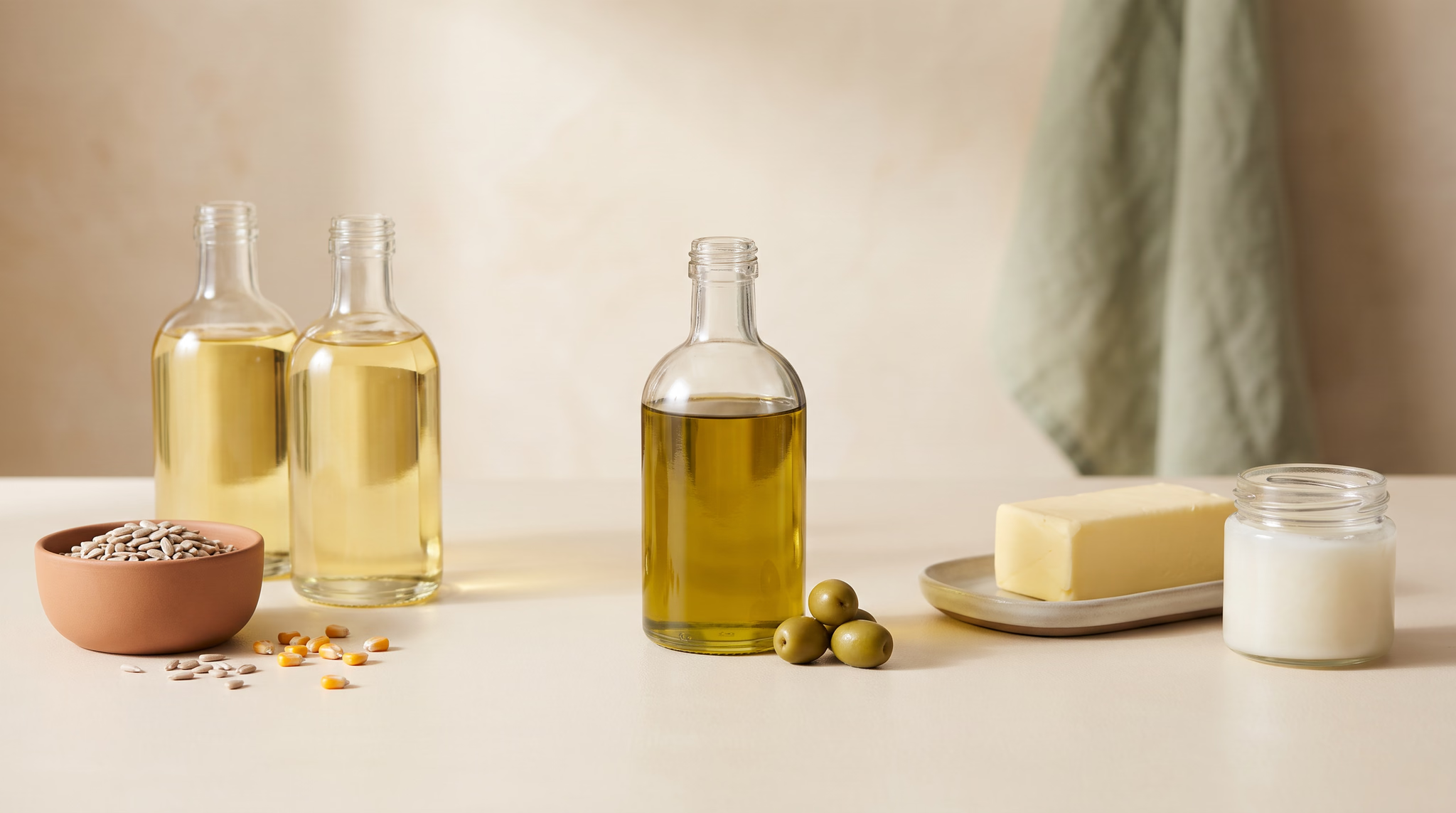
Mainstream bodies such as the American Heart Association recommend replacing saturated fat with polyunsaturated vegetable oils, based on meta-analyses of trials and large cohort and biomarker studies showing lower heart disease and mortality. Critics point to recovered data from the Minnesota and Sydney trials, which found no benefit or harm from linoleic acid alone, and to mechanistic work on oxidation. Randomized trials do not show that seed oils raise inflammation.
The rules
The rules ofAvoiding seed oils
- 1Do not cook with canola (rapeseed), soybean, corn, sunflower, safflower, cottonseed, grapeseed or rice bran oil.
- 2Avoid packaged foods whose ingredient list includes any of those oils.
- 3Ask restaurants which fat they use and choose dishes not fried in seed oils.
- 4Cook with olive oil, avocado oil, butter, ghee, tallow, lard or coconut oil instead.
Share these rules as an image or a link.
| Strict seed-oil-free | No seed oils at home or in packaged or restaurant food. |
|---|---|
| Low linoleic acid | Also limit nuts, seeds and conventionally raised pork and poultry to keep linoleic acid intake low. |
| Refined-oil avoidance | Avoid refined, bleached and deodorized oils but allow cold-pressed versions. |
| Olive oil swap | Replace seed oils with extra virgin olive oil and keep saturated fat moderate. |
What it aims to do
- Lower intake of the omega-6 fat linoleic acid and improve the omega-6 to omega-3 ratio.
- Reduce inflammation and oxidative stress that followers attribute to seed oils.
- Lower risk of heart disease, obesity and type 2 diabetes.
- Eat fewer refined and industrially processed fats and fewer packaged and fried foods.
What it claims, and what the evidence shows
Grades reflect evidence in people. Animal and cell results alone never earn more than limited.
Heart and blood vessels
Evidence againstInflammation
Evidence againstLifespan and mortality
Mixed evidenceBlood sugar and insulin
Evidence againstBody fat and weight
Evidence againstSkin
Not enough evidenceReduces sunburn, acne and skin aging
We found no human trials testing whether seed oil intake changes sunburn, acne or skin aging.
Key takeaways
- 1
Seed oils are rich in the omega-6 fat linoleic acid; avoiding them is popular but mainstream science does not support it.
- 2
Randomized trials do not show that seed oils raise inflammation [1].
- 3
- 4
- 5
What are seed oils?
Seed oils are cooking oils pressed or solvent-extracted from seeds and grains, such as soybean, canola, corn, sunflower, safflower, cottonseed, grapeseed and rice bran oil. Most are rich in the omega-6 fat linoleic acid. Avoiding them is a popular protocol that mainstream nutrition science does not support.
The phrase 'seed oils' is used mostly by critics. Physician Cate Shanahan popularized a list she calls the 'hateful eight': canola, corn, cottonseed, soy, sunflower, safflower, grapeseed and rice bran oil. Nutrition scientists usually call them vegetable oils and group them with other unsaturated fats.
What these oils share is a high content of polyunsaturated fat, mostly linoleic acid, an omega-6 fatty acid the body cannot make and needs in small amounts. Olive and avocado oil are mostly monounsaturated and are not on the list. High-oleic versions of sunflower and safflower oil are bred to be low in linoleic acid.
How much has intake changed?
A lot. Linoleic acid in the body fat of US adults rose by 136% over about 50 years, tracking the shift toward soybean oil and other seed oils [19]. This rise is a central part of the critics' case. It is a correlation over a period when almost everything about the food supply changed, including the rise of ultra-processed food.
Where seed oils show up
Most seed oil in modern diets comes from packaged and restaurant food rather than home cooking: fried foods, chips, crackers, baked goods, dressings, mayonnaise and ready meals. This is why avoiding seed oils overlaps heavily with avoiding ultra-processed food.
Which oils count as seed oils?
The 'hateful eight'
The seed oils named by Cate Shanahan.
- Canola (rapeseed)
- Corn
- Cottonseed
- Soybean
- Sunflower
- Safflower
- Grapeseed
- Rice bran
Fats critics cook with instead
Animal fats and coconut oil, none on the list.
- Butter
- Ghee
- Beef tallow
- Lard
- Coconut oil
Not on the list
Pressed from fruit flesh and mostly monounsaturated.
- Extra virgin olive oil
- Avocado oil
High-oleic versions of sunflower and safflower oil are bred to be low in linoleic acid.
What are the rules of a seed-oil-free diet?
Followers avoid the eight common seed oils in cooking and in packaged and restaurant food, and cook with butter, ghee, tallow, lard, coconut, olive or avocado oil instead. Stricter versions also limit linoleic acid from nuts, seeds and conventionally raised pork and chicken.
Core rules most followers use:
- No seed oils at home. Remove canola, soybean, corn, sunflower, safflower, cottonseed, grapeseed and rice bran oil from the kitchen.
- Read labels. Skip packaged foods listing those oils, which rules out most chips, crackers, dressings and mayonnaise.
- Choose restaurants and fried foods carefully. Ask what the fryer oil is; some chains now fry in beef tallow.
- Cook with other fats. Olive and avocado oil are accepted by both camps; animal fats and coconut oil are favored by many followers.
Variants
- Linoleic acid minimization: a target such as keeping linoleic acid to a few percent of calories, which also limits nuts, seeds and some poultry and pork.
- Refined-oil avoidance: cold-pressed or unrefined oils allowed, refined and deodorized oils avoided.
- Swap to olive oil: the mildest version, which replaces seed oils with extra virgin olive oil and keeps butter low. This is close to a Mediterranean diet.
What the protocol leaves out
The protocol is defined by what it removes, not by what replaces it. That matters: the evidence below shows that the health effect depends almost entirely on the swap. Replacing seed oils with olive oil is a very different change from replacing them with butter or tallow.
Why do people say seed oils are bad for you?
The claims are that seed oils cause inflammation because they are rich in omega-6, that their polyunsaturated fat oxidizes into harmful compounds during refining, frying and in the body, and that their rise tracks the rise in obesity and chronic disease. Each claim has a plausible mechanism; human trials mostly do not confirm the harm.
The case against seed oils rests on four ideas:
- Omega-6 and inflammation. Linoleic acid can be converted to arachidonic acid, a precursor of inflammatory mediators such as prostaglandins and leukotrienes [11].
- Omega-6 to omega-3 balance. Modern diets have far more omega-6 than omega-3. The US MAHA Commission report says seed oils contribute to an imbalanced ratio and calls this a topic of ongoing research [20].
- Oxidation. Linoleic acid has two double bonds and oxidizes easily. Its oxidized products (OXLAMs) and oxidized LDL are proposed drivers of atherosclerosis [21]. Cate Shanahan argues that oxidative stress from these oils is the root of most chronic disease.
- Refining and processing. Industrial refining reduces micronutrients such as vitamin E and phytosterols [20]. Critics also worry about solvent residues such as hexane; food scientist Eric Decker told NPR the traces are too low to be toxic.
What supports these ideas
Some evidence fits. Lowering dietary linoleic acid for 12 weeks lowered blood OXLAMs in people with chronic headaches [12]. In mice, a soybean oil diet caused more weight gain, diabetes and fatty liver than a coconut oil diet with the same calories [18]. And recovered data from two old trials found no benefit, or harm, when linoleic acid replaced saturated fat [2] [3].
Mechanisms and mouse data are a reason to test an idea, not proof of harm in people. The next sections look at what happened when people actually ate more or less of these oils.
The seed oil claims, link by link
- The claim
- Inflammation: Linoleic acid becomes arachidonic acid, a precursor of inflammatory mediators.
- Oxidation: Linoleic acid oxidizes into OXLAMs and oxidized LDL, proposed drivers of atherosclerosis.
- Heart disease: Swapping saturated fat for seed oils does not prevent heart disease or deaths.
- What fits
- Inflammation: The conversion pathway is real.
- Oxidation: A 12-week low linoleic acid diet lowered blood OXLAMs.
- Heart disease: Recovered Minnesota and Sydney trial data found no benefit, or harm.
- What trials found
- Inflammation: None of 15 randomized trials found a rise in inflammatory markers.
- Oxidation: Lower OXLAMs are a mechanism; no trial shows harm in people.
- Heart disease: 8 trials of more polyunsaturated fat in place of saturated fat: 19% fewer coronary events.
- Verdict
- Inflammation: Not supported by trials
- Oxidation: Mechanism only
- Heart disease: Disputed; most pooled trials favor seed oils
| Inflammation | Oxidation | Heart disease | |
|---|---|---|---|
| The claim | Linoleic acid becomes arachidonic acid, a precursor of inflammatory mediators. | Linoleic acid oxidizes into OXLAMs and oxidized LDL, proposed drivers of atherosclerosis. | Swapping saturated fat for seed oils does not prevent heart disease or deaths. |
| What fits | The conversion pathway is real. | A 12-week low linoleic acid diet lowered blood OXLAMs. | Recovered Minnesota and Sydney trial data found no benefit, or harm. |
| What trials found | None of 15 randomized trials found a rise in inflammatory markers. | Lower OXLAMs are a mechanism; no trial shows harm in people. | 8 trials of more polyunsaturated fat in place of saturated fat: 19% fewer coronary events. |
| Verdict | Not supported by trials | Mechanism only | Disputed; most pooled trials favor seed oils |
The heart disease split comes from which trials count. Replacing seed oils with butter or tallow raises LDL cholesterol.
Do seed oils cause inflammation?
Randomized trials say no. A review of 15 trials in healthy people found no rise in C-reactive protein, cytokines or other inflammatory markers when linoleic acid was added to the diet [1], and a 10-week trial found less liver fat and no sign of inflammation on a high omega-6 diet [10].
The inflammation claim is the most popular and the most directly tested.
- Markers of inflammation. None of 15 randomized trials found that adding linoleic acid raised C-reactive protein, fibrinogen, cytokines or TNF-alpha in healthy people [1].
- Liver fat and inflammation. In 67 adults with abdominal obesity, a 10-week diet high in vegetable omega-6 fat lowered liver fat compared with a butter-based diet, with no signs of increased inflammation or oxidative stress [10].
- Overfeeding. When young adults overate muffins made with sunflower oil or palm oil for 7 weeks, palm oil raised liver and visceral fat much more [17].
Reviewers who know the arachidonic acid pathway well conclude that eating more linoleic or arachidonic acid does not raise most inflammatory markers in healthy adults, although the interplay with omega-3 is not fully understood [11].
What about oxidation?
Lowering linoleic acid does lower oxidized linoleic acid metabolites in blood [12]. No trial has shown that this change prevents heart disease or other illness. Oxidation during frying is real, which is one reason to limit deep-fried food whatever the oil.
If you test hs-CRP, it is a reasonable way to see whether your own diet change moves inflammation; see the hs-CRP guide.

What do the Minnesota Coronary Experiment and Sydney Diet Heart Study show?
Recovered data from both trials showed no benefit from replacing saturated fat with linoleic-acid-rich oil. In Minnesota, cholesterol fell 13.8% but deaths did not [2]; in Sydney, the safflower oil group had higher death rates (17.6% vs 11.8%) [3]. Larger pooled analyses still favor polyunsaturated fat.
These two trials are the strongest evidence for the seed oil critics, and they deserve a careful reading.
Minnesota Coronary Experiment (1968 to 1973). 9,423 residents of a nursing home and six state mental hospitals were randomized to a diet where corn oil and corn oil margarine replaced saturated fat, or to a control diet. The original 1989 report found no difference in cardiovascular events or deaths; the mean time on the diet was only 384 days [22]. Christopher Ramsden's team recovered the raw data in 2016. Serum cholesterol fell 13.8% versus 1.0%, but there was no mortality benefit, and each 30 mg/dL (0.78 mmol/L)0.78 mmol/L (30 mg/dL) drop in cholesterol was linked to 22% higher risk of death [2].
Sydney Diet Heart Study (1966 to 1973). 458 men with a recent coronary event were told to replace saturated fat with safflower oil. All-cause death was 17.6% versus 11.8% in controls (hazard ratio 1.62), and coronary death was also higher [3].
How they fit with the other trials
| Analysis | Result | Source |
|---|---|---|
| 8 trials, more PUFA in place of saturated fat | 19% fewer coronary events | [4] |
| 15 trials, less saturated fat (any swap) | 21% fewer cardiovascular events, no change in total deaths | [6] |
| 19 trials, more omega-6 | No change in deaths or cardiovascular events | [15] |
| Mixed omega-3 and omega-6 vs omega-6-specific trials | 22% fewer events vs 13% more (not significant) | [23] |
| Only well-controlled omega-6 trials | No effect on major coronary events | [9] |
The split comes from which trials count. Pooled analyses that include trials where omega-3 also rose, or where trans fat fell, show benefit. Trials that raised mainly linoleic acid show none [23] [9]. The old trials also had problems: in Minnesota the average time on the diet was only 384 days [22], and in all eight datasets of one analysis the swap replaced a mix of saturated and trans fat, not saturated fat alone [23]. No modern trial has been run.
What the diet-heart trials show
- Mixed omega-3 and omega-6 trials0.78 risk ratio for coronary or cardiovascular events
Ramsden 2010, nonfatal MI plus CHD death
- Cut saturated fat, any swap0.79 risk ratio for coronary or cardiovascular events
Hooper 2020 Cochrane, combined CV events
- More PUFA in place of saturated fat0.81 risk ratio for coronary or cardiovascular events
Mozaffarian 2010, 8 trials
- More omega-6 fat0.97 risk ratio for coronary or cardiovascular events
Hooper 2018 Cochrane, CV events
- Well-controlled omega-6 trials only1.06 risk ratio for coronary or cardiovascular events
Hamley 2017, major CHD events
- Linoleic acid trials incl. Minnesota1.13 risk ratio for coronary or cardiovascular events
Ramsden 2016, CHD mortality
- Omega-6 specific trials1.13 risk ratio for coronary or cardiovascular events
Ramsden 2010, nonfatal MI plus CHD death
- Linoleic acid trials incl. Sydney1.33 risk ratio for coronary or cardiovascular events
Ramsden 2013, CHD death
Show the data
| Item | Value (risk ratio for coronary or cardiovascular events) | Low | High | Note |
|---|---|---|---|---|
| Mixed omega-3 and omega-6 trials | 0.78 | 0.65 | 0.93 | Ramsden 2010, nonfatal MI plus CHD death |
| Cut saturated fat, any swap | 0.79 | 0.66 | 0.93 | Hooper 2020 Cochrane, combined CV events |
| More PUFA in place of saturated fat | 0.81 | 0.7 | 0.95 | Mozaffarian 2010, 8 trials |
| More omega-6 fat | 0.97 | 0.81 | 1.15 | Hooper 2018 Cochrane, CV events |
| Well-controlled omega-6 trials only | 1.06 | 0.86 | 1.31 | Hamley 2017, major CHD events |
| Linoleic acid trials incl. Minnesota | 1.13 | 0.83 | 1.54 | Ramsden 2016, CHD mortality |
| Omega-6 specific trials | 1.13 | 0.84 | 1.53 | Ramsden 2010, nonfatal MI plus CHD death |
| Linoleic acid trials incl. Sydney | 1.33 | 0.99 | 1.79 | Ramsden 2013, CHD death |
Are seed oils linked to better or worse health in large studies?
Better. Across 30 cohorts, people with more linoleic acid in their blood had 22% lower cardiovascular death [5], and higher intake was linked to 13% lower total mortality in a meta-analysis of 44 cohorts [13]. Higher linoleic acid levels were also linked to 35% lower type 2 diabetes risk [16].
Observational studies cannot prove cause, but the biomarker studies avoid one common weakness: they measure linoleic acid in blood or fat tissue instead of relying on food questionnaires.
- Heart and stroke. In 68,659 people from 30 cohorts in 13 countries, higher linoleic acid levels were linked to 7% lower total cardiovascular disease, 22% lower cardiovascular death and 12% lower ischemic stroke risk [5].
- Diabetes. In 39,740 adults from 20 cohorts, higher linoleic acid levels were linked to 35% lower type 2 diabetes risk [16].
- Mortality. Across 44 cohorts, the highest linoleic acid intake was linked to 13% lower total and cardiovascular mortality and 11% lower cancer mortality [13].
- Swaps. Replacing 5% of energy from saturated fat with polyunsaturated fat was linked to 27% lower total mortality [14]. In 221,054 US adults followed for up to 33 years, the highest plant oil intake was linked to 16% lower mortality and the highest butter intake to 15% higher; soybean and canola oil were each linked to lower mortality [7].
Why critics doubt the cohorts
People who choose vegetable oils over butter may differ in many other ways, and early guideline advice may have nudged health-conscious people toward them. That is a fair limitation. The biomarker studies are harder to explain away, because blood linoleic acid is not a lifestyle choice people report, but they still cannot fully separate oils from the diets they come in.
Linoleic acid levels and cardiovascular outcomes
- Cardiovascular death0.78 hazard ratio per interquintile range of linoleic acid
- Ischemic stroke0.88 hazard ratio per interquintile range of linoleic acid
- Total cardiovascular disease0.93 hazard ratio per interquintile range of linoleic acid
- Coronary heart disease0.94 hazard ratio per interquintile range of linoleic acid
Show the data
| Item | Value (hazard ratio per interquintile range of linoleic acid) | Low | High | Note |
|---|---|---|---|---|
| Cardiovascular death | 0.78 | 0.7 | 0.85 | |
| Ischemic stroke | 0.88 | 0.79 | 0.98 | |
| Total cardiovascular disease | 0.93 | 0.88 | 0.99 | |
| Coronary heart disease | 0.94 | 0.88 | 1 |
Is it healthier to cook with butter, tallow or olive oil?
Olive oil is the swap with the best evidence. Replacing seed oils with butter, tallow or coconut oil raises saturated fat, which raises LDL cholesterol; trials of cutting saturated fat lowered cardiovascular events by 21% [6]. Butter intake was linked to higher mortality in US cohorts [7].
If you decide to avoid seed oils, what you eat instead decides the effect.
| Swap | Likely effect | Evidence |
|---|---|---|
| Seed oils to extra virgin olive oil | Neutral to favorable | Olive oil linked to lower mortality, like canola and soybean oil [7] |
| Seed oils to butter or tallow | Raises saturated fat and LDL cholesterol | Cutting saturated fat cut cardiovascular events 21% [6]; butter linked to 15% higher mortality [7] |
| Packaged foods to home cooking | Likely favorable for reasons beyond the oil | Overlaps with avoiding ultra-processed food |
The American Heart Association concluded that trials replacing saturated fat with polyunsaturated vegetable oil cut cardiovascular disease by about 30% [8]. Christopher Gardner of Stanford has said he thinks junk food, not seed oils, explains the health problems critics attribute to seed oils, and that seed oil in a salad dressing that gets people eating vegetables is a win.
What to watch
If you switch to animal fats, check your lipids. A rise in LDL cholesterol or ApoB after the change is the main known risk. Many people who avoid seed oils also cut packaged and fried food, which may improve triglycerides and weight for reasons unrelated to the oil itself.
The studies, by type
Strongest designs first. Scroll each row; every card links to the paper and says whether it supports the protocol.
Systematic reviews and meta-analyses (7)
Randomized controlled trials (5)
Large observational studies in people (5)
Mechanistic studies in people (1)
Animal and cell studies (1)
Hypotheses and expert reviews (4)
Who follows it, who backs it, who doubts it
Public positions summarized in our words. Follow each link for the full context.
Support it
Cate ShanahanPhysician and author of Deep Nutrition and Dark Calories
Coined the 'hateful eight' list of seed oils and argues that their polyunsaturated fat drives oxidative stress, which she sees as the root process behind most chronic disease.
Robert F. Kennedy Jr.US Secretary of Health and Human Services
Has said vegetable oils such as canola, soybean and safflower are poisoning Americans and praised restaurant switches to beef tallow; his commission's report calls refined seed oils ultra-processed fats.
NPR via KPBS, July 2025: Are seed oils actually bad for your health?
Mixed or cautious
Christopher RamsdenNutrition researcher at the US National Institutes of Health (2016 affiliation) who led the recovery of the Minnesota and Sydney trial data
His analyses of recovered trial data argue that the benefits of replacing saturated fat with linoleic acid alone have not been established and that lowering cholesterol this way did not lower deaths. He does not run a seed oil campaign.
BMJ, 2016: Re-evaluation of the traditional diet-heart hypothesis
Tom BrennaFatty acid researcher, University of Texas at Austin
Worries some people eat too much omega-6 from seed oils and may be more susceptible to inflammation, but warns against cutting omega-6 out entirely; he mostly uses olive oil and suggests high-oleic seed oils.
Oppose or doubt it
Christopher GardnerNutrition scientist, Stanford University
Says studies consistently show health gains when plant oils replace lard or tallow, finds the controversy surprising for such a well-studied topic, and blames junk food rather than seed oils.
Sarah BerryProfessor of nutrition, King's College London
Says the omega-6 inflammation idea makes sense in theory but does not hold up in people, since randomized trials show more seed oil does not raise inflammation markers.
Layne NortonNutrition scientist and power athlete
Presents the case that seed oils are not uniquely harmful compared with other fats when calories are equal, in a debate-style episode where Peter Attia argues the opposing side.
Public examples
- Seed Oil Free Certified (Seed Oil Free Alliance)
A third-party certification program that tests and labels packaged foods, restaurants and cooking oils as free of seed oils.
- Steak 'n Shake beef tallow fries
A US burger chain that switched its fries to beef tallow and markets itself on avoiding seed oils.
- The Hateful Eight (Dr. Cate)
Cate Shanahan's list of eight oils to avoid, which most seed-oil-free diets follow.
How to follow it
- Decide what replaces seed oils before you start; extra virgin olive oil is the option with the best evidence.
- Clear the eight common seed oils from your kitchen and replace them with your chosen fats.
- Read ingredient lists on packaged food and skip products that list seed oils, which will also cut much ultra-processed food.
- Ask restaurants about fryer oil and order grilled, roasted or steamed dishes when unsure.
- Keep eating oily fish or other omega-3 sources if your goal is a better omega-6 to omega-3 balance.
- Get a lipid panel before and 8 to 12 weeks after the change, especially if you switch to butter, tallow or coconut oil.
How to know you are following it
Track the share of meals cooked at home with your chosen fats and the number of packaged or fried foods with seed oils per week. Biologically, red blood cell or plasma fatty acid tests can show linoleic acid and omega-3 levels. Track LDL cholesterol, ApoB, triglycerides and hs-CRP before and after.
Common mistakes
- Replacing seed oils with large amounts of butter, tallow or coconut oil and not checking LDL cholesterol or ApoB.
- Assuming 'seed-oil-free' packaged snacks or fried foods are healthy; they are often still ultra-processed.
- Cutting nuts and seeds, which are whole foods rich in fiber and unsaturated fat, in an effort to minimize linoleic acid.
- Crediting seed oil removal for improvements that come from eating less packaged and fried food.
- Treating omega-6 as toxic; linoleic acid is an essential fat.
Who should be careful
Check with a clinician first if you
- People with high LDL cholesterol, high ApoB, familial hypercholesterolemia or heart disease should not replace seed oils with saturated animal fats without talking to their clinician.
- People with a current or past eating disorder should be careful with restrictive food rules.
Possible side effects
- Higher LDL cholesterol and ApoB if seed oils are replaced with butter, tallow, lard or coconut oil.
- Higher grocery costs and fewer options when eating out.
- Possible drop in vitamin E intake if nuts, seeds and their oils are all removed.
Watch
Talks and explainers worth your time. Nothing loads from YouTube until you press play.
380 ‒ The seed oil debate: are they uniquely harmful relative to other dietary fats?
Peter Attia MDPeter Attia MD@peterattiamdSubscribers1MStartedJuly 2015CountryNot statedVideos1.8KTotal views137.4MNew videos, last 30 days7New videos, last year105From YouTube, 2026-10-31Open on YouTube
A long debate format in which Peter Attia argues the case against seed oils and Layne Norton answers with the trial evidence.
Nutrition Doctor: Seed oils may lower your risk of heart disease | Prof. Sarah Berry
ZOEZOE@joinzoeSubscribers939KStartedJanuary 2020CountryUnited KingdomVideos531Total views96.5MNew videos, last 30 days5New videos, last year51From YouTube, 2026-10-31Open on YouTube
A nutrition scientist explains the inflammation trials and the heart disease evidence in plain terms.
The Truth About Seed Oils | Dr. Mark Hyman & Dr. Andrew Huberman
Huberman Lab ClipsHuberman Lab Clips@hubermanlabclipsSubscribers1.5MStartedJuly 2021CountryUnited StatesVideos574Total views137.5MNew videos, last 30 days22New videos, last year204From YouTube, 2026-10-31Open on YouTube
Shows how a popular functional medicine physician frames the concerns about seed oils and processed fats.
The Truth About Seed Oils, Athletic Greens, & RFK Jr. | Kevin Klatt PhD RD
Doctor MikeDoctor Mike@doctormikeSubscribers15.1MStartedAugust 2016CountryUnited StatesVideos1.3KTotal views5.8BNew videos, last 30 days12New videos, last year180From YouTube, 2026-10-31Open on YouTube
A nutrition scientist and dietitian walks through the seed oil claims and the studies behind them.
Are Seed Oils Bad For You? | Ultra-Processed Life | Business Insider
Business InsiderBusiness Insider@businessinsiderSubscribers10.6MStartedOctober 2009CountryUnited StatesVideos8.2KTotal views6.8BNew videos, last 30 days76New videos, last year500+From YouTube, 2026-10-31Open on YouTube
A short explainer on how seed oils are made and why they became controversial.
Biomarkers it can move
- LDL cholesterolLDL cholesterol (LDL-C) is the cholesterol carried inside low-density lipoprotein particles, the main particles that deliver cholesterol to tissues and lodge in artery walls.
- ApoBApoB (apolipoprotein B) is the protein on every LDL, VLDL, IDL and Lp(a) particle, one per particle, so a blood ApoB test counts the particles that drive atherosclerosis.
- hs-CRPhs-CRP is a blood test that measures C-reactive protein, an inflammation protein made by the liver, at very low levels.
- TriglyceridesTriglycerides are the main form of fat in the body and in the blood, carried by VLDL from the liver and chylomicrons from the gut.
- Fasting insulinFasting insulin is the level of insulin in your blood after at least 8 hours without food.
Common questions
What oils are not seed oils?
Olive and avocado oil are pressed from fruit flesh, coconut oil is not on the critics' list, and butter, ghee, tallow and lard are animal fats. Olive oil is the swap with the strongest evidence; cohort data link it, along with canola and soybean oil, to lower mortality [7].
Are seed oils inflammatory?
Are seed oils bad for cholesterol?
Is beef tallow healthier than seed oil?
Do seed oils cause weight gain or diabetes?
Do seed oils cause sunburn or acne?
These claims circulate online, including from Cate Shanahan, but we found no randomized trials in people testing whether seed oil intake changes sunburn or acne. The evidence is insufficient to say either way.
Why did RFK Jr. criticize seed oils?
As US Health Secretary, Robert F. Kennedy Jr. has said vegetable oils are poisoning Americans. His MAHA Commission report frames refined seed oils as ultra-processed fats and says they contribute to an imbalanced omega-6 to omega-3 ratio, which it calls a topic of ongoing research [20].
Should I avoid fried foods?
Limiting fried and packaged foods is reasonable for most people, regardless of the oil, because it also cuts ultra-processed food. Oxidation of polyunsaturated oils during repeated frying is real; whether it harms health at normal intakes is not established.
Sources
- 1.Johnson GH, Fritsche K. Effect of dietary linoleic acid on markers of inflammation in healthy persons: a systematic review of randomized controlled trials. Journal of the Academy of Nutrition and Dietetics, 2012. doi:10.1016/j.jand.2012.03.029
- 2.Ramsden CE, Zamora D, Majchrzak-Hong S, et al. Re-evaluation of the traditional diet-heart hypothesis: analysis of recovered data from Minnesota Coronary Experiment (1968-73). BMJ, 2016. doi:10.1136/bmj.i1246
- 3.Ramsden CE, Zamora D, Leelarthaepin B, et al. Use of dietary linoleic acid for secondary prevention of coronary heart disease and death: evaluation of recovered data from the Sydney Diet Heart Study and updated meta-analysis. BMJ, 2013. doi:10.1136/bmj.e8707
- 4.Mozaffarian D, Micha R, Wallace S. Effects on coronary heart disease of increasing polyunsaturated fat in place of saturated fat: a systematic review and meta-analysis of randomized controlled trials. PLoS Medicine, 2010. doi:10.1371/journal.pmed.1000252
- 5.Marklund M, Wu JHY, Imamura F, et al. Biomarkers of Dietary Omega-6 Fatty Acids and Incident Cardiovascular Disease and Mortality. Circulation, 2019. doi:10.1161/CIRCULATIONAHA.118.038908
- 6.Hooper L, Martin N, Jimoh OF, et al. Reduction in saturated fat intake for cardiovascular disease. Cochrane Database of Systematic Reviews, 2020. doi:10.1002/14651858.CD011737.pub3
- 7.Zhang Y, Chadaideh KS, Li Y, et al. Butter and Plant-Based Oils Intake and Mortality. JAMA Internal Medicine, 2025. doi:10.1001/jamainternmed.2025.0205
- 8.Sacks FM, Lichtenstein AH, Wu JHY, et al. Dietary Fats and Cardiovascular Disease: A Presidential Advisory From the American Heart Association. Circulation, 2017. doi:10.1161/CIR.0000000000000510
- 9.Hamley S. The effect of replacing saturated fat with mostly n-6 polyunsaturated fat on coronary heart disease: a meta-analysis of randomised controlled trials. Nutrition Journal, 2017. doi:10.1186/s12937-017-0254-5
- 10.Bjermo H, Iggman D, Kullberg J, et al. Effects of n-6 PUFAs compared with SFAs on liver fat, lipoproteins, and inflammation in abdominal obesity: a randomized controlled trial. American Journal of Clinical Nutrition, 2012. doi:10.3945/ajcn.111.030114
- 11.Innes JK, Calder PC. Omega-6 fatty acids and inflammation. Prostaglandins, Leukotrienes and Essential Fatty Acids, 2018. doi:10.1016/j.plefa.2018.03.004
- 12.Ramsden CE, Ringel A, Feldstein AE, et al. Lowering dietary linoleic acid reduces bioactive oxidized linoleic acid metabolites in humans. Prostaglandins, Leukotrienes and Essential Fatty Acids, 2012. doi:10.1016/j.plefa.2012.08.004
- 13.Li J, Guasch-Ferré M, Li Y, Hu FB. Dietary intake and biomarkers of linoleic acid and mortality: systematic review and meta-analysis of prospective cohort studies. American Journal of Clinical Nutrition, 2020. doi:10.1093/ajcn/nqz349
- 14.Wang DD, Li Y, Chiuve SE, et al. Association of Specific Dietary Fats With Total and Cause-Specific Mortality. JAMA Internal Medicine, 2016. doi:10.1001/jamainternmed.2016.2417
- 15.Hooper L, Al-Khudairy L, Abdelhamid AS, et al. Omega-6 fats for the primary and secondary prevention of cardiovascular disease. Cochrane Database of Systematic Reviews, 2018. doi:10.1002/14651858.CD011094.pub4
- 16.Wu JHY, Marklund M, Imamura F, et al. Omega-6 fatty acid biomarkers and incident type 2 diabetes: pooled analysis of individual-level data for 39 740 adults from 20 prospective cohort studies. Lancet Diabetes & Endocrinology, 2017. doi:10.1016/S2213-8587(17)30307-8
- 17.Rosqvist F, Iggman D, Kullberg J, et al. Overfeeding polyunsaturated and saturated fat causes distinct effects on liver and visceral fat accumulation in humans. Diabetes, 2014. doi:10.2337/db13-1622
- 18.Deol P, Evans JR, Dhahbi J, et al. Soybean Oil Is More Obesogenic and Diabetogenic than Coconut Oil and Fructose in Mouse: Potential Role for the Liver. PLoS One, 2015. doi:10.1371/journal.pone.0132672
- 19.Guyenet SJ, Carlson SE. Increase in adipose tissue linoleic acid of US adults in the last half century. Advances in Nutrition, 2015. doi:10.3945/an.115.009944
- 20.Make America Healthy Again Commission. The MAHA Report: Make Our Children Healthy Again Assessment. The White House, 2025. Link
- 21.DiNicolantonio JJ, O'Keefe JH. Omega-6 vegetable oils as a driver of coronary heart disease: the oxidized linoleic acid hypothesis. Open Heart, 2018. doi:10.1136/openhrt-2018-000898
- 22.Frantz ID Jr, Dawson EA, Ashman PL, et al. Test of effect of lipid lowering by diet on cardiovascular risk. The Minnesota Coronary Survey. Arteriosclerosis, 1989. doi:10.1161/01.atv.9.1.129
- 23.Ramsden CE, Hibbeln JR, Majchrzak SF, Davis JM. n-6 fatty acid-specific and mixed polyunsaturate dietary interventions have different effects on CHD risk: a meta-analysis of randomised controlled trials. British Journal of Nutrition, 2010. doi:10.1017/S0007114510004010
AumniVIDA explains health information for general wellness. Talk to your clinician before changing your diet, training or medication for a health condition.