
High-protein diet
What is high-protein diet?
A high-protein diet supplies more than the RDA of 0.8 g of protein per kg of body weight a day, usually 1.2 to 1.6 g/kg and up to 2 g/kg or more for athletes. Trials show it helps build muscle with training, preserves muscle while dieting and increases fullness, without harming healthy kidneys.
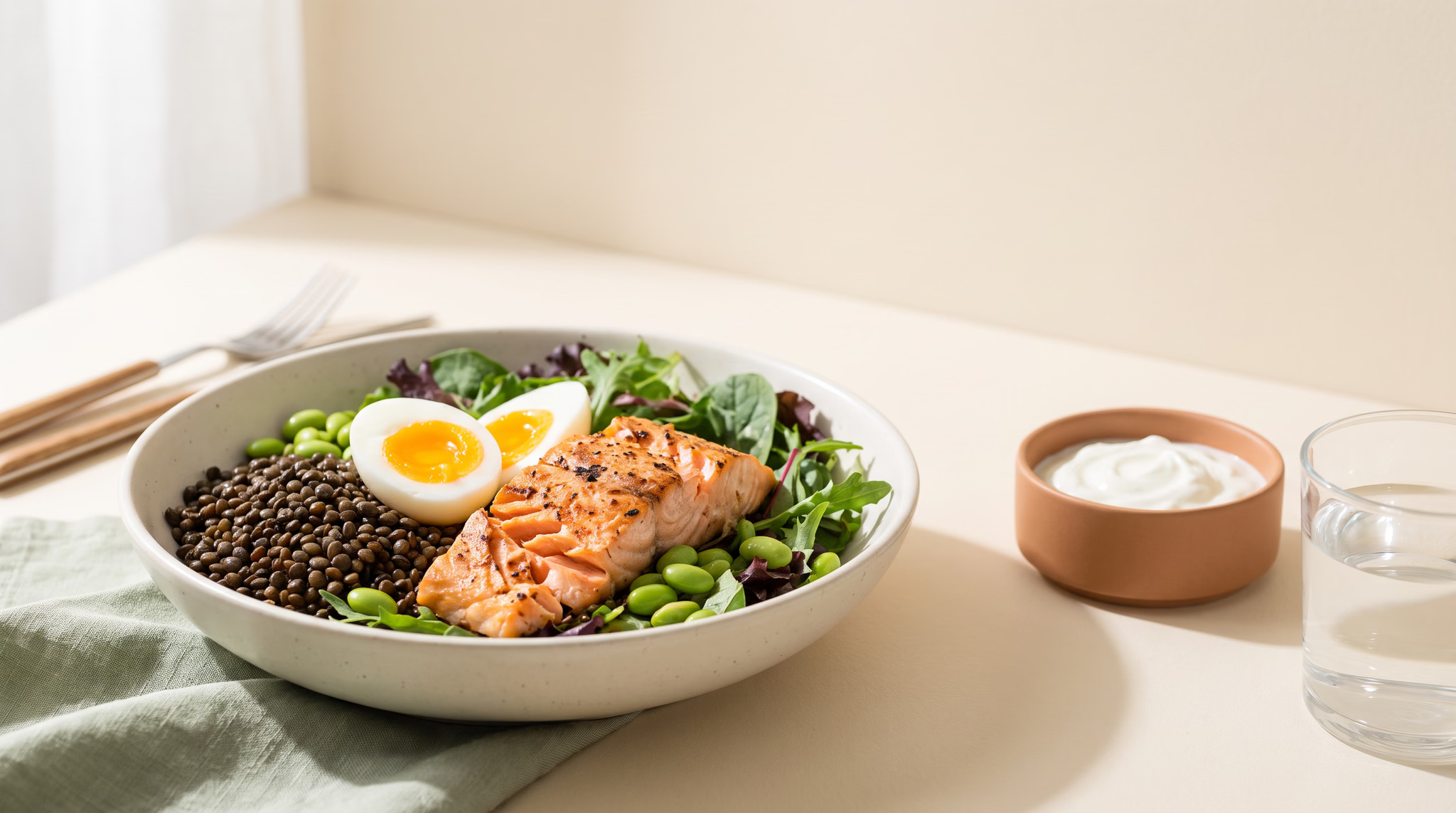
Most researchers accept that intakes above the RDA help muscle, satiety and weight loss, and expert groups recommend 1.0 to 1.2 g/kg or more for older adults. Two debates remain open: whether very high intakes are safe for people with or at risk of kidney disease, and whether high protein, especially animal protein, in midlife speeds aging through IGF-1 and mTOR.
The rules
The rules ofHigh-protein diet
- 1Eat at least 1.2 g of protein per kg of body weight a day, above the RDA of 0.8 g/kg.
- 2Spread protein across 3 to 4 meals of about 25 to 40 g each.
- 3Raise protein to 1.4 to 2.0 g/kg if you train regularly, and higher during a calorie deficit with training.
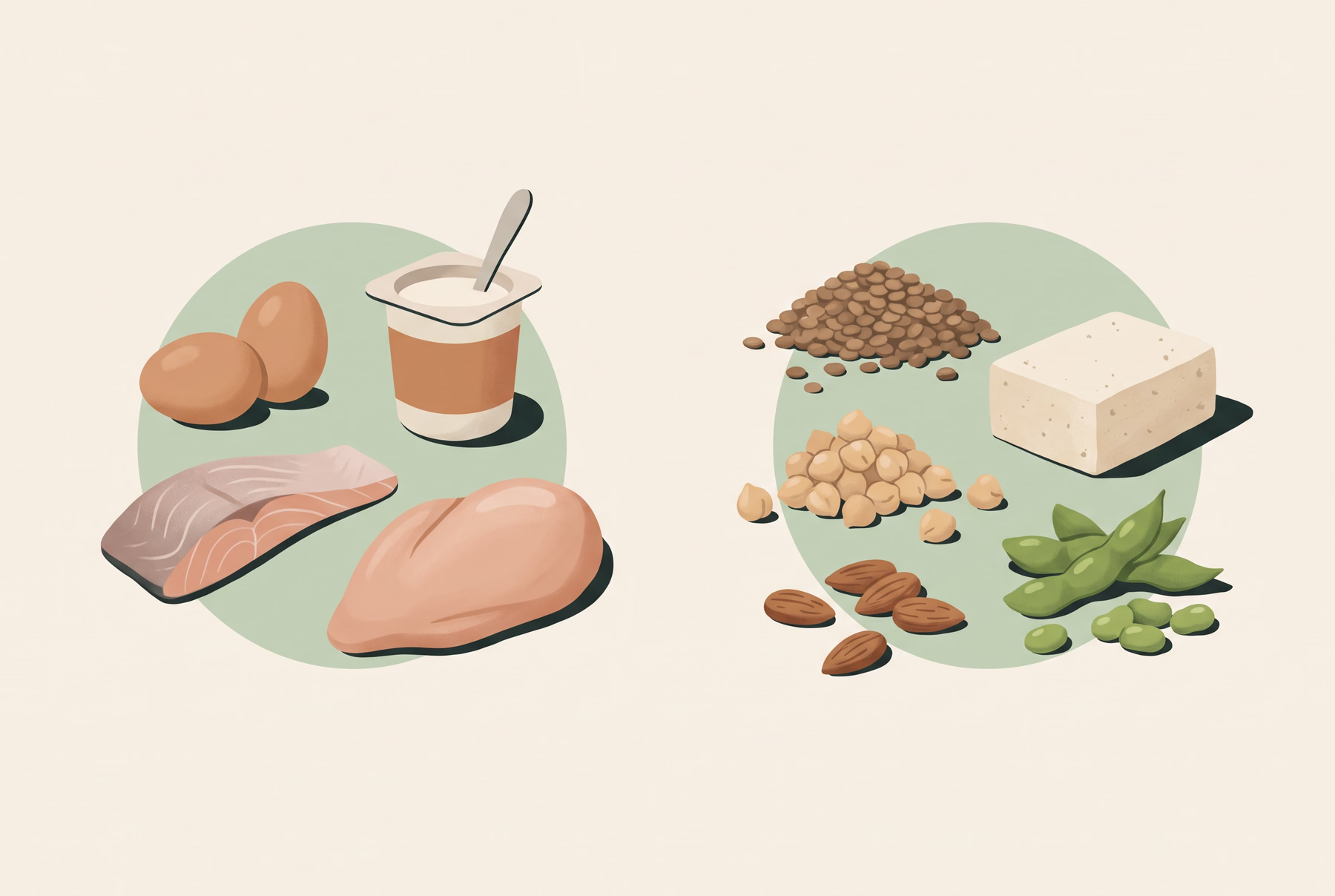
- 4Choose mostly minimally processed sources: fish, eggs, dairy, poultry, legumes, tofu and other soy foods.
- 5Pair the diet with resistance training at least twice a week to turn protein into muscle.
Share these rules as an image or a link.
| Healthy aging | 1.0 to 1.2 g/kg a day after 65, 1.2 to 1.5 g/kg with illness, plus daily exercise. |
|---|---|
| Muscle gain | About 1.6 g/kg a day with resistance training; little extra gain above this. |
| High-protein cut | 1.8 to 2.7 g/kg a day with at least 30 g at most meals during fat loss with training (AumniVIDA protocol). |
| Athlete in a deficit | 2.3 to 3.1 g/kg a day for lean, trained people cutting weight. |
| Plant-forward high protein | The same targets met mostly from legumes, soy, dairy and fish. |
What it aims to do
- Build muscle and strength alongside resistance training.
- Keep muscle during weight loss.
- Increase fullness so it is easier to eat less.
- Slow age-related muscle loss and keep physical function.
What it claims, and what the evidence shows
Grades reflect evidence in people. Animal and cell results alone never earn more than limited.
Muscle and strength
Strong evidenceBody fat and weight
Moderate evidenceHeart and blood vessels
Limited evidenceBlood sugar and insulin
Not enough evidenceImproves blood sugar control
Randomized trials show no difference in fasting glucose or insulin compared with standard-protein diets. [4]
Lifespan and mortality
Mixed evidence
Key takeaways
- 1
The RDA of 0.8 g/kg a day prevents deficiency; 1.2 to 1.6 g/kg is a common evidence-based target for better health outcomes.
- 2
Older adults should aim for at least 1.0 to 1.2 g/kg, and people who train for 1.4 to 2.0 g/kg; gains in muscle plateau around 1.6 g/kg.
- 3
Higher protein modestly improves fat loss, keeps muscle during dieting and increases fullness.
- 4
Trials show no harm to healthy kidneys, but people with kidney disease need much lower intakes.
- 5
The longevity debate is open: plant protein looks safest, and needs seem to rise after 65.
What is a high-protein diet?
A high-protein diet supplies more protein than the RDA of 0.8 g per kg of body weight a day, usually 1.2 to 1.6 g/kg and up to about 2 g/kg or more for athletes. It spreads protein across meals, often 25 to 40 g each, without fixing the rest of the diet.
Unlike keto or carnivore, a high-protein diet is defined by one number rather than a list of banned foods. Researchers who study it put the useful range at about 1.2 to 1.6 g/kg a day, with 25 to 30 g of protein at each meal [6] [12]. Sports nutrition guidance goes higher: 1.4 to 2.0 g/kg for most exercising people and 2.3 to 3.1 g/kg for trained people trying to keep muscle in a calorie deficit [2].
As a share of calories, protein in a typical diet is about 15%. One trial that doubled it to 30% of energy, with carbohydrate unchanged, found people ate less and lost weight [5].
The pattern is common to many popular approaches. Keto and carnivore are usually high in protein, and so are many weight-loss programs such as the CSIRO Total Wellbeing Diet. AumniVIDA's high-protein cut protocol targets 1.8 to 2.7 g/kg with at least 30 g at most meals during fat loss with training.
High-protein diet versus related protocols
- Ketogenic diet: protein is moderate so that ketones stay up.
- Carnivore diet: very high protein from animal foods only.
- Strength training: the partner that turns extra protein into muscle.
- Creatine: another well-studied aid for muscle and strength.
How much protein do you need per day?
The RDA is 0.8 g/kg a day, set to prevent deficiency in nearly all healthy adults. Expert groups recommend 1.0 to 1.2 g/kg for people over 65, 1.4 to 2.0 g/kg for people who exercise, and much less, 0.55 to 0.8 g/kg, for advanced kidney disease.
The RDA comes from nitrogen balance studies, which measure the least protein needed to avoid losing body protein. A pooled analysis put the average requirement at 0.65 g/kg and the RDA, covering 97.5% of people, at 0.83 g/kg [13]. That is a floor for avoiding deficiency, not a target for muscle or healthy aging.
| Group | Daily target | Source |
|---|---|---|
| Healthy adults (RDA) | 0.8 g/kg | [13] |
| Adults aiming for better health outcomes | 1.2 to 1.6 g/kg | [12] |
| Healthy adults over 65 | 1.0 to 1.2 g/kg | [14] [15] |
| Older adults who exercise | At least 1.2 g/kg | [14] |
| Older adults with illness | 1.2 to 1.5 g/kg | [14] [15] |
| Most exercising people | 1.4 to 2.0 g/kg | [2] |
| Lean trained athletes in a deficit | 2.3 to 3.1 g/kg of fat-free mass | [7] |
| Chronic kidney disease stage 3 to 5, no dialysis | 0.55 to 0.60 g/kg (0.6 to 0.8 with diabetes) | [16] |
For a 75 kg person, 0.8 g/kg is 60 g a day, 1.2 g/kg is 90 g and 1.6 g/kg is 120 g. Per meal, sports guidance suggests about 0.25 g/kg or 20 to 40 g, spread every 3 to 4 hours [2].
Daily protein targets by population
- Chronic kidney disease, stages 3 to 50.58 g/kg/day
KDOQI 2020, without diabetes (Kistler 2021)
- RDA, healthy adults0.8 g/kg/day
0.83 g/kg from nitrogen balance (Rand 2003)
- Healthy adults over 651.1 g/kg/day
PROT-AGE and ESPEN
- Older adults with illness1.35 g/kg/day
PROT-AGE and ESPEN
- Muscle gain plateau with training1.62 g/kg/day
Morton 2018 meta-regression
- Most exercising people1.7 g/kg/day
ISSN 2017
- Trained people in a calorie deficit2.7 g/kg/day
ISSN 2017
Show the data
| Item | Value (g/kg/day) | Low | High | Note |
|---|---|---|---|---|
| Chronic kidney disease, stages 3 to 5 | 0.58 | 0.55 | 0.6 | KDOQI 2020, without diabetes (Kistler 2021) |
| RDA, healthy adults | 0.8 | 0.83 g/kg from nitrogen balance (Rand 2003) | ||
| Healthy adults over 65 | 1.1 | 1 | 1.2 | PROT-AGE and ESPEN |
| Older adults with illness | 1.35 | 1.2 | 1.5 | PROT-AGE and ESPEN |
| Muscle gain plateau with training | 1.62 | Morton 2018 meta-regression | ||
| Most exercising people | 1.7 | 1.4 | 2 | ISSN 2017 |
| Trained people in a calorie deficit | 2.7 | 2.3 | 3.1 | ISSN 2017 |
How does protein build muscle, and how much is too much per meal?
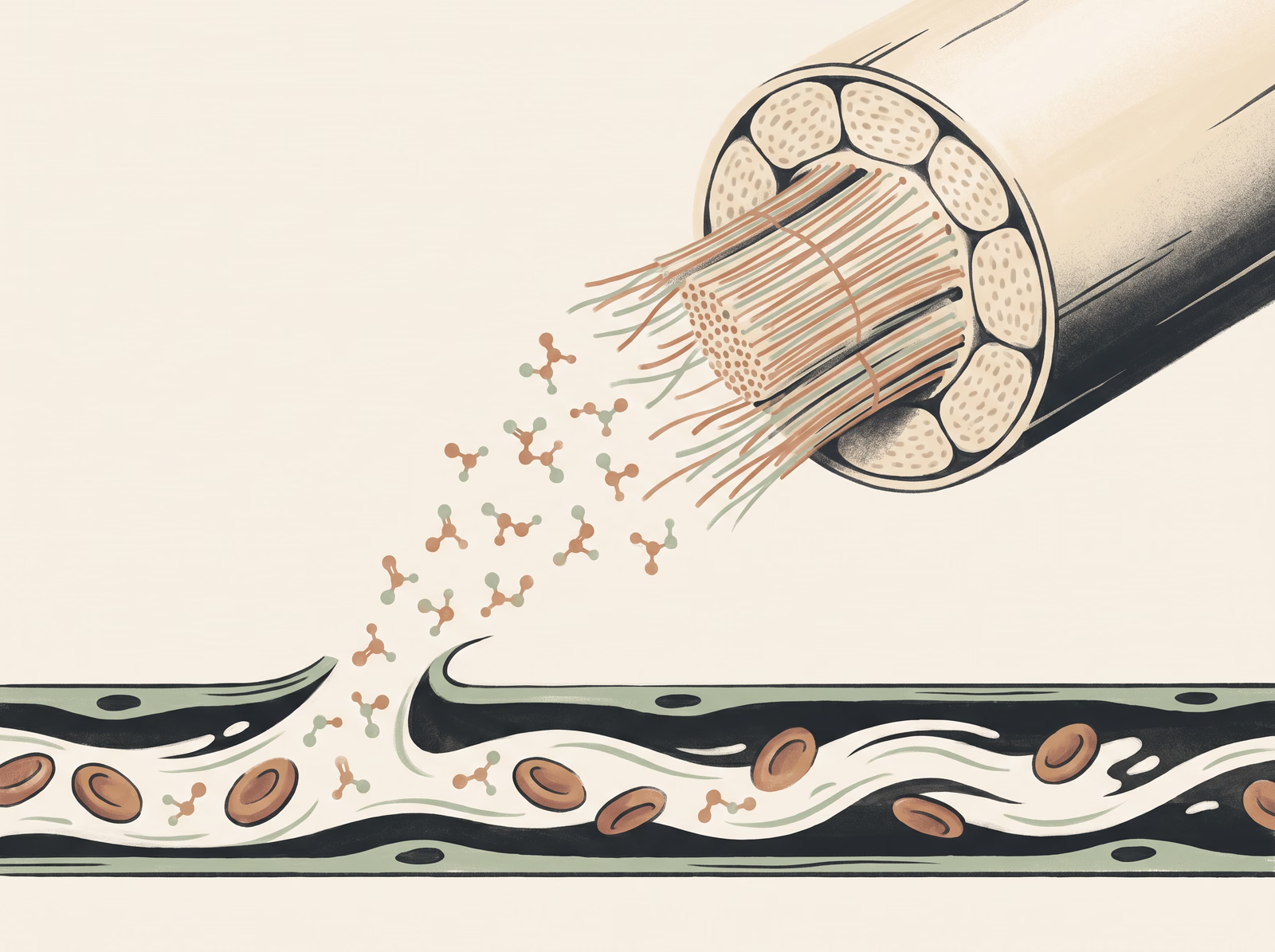
Protein supplies amino acids, especially leucine, that switch on muscle protein synthesis, and resistance training amplifies the effect. Added protein increases training gains up to about 1.6 g/kg a day. The old idea that the body can only use 20 to 30 g per meal has been challenged.
In a meta-analysis of 49 randomized trials, protein supplements during resistance training added 0.30 kg of fat-free mass and 2.49 kg to one-repetition maximum strength. Gains in fat-free mass stopped increasing above a total intake of about 1.62 g/kg a day. The benefit was larger in trained people and smaller with age [1].
The per-meal question
A 2009 dose-response study found that muscle protein synthesis after exercise plateaued at 20 g of egg protein, and extra protein was burned [17]. That result shaped the advice to eat 20 to 30 g at a time. A 2023 study using four isotope tracers found that 100 g of protein after exercise produced a larger response lasting more than 12 hours compared with 25 g, with little extra oxidation [18].
The practical reading: daily total matters most, and spreading 25 to 40 g across 3 to 4 meals is a reasonable default [2]. Peter Attia argues slow-digesting protein from whole food may allow fewer, larger meals (peterattiamd.com).
Training is what tells muscle to grow. Protein without resistance exercise has much smaller effects. See strength training.
Does a high-protein diet help with weight loss?
Modestly. At equal calories, higher-protein diets led to about 0.8 kg more weight loss, 0.9 kg more fat loss and 0.4 kg more lean mass kept over about 12 weeks. Protein also increases fullness, which can lower intake when people eat freely.
A meta-analysis of 24 randomized trials compared higher-protein and standard-protein diets at the same calories. Higher protein produced 0.79 kg more weight loss, 0.87 kg more fat loss and 0.43 kg less lean mass loss, and kept resting energy expenditure higher. Triglycerides fell 0.23 mmol/L more; glucose, insulin, blood pressure and LDL did not differ [4].
Satiety is the bigger lever. When protein rose from 15% to 30% of energy with carbohydrate unchanged, people spontaneously ate 441 kcal a day less and lost 4.9 kg over 12 weeks, 3.7 kg of it fat [5]. A review of this research found a modest fullness effect from higher-protein meals, consistent short-term benefits and mixed long-term results that track how well people stick to the diet [6].
Protein matters most in a calorie deficit, when the body is more likely to break down muscle. That is why guidance for lean athletes cutting weight goes up to 2.3 to 3.1 g/kg [7] [2], and why AumniVIDA's high-protein cut protocol sits at 1.8 to 2.7 g/kg.
What extra protein does on a calorie-restricted diet
- Extra weight lost0.79 kg
- Extra fat lost0.87 kg
- Lean mass kept0.43 kg
Show the data
| Item | Value (kg) | Low | High | Note |
|---|---|---|---|---|
| Extra weight lost | 0.79 | 0.08 | 1.5 | |
| Extra fat lost | 0.87 | 0.48 | 1.26 | |
| Lean mass kept | 0.43 | 0.09 | 0.78 |
Do older adults need more protein?
Yes, according to European geriatric and clinical nutrition groups, which recommend at least 1.0 to 1.2 g/kg a day after 65 and 1.2 to 1.5 g/kg with illness. In a US cohort of adults in their 70s, the highest protein eaters lost about 40% less lean mass over 3 years.
Muscle responds less to each protein meal with age, and illness and inactivity speed its loss. The PROT-AGE group recommends at least 1.0 to 1.2 g/kg a day for people over 65, at least 1.2 g/kg for those who exercise, and 1.2 to 1.5 g/kg for most with acute or chronic disease. The exception is severe kidney disease with an eGFR under 30 mL/min/1.73 m2, where protein may need limiting [14]. ESPEN gives the same ranges and adds daily exercise for all older people [15].
In the Health ABC study of adults aged 70 to 79, those in the top fifth of protein intake lost about 40% less lean mass over 3 years than those in the bottom fifth, 0.50 kg versus 0.88 kg [3]. This is observational, so healthier people may simply eat more.
Two cautions apply. Protein supplements add less muscle with training as age rises [1], so exercise matters even more. And the longevity debate below suggests age may change the balance of benefit and risk: in one large cohort, higher protein was linked to lower mortality after 65 but higher mortality from 50 to 65 [10].
Protein targets in grams for different body weights
Daily target down, Body weight across
0.8 g/kg, the RDA
- 60 kg48 g
- 75 kg60 g
- 90 kg72 g
1.2 g/kg, older adults who exercise
- 60 kg72 g
- 75 kg90 g
- 90 kg108 g
1.6 g/kg, where training gains level off
- 60 kg96 g
- 75 kg120 g
- 90 kg144 g
2.0 g/kg, top of the range for exercisers
- 60 kg120 g
- 75 kg150 g
- 90 kg180 g
| 60 kg | 75 kg | 90 kg | |
|---|---|---|---|
| 0.8 g/kg, the RDA | 48 g | 60 g | 72 g |
| 1.2 g/kg, older adults who exercise | 72 g | 90 g | 108 g |
| 1.6 g/kg, where training gains level off | 96 g | 120 g | 144 g |
| 2.0 g/kg, top of the range for exercisers | 120 g | 150 g | 180 g |
Per meal, spread protein across 3 to 4 meals of about 25 to 40 g. People with chronic kidney disease follow much lower targets, 0.55 to 0.8 g/kg, set by their care team.
Is a high-protein diet bad for your kidneys?
Not for healthy kidneys, based on current trials: a meta-analysis of 28 trials found no change in kidney function over time with higher protein. People with chronic kidney disease are different; guidelines set much lower intakes, and observational data suggest high protein may speed decline when kidneys are already impaired.
Higher protein makes the kidneys filter more, so filtration rate (GFR) rises. Across 28 trials in healthy adults, GFR was slightly higher after high-protein diets, but the change over time did not differ from lower-protein diets [19]. In a 1-year randomized crossover study, trained men eating about 2.5 to 3.3 g/kg a day showed no harmful changes in kidney or liver function or blood lipids [8].
The picture changes with existing kidney disease. In the Nurses' Health Study, protein intake did not affect kidney function in women with normal kidneys. In women with mild impairment, each extra 10 g a day was linked to a faster fall in GFR of 1.69 mL/min per 1.73 m2 over 11 years, mostly from non-dairy animal protein [20].
Nephrologists including Kamyar Kalantar-Zadeh argue that high protein raises pressure inside the kidney's filters and may harm kidneys over time, perhaps even in people without known disease, and urge care for anyone at high risk [21]. Kidney guidelines for stage 3 to 5 disease not on dialysis set 0.55 to 0.60 g/kg a day, or 0.6 to 0.8 g/kg with diabetes [16].
If you have diabetes, high blood pressure or a family history of kidney disease, check your eGFR and urine albumin before raising protein a lot. Higher protein can also raise blood urea (BUN) without meaning kidney damage.
Does eating more protein shorten your life? The IGF-1 and mTOR debate
It is unresolved: one cohort linked high protein at ages 50 to 65 to 75% higher mortality, and mice live longer on low-protein diets. The largest meta-analysis links higher total protein to slightly lower mortality, most clearly for plant protein, so age and protein source seem to matter.
Protein, especially its leucine, raises IGF-1 and switches on mTOR, the same growth signals that build muscle. In many animals, turning these signals down extends lifespan. That is the basis of the concern.
Evidence that worries researchers
- In the NHANES III cohort, people aged 50 to 65 eating the most protein had 75% higher overall mortality and 4 times the risk of cancer death over 18 years. The link was weaker or absent when protein came from plants. After 65, the pattern reversed and high protein was linked to lower mortality [10].
- Across 25 diets, mice lived longest on low-protein, high-carbohydrate diets, which kept mTOR activity low [11].
- In human feeding studies, meals with more than about 25 g of protein raised leucine enough to activate mTOR in immune cells, and in mice protein above about 22% of energy accelerated atherosclerosis [22].
Evidence that reassures
A meta-analysis of 32 cohorts with 715,128 people found that higher total protein was linked to 6% lower all-cause mortality and plant protein to 8% lower. Each extra 3% of energy from plant protein was linked to 5% lower mortality. Animal protein was not linked to cardiovascular or cancer deaths [9].
What is not known. No trial has tested protein intake against lifespan in people. Valter Longo, senior author of the NHANES study, suggests lower protein in midlife and more after 65 [10]. Muscle-focused clinicians such as Peter Attia and Gabrielle Lyon put more weight on preventing muscle loss. A middle path consistent with the data: meet targets for your age and training, and lean on plant protein, fish and dairy rather than processed meat.
The protein and longevity debate
Muscle and function
Why higher protein helps
- Protein switches on mTOR and muscle protein synthesis
- Training gains rise up to about 1.6 g/kg a day
- Top protein eaters in their 70s lost about 40% less lean mass
Aging concerns
Why some researchers worry
- Ages 50 to 65: highest protein linked to 75% higher mortality in one cohort
- Mice lived longest on low-protein, high-carbohydrate diets
- Meals above about 25 g activated mTOR in immune cells
What the largest data say
32 cohorts, 715,128 people
- Higher total protein linked to 6% lower mortality
- Plant protein linked to 8% lower mortality
- After 65, higher protein linked to lower mortality in the same cohort that raised the concern
No trial has tested protein intake against lifespan in people, so age and protein source are the open questions.
The studies, by type
Strongest designs first. Scroll each row; every card links to the paper and says whether it supports the protocol.
Systematic reviews and meta-analyses (6)
Randomized controlled trials (1)
Large observational studies in people (3)
Mechanistic studies in people (4)
Animal and cell studies (1)
Hypotheses and expert reviews (7)
Who follows it, who backs it, who doubts it
Public positions summarized in our words. Follow each link for the full context.
Support it
Stuart PhillipsMuscle physiologist, McMaster University
Argues that at least 1.2 to 1.6 g/kg a day of high-quality protein is a better target than the RDA for healthy aging, appetite and athletic goals, and finds no evidence linking higher protein to kidney disease or bone loss.
Protein requirements beyond the RDA (Appl Physiol Nutr Metab, 2016)
Donald LaymanNutrition scientist specializing in dietary protein
Explains that the RDA was built as the minimum protein needed for survival and should not be read as an optimal intake, and discusses meal timing, quality and leucine.
Peter AttiaPhysician, author of Outlive
His clinic recommends about 2 g/kg (roughly 1 g per pound) a day, argues the RDA is not enough to keep muscle with age, and suggests slow-digesting whole-food protein may allow fewer, larger meals.
New insights on maximizing protein utilization for muscle protein synthesis
Gabrielle LyonPhysician, founder of Muscle-Centric Medicine and author of Forever Strong
Treats skeletal muscle as a central organ for aging, metabolism and disease prevention and promotes higher-protein eating with strength training.
Oppose or doubt it
Valter LongoGerontologist, University of Southern California
Senior author of a cohort study linking high protein at ages 50 to 65 to higher IGF-1, cancer and overall mortality; suggests low protein in midlife and moderate to high protein after 65.
Low protein intake, IGF-1, cancer and mortality (Cell Metabolism, 2014)
Kamyar Kalantar-ZadehNephrologist
Co-authored a review arguing that high-protein diets raise pressure in the kidney's filters, may worsen kidney function and should be used with care in people at high risk of kidney disease.
The effects of high-protein diets on kidney health and longevity (JASN, 2020)
Public examples
- CSIRO Total Wellbeing Diet
Australian science agency's weight-loss program built on a higher-protein, lower-carbohydrate, lower-glycemic-index pattern.
- Virta Health
Diabetes program whose ketogenic approach sets protein at 1.2 to 2.0 g/kg of reference weight, with 1.5 g/kg as a midpoint.
- Revero
Online clinic offering supervised low-carbohydrate, high-protein nutrition plans for chronic conditions.
How to follow it
- Check with your clinician first if you have chronic kidney disease, diabetes with kidney involvement, or reduced eGFR.
- Work out your target in grams: body weight in kg times your g/kg goal, for example 75 kg times 1.6 g/kg is 120 g a day.
- Divide it across 3 to 4 meals of about 25 to 40 g, starting with breakfast, which is often the lowest-protein meal.
- Build each meal around a protein food, and add fiber from vegetables, legumes and whole grains to stay regular.
- Do resistance training at least twice a week.
- Track body weight over weeks and adjust; recheck kidney markers if you have risk factors.
How to know you are following it
Log meals and compare daily protein in grams with your target in g/kg using a recent body weight. Count meals with at least 25 to 30 g. AumniVIDA scales targets to your logged weight and shows protein per meal alongside training.
Common mistakes
- Using an old body weight, which throws off a per-kilogram target.
- Packing all protein into dinner instead of spreading it across meals.
- Relying on processed meat or protein bars instead of whole foods.
- Cutting fiber to make room for protein, which causes constipation.
- Expecting protein alone to build muscle without resistance training.
Who should be careful
Check with a clinician first if you
- You have chronic kidney disease, especially stage 3 or higher: guidelines set protein at 0.55 to 0.8 g/kg a day.
- You have diabetes, high blood pressure or a family history of kidney disease, until you have checked eGFR and urine albumin.
- You have a urea cycle disorder or another inherited condition that limits protein.
- You have a history of gout or kidney stones, where large amounts of animal protein may need a clinician's input.
- You have liver cirrhosis or an eating disorder, without your care team's guidance.
Possible side effects
- Constipation if fiber falls as protein rises.
- Gas and bloating, especially from protein powders or large amounts of legumes.
- Higher blood urea (BUN) and slightly higher kidney filtration, which in healthy people do not indicate damage.
- Higher saturated fat and processed meat intake if protein comes mostly from fatty or processed meats.
Follow it in AumniVIDA
Keep muscle while you lose fat with protein of 1.8 to 2.7 g/kg a day, at least 30 g at most meals and enough fiber to stay full, measured against an energy target you set.
The targets
AumniVIDA scores these from your logged meals and measurements, and shows the evidence grade for each protocol.
Targets
- Protein: 1.8 to 2.7 g/kg/day
- Protein: at least 30 g at most meals
- Fiber: at least 25 g/day
How AumniVIDA follows it with your data
- Scale protein to your weight. Targets are per kilogram, so they need a recent weight. Without one, the scorecard says so.
- Read weight over weeks. Trends over two to four weeks matter; day-to-day swings are mostly water.
- Close the gap before evening. The coach suggests your own high-protein foods when you are behind for the day.
- Keep training visible. Resistance training from your workout data appears next to your intake, because it is what tells your body to keep muscle.
Follow up to five protocols on the free plan, or the full library with Pro. Rank them, and when two protocols disagree, the higher-ranked one guides the app.
Watch
Talks and explainers worth your time. Nothing loads from YouTube until you press play.
No.1 Protein Scientist: Are you eating enough? | Prof. Stuart Phillips & Dr. Federica Amati
ZOEZOE@joinzoeSubscribers939KStartedJanuary 2020CountryUnited KingdomVideos531Total views96.5MNew videos, last 30 days5New videos, last year51From YouTube, 2026-10-31Open on YouTube
A leading protein researcher explains requirements and the RDA debate for a general audience.
224: Dietary protein: amount needed, ideal timing, quality, and more | Don Layman, Ph.D.
Peter Attia MDPeter Attia MD@peterattiamdSubscribers1MStartedJuly 2015CountryNot statedVideos1.8KTotal views137.4MNew videos, last 30 days7New videos, last year105From YouTube, 2026-10-31Open on YouTube
A long, detailed conversation on protein amount, timing and quality from a career protein scientist.
How Much Protein Do We Need? | Drs Stuart Phillips and Christopher Gardner
The Proof with Simon HillThe Proof with Simon Hill@theproofwithsimonhillSubscribers149KStartedNovember 2011CountryUnited StatesVideos2.2KTotal views23.1MNew videos, last 30 days44New videos, last year368From YouTube, 2026-10-31Open on YouTube
Two scientists with different views discuss how much protein people need.
Protein, IGF-1 & Longevity Q&A | Dr Valter Longo
The Proof with Simon HillThe Proof with Simon Hill@theproofwithsimonhillSubscribers149KStartedNovember 2011CountryUnited StatesVideos2.2KTotal views23.1MNew videos, last 30 days44New videos, last year368From YouTube, 2026-10-31Open on YouTube
The case for lower protein in midlife from the scientist behind the IGF-1 cohort study.
How much protein do you really need?
The EconomistThe Economist@theeconomistSubscribers4.2MStartedMarch 2009CountryUnited KingdomVideos1.7KTotal views597.9MNew videos, last 30 days40New videos, last year500+From YouTube, 2026-10-31Open on YouTube
A short, neutral explainer on the protein boom and what the science supports.
Biomarkers it can move
- HbA1cHbA1c (A1c) is the percentage of hemoglobin in red blood cells that has glucose attached.
- TriglyceridesTriglycerides are the main form of fat in the body and in the blood, carried by VLDL from the liver and chylomicrons from the gut.
- LDL cholesterolLDL cholesterol (LDL-C) is the cholesterol carried inside low-density lipoprotein particles, the main particles that deliver cholesterol to tissues and lodge in artery walls.
- Fasting insulinFasting insulin is the level of insulin in your blood after at least 8 hours without food.
Common questions
How much protein should I eat a day?
Can a high-protein diet cause kidney damage?
Does a high-protein diet cause constipation?
It can if fiber drops as protein rises. Choosing legumes, vegetables and whole grains alongside protein foods, and drinking enough water, usually prevents it.
Is a high-protein diet good for weight loss?
How much protein can your body absorb in one meal?
Do high-protein diets raise cholesterol?
Not in trials comparing them with standard-protein diets: LDL did not differ and triglycerides fell slightly [4]. If the extra protein comes from fatty or processed meat, saturated fat may raise LDL.
Does a high-protein diet age you faster?
What are the best high-protein foods?
Fish, eggs, dairy, poultry, legumes, tofu and other soy foods. Cohort data link plant protein to lower mortality [9], and processed meat is a known cause of colorectal cancer, so it is best kept low.
Does a high-protein diet affect BUN levels?
Yes. Blood urea nitrogen rises with protein intake because urea is how the body clears nitrogen. Higher filtration and BUN on a high-protein diet do not by themselves mean kidney damage in healthy people [19].
Sources
- 1.Morton RW, Murphy KT, McKellar SR, et al. A systematic review, meta-analysis and meta-regression of the effect of protein supplementation on resistance training-induced gains in muscle mass and strength in healthy adults. British Journal of Sports Medicine, 2018. doi:10.1136/bjsports-2017-097608
- 2.Jäger R, Kerksick CM, Campbell BI, et al. International Society of Sports Nutrition Position Stand: protein and exercise. Journal of the International Society of Sports Nutrition, 2017. doi:10.1186/s12970-017-0177-8
- 3.Houston DK, Nicklas BJ, Ding J, et al. Dietary protein intake is associated with lean mass change in older, community-dwelling adults: the Health, Aging, and Body Composition (Health ABC) Study. American Journal of Clinical Nutrition, 2008. doi:10.1093/ajcn/87.1.150
- 4.Wycherley TP, Moran LJ, Clifton PM, et al. Effects of energy-restricted high-protein, low-fat compared with standard-protein, low-fat diets: a meta-analysis of randomized controlled trials. American Journal of Clinical Nutrition, 2012. doi:10.3945/ajcn.112.044321
- 5.Weigle DS, Breen PA, Matthys CC, et al. A high-protein diet induces sustained reductions in appetite, ad libitum caloric intake, and body weight despite compensatory changes in diurnal plasma leptin and ghrelin concentrations. American Journal of Clinical Nutrition, 2005. doi:10.1093/ajcn.82.1.41
- 6.Leidy HJ, Clifton PM, Astrup A, et al. The role of protein in weight loss and maintenance. American Journal of Clinical Nutrition, 2015. doi:10.3945/ajcn.114.084038
- 7.Helms ER, Zinn C, Rowlands DS, et al. A systematic review of dietary protein during caloric restriction in resistance trained lean athletes: a case for higher intakes. International Journal of Sport Nutrition and Exercise Metabolism, 2014. doi:10.1123/ijsnem.2013-0054
- 8.Antonio J, Ellerbroek A, Silver T, et al. A High Protein Diet Has No Harmful Effects: A One-Year Crossover Study in Resistance-Trained Males. Journal of Nutrition and Metabolism, 2016. doi:10.1155/2016/9104792
- 9.Naghshi S, Sadeghi O, Willett WC, et al. Dietary intake of total, animal, and plant proteins and risk of all cause, cardiovascular, and cancer mortality: systematic review and dose-response meta-analysis of prospective cohort studies. BMJ, 2020. doi:10.1136/bmj.m2412
- 10.Levine ME, Suarez JA, Brandhorst S, et al. Low protein intake is associated with a major reduction in IGF-1, cancer, and overall mortality in the 65 and younger but not older population. Cell Metabolism, 2014. doi:10.1016/j.cmet.2014.02.006
- 11.Solon-Biet SM, McMahon AC, Ballard JW, et al. The ratio of macronutrients, not caloric intake, dictates cardiometabolic health, aging, and longevity in ad libitum-fed mice. Cell Metabolism, 2014. doi:10.1016/j.cmet.2014.02.009
- 12.Phillips SM, Chevalier S, Leidy HJ. Protein "requirements" beyond the RDA: implications for optimizing health. Applied Physiology, Nutrition, and Metabolism, 2016. doi:10.1139/apnm-2015-0550
- 13.Rand WM, Pellett PL, Young VR. Meta-analysis of nitrogen balance studies for estimating protein requirements in healthy adults. American Journal of Clinical Nutrition, 2003. doi:10.1093/ajcn/77.1.109
- 14.Bauer J, Biolo G, Cederholm T, et al. Evidence-based recommendations for optimal dietary protein intake in older people: a position paper from the PROT-AGE Study Group. Journal of the American Medical Directors Association, 2013. doi:10.1016/j.jamda.2013.05.021
- 15.Deutz NE, Bauer JM, Barazzoni R, et al. Protein intake and exercise for optimal muscle function with aging: recommendations from the ESPEN Expert Group. Clinical Nutrition, 2014. doi:10.1016/j.clnu.2014.04.007
- 16.Kistler BM, Moore LW, Benner D, et al. The International Society of Renal Nutrition and Metabolism Commentary on the National Kidney Foundation and Academy of Nutrition and Dietetics KDOQI Clinical Practice Guideline for Nutrition in Chronic Kidney Disease. Journal of Renal Nutrition, 2021. doi:10.1053/j.jrn.2020.05.002
- 17.Moore DR, Robinson MJ, Fry JL, et al. Ingested protein dose response of muscle and albumin protein synthesis after resistance exercise in young men. American Journal of Clinical Nutrition, 2009. doi:10.3945/ajcn.2008.26401
- 18.Trommelen J, van Lieshout GAA, Nyakayiru J, et al. The anabolic response to protein ingestion during recovery from exercise has no upper limit in magnitude and duration in vivo in humans. Cell Reports Medicine, 2023. doi:10.1016/j.xcrm.2023.101324
- 19.Devries MC, Sithamparapillai A, Brimble KS, et al. Changes in Kidney Function Do Not Differ between Healthy Adults Consuming Higher- Compared with Lower- or Normal-Protein Diets: A Systematic Review and Meta-Analysis. Journal of Nutrition, 2018. doi:10.1093/jn/nxy197
- 20.Knight EL, Stampfer MJ, Hankinson SE, et al. The impact of protein intake on renal function decline in women with normal renal function or mild renal insufficiency. Annals of Internal Medicine, 2003. doi:10.7326/0003-4819-138-6-200303180-00009
- 21.Ko GJ, Rhee CM, Kalantar-Zadeh K, et al. The Effects of High-Protein Diets on Kidney Health and Longevity. Journal of the American Society of Nephrology, 2020. doi:10.1681/ASN.2020010028
- 22.Zhang X, Kapoor D, Jeong SJ, et al. Identification of a leucine-mediated threshold effect governing macrophage mTOR signalling and cardiovascular risk. Nature Metabolism, 2024. doi:10.1038/s42255-024-00984-2
AumniVIDA explains health information for general wellness. Talk to your clinician before changing your diet, training or medication for a health condition.