
Blueprint (Bryan Johnson)
What is blueprint (bryan johnson)?
Blueprint is entrepreneur Bryan Johnson's published longevity protocol: a plant-heavy diet of about 2,250 kcal eaten early in the day, 6 hours of exercise a week, a fixed early bedtime, a supplement stack he sells, and routine health tests. Its everyday habits are well supported. His drugs and therapies are personal experiments, listed separately.
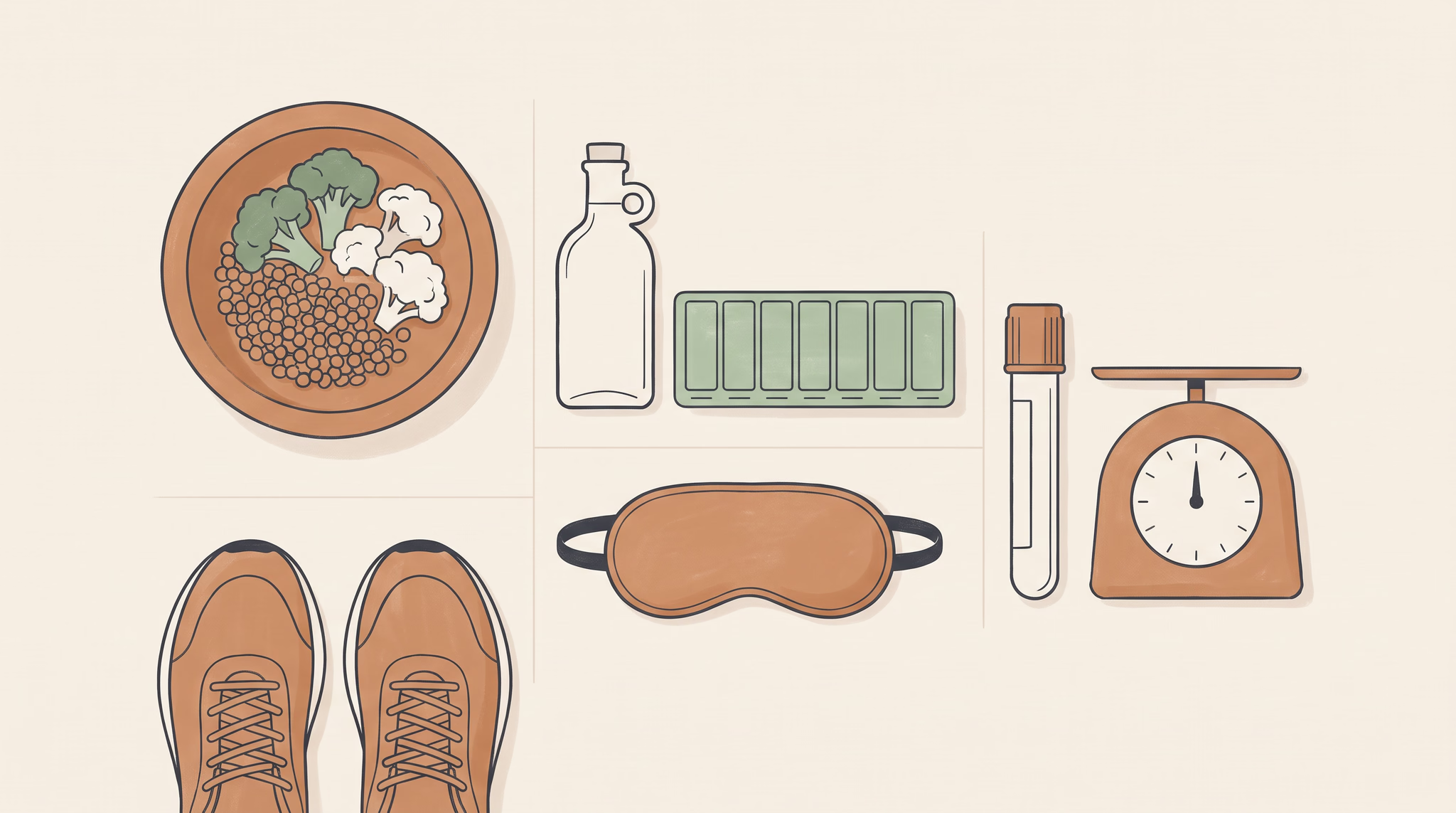
Rated by what it asks you to do. The diet of mostly whole plant foods, regular strength and cardio training and a consistent sleep routine match mainstream nutrition, exercise and sleep evidence. The supplement stack he sells has never been tested as a whole, large trials find most supplements do not prevent disease, and the test list adds an annual full-body MRI that radiologists do not recommend for people without symptoms. His self-experiments, such as plasma exchange, gene therapy and rapamycin, are listed separately and not counted.
The rules
The rules ofBlueprint (Bryan Johnson)
- 1Eat about 2,250 kcal a day (Johnson's figure, 10% below his estimated needs), with about 130 g protein, 206 g carbohydrate and 101 g fat.
- 2Eat mostly whole plant foods: vegetables, lentils, nuts, seeds, berries and extra-virgin olive oil, with no named diet camp.
- 3Finish the last meal at least 4 hours before bed; Johnson finishes around noon.
- 4Exercise about 6 hours a week: three strength sessions and three cardio sessions, including 150 minutes of moderate and 75 minutes of vigorous activity, plus balance and mobility work.
- 5Keep a fixed bedtime; screens off 60 minutes before bed, a 60-minute wind-down, a cool dark room, and no caffeine or alcohol 8 to 10 hours before sleep.
- 6Get morning light within 15 to 30 minutes of waking.
- 7Optionally take the Blueprint supplement stack, which Johnson sells: Essentials and Advanced Antioxidants capsules, Longevity Mix, an EPA/DHA capsule, and ashwagandha with rhodiola.
- 8Measure: blood tests every 3 to 6 months, continuous glucose monitoring, an annual full-body MRI after 40 or with high-risk family history, yearly skin and eye checks, dental visits every 6 months and monthly self-exams.
- 9Avoid smoking, vaping, fast food, excess alcohol and other addictive habits.
Share these rules as an image or a link.
| Free habit layer | Johnson's five basics: sleep, nutrition, 6 hours of exercise a week, relationships, and avoiding addictive habits. |
|---|---|
| Full protocol | The habit layer plus the Blueprint supplement stack and the routine test schedule on his page. Johnson's own prescriptions and therapies are not part of it; they are his experiments. |
| Blueprint products | Following the diet using Blueprint-branded foods and supplements sold on his store. |
| AumniVIDA Blueprint-style | A scorecard of the eating principles only: 1,900 to 2,100 kcal, at least 40 g fiber, plant-only meals, at least 30 g olive oil, an eating window of 8 hours or less. |
What it aims to do
- Slow the rate of biological aging, which Johnson tracks organ by organ on himself.
- Keep blood pressure, glucose, lipids and inflammation in very low ranges.
- Build and keep muscle, bone density, fitness and flexibility.
- Maximize sleep quality through strict routines.
- Replace in-the-moment food and lifestyle choices with fixed systems.
What it claims, and what the evidence shows
Grades reflect evidence in people. Animal and cell results alone never earn more than limited.
Lifespan and mortality
Not enough evidenceHeart and blood vessels
Moderate evidenceBlood sugar and insulin
Moderate evidenceMuscle and strength
Strong evidenceBuilds and keeps muscle and strength
Regular strength training is consistently linked to lower mortality and builds muscle and strength at any age. [4]
Sleep
Limited evidenceCancer risk
Evidence against
How it handles evidence
As presented by Bryan Johnson. Three checks you can verify from the sources, separate from the evidence ratings above.
Partly open to evidence
Separates its advice from experimentsPartly
His page points readers to free basics first and calls the whole project an experimental clinical research project, but his own drugs and therapies sit on the same page as the advice with no plain line telling readers not to copy them. In one place it invites readers to match his tadalafil dose.
Says how strong the evidence is for each recommendationPartly
The page warns that biological age tests are experimental and notes where some claims rest on animal or preclinical work, but it gives no evidence rating for each recommendation and many figures carry no citation.
Has publicly changed its advice when the evidence changedYes
He reports publicly when something does not work for him and updates his published routine: he dropped young plasma in July 2023 after no measured benefit and announced in 2024 that he had ended rapamycin after side effects. His page keeps no changelog, so older versions are hard to compare.
Key takeaways
- 1
Blueprint asks you to eat about 2,250 kcal of mostly plant foods early in the day, exercise 6 hours a week, keep a fixed bedtime and get routine tests, and offers a supplement stack Johnson sells [1].
- 2
- 3
- 4
Its anti-aging claims rest on Johnson's own measurements, and epigenetic clocks can vary by up to 9 years from noise alone [8].
- 5
What is Bryan Johnson's Blueprint protocol?
Blueprint is the published protocol of entrepreneur Bryan Johnson: a plant-heavy diet of about 2,250 kcal eaten before noon, about 6 hours of exercise a week, an 8:30 pm bedtime he says can be any fixed time, a supplement stack he sells, and routine health tests. Separately, he runs experiments on himself that the protocol does not ask others to copy.
Bryan Johnson, a tech entrepreneur, began Project Blueprint in his early 40s. His protocol page describes him at the start as overweight, sleep-deprived and depressed, and frames the goal as measuring every organ and slowing or reversing its rate of aging [1]. In 2023 he was reported to be spending over $2 million a year on it [11].
His page mixes two things, and this guide keeps them apart:
- What the protocol asks you to do: sleep consistency, a final meal at least 4 hours before bed, a plant-heavy whole-food diet with extra-virgin olive oil, 6 hours of exercise a week, avoiding smoking, junk food and excess alcohol, the Blueprint supplement stack, and routine tests such as blood draws every 3 to 6 months [1]. In a 2025 interview he described the core of sleep, diet and exercise as free and open to most people [16].
- What he does only on himself: prescription drugs such as metformin and acarbose, and therapies such as hyperbaric oxygen, shockwave therapy, stem cell injections and gene therapy. His page calls the whole project an experimental clinical research project that mixes on-label, off-label and unlicensed treatments [1]. We treat these as his experiments, listed below, and do not rate them as part of the protocol.
Johnson sells many of the products the protocol recommends through his Blueprint store, including the supplement stack, olive oil and protein powders.
AumniVIDA is not affiliated with Bryan Johnson or Blueprint, and he has not reviewed this page. We describe the regimen from his own published materials as of October 2026 and grade each part against independent research.
What does Bryan Johnson eat on the Blueprint diet?
About 2,250 kcal a day, described as 10% below his estimated needs, with roughly 130 g protein, 206 g carbohydrate and 101 g fat, eaten in four small meals between about 5:35 am and noon. Meals center on vegetables, lentils, nuts, berries and extra-virgin olive oil.
Johnson's published daily food routine [1]:
| Time | What he eats |
|---|---|
| 5:25 am | Drink with Longevity Mix, 5 g creatine and prebiotic fibers |
| 5:35 am | Protein powder with a blueberry nut mix, 11 g collagen peptides, 15 mL extra-virgin olive oil and berries |
| About 10:00 am | A second protein drink with olive oil, collagen and berries |
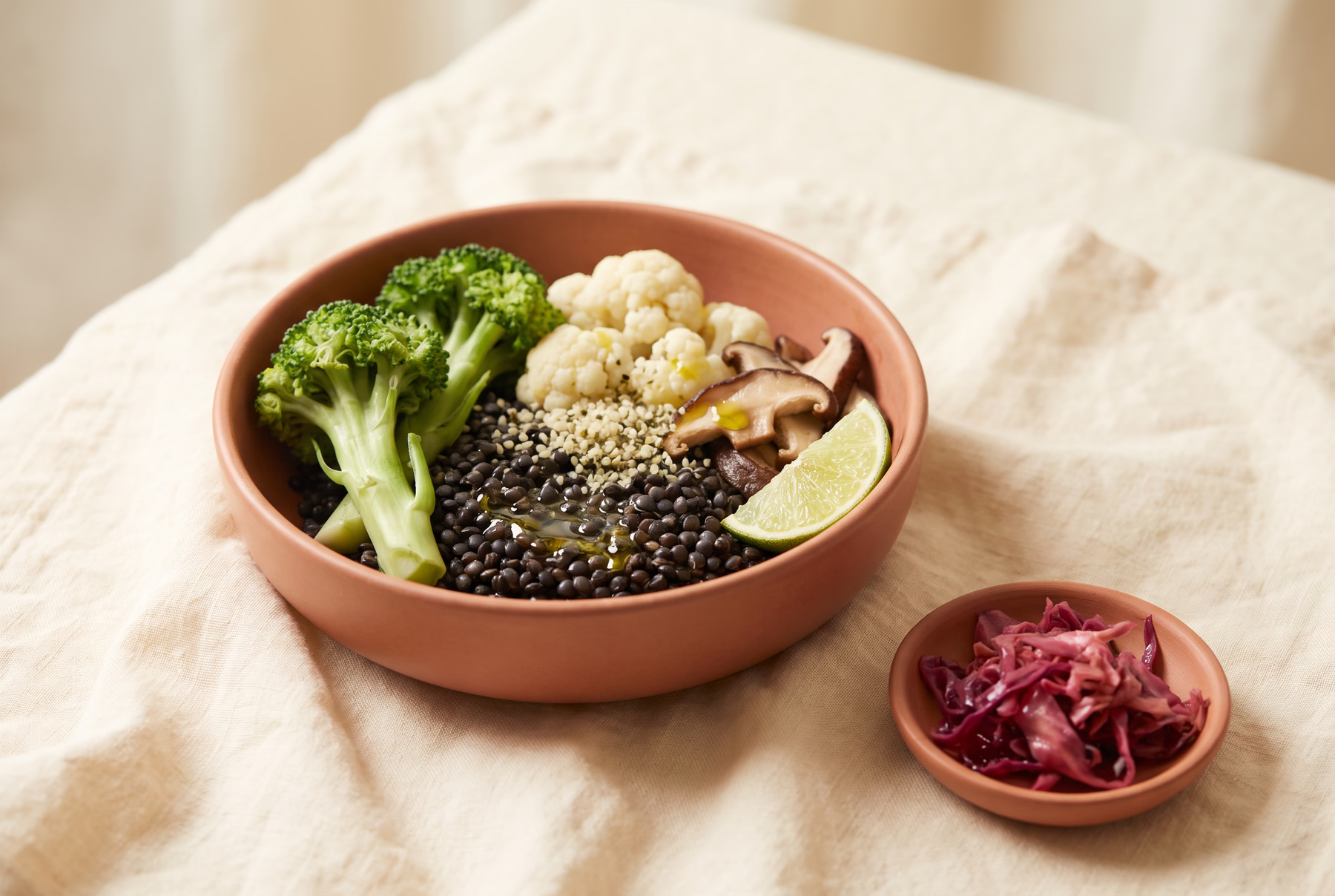
| 11:00 am | A vegetable meal: 45 g dry black lentils, 250 g broccoli, 150 g cauliflower, 50 g mushrooms, garlic, ginger, lime, cumin, apple cider vinegar, hemp seeds, olive oil and fermented vegetables |
| Noon | Final meal, for example a stuffed sweet potato of about 500 kcal |
He stops eating around noon and stops drinking fluids at 4 pm. The page says he follows no named diet camp. Because it includes collagen peptides, which come from animals, the current routine is not strictly vegan even though it is mostly plants.
What the evidence says. The building blocks are well supported. People who eat the most fiber have 15% to 30% lower mortality and less heart disease, diabetes and colorectal cancer [2]. A Mediterranean diet with extra-virgin olive oil cut major cardiovascular events by about 31% in a large trial [3]. Modest calorie restriction of about 12% for 2 years improved blood pressure, lipids and insulin sensitivity in healthy adults [15]. No trial has tested Johnson's exact menu, meal timing or 10% energy deficit.
Related pages: Mediterranean diet, plant-based diets, calorie restriction and time-restricted eating.
Bryan Johnson's published daily macronutrients
- Carbohydrate206 g per day
About 35% of energy
- Protein130 g per day
About 25% of energy
- Fat101 g per day
About 40% of energy
Show the data
| Item | Value (g per day) | Low | High | Note |
|---|---|---|---|---|
| Carbohydrate | 206 | About 35% of energy | ||
| Protein | 130 | About 25% of energy | ||
| Fat | 101 | About 40% of energy |
What supplements does Blueprint recommend, and what drugs does Johnson take himself?
The protocol's supplement stack is his own brand: Essentials and Advanced Antioxidants capsules, Longevity Mix, an 800 mg omega-3 capsule and ashwagandha with rhodiola. Separately, he takes prescriptions on himself, such as metformin, acarbose, an SGLT2 inhibitor, tadalafil and Repatha, which are his experiments. Evidence that most supplements prevent disease is weak.
The recommended stack. His page lists the Blueprint stack among the things readers may want: Blueprint Essentials, Advanced Antioxidants, Longevity Mix, Ashwagandha and Rhodiola and an 800 mg EPA/DHA capsule. He also takes creatine and prebiotic powders himself [1]. No trial has tested the stack as a whole. Large trials of single supplements are mostly negative for disease prevention: vitamin D at 2,000 IU a day did not prevent cancer or cardiovascular events in 25,871 adults [6], and the US Preventive Services Task Force found insufficient evidence for multivitamins [7].
Prescriptions he takes himself. His own list includes thyroid hormone for hypothyroidism diagnosed at 21, oral minoxidil for hair, metformin in 6-week on and off cycles that he describes as an experiment, tadalafil, empagliflozin (Jardiance), acarbose, candesartan and evolocumab (Repatha) every two weeks [1]. The page lists these as his prescriptions, not as steps for readers. What independent research shows:
- LDL lowering: strong evidence, in the right people. Evolocumab lowered LDL to a median 30 mg/dL (0.78 mmol/L)0.78 mmol/L (30 mg/dL) and cut cardiovascular events by 15% in patients with heart disease [13]. Its value in a lean, fit person without heart disease has not been tested in trials; see ApoB and LDL cholesterol.
- Anti-aging drugs: mostly animal evidence. Acarbose extended median lifespan by 22% in male mice [17] and rapamycin extended lifespan in mice [18], but no human trial shows that either slows aging. Johnson stopped rapamycin in 2024 after side effects [10].
- Metformin with exercise: two trials in older adults found metformin blunted gains from aerobic training [19] and from strength training [20], a possible conflict with a regimen built on daily exercise.
Johnson sells the stack the protocol recommends, which is a conflict of interest worth keeping in mind when reading his recommendations.
What is the Blueprint exercise and sleep routine?
Johnson recommends 6 hours of exercise a week: three strength sessions, three cardio sessions with 150 minutes of moderate Zone 2 and 75 minutes of vigorous work, plus balance and mobility. He goes to bed at 8:30 pm, wakes around 4:30 to 5 am and treats sleep as his top priority.
His exercise guidance is close to mainstream advice, set at the high end [1]. He trains 60 to 90 minutes most mornings and moves for 2 to 3 minutes every 30 minutes during the day. The strength component is well supported: muscle-strengthening activity is linked to 10% to 17% lower mortality, with the largest benefit at about 30 to 60 minutes a week [4]. See strength training, Zone 2 cardio and the Norwegian 4x4 for the vigorous part.
His sleep rules are concrete [1]:
- Treat sleep as the most important appointment of the day.
- Eat the final meal at least 4 hours before bed.
- Screens off 60 minutes before bed, followed by a calm wind-down.
- Keep a consistent bedtime; he chooses 8:30 pm but says any fixed time works.
- Use red or amber light in the evening.
- Keep the bedroom dark, quiet and at 65 to 70 F (18 to 21 C).
- Avoid caffeine and alcohol 8 to 10 hours before sleep.
- Get outside within 15 to 30 minutes of waking, or use a 10,000 lux lamp; see morning sunlight.
Regular sleep timing has good observational support: the most regular sleepers had 20% to 48% lower mortality than the least regular in UK Biobank [5]. His claim of months of perfect sleep refers to a wearable's score, not a clinical sleep study. He uses a dry sauna daily, and his page suggests readers who sauna aim for 3 to 5 sessions a week of 15 to 20 minutes, with a list of who should skip it [1]. Finnish cohort data link frequent sauna use with lower cardiovascular death [14]. See sauna.
A day on the Blueprint regimen
- Morning
- 04:30WakeAround 4:30 to 5 am. Outside within 15 to 30 minutes, or a 10,000 lux lamp.
- 05:25First drinkLongevity Mix, 5 g creatine and prebiotic fibers.
- 05:35First mealProtein with a blueberry nut mix, 11 g collagen, 15 mL olive oil and berries.
- 06:00Workout, 60 to 90 minutesStrength, Zone 2, vigorous intervals or mobility.
- 07:30Dry saunaHe uses it daily; his page suggests readers aim for 15 to 20 minutes.
- Midday
- 10:00Second protein drinkWith olive oil, collagen and berries.
- 11:00Vegetable mealBlack lentils, broccoli, cauliflower, mushrooms, hemp seeds and fermented vegetables.
- 12:00Final mealFor example a stuffed sweet potato of about 500 kcal. Eating stops here.
- Afternoon and evening
- 16:00Stop drinking fluids
- 19:30Screens offA calm wind-down in red or amber light.
- 20:30In bedHe says any fixed bedtime works.
Self-reported routine from Johnson's protocol page. Through the day he moves for 2 to 3 minutes every 30 minutes.
How does Bryan Johnson measure his results?
His page recommends blood tests every 3 to 6 months, continuous glucose monitoring, an annual full-body MRI after 40, and yearly skin, eye and dental checks. On himself he adds skin imaging, epigenetic clocks and organ age estimates, which his page calls preliminary and which research shows are noisy for one person.
The protocol's routine measurement list, addressed to readers, covers blood draws every 3 to 6 months, an annual full-body MRI after 40 or with high-risk family history, annual skin and eye checks, dental visits every 6 months, monthly self-exams and continuous glucose monitoring [1]. Most of this is standard screening. The full-body MRI is not: the American College of Radiology says there is not enough evidence to recommend it for people without symptoms or risk factors, and that it can trigger needless follow-up tests [21].
On himself, Johnson reports percentile rankings for many markers, for example bone density in the 99th percentile and grip strength in the top 5%, and organ age estimates such as a skin age of 39 at 48. Two cautions apply to these numbers:
- Clocks are noisy. Technical noise alone made six popular epigenetic clocks differ by up to 9 years between repeat measurements of the same sample [8]. A change of a few years in one person can be measurement error.
- Clock changes are not outcomes. In the CALERIE trial, 2 years of calorie restriction slightly slowed the DunedinPACE measure but did not change other clocks, and nobody knows yet whether such changes mean longer life [12].
Johnson's own disclaimer says biological age claims are preliminary, can reflect statistical error and need peer-reviewed validation [1]. Tracking standard markers such as ApoB, HbA1c, hs-CRP and ferritin over time is the part of his approach with the clearest clinical meaning.
Does Bryan Johnson's Blueprint work?
No study has tested Blueprint as a whole, so nobody can say it slows aging. The habits it asks people to follow are well supported. Johnson's own results are an N-of-1 report: several markers look excellent, his doctor described early results as small, and some of his personal experiments showed no benefit.
Blueprint is the clearest example of the N-of-1 evidence tier in this encyclopedia: one person, many simultaneous changes, no control group. That design can generate ideas but cannot show which change caused which result, or whether the same would happen in someone else.
What the record shows so far:
- Early results were modest. In 2023 his lead physician said the results were small and reasonable rather than remarkable [11].
- Illness still happens. In 2026 he disclosed autoimmune gastritis, a condition with no known cause; he said the regimen made it milder than it would have been, which cannot be tested [22].
- His experiments, listed below, are separate. They are not part of the protocol and not counted in its rating, but they show the same limits. Six young plasma exchanges, one from his son, produced no detected benefit, and he stopped them [9]; the FDA says young plasma has no proven benefit and carries real risks [23]. He stopped rapamycin in 2024 after skin infections, higher glucose, lipid changes and a higher resting heart rate [10].
The population evidence points to the same conclusion as most critics: exercise, fiber, olive oil, regular sleep, not smoking and LDL control are worth doing [2] [4] [3]. Beyond those habits, the evidence for the stack and the extra tests is thin.
Johnson's experiments and milestones
2019
Starts daily rapamycin
2023
Reported spending over $2 million a year; his doctor calls results small
2023
Stops young plasma exchanges after no detected benefit
2024
Receives 300 million mesenchymal stem cells into joints
2024
Stops rapamycin, citing side effects
2025
Netflix documentary Don't Die is released
2026
Discloses autoimmune gastritis
What do critics and supporters say about Blueprint?
Critics point to the N-of-1 design, the cost, the unproven therapies he uses on himself, measurement noise and the fact that Johnson sells products tied to the protocol. Supporters, including his medical team, argue that careful self-measurement can generate first observations and that the habit layer is free.
The main criticisms, roughly in order of how often scientists raise them:
- One person cannot answer the question. Aging researcher Nir Barzilai has said Johnson's choices are based on biology but not on clinical evidence, and that science does not rest on n = 1 [10].
- Too many changes at once. With dozens of simultaneous interventions, no result can be traced to one of them.
- Cost and access. A reported $2 million or more a year puts his own version out of reach [11], although Johnson says the habit layer is free [16].
- Commercial interest. Johnson sells supplements, food products, skin and hair care and tests through Blueprint, so the protocol doubles as a product catalog.
- Risky experiments on himself. Young plasma [23], gene therapy and stem cell injections are outside approved uses, and his page acknowledges unlicensed therapies [1]. These are his experiments, listed below, not steps the protocol asks others to take.
- Noisy measures. Organ and epigenetic ages are not validated for tracking one person [8].
On the other side, Johnson's team told Nature that it regards n-of-1 measurement as the next frontier and has generated first-in-human observations [10]. His free protocol page shares detailed, if self-reported, data, and its habit layer of sleep, exercise and whole-food eating costs nothing.
How strong is the evidence for each part?
Step 1
Strong human evidence
Exercise, fiber, olive oil
Strength training (Momma 2022), high-fiber diet (Reynolds 2019), olive oil in a Mediterranean diet (Estruch 2018).
Step 2
Moderate
Modest calorie restriction, regular sleep
About 12% restriction for 2 years (Kraus 2019); regular sleep timing, observational (Windred 2024).
Step 3
Mixed or limited
Sauna, standard tests
Sauna data are observational (Laukkanen 2015); blood tests are useful but untested as part of Blueprint.
Step 4
Weak or against
Supplements, full-body MRI, organ ages
Supplements for prevention (USPSTF 2022, VITAL); MRI without symptoms (ACR 2023); one-person age scores (Higgins-Chen 2022).
Only what the protocol asks others to do. Johnson's personal experiments, such as young plasma and off-label drugs, are listed separately and not ranked here.
How does AumniVIDA's Blueprint-style protocol relate to the original?
AumniVIDA's Blueprint-style protocol turns the eating principles Johnson describes into a daily scorecard: 1,900 to 2,100 kcal, at least 40 g fiber, plant-only meals with at least 30 g olive oil, an eating window of 8 hours or less and a last meal at least 4 hours before sleep. It leaves out the supplement stack and Johnson's own drugs and therapies.
The app's version is community-compiled from Johnson's public eating principles. It is not his protocol, and neither Johnson nor Blueprint has reviewed or endorsed it.
| Element | Johnson's published routine | AumniVIDA Blueprint-style targets |
|---|---|---|
| Energy | 2,250 kcal | 1,900 to 2,100 kcal, adjustable |
| Animal foods | Mostly plants, plus collagen peptides | No animal foods |
| Olive oil | About 15 mL at each of three meals | At least 30 g a day |
| Eating window | About 5:35 am to noon | At most 8 hours |
| Last meal before sleep | About 8.5 hours | At least 4 hours |
| Supplement stack | Recommended, sold by Johnson | Not included |
| Johnson's own drugs and therapies | Personal experiments, not part of the protocol | Not included |
| Exercise and sleep | Detailed rules | Tracked through connected wearables |
The scorecard focuses on the parts with the best evidence, such as fiber and extra-virgin olive oil [2] [3], and lets you set your own energy and fiber targets. It explains your data for general wellness; decisions about medication, including the lipid and glucose drugs on Johnson's list, belong with your clinician. For a framework that puts exercise and early lipid management first, compare Outlive and Medicine 3.0.
The studies, by type
Strongest designs first. Scroll each row; every card links to the paper and says whether it supports the protocol.
Systematic reviews and meta-analyses (3)
Randomized controlled trials (7)
Large observational studies in people (2)
Mechanistic studies in people (1)
Animal and cell studies (2)
Case reports and N-of-1 experiments (5)
Hypotheses and expert reviews (3)
Who follows it, who backs it, who doubts it
Public positions summarized in our words. Follow each link for the full context.
Follow it
Bryan JohnsonEntrepreneur, founder of Blueprint
Created and follows the regimen, publishes his routine and biomarker results, and says anyone can get much of the benefit from free habits, while noting that his biological age claims are preliminary.
Support it
Oliver ZolmanRegenerative medicine physician who led Blueprint's medical team in 2023
Designed the program as its lead doctor but described the results in early 2023 as small and reasonable rather than remarkable.
Mixed or cautious
Matt KaeberleinBiogerontologist and aging researcher
Describes the longevity self-experiment scene as a signal-to-noise problem: some real signal, buried in a lot of noise.
Chris MacAskillHost of the Viva Longevity! interview channel and co-founder of SmugMug
MacAskill attended Johnson's Don't Die Summit and judged Blueprint to carry a lot of hype. He sets it against long-running cohort research on diet, activity and relationships, such as the Adventist Health Study 2 and Harvard's study of adult development, which points to the same everyday habits without the supplement stack.
Viva Longevity!, Is Bryan Johnson's Longevity Protocol Worth the Hype? (September 2024)
Oppose or doubt it
Nir BarzilaiAging researcher at Albert Einstein College of Medicine
Says Johnson's choices are grounded in biology but not in clinical evidence, and that a single self-experimenter cannot produce science.
Andrew SteeleIndependent longevity researcher and author
Points out that no medical intervention has yet been proven to extend human life by targeting aging itself, so anti-aging regimens run ahead of the evidence.
Ezekiel J. EmanuelPhysician, bioethicist and former White House health policy adviser
Argues that trying to defeat aging is arrogant and favors simple habits such as cutting ultraprocessed food and sleeping well.
Bryan Johnson’s own experiments
Things Bryan Johnson has tried personally, separate from what the protocol asks others to do and not counted in its rating. 6 testing, 23 kept, 6 stopped.
Public examples
- Bryan's Protocol
Johnson's free protocol page with his daily routine, diet, exercise, sleep rules, prescriptions and reported results.
- My 2025 Longevity Protocol, full day (video)
Johnson's own video walk-through of a full day on the regimen.
How to follow it
- Start with the free habit layer: a fixed bedtime and wake time, screens off an hour before bed and a final meal at least 4 hours before sleep.
- Build up to about 6 hours of exercise a week, mixing strength, Zone 2, vigorous intervals and mobility.
- Shift meals toward vegetables, legumes, nuts, berries and extra-virgin olive oil, aiming for at least 30 to 40 g of fiber a day.
- Choose an energy target that fits your body and goals with a clinician or dietitian rather than copying 2,250 kcal.
- Measure standard markers with your clinician, such as blood pressure, ApoB or LDL cholesterol, HbA1c and body composition, and track them over months.
- If you consider the supplement stack, check each ingredient against your diet and medicines with a clinician; most supplements do not prevent disease in large trials.
- Treat the prescription drugs and therapies Johnson uses on himself as his experiments, not part of the protocol, and do not self-prescribe.
How to know you are following it
Score each day on the habits: bedtime within 30 minutes of target, last meal at least 4 hours before sleep, fiber grams, servings of vegetables and olive oil, and minutes of strength, moderate and vigorous exercise. AumniVIDA's Blueprint-style scorecard counts these from logged meals and connected wearables. Review lab markers every 3 to 6 months rather than daily.
Common mistakes
- Copying the drugs and therapies Johnson tries on himself instead of the habits that carry the evidence.
- Eating too little: a fixed calorie target from one man may be too low for active, younger or larger people.
- Reading single epigenetic or organ-age results as proof of change.
- Buying branded products on the assumption that the brand is what works.
- Stacking many changes at once, so you cannot tell what helped or harmed.
- Moving bedtime to 8:30 pm at the cost of family, work or social life, when a consistent later time works.
Who should be careful
Check with a clinician first if you
- You are pregnant or breastfeeding: a fixed energy deficit and a long daily fast are not appropriate without medical guidance.
- You have a history of eating disorders: rigid food rules and calorie targets can be harmful.
- You take glucose-lowering, blood pressure or other prescription medicines: dietary changes and added drugs can interact; check with your clinician.
- You are considering any prescription Johnson takes himself, such as metformin, SGLT2 inhibitors, acarbose, tadalafil or PCSK9 inhibitors: these are not part of the protocol, need a prescriber and need monitoring.
- You are considering any of his personal experiments, such as plasma exchange, gene therapy or stem cell injections: these are unproven for aging and carry real risks.
Possible side effects
- Hunger, low energy or loss of menstrual cycles with too low an energy intake.
- Gas and bloating when fiber and legumes rise quickly.
- Social strain from very early bedtimes and fixed eating windows.
- Anxiety or obsessive tracking from constant measurement.
Follow it in AumniVIDA
Track a Blueprint-style day against its targets: a fixed energy budget, at least 40 g of fiber, plant-only meals with olive oil, an eating window of 8 hours or less and a last meal 4 hours before sleep.
The targets
AumniVIDA scores these from your logged meals and measurements, and shows the evidence grade for each protocol.
Targets
- Energy: 1,900 to 2,100 kcal
- Fiber: at least 40 g
- Protein: at least 1.0 g/kg
- Extra-virgin olive oil: at least 30 g
- Vegetables: at least 500 g
- Pulses: at least 100 g
- Nuts: at least 30 g
- At least 30 plants a week
- Added sugar: at most 5 % of energy
Limits
- No animal foods
Timing
- Eating window: at most 8 h
- Last meal: at least 4 h before sleep
How AumniVIDA follows it with your data
- Score your day. Log meals by photo, barcode, voice or text, and see how many of the targets you met. The scorecard shows progress, not a grade.
- Change the numbers. The energy target starts at 2,000 kcal and fiber at 40 g. Set your own if your needs differ.
- Connect timing to sleep. With Apple Health or Oura connected, compare your last-meal time with the next night's sleep score and HRV.
- Ask the coach. The protocol briefs the coach, so its answers follow Blueprint-style rules, such as keeping meals plant-only.
- Check your labs against the pattern. Follow LDL, ApoB, HbA1c and other results over time next to the weeks you followed the protocol.
Follow up to five protocols on the free plan, or the full library with Pro. Rank them, and when two protocols disagree, the higher-ranked one guides the app.
Watch
Talks and explainers worth your time. Nothing loads from YouTube until you press play.
My 2025 Longevity Protocol | FULL DAY
Bryan JohnsonBryan Johnson@bryanjohnsonSubscribers2.3MStartedFebruary 2016CountryUnited StatesVideos1KTotal views468.1MNew videos, last 30 days16New videos, last year125From YouTube, 2026-10-31Open on YouTube
The regimen in Johnson's own words, from waking to bedtime.
Don't Die: The Man Who Wants to Live Forever | Official Trailer | Netflix
NetflixNetflix@netflixSubscribers33.8MStartedJuly 2012CountryUnited StatesVideos9.5KTotal views11.9BNew videos, last 30 days118New videos, last year500+From YouTube, 2026-10-31Open on YouTube
Trailer for the 2025 documentary about Johnson and Blueprint.
BRYAN JOHNSON: CHARLATAN OR NOT?
Adam Nessim, MDAdam Nessim, MD@adamnessimSubscribers3.2KStartedOctober 2017CountryUnited StatesVideos570Total views941.3KNew videos, last 30 days2New videos, last year104From YouTube, 2026-10-31Open on YouTube
A physician weighs the evidence behind the main claims.
Bryan Johnson’s Anti Aging Diet EXPOSED! Doctor Reacts
Dr. Eric Westman - Adapt Your LifeDr. Eric Westman - Adapt Your Life@adaptyourlifeSubscribers316KStartedJune 2015CountryUnited StatesVideos1.3KTotal views41.5MNew videos, last 30 days8New videos, last year114From YouTube, 2026-10-31Open on YouTube
An obesity medicine physician reviews the diet and supplement plan from a low-carbohydrate perspective.
Biomarkers it can move
- ApoBApoB (apolipoprotein B) is the protein on every LDL, VLDL, IDL and Lp(a) particle, one per particle, so a blood ApoB test counts the particles that drive atherosclerosis.
- LDL cholesterolLDL cholesterol (LDL-C) is the cholesterol carried inside low-density lipoprotein particles, the main particles that deliver cholesterol to tissues and lodge in artery walls.
- HbA1cHbA1c (A1c) is the percentage of hemoglobin in red blood cells that has glucose attached.
- hs-CRPhs-CRP is a blood test that measures C-reactive protein, an inflammation protein made by the liver, at very low levels.
- Fasting insulinFasting insulin is the level of insulin in your blood after at least 8 hours without food.
- TriglyceridesTriglycerides are the main form of fat in the body and in the blood, carried by VLDL from the liver and chylomicrons from the gut.
- FerritinFerritin is the protein that stores iron inside your cells, and a blood ferritin test estimates how much iron you have in reserve.
Common questions
What is the Bryan Johnson Blueprint diet?
About 2,250 kcal a day of mostly plant foods, with about 130 g protein, 206 g carbohydrate and 101 g fat, eaten between about 5:35 am and noon. It centers on vegetables, lentils, nuts, berries and extra-virgin olive oil, plus protein drinks and collagen.
Does Bryan Johnson's Blueprint work?
It has never been tested in a study, so nobody knows whether it slows aging. Its habits (exercise, fiber, olive oil, regular sleep) are well supported; its anti-aging claims rest on one person's measurements.
Is Blueprint vegan?
Mostly plant-based, but Johnson's current published routine includes collagen peptides, which come from animals, so it is not strictly vegan. AumniVIDA's Blueprint-style scorecard uses plant-only meals.
How much does Blueprint cost?
Johnson was reported in 2023 to spend over $2 million a year on the full program. The habit layer on his protocol page is free, and his branded products are sold separately.
What supplements does Bryan Johnson take?
The protocol recommends his Blueprint stack: Essentials and Advanced Antioxidants capsules, Longevity Mix, an 800 mg omega-3 and ashwagandha with rhodiola. He also takes creatine, prebiotic fibers and several prescription drugs himself, which are his experiments rather than advice. Large trials show most supplements do not prevent cancer or heart disease.
Is Blueprint safe?
The habits are safe for most adults. The prescription drugs and therapies Johnson uses on himself are his experiments, not part of the protocol, and carry real risks that need a physician. The fixed calorie target and early eating window are not suitable for pregnancy, eating disorders or some medical conditions.
What time does Bryan Johnson go to bed?
He is in bed by 8:30 pm and wakes around 4:30 to 5 am. His protocol says the key is consistency and that any fixed bedtime, such as 10 or 11 pm, can work.
Does Bryan Johnson recommend his experiments to others?
Mostly not. He points people to free basics of sleep, diet and exercise, and his page frames his drugs and therapies as his own experimental project. It does not tell readers outright to avoid copying them, so this guide lists them separately and does not count them in the protocol's rating.
Did Bryan Johnson stop rapamycin and plasma exchange?
Yes, both were personal experiments rather than part of the protocol. He stopped young plasma exchanges in 2023 after detecting no benefit, and stopped rapamycin in 2024 after side effects including skin infections, higher glucose and lipid changes. In late 2024 he began total plasma exchange, which replaces plasma with albumin.
Is AumniVIDA affiliated with Bryan Johnson?
No. AumniVIDA's Blueprint-style protocol is compiled from his public eating principles, and neither Johnson nor Blueprint has reviewed or endorsed it or this page.
Sources
- 1.Johnson B. Bryan's Protocol (Don't Die protocol page). protocol.bryanjohnson.com, 2026. Link
- 2.Reynolds A, Mann J, Cummings J, et al. Carbohydrate quality and human health: a series of systematic reviews and meta-analyses. The Lancet, 2019. doi:10.1016/S0140-6736(18)31809-9
- 3.Estruch R, Ros E, Salas-Salvadó J, et al. Primary Prevention of Cardiovascular Disease with a Mediterranean Diet Supplemented with Extra-Virgin Olive Oil or Nuts. New England Journal of Medicine, 2018. doi:10.1056/NEJMoa1800389
- 4.Momma H, Kawakami R, Honda T, Sawada SS. Muscle-strengthening activities are associated with lower risk and mortality in major non-communicable diseases: a systematic review and meta-analysis of cohort studies. British Journal of Sports Medicine, 2022. doi:10.1136/bjsports-2021-105061
- 5.Windred DP, Burns AC, Lane JM, et al. Sleep regularity is a stronger predictor of mortality risk than sleep duration: A prospective cohort study. Sleep, 2024. doi:10.1093/sleep/zsad253
- 6.Manson JE, Cook NR, Lee IM, et al. Vitamin D Supplements and Prevention of Cancer and Cardiovascular Disease. New England Journal of Medicine, 2019. doi:10.1056/NEJMoa1809944
- 7.US Preventive Services Task Force; Mangione CM, Barry MJ, et al. Vitamin, Mineral, and Multivitamin Supplementation to Prevent Cardiovascular Disease and Cancer: US Preventive Services Task Force Recommendation Statement. JAMA, 2022. doi:10.1001/jama.2022.8970
- 8.Higgins-Chen AT, Thrush KL, Wang Y, et al. A computational solution for bolstering reliability of epigenetic clocks: Implications for clinical trials and longitudinal tracking. Nature Aging, 2022. doi:10.1038/s43587-022-00248-2
- 9.Mikhail A. Tech CEO Bryan Johnson admits he saw 'no benefits' after controversially injecting his son's plasma into his body to reverse his biological age. Fortune, 2023. Link
- 10.Stokel-Walker C, Nature magazine. Silicon Valley's longevity biohackers are engaged in a dangerous experiment. Scientific American (reproduced from Nature), 2026. Link
- 11.Mikhail A. A 45-year-old tech CEO is spending millions a year to be 18 again, even though doctor admits results are minimal. Fortune, 2023. Link
- 12.Waziry R, Ryan CP, Corcoran DL, et al. Effect of long-term caloric restriction on DNA methylation measures of biological aging in healthy adults from the CALERIE trial. Nature Aging, 2023. doi:10.1038/s43587-022-00357-y
- 13.Sabatine MS, Giugliano RP, Keech AC, et al. Evolocumab and Clinical Outcomes in Patients with Cardiovascular Disease. New England Journal of Medicine, 2017. doi:10.1056/NEJMoa1615664
- 14.Laukkanen T, Khan H, Zaccardi F, Laukkanen JA. Association between sauna bathing and fatal cardiovascular and all-cause mortality events. JAMA Internal Medicine, 2015. doi:10.1001/jamainternmed.2014.8187
- 15.Kraus WE, Bhapkar M, Huffman KM, et al. 2 years of calorie restriction and cardiometabolic risk (CALERIE): exploratory outcomes of a multicentre, phase 2, randomised controlled trial. Lancet Diabetes and Endocrinology, 2019. doi:10.1016/S2213-8587(19)30151-2
- 16.NPR. Tech entrepreneur Bryan Johnson discusses his quest to slow aging. NPR (republished by WFAE), 2025. Link
- 17.Harrison DE, Strong R, Allison DB, et al. Acarbose, 17-α-estradiol, and nordihydroguaiaretic acid extend mouse lifespan preferentially in males. Aging Cell, 2014. doi:10.1111/acel.12170
- 18.Harrison DE, Strong R, Sharp ZD, et al. Rapamycin fed late in life extends lifespan in genetically heterogeneous mice. Nature, 2009. doi:10.1038/nature08221
- 19.Konopka AR, Laurin JL, Schoenberg HM, et al. Metformin inhibits mitochondrial adaptations to aerobic exercise training in older adults. Aging Cell, 2019. doi:10.1111/acel.12880
- 20.Walton RG, Dungan CM, Long DE, et al. Metformin blunts muscle hypertrophy in response to progressive resistance exercise training in older adults: A randomized, double-blind, placebo-controlled, multicenter trial: The MASTERS trial. Aging Cell, 2019. doi:10.1111/acel.13039
- 21.American College of Radiology. ACR Statement on Screening Total Body MRI. ACR news release, 2023. Link
- 22.Hartocollis A. He said he was the world's healthiest man until a stunning diagnosis. The New York Times (republished by the Honolulu Star-Advertiser), 2026. Link
- 23.US Food and Drug Administration. Important Information About Young Donor Plasma Infusions for Profit. FDA safety communication, 2019. Link
AumniVIDA explains health information for general wellness. Talk to your clinician before changing your diet, training or medication for a health condition.