
Fasting-mimicking diet
What is fasting-mimicking diet?
The fasting-mimicking diet is a five-day, plant-based, low-protein plan of about 1,100 kcal on day one and 720 kcal on days two to five, repeated monthly. Designed by Valter Longo and sold as ProLon by his company L-Nutra, it modestly lowers weight, blood pressure and IGF-1 in randomized trials.
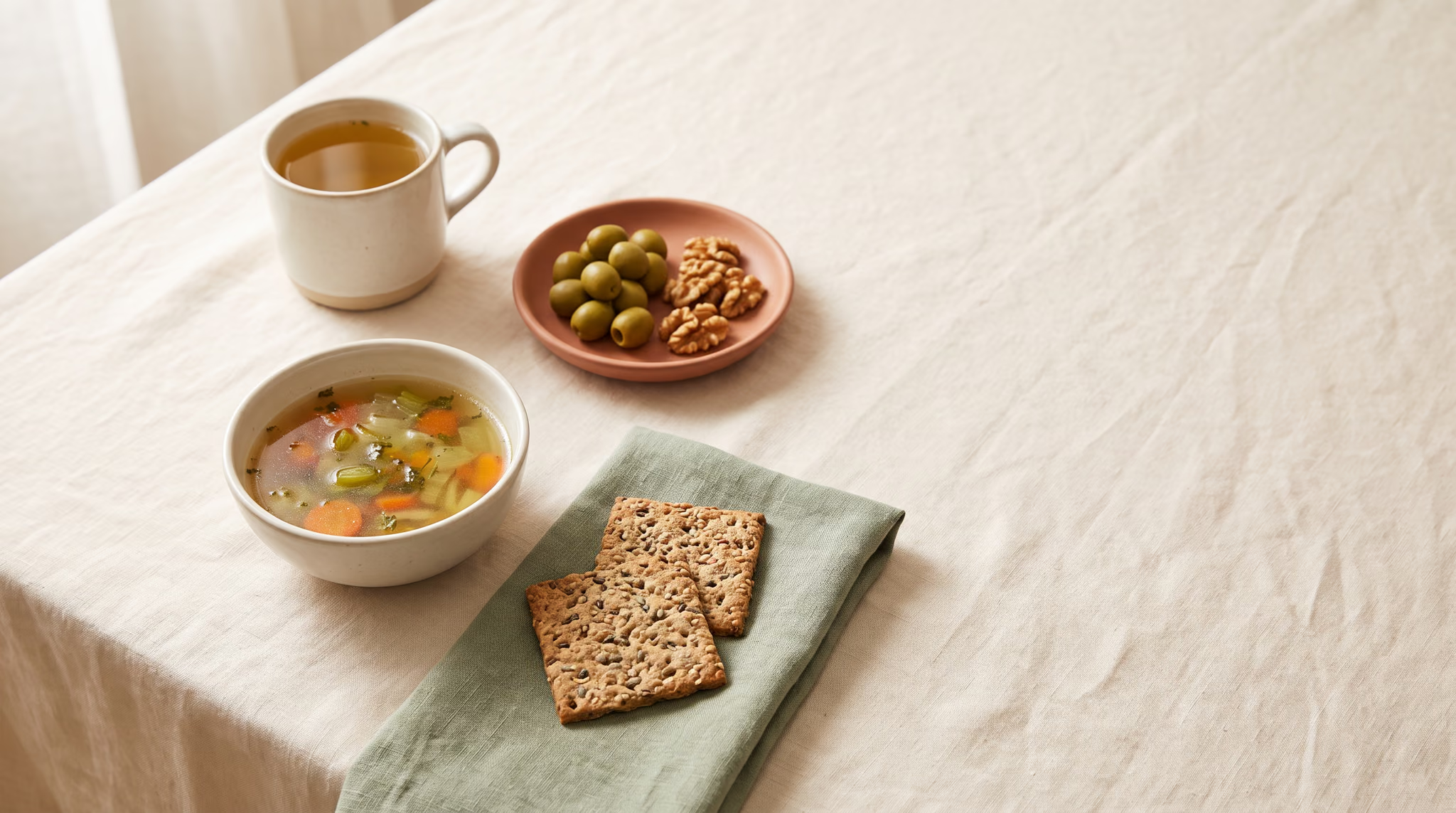
Randomized trials show modest, real effects on weight, blood pressure, IGF-1 and blood sugar control in type 2 diabetes, and the diet appears safe in screened adults. But trials are short, most compare it with usual eating rather than another diet, most are tied to the inventor or his company, and the headline claims about regeneration and longevity come from mice, with autophagy in people shown only in one small company-sponsored pilot.
The rules
The rules ofFasting-mimicking diet
- 1Follow the plan for 5 consecutive days, then return to normal eating.
- 2Day 1: about 1,100 kcal (4,600 kJ), roughly 11% protein, 46% fat and 43% carbohydrate.
- 3Days 2 to 5: about 720 kcal (3,000 kJ) a day, roughly 9% protein, 44% fat and 47% carbohydrate.
- 4Eat only plant foods, low in protein and sugar and high in unsaturated fat; no meat, fish, eggs, dairy or alcohol.
- 5Repeat once a month; trials used 3 cycles in healthy adults and 12 monthly cycles in type 2 diabetes.
Share these rules as an image or a link.
| ProLon | L-Nutra's packaged 5-day kit of soups, bars, olives, crackers, teas and a glycerin drink. |
|---|---|
| DIY fasting-mimicking diet | Home-cooked plant meals built to the same calorie and macronutrient targets; not tested in trials. |
| Chemotherapy FMD | About 1,200 kcal on day 1 then about 200 kcal a day, for 3 days before and the day of each chemotherapy cycle, under an oncology team [@degroot2020]. |
| FMD in diabetes care | The 5-day plan every month for 12 months alongside primary care, with medication adjusted by the doctor [@vandenburg2024]. |
What it aims to do
- Get the benefits of a multi-day fast without a water-only fast.
- Lower weight and body fat, especially visceral fat, while sparing muscle.
- Lower IGF-1, insulin and glucose, signals linked to aging and cancer in animal studies.
- Improve blood sugar control in type 2 diabetes and lower blood pressure.
- Trigger cell renewal and lower biological age, as claimed by its developers.
- Make cancer treatment more effective and less toxic, under study in trials.
What it claims, and what the evidence shows
Grades reflect evidence in people. Animal and cell results alone never earn more than limited.
Body fat and weight
Moderate evidenceBlood sugar and insulin
Moderate evidenceHormones
Moderate evidenceHeart and blood vessels
Mixed evidenceCancer risk
Limited evidenceLifespan and mortality
Limited evidenceInflammation
Not enough evidence
How it handles evidence
As presented by Valter Longo and L-Nutra, the company he founded that sells ProLon. Three checks you can verify from the sources, separate from the evidence ratings above.
Partly open to evidence
Separates its advice from experimentsPartly
Longo's papers label mouse results as mouse results. ProLon's science page lists six human studies on their own, but it does not say which of its cellular rejuvenation and longevity claims rest on animal work.
Says how strong the evidence is for each recommendationPartly
The ProLon homepage counts 40+ clinical trials and calls autophagy in humans clinically proven, but it grades no claim. The autophagy claim rests on a 30-person pilot funded by L-Nutra (December 2025), and the 2.5-year biological age figure on one exploratory analysis.
Has publicly changed its advice when the evidence changedPartly
In June 2015 Longo cautioned that people with diabetes on insulin or metformin should not fast or use the FMD; after trials in people on metformin, L-Nutra promoted the FMD for type 2 diabetes care in 2024. We found no case of a claim being narrowed after a weak result, such as the missed toxicity goal of the 2020 DIRECT trial.
USC News, Diet that mimics fasting appears to slow aging (June 2015)
Key takeaways
- 1
The FMD is 5 days a month of plant-based eating at about 1,100 kcal, then about 720 kcal a day, low in protein and sugar [1].
- 2
- 3
In type 2 diabetes, a monthly FMD lowered HbA1c by 0.3 percentage points while cutting medication over 12 months [2].
- 4
Lipids did not change significantly in pooled trials [3].
- 5
- 6
Valter Longo founded L-Nutra, which sells the diet as ProLon; USC can earn royalties, and most trials used the company's product.
What is the fasting-mimicking diet, exactly?
It is a five-day, plant-based, low-protein, low-sugar plan of about 1,100 kcal on day one and about 720 kcal on days two to five, repeated about once a month. Valter Longo's lab designed it to produce the effects of a water fast while still eating.
The fasting-mimicking diet (FMD) is a fixed meal plan, not a general eating style. In the trial that put it on the map, day one supplied about 4,600 kJ (about 1,100 kcal), with 11% of energy from protein, 46% from fat and 43% from carbohydrate. Days two to five supplied about 3,000 kJ (about 720 kcal) a day, with 9% protein, 44% fat and 47% carbohydrate [1]. Fat is mostly unsaturated, and protein and sugar are kept low on purpose.
People did it for five consecutive days a month, for three months, and ate normally the rest of the time [1]. Later trials repeated it monthly for a year [2].
The commercial version is ProLon, sold by L-Nutra, a company Longo founded. The kit is a box of soups, nut bars, olives, kale crackers, herbal teas and a glycerin drink. A journalist who tried it reported just over 800 kcal a day, a price of $250, and five hungry, irritable days.
Why "mimicking"?
Longo's group noted that patients tolerate water-only fasting poorly, especially during cancer treatment [15]. The FMD was built to keep the signals of fasting, low glucose, low insulin and low IGF-1, while giving enough food to be tolerable [5].
| Version | Days | Energy | Used in |
|---|---|---|---|
| Standard 5-day FMD | 5 per month | About 1,100 kcal on day 1 (11% protein, 46% fat, 43% carbohydrate), about 720 kcal on days 2 to 5 (9%, 44%, 47%) | Healthy adults, 3 cycles |
| Monthly FMD in diabetes care | 5 per month for 12 months | Same 5-day plan | Type 2 diabetes in primary care |
| Chemotherapy FMD | 3 days before and the day of each cycle | About 1,200 kcal on day 1, then about 200 kcal a day | Breast cancer, DIRECT trial |
Daily energy on a fasting-mimicking diet cycle
- Day 11,100 kcal per day
About 4,600 kJ; 11% protein, 46% fat, 43% carbohydrate
- Day 2720 kcal per day
About 3,000 kJ; 9% protein, 44% fat, 47% carbohydrate
- Day 3720 kcal per day
- Day 4720 kcal per day
- Day 5720 kcal per day
Show the data
| Item | Value (kcal per day) | Low | High | Note |
|---|---|---|---|---|
| Day 1 | 1,100 | About 4,600 kJ; 11% protein, 46% fat, 43% carbohydrate | ||
| Day 2 | 720 | About 3,000 kJ; 9% protein, 44% fat, 47% carbohydrate | ||
| Day 3 | 720 | |||
| Day 4 | 720 | |||
| Day 5 | 720 |
How is the fasting-mimicking diet supposed to work?
By cutting calories, protein and sugar for five days, the FMD lowers glucose, insulin and the growth hormone IGF-1. In mice, cycles of this low-nutrient state followed by refeeding shrink and then regenerate tissues; in people, the strongest finding is a drop in IGF-1 of about 20 ng/mL.
The core idea is that nutrient-sensing pathways, chiefly IGF-1, PKA and mTOR, switch cells from growth into protection and repair when food is scarce, and that refeeding then triggers rebuilding [16].
In mice, four-day FMD cycles shrank several organs, then raised stem and progenitor cell numbers when the mice ate again. Twice-monthly cycles started in middle age extended lifespan, cut cancer incidence and visceral fat, and improved memory [5]. FMD cycles regenerated insulin-producing beta cells in diabetic mice [17], eased a mouse model of multiple sclerosis [13] and reversed colitis damage [14].
In people, the measured effects are smaller and mostly in blood markers:
- IGF-1 fell by 21.7 ng/mL after three cycles, against a rise of 8.7 ng/mL on usual diet [1]. A meta-analysis put the average fall at 19.2 ng/mL [3].
- Glucose and growth factors fell consistently in 101 patients with cancer [11].
- Insulin resistance and liver fat were lower after three cycles in a secondary analysis [6].
Note what has not been measured in people: tissue regeneration and stem cell renewal. Those claims come from the animal work. Autophagy has now been measured once: a 30-person pilot sponsored by L-Nutra found a blood-cell marker of autophagic flux rose after six days, though not at every time point [4].
One FMD cycle and what trials measured
- One 5-day cycle
- Day 1About 1,100 kcalRoughly 11% protein, 46% fat and 43% carbohydrate, from plant foods only.
- Days 2 to 5About 720 kcal a dayRoughly 9% protein, 44% fat and 47% carbohydrate.
- Day 6 onwardNormal eatingRefeeding until the next cycle.
- Repeat
- MonthlyRepeat the cycleTrials used 3 cycles in healthy adults and 12 monthly cycles in type 2 diabetes.
- Measured in people
- After 3 cyclesIGF-1 down about 20 ng/mL21.7 ng/mL in one trial; 19.2 ng/mL on average in a meta-analysis.
- After cyclesGlucose and growth factors downConsistent falls in 101 patients with cancer.
- After 3 cyclesInsulin resistance and liver fat lowerFrom a secondary analysis of trial data.
- Shown only in mice
- On refeedingOrgans shrink, then regenerateStem and progenitor cells rose when the mice ate again.
- After cyclesBeta cells regenerateInsulin-producing cells regrew in diabetic mice.
Tissue regeneration and stem cell renewal have not been measured in people; those findings come from mice.
What do human trials of the fasting-mimicking diet show?
Randomized trials show modest falls in weight (2.6 to 3.6 kg), body fat, blood pressure and IGF-1, and better blood sugar control in type 2 diabetes. Effects on cholesterol are not significant overall, and no trial has measured heart attacks, cancer or lifespan.
Healthy adults. In the first randomized trial, 100 adults did three monthly cycles or ate normally. The FMD group lost 2.6 kg against a 0.1 kg gain, with less trunk fat, 4.5 mm Hg lower systolic blood pressure and lower IGF-1. Fasting glucose, LDL cholesterol and CRP did not change significantly for the whole group, though a post hoc analysis found larger effects in people with risk factors [1]. A quarter of the FMD arm dropped out before the end of the randomized phase.
Type 2 diabetes. The strongest trial added a monthly FMD to usual primary care for 12 months in 100 people on metformin or diet alone. The FMD group needed less glucose-lowering medication, and still had HbA1c 3.2 mmol/mol (0.3 percentage points) lower and weight 3.6 kg lower than controls. Glycaemic control improved in 53% of the FMD group against 8% of controls [2]. MRI showed less visceral and subcutaneous fat with no significant loss of abdominal muscle [7]. A smaller German trial saw lower insulin resistance but no overall difference in kidney damage markers compared with a Mediterranean diet [8].
Pooled evidence. A 2025 meta-analysis of 11 randomized trials found lower HbA1c, IGF-1 and blood pressure (4.1/2.3 mm Hg), and no significant effect on lipids or other cardiovascular risk factors [3].
Biological age. A secondary analysis reported a 2.5-year fall in median biological age after three cycles [6]. That was exploratory, used a blood-marker estimate rather than outcomes, and came from the developer's lab.
Behavior. Diet quality between cycles did not change in the diabetes trial, but FMD participants became more active, and many described the cycles as a prompt for other changes [18].
Blood pressure change with the FMD in 11 trials
- Systolic4.1 mm Hg lower than control
- Diastolic2.3 mm Hg lower than control
Show the data
| Item | Value (mm Hg lower than control) | Low | High | Note |
|---|---|---|---|---|
| Systolic | 4.1 | 0.7 | 7.6 | |
| Diastolic | 2.3 | 0.4 | 4.2 |
Does the fasting-mimicking diet help with cancer and chemotherapy?
It is being tested, not proven. In a 131-patient breast cancer trial, the FMD did not reduce chemotherapy toxicity, its main goal, though tumor response was better among patients who used it. Mouse studies are stronger than the human evidence, and no trial shows longer survival.
The cancer idea came from mice: short fasts protected normal cells, but not cancer cells, from high-dose chemotherapy, and ten patients who chose to fast around chemotherapy reported fewer side effects [12]. Longo's group then argued that FMDs could make treatments work better while protecting normal tissue [15].
The key human test is the Dutch DIRECT trial. 131 women with HER2-negative breast cancer were randomized to an FMD for three days before and on the day of each chemotherapy cycle, or their regular diet [10].
- Toxicity, the primary endpoint, did not differ between groups.
- Tumor response on imaging was more frequent with the FMD (odds ratio 3.2), and in a per-protocol analysis a near-complete pathological response was more likely (odds ratio 4.1).
- Adherence was the problem: only 20% of FMD patients complied in every cycle, and a planned phase 3 extension was dropped.
A single-arm trial in 101 patients found the FMD safe alongside standard treatments, with lower glucose and immune changes linked to stronger antitumor responses [11]. In mice, FMD cycles made hormone therapy for breast cancer work better, and patients on hormone therapy showed the same drop in insulin, leptin and IGF-1 [9].
None of this means people with cancer should start an FMD on their own. Weight and muscle loss can be dangerous during treatment, and the trials ran with oncology teams.
What is claimed beyond the evidence?
Claims that the FMD regenerates organs, resets the immune system, reverses autoimmune disease or extends life come mainly from mouse studies. In people, those effects have not been measured directly; autophagy has been measured once, in a small company-sponsored pilot, and the only biological age result is one exploratory analysis by the developer's lab.
Marketing and social media often describe the FMD as a way to trigger autophagy, clear damaged cells, renew stem cells and turn back the clock. Here is how those claims map to evidence.
| Claim | What exists |
|---|---|
| Extends lifespan | Mice and yeast only [5] |
| Regenerates beta cells, reverses diabetes | Mice and human islets in a dish [17]; human trials show better HbA1c, not regeneration [2] |
| Reverses multiple sclerosis or IBD | Mouse models plus small pilots [13] [14] |
| Triggers autophagy | One 30-person pilot, sponsored by L-Nutra, found a rise in a blood-cell marker of autophagic flux [4]; not yet replicated |
| Lowers biological age | One exploratory secondary analysis [6] |
| Lowers IGF-1, weight and blood pressure | Shown in randomized trials [1] [3] |
Outside scientists quoted in 2017 press coverage made the same point: the human base was thin and mostly animal, and there were no side-by-side comparisons with other fasting or diet programs. Chris Kresser, who uses a homemade version with patients, has said the benefits have been overstated relative to the human data.
Key studies of the fasting-mimicking diet
2009
Case series of patients fasting around chemotherapy
2015
FMD cycles extend lifespan in mice; first human pilot
2016
FMD eases a mouse model of multiple sclerosis
2017
Randomized trial of 3 cycles in 100 healthy adults
2020
DIRECT breast cancer chemotherapy trial
2022
FMD safe alongside cancer therapy in 101 patients
2024
12-month primary care trial in type 2 diabetes
2025
Meta-analysis of 11 randomized trials
Who profits from the fasting-mimicking diet?
Valter Longo invented the FMD and founded L-Nutra, the company that sells it as ProLon. USC licensed the diet's intellectual property to L-Nutra and can receive royalties. Longo says his equity goes to charity, but most trials used L-Nutra's product, and several were co-funded by it.
Readers should know who stands to gain, because it shapes how much weight to give each study.
- The company. L-Nutra was founded by Longo in 2009 and sells ProLon kits and related foods. Press coverage in 2017 reported that Longo kept majority ownership.
- The university. USC licensed intellectual property to L-Nutra and may receive royalties. L-Nutra supplied the diet used in the trials [1] [6].
- The pledge. Longo and a coauthor hold equity in L-Nutra and did not take part in collecting or analyzing data in the 2024 analysis; the paper states that 100% of Longo's equity will go to charitable organizations, including the Create Cures Foundation he founded [6].
- Trial funding. The 12-month diabetes trial was co-funded by L-Nutra along with public Dutch funders [2]. In the breast cancer trial, Longo had equity in L-Nutra and another author had shares in a company that invested in it [10]. Authors of key reviews hold FMD patents under negotiation with L-Nutra [15].
None of this makes the results wrong. The Dutch diabetes trial was assessor-blinded and run in primary care [2]. But the field would be stronger with more trials run independently, against active comparators such as a Mediterranean diet or simple calorie restriction.
Who is connected to the fasting-mimicking diet
Valter Longo
Inventor of the fasting-mimicking diet
- Founded L-Nutra in 2009
- Holds equity in L-Nutra
- Pledged 100% of his equity to charity
- Founded the Create Cures Foundation, a stated recipient
USC
The university behind the research
- Licensed FMD intellectual property to L-Nutra
- May receive royalties
L-Nutra and ProLon
The company that sells the diet
- Sells ProLon 5-day kits, about $250 to $300
- Supplied the diet used in the Wei 2017 and Brandhorst 2024 trials
- Co-funded the Dutch diabetes trial with public funders
Trials and reviews
What each paper discloses
- Brandhorst 2024: Longo did not collect or analyze data
- Dutch diabetes trial: assessor-blinded, run in primary care
- DIRECT breast cancer trial: Longo's equity disclosed
- Key reviews: authors hold FMD patents under negotiation with L-Nutra
Each card lists a relationship stated in the papers' disclosures or in press coverage.
Fasting-mimicking diet vs water fasting, intermittent fasting and keto: how do they compare?
The FMD is easier to tolerate than a multi-day water fast and has more randomized human trials. Compared with intermittent fasting or a low-carb diet, it has fewer and shorter trials, few active comparisons and a commercial sponsor, but it only asks for five hard days a month.
Against a water fast, the FMD keeps some protein and calories coming in. That matters because about two thirds of the weight lost in 5 to 20-day water fasts is lean mass [19]. In mice with colitis, FMD cycles reversed gut damage that water-only fasting did not [14], though that comparison has not been repeated in people.
Against intermittent fasting and the ketogenic diet, the main difference is rhythm. The FMD concentrates restriction into five days a month and leaves 25 or so days of normal eating. Whether that beats daily approaches is unknown, because the trials mostly compared the FMD with usual eating rather than with another diet [1] [2]. For context, daily calorie restriction produced a 7.5 kg loss over two years in the CALERIE trial [20], and intermittent and continuous restriction give similar weight loss [21]. The one trial with an active comparator, a Mediterranean diet in diabetes with kidney damage, found no difference in its main outcome [8].
Searches for "fasting-mimicking diet and keto" often ask whether the FMD puts you in ketosis. It is designed to push metabolism toward a fasting state, but published human trials report glucose, insulin and IGF-1 more consistently than ketones [1] [11].
| Approach | Effort | Typical human result | Evidence base |
|---|---|---|---|
| Fasting-mimicking diet | 5 low-calorie days a month | 2.6 to 3.6 kg weight loss; lower IGF-1 and blood pressure | Several randomized trials, mostly linked to the developer |
| Water fasting | Days to weeks of water only | 2 to 10% weight loss, two thirds lean mass | Mostly uncontrolled clinic studies |
| Intermittent fasting | Daily eating window or 2 low days a week | Weight loss similar to daily calorie restriction | Many randomized trials |
| Ketogenic diet | Daily carbohydrate restriction | Weight and triglyceride falls; LDL can rise | Many randomized trials |
| Calorie restriction | 10 to 25% fewer calories every day | 7.5 kg over 2 years in CALERIE | Long randomized trials |
What can you eat on a fasting-mimicking diet, and does a DIY version work?
The tested diet is plant-based: vegetable soups, nuts, olives, crackers and herbal tea, kept low in protein and sugar. Homemade versions copying the published calorie and macronutrient targets are popular, but no trial has tested a DIY plan, so their effects are assumed rather than shown.
The trials used L-Nutra's packaged plan. If you build your own, the published targets are the reference point: about 1,100 kcal on day one, then about 720 kcal a day for four days, with protein near 9 to 11% of energy, fat 44 to 46% (mostly unsaturated) and carbohydrate 43 to 47%, mostly from vegetables [1].
Typical DIY menus use:
- vegetable soups and broths,
- small portions of nuts and olives,
- vegetables such as kale, mushrooms and squash,
- herbal tea and water,
- no meat, fish, eggs, dairy, added sugar or alcohol.
Whether a homemade plan matches the packaged one depends on hitting the protein, sugar and calorie targets, which is hard to do by eye. Weighing food and logging it in an app is the most reliable check.
How often?
The healthy-adult trial used three monthly cycles [1]. The diabetes trial used monthly cycles for a year under medical supervision [2]. Longer-term schedules for healthy people, such as a few cycles a year, have not been compared in trials.
Exercise during the five days
Light activity such as walking is the common advice. There is little published data on hard training during an FMD cycle, and low intake makes heavy sessions harder and riskier.

The studies, by type
Strongest designs first. Scroll each row; every card links to the paper and says whether it supports the protocol.
Systematic reviews and meta-analyses (2)
Randomized controlled trials (8)
Large observational studies in people (1)
Mechanistic studies in people (1)
Animal and cell studies (5)
Case reports and N-of-1 experiments (1)
Hypotheses and expert reviews (3)
Who follows it, who backs it, who doubts it
Public positions summarized in our words. Follow each link for the full context.
Follow it
Adam PioreJournalist, MIT Technology Review
Did one five-day ProLon cycle, found it hungry and irritable going, lost about 4 kg, felt more energetic afterwards and planned to repeat it, while noting the human evidence was still limited.
Support it
Valter LongoDirector of the USC Longevity Institute; inventor of the FMD and founder of L-Nutra
Developed the FMD from his fasting research and founded L-Nutra in 2009 to sell it as ProLon; argues periodic cycles lower disease risk markers and biological age, and says he donates his L-Nutra consulting fees and book royalties to charity.
Mark MattsonNeuroscientist and fasting researcher
Was not skeptical of the approach when ProLon launched, but worried that the people who could benefit most may be least able to afford a commercial kit.
Mixed or cautious
Kristen GradneyRegistered dietitian and Academy of Nutrition and Dietetics spokeswoman
Said the evidence was mostly from animals and that the diet could work, but that she could not say confidently that it would.
Grant TinsleyKinesiology researcher, Texas Tech University
Questioned whether fasting programs work in people for any reason beyond cutting calories, noting there were no side-by-side human comparisons of fasting programs.
Chris KresserFunctional medicine clinician, founder of the Kresser Institute
Uses a fasting-mimicking approach with homemade meals rather than packaged kits, but thinks its benefits have been overstated because most of the evidence is from animals.
Oppose or doubt it
Allison DostalRegistered dietitian with a PhD from the University of Minnesota
Criticized the arrangement of a professor marketing his own longevity diet, and helped write a critical review of a USC press release about one of Longo's studies.
Public examples
- ProLon by L-Nutra
The commercial 5-day fasting-mimicking diet kit, sold by the company Valter Longo founded, alongside a clinical L-Nutra Health program for metabolic disease.
- Create Cures Foundation
Nonprofit founded by Valter Longo that offers webinars and nutrition consultations on fasting-mimicking diets, including for people with cancer.
- Fasting in diabetes Treatment (FIT) trial
Dutch primary care trial that added a monthly FMD to usual type 2 diabetes care for 12 months.
How to follow it
- Check with a clinician first if you take any medication, especially for diabetes or blood pressure, or have a chronic illness.
- Pick a 5-day window without hard training, travel or big social events.
- Use the packaged plan or build a plant-based menu to the published targets: about 1,100 kcal on day 1 and 720 kcal on days 2 to 5, low protein and low sugar.
- Drink water and herbal tea freely; keep activity light.
- On day 6, return to normal meals, starting with light, easily digested food.
- Repeat monthly for 3 cycles, as in the main trial, then review results with blood tests.
- Track weight, waist, blood pressure and, with your clinician, HbA1c, fasting glucose and lipids before and after.
How to know you are following it
Count completed 5-day cycles and how many days in each cycle stayed within the plan. If you build your own, log every food in an app and check daily calories, protein and sugar against the targets; the packaged kit makes adherence a matter of eating only what is in the box.
Common mistakes
- Adding meat, eggs, protein shakes or sugary snacks, which breaks the low-protein, low-sugar design.
- Going far below the target calories, which turns the plan into a water fast.
- Taking glucose-lowering drugs at usual doses without medical advice, which risks low blood sugar.
- Expecting regeneration or anti-aging effects that have only been shown in mice.
- Bingeing on day 6, which wipes out much of the calorie deficit.
- Doing it once and expecting lasting changes; trials used repeated monthly cycles.
Who should be careful
Check with a clinician first if you
- Pregnancy or breastfeeding.
- A current or past eating disorder.
- Underweight (BMI under 18.5) or frailty.
- Diabetes treated with insulin or sulfonylureas, unless a clinician supervises and adjusts medication.
- Active cancer treatment, except within a trial or with your oncology team.
- Kidney or liver disease, or other serious chronic illness, without medical advice.
- Children and teenagers.
Possible side effects
- Fatigue, weakness and headache, the most common complaints in trials.
- Hunger and irritability during days 2 to 5.
- Dislike of the food, the main reason patients stopped in the cancer trial.
- Low blood sugar in people on glucose-lowering drugs.
- Dizziness from lower blood pressure.
Watch
Talks and explainers worth your time. Nothing loads from YouTube until you press play.
Valter Longo, Ph.D. on Fasting-Mimicking Diet & Fasting for Longevity, Cancer & Multiple Sclerosis
FoundMyFitnessFoundMyFitness@foundmyfitnessSubscribers736KStartedJune 2013CountryUnited StatesVideos153Total views40MNew videos, last 30 days2New videos, last year18From YouTube, 2026-10-31Open on YouTube
The inventor explains the mechanisms and animal studies behind the FMD in depth.
Dr. Valter Longo on Metabolic Signals, Human Trials and Healthspan
Stanford Department of MedicineStanford Department of Medicine@stanforddepartmentofmedicineSubscribers15.4KStartedMarch 2014CountryUnited StatesVideos611Total views1.2MNew videos, last 30 days10New videos, last year82From YouTube, 2026-10-31Open on YouTube
An academic interview at Stanford covering the human trials and Longo's views on protein and daily fasting windows.
The new fasting technique that could extend your life | Dr. Valter Longo & Dr. Tim Spector
ZOEZOE@joinzoeSubscribers939KStartedJanuary 2020CountryUnited KingdomVideos531Total views96.5MNew videos, last 30 days5New videos, last year51From YouTube, 2026-10-31Open on YouTube
A nutrition scientist questions Longo on what the FMD does and how strong the evidence is.
Fasting Mimicking Diet: Human Health Effects? [Study 67]
PhysionicPhysionic@physionicSubscribers413KStartedOctober 2014CountryUnited StatesVideos947Total views59.2MNew videos, last 30 days12New videos, last year147From YouTube, 2026-10-31Open on YouTube
An independent walk-through of the main human FMD trial, its numbers and its limits.
Biomarkers it can move
- HbA1cHbA1c (A1c) is the percentage of hemoglobin in red blood cells that has glucose attached.
- Fasting insulinFasting insulin is the level of insulin in your blood after at least 8 hours without food.
- LDL cholesterolLDL cholesterol (LDL-C) is the cholesterol carried inside low-density lipoprotein particles, the main particles that deliver cholesterol to tissues and lodge in artery walls.
- TriglyceridesTriglycerides are the main form of fat in the body and in the blood, carried by VLDL from the liver and chylomicrons from the gut.
- hs-CRPhs-CRP is a blood test that measures C-reactive protein, an inflammation protein made by the liver, at very low levels.
Common questions
What can you eat on the fasting-mimicking diet?
Plant foods only: vegetable soups, small amounts of nuts and olives, vegetables, crackers and herbal tea, kept low in protein and sugar and higher in unsaturated fat, at about 1,100 kcal on day 1 and about 720 kcal on days 2 to 5 [1].
How often should you do the fasting-mimicking diet?
How much weight do you lose on the fasting-mimicking diet?
Does the fasting-mimicking diet cause autophagy?
Is the fasting-mimicking diet safe?
Trials in screened adults reported no serious adverse effects, with fatigue, weakness and headache most common [1]. People on glucose-lowering drugs, pregnant women, people with eating disorders and people in cancer treatment need medical oversight or should not do it.
Is ProLon worth the money?
ProLon kits have sold for about $250 to $300. There is no evidence that the packaged food beats a carefully built homemade plan, because no trial has compared them; the trials tested only the packaged version.
Fasting-mimicking diet vs water fasting: which is better?
The FMD is easier to tolerate and has randomized trials, while multi-day water fasting relies mostly on clinic case series and carries more risk. See water fasting.
Can people with type 2 diabetes do the fasting-mimicking diet?
In a 12-month trial in people on metformin or diet alone, a monthly FMD improved HbA1c while doctors reduced medication [2]. People on insulin or sulfonylureas were not the population tested and need close supervision.
Fasting-mimicking diet vs intermittent fasting?
Intermittent fasting is a daily or weekly habit with many trials; the FMD is five hard days a month with fewer, shorter trials. They have rarely been compared head to head. See intermittent fasting.
Sources
- 1.Wei M, Brandhorst S, Shelehchi M, et al. Fasting-mimicking diet and markers/risk factors for aging, diabetes, cancer, and cardiovascular disease. Science Translational Medicine, 2017. doi:10.1126/scitranslmed.aai8700
- 2.van den Burg EL, Schoonakker MP, van Peet PG, et al. Integration of a fasting-mimicking diet programme in primary care for type 2 diabetes reduces the need for medication and improves glycaemic control: a 12-month randomised controlled trial. Diabetologia, 2024. doi:10.1007/s00125-024-06137-0
- 3.Mohammadzadeh M, Amirpour M, Ahmadirad H, et al. Impact of Fasting Mimicking Diet (FMD) on cardiovascular risk factors: a systematic review and meta-analysis of randomized control trials. Diabetology and Metabolic Syndrome, 2025. doi:10.1186/s13098-025-01709-5
- 4.Espinoza SE, Park S, Connolly G, et al. Effect of fasting-mimicking diet on markers of autophagy and metabolic health in human subjects. GeroScience, 2025. doi:10.1007/s11357-025-02035-4
- 5.Brandhorst S, Choi IY, Wei M, et al. A Periodic Diet that Mimics Fasting Promotes Multi-System Regeneration, Enhanced Cognitive Performance, and Healthspan. Cell Metabolism, 2015. doi:10.1016/j.cmet.2015.05.012
- 6.Brandhorst S, Levine ME, Wei M, et al. Fasting-mimicking diet causes hepatic and blood markers changes indicating reduced biological age and disease risk. Nature Communications, 2024. doi:10.1038/s41467-024-45260-9
- 7.Schoonakker MP, van den Burg EL, van Peet PG, et al. A fasting-mimicking diet programme reduces abdominal adipose tissue while preserving abdominal muscle mass in persons with type 2 diabetes. Nutrition, Metabolism and Cardiovascular Diseases, 2025. doi:10.1016/j.numecd.2025.104111
- 8.Sulaj A, Kopf S, von Rauchhaupt E, et al. Six-Month Periodic Fasting in Patients With Type 2 Diabetes and Diabetic Nephropathy: A Proof-of-Concept Study. Journal of Clinical Endocrinology and Metabolism, 2022. doi:10.1210/clinem/dgac197
- 9.Caffa I, Spagnolo V, Vernieri C, et al. Fasting-mimicking diet and hormone therapy induce breast cancer regression. Nature, 2020. doi:10.1038/s41586-020-2502-7
- 10.de Groot S, Lugtenberg RT, Cohen D, et al. Fasting mimicking diet as an adjunct to neoadjuvant chemotherapy for breast cancer in the multicentre randomized phase 2 DIRECT trial. Nature Communications, 2020. doi:10.1038/s41467-020-16138-3
- 11.Vernieri C, Fucà G, Ligorio F, et al. Fasting-Mimicking Diet Is Safe and Reshapes Metabolism and Antitumor Immunity in Patients with Cancer. Cancer Discovery, 2022. doi:10.1158/2159-8290.CD-21-0030
- 12.Safdie FM, Dorff T, Quinn D, et al. Fasting and cancer treatment in humans: A case series report. Aging, 2009. doi:10.18632/aging.100114
- 13.Choi IY, Piccio L, Childress P, et al. A Diet Mimicking Fasting Promotes Regeneration and Reduces Autoimmunity and Multiple Sclerosis Symptoms. Cell Reports, 2016. doi:10.1016/j.celrep.2016.05.009
- 14.Rangan P, Choi I, Wei M, et al. Fasting-Mimicking Diet Modulates Microbiota and Promotes Intestinal Regeneration to Reduce Inflammatory Bowel Disease Pathology. Cell Reports, 2019. doi:10.1016/j.celrep.2019.02.019
- 15.Nencioni A, Caffa I, Cortellino S, et al. Fasting and cancer: molecular mechanisms and clinical application. Nature Reviews Cancer, 2018. doi:10.1038/s41568-018-0061-0
- 16.Longo VD, Mattson MP. Fasting: molecular mechanisms and clinical applications. Cell Metabolism, 2014. doi:10.1016/j.cmet.2013.12.008
- 17.Cheng CW, Villani V, Buono R, et al. Fasting-Mimicking Diet Promotes Ngn3-Driven β-Cell Regeneration to Reverse Diabetes. Cell, 2017. doi:10.1016/j.cell.2017.01.040
- 18.van den Burg EL, Schoonakker MP, Korpershoek B, et al. Self-initiated lifestyle changes during a fasting-mimicking diet programme in patients with type 2 diabetes: a mixed-methods study. BMC Primary Care, 2024. doi:10.1186/s12875-024-02405-5
- 19.Ezpeleta M, Cienfuegos S, Lin S, et al. Efficacy and safety of prolonged water fasting: a narrative review of human trials. Nutrition Reviews, 2024. doi:10.1093/nutrit/nuad081
- 20.Kraus WE, Bhapkar M, Huffman KM, et al. 2 years of calorie restriction and cardiometabolic risk (CALERIE): exploratory outcomes of a multicentre, phase 2, randomised controlled trial. Lancet Diabetes and Endocrinology, 2019. doi:10.1016/S2213-8587(19)30151-2
- 21.Cioffi I, Evangelista A, Ponzo V, et al. Intermittent versus continuous energy restriction on weight loss and cardiometabolic outcomes: a systematic review and meta-analysis of randomized controlled trials. Journal of Translational Medicine, 2018. doi:10.1186/s12967-018-1748-4
AumniVIDA explains health information for general wellness. Talk to your clinician before changing your diet, training or medication for a health condition.