
Water fasting and extended fasting
What is water fasting and extended fasting?
Water fasting means drinking only water and eating nothing for 24 hours to several weeks. Fasts of 5 to 20 days cut weight by 2 to 10% and lower blood pressure, but about two thirds of the loss is lean mass and most metabolic gains fade within 3 to 4 months. Long fasts need medical supervision.

Short water fasts of a day or two are well tolerated by most healthy adults, and supervised clinic fasts of 1 to 3 weeks have reasonable safety records in selected patients. But there are almost no randomized trials of multi-day water-only fasting, most data come from clinics with a financial stake, benefits fade within months, and older reports document deaths and serious complications in very long fasts.
The rules
The rules ofWater fasting and extended fasting
- 1Consume nothing but plain water for the whole fast: no food, juice, broth, milk or other caloric drinks.
- 2Fast for at least 24 hours; extended fasts usually run 3 to 21 days, and clinics report fasts of 5 to 40 days.
- 3Keep drinking water throughout; withholding water turns it into a dry fast.
- 4Fast for more than about 5 days only under medical supervision, with baseline and follow-up blood tests.
- 5Break the fast with a gradual refeed that lasts about half as long as the fast.
Share these rules as an image or a link.
| Short water fast | 24 to 72 hours of water only, the version most people do at home. |
|---|---|
| Extended supervised water fast | 5 to 21 or more days of water only in a residential clinic, with rest, daily checks and a plant-food refeed [@goldhamer2001]. |
| Buchinger periodic fasting | 4 to 21 days on about 200 to 300 kcal a day of liquids with light activity; a modified fast, not water only [@wilhelmi2019] [@li2017]. |
| Fasting-mimicking diet | 5 days on about 1,100 then 720 kcal a day of plant foods, designed to mimic a fast; see the fasting-mimicking diet page. |
| Dry fasting | No food and no water; not a form of water fasting and advised against because of dehydration. |
What it aims to do
- Lose weight quickly.
- Lower blood pressure, in some cases enough to stop medication under a doctor.
- Improve blood sugar, insulin and blood lipids.
- Switch the body into ketosis and trigger autophagy and cell renewal, which proponents link to longevity and disease prevention.
- Reset eating habits before moving to a new diet.
What it claims, and what the evidence shows
Grades reflect evidence in people. Animal and cell results alone never earn more than limited.
Body fat and weight
Mixed evidenceHeart and blood vessels
Limited evidenceBlood sugar and insulin
Mixed evidenceInflammation
Limited evidenceLifespan and mortality
Not enough evidenceCancer risk
Not enough evidence
Key takeaways
- 1
Water fasting means water only, from 24 hours to several weeks; fasts beyond about 5 days belong under medical supervision.
- 2
Weight drops 2 to 10% in 5 to 20 days, but about two thirds of it is lean mass and water, not fat [1].
- 3
Blood pressure falls consistently, by 37/13 mm Hg on average in one 174-patient series, yet almost none of the evidence is randomized [2].
- 4
Most metabolic gains fade within 3 to 4 months unless diet changes for good [1].
- 5
- 6
Claims about autophagy, stem cells, longevity and cancer rest on mouse studies and case reports.
What happens in your body during a water fast?
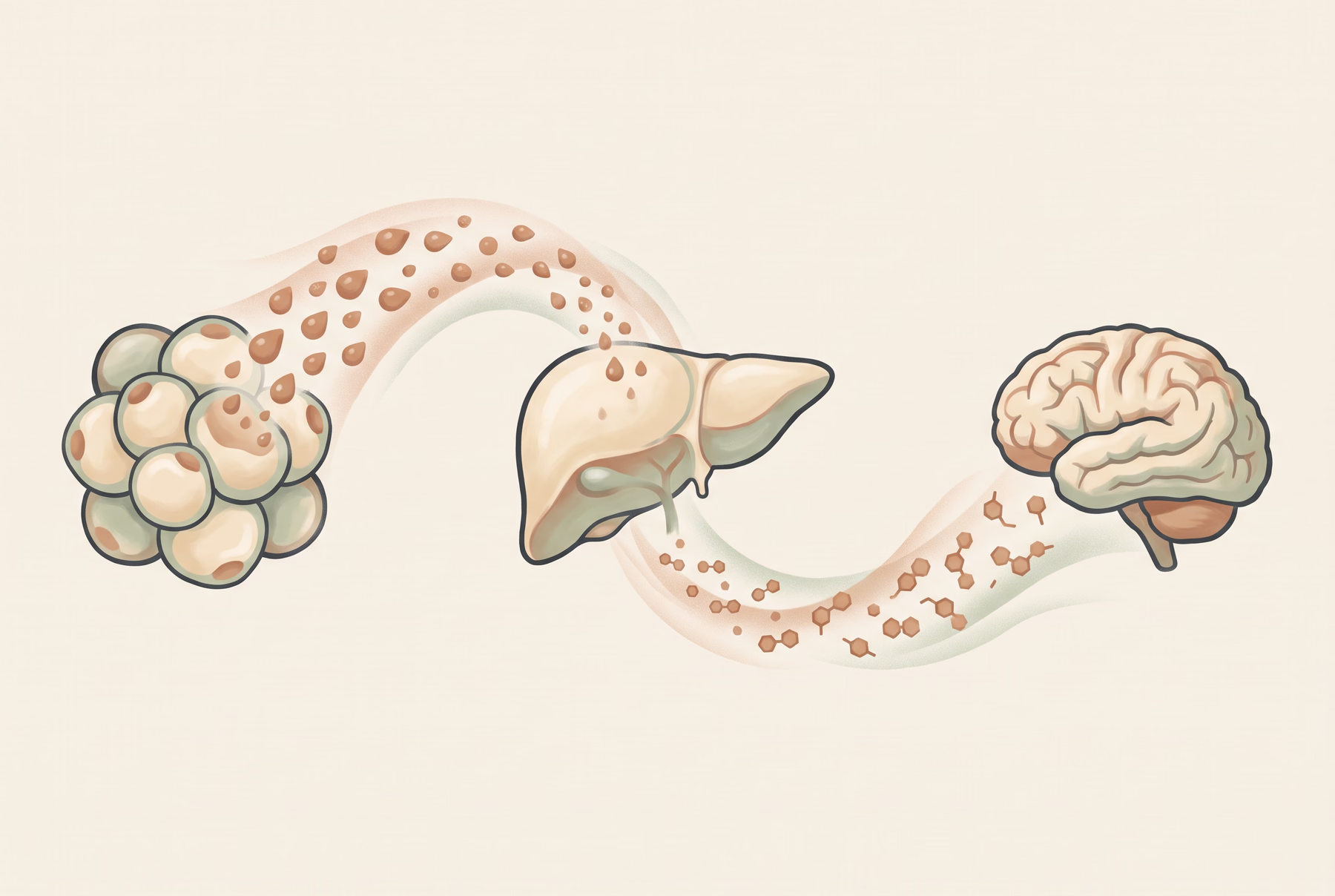
The body first burns stored glycogen and makes glucose from amino acids, then shifts to fat and ketones within a few days. Insulin falls, ketones rise, and by the third day more than a thousand blood proteins start to change.
A water fast is a controlled switch from eating to living on stored fuel. The sequence is well mapped, mostly from older studies of people with obesity who fasted for weeks under medical care.
- First day. The liver releases stored glycogen and starts making new glucose, mostly from amino acids taken from protein [3].
- Days 2 to 3. Fat breakdown speeds up and the liver turns fatty acids into ketone bodies. Insulin and the active thyroid hormone T3 fall, while glucagon and reverse T3 rise [3].
- After about 3 days. A 2024 study that measured about 3,000 blood proteins every day of a 7-day water fast found that body-wide changes only appeared after roughly 3 days, and more than 1,000 proteins changed in a consistent way across volunteers [7].
- Weeks. In people who fasted for 5 to 6 weeks, ketone bodies replaced glucose as the brain's main fuel [18]. That shift is what lets the body spare protein during long fasts [19].
Weight comes off fast at first: about 0.9 kg a day in the first week, slowing to 0.3 kg a day by the third week. Most of the early loss is sodium and water, not fat [3]. In the 7-day study, volunteers lost 5.7 kg on average [7].
In mice, repeated multi-day fasts lower the growth signal IGF-1 and trigger blood stem cell renewal [14]. That work drives many of the regeneration claims you will see online, but it has not been shown in people.
What changes across the first days of a water fast
- First days
- Day 1Glycogen, then new glucoseThe liver releases stored glycogen and makes glucose, mostly from amino acids.
- Days 2 to 3Fat and ketones take overFat breakdown speeds up and the liver turns fatty acids into ketones.
- Days 2 to 3Hormones shiftInsulin and T3 fall; glucagon and reverse T3 rise.
- After about day 3Body-wide protein changesMore than 1,000 blood proteins change in a consistent way.
- Weeks
- Week 1About 0.9 kg a day lostMostly sodium and water, not fat. One 7-day study averaged 5.7 kg.
- Week 3About 0.3 kg a day lostWeight loss slows as the fast goes on.
- Weeks 5 to 6Ketones fuel the brainKetones replace glucose as the brain's main fuel, which spares protein.
Most of this comes from older studies of people with obesity fasting under medical care. Risks grow with time: electrolyte breakdown, uric acid and gout, and low blood pressure on standing.
How much weight do you lose on a water fast, and does it stay off?
Fasts of 5 to 20 days cut body weight by 2 to 10%, but about two thirds of the loss is lean mass and water rather than fat. Much of the weight and most of the metabolic benefit return within a few months unless eating habits change.
Weight loss on a water fast is real and large on the scale. What the scale hides is where the weight comes from.
A 2026 meta-analysis of 49 prolonged fasting studies found falls in body weight, BMI, fat mass and waist size, but the drops in fat-free mass and total body water were bigger than the drop in fat [5]. A review of human trials by Krista Varady's group put it plainly: in fasts of 5 to 20 days, roughly two thirds of the weight lost was lean mass and one third was fat [1]. That is the reverse of a typical slow diet.
Some of that "lean" loss is water and glycogen that come back when you eat. In a careful 10-day study of 16 men on a 200 to 250 kcal modified fast, lean soft tissue made up about 60% of the 5.9 kg lost; extracellular water explained 44% of it, glycogen and its water 14%, and active lean tissue 42%. Strength held up, and leg strength even improved, but lean tissue was still 3.2% below baseline 3 months later [6].
Does it stay off? Follow-up is short. In a randomized pilot in type 2 diabetes, a 7-day modified fast left people 3.5 kg lighter at 4 months, against 2.0 kg with usual care [8]. Six weeks after a supervised water fast and plant-based refeed, weight was still below baseline [13]. Across trials, though, metabolic gains were gone 3 to 4 months later even when weight stayed down [1].
For lasting weight change, the evidence favors patterns you can keep, such as intermittent fasting or moderate calorie restriction.
Weight lost in multi-day fasting studies
- 7-day water-only fast5.7 kg lost
12 healthy adults, end of fast (Pietzner 2024)
- 10-day modified fast, 200 to 250 kcal/day5.9 kg lost
16 healthy men, end of fast, about 60% lean soft tissue (Laurens 2021)
- 7-day modified fast, 4 months later3.5 kg lost
Type 2 diabetes, randomized (Li 2017)
- Usual care, same trial, 4 months2 kg lost
Control group (Li 2017)
Show the data
| Item | Value (kg lost) | Low | High | Note |
|---|---|---|---|---|
| 7-day water-only fast | 5.7 | 12 healthy adults, end of fast (Pietzner 2024) | ||
| 10-day modified fast, 200 to 250 kcal/day | 5.9 | 16 healthy men, end of fast, about 60% lean soft tissue (Laurens 2021) | ||
| 7-day modified fast, 4 months later | 3.5 | Type 2 diabetes, randomized (Li 2017) | ||
| Usual care, same trial, 4 months | 2 | Control group (Li 2017) |
Does water fasting lower blood pressure and cholesterol?
Blood pressure falls consistently during supervised water fasts, by 37/13 mm Hg on average in one series of 174 patients. LDL cholesterol often falls too, but results are mixed, ApoB did not change in one detailed study, and almost none of the evidence is randomized.
Blood pressure is the most consistent finding. In 174 consecutive patients with hypertension who fasted on water for about 10 to 11 days, almost 90% ended below 140/90 mm Hg. The average fall was 37/13 mm Hg, and 60/17 mm Hg in people with the most severe hypertension [2]. A newer single-arm trial of 29 people saw median blood pressure fall below 130/80 mm Hg, with drugs stopped, and the effect held for at least six weeks [9]. Reviews agree that blood pressure falls consistently with prolonged fasting [1].
The catch: these are uncontrolled studies from fasting clinics, and the authors include the clinics' owners [2] [9]. The one randomized trial of a week-long fast used a 300 kcal liquid fast, not water only, and found lower blood pressure at 4 months [8].
Cholesterol is less clear. A 14-day modified fast lowered LDL cholesterol by about 28 mg/dL (0.72 mmol/L)0.72 mmol/L (about 28 mg/dL) and triglycerides by 0.35 mmol/L, but HDL also fell, and ApoB, lipoprotein(a) and hs-CRP did not change [10]. After a median 17-day water fast, LDL and hsCRP were lower, yet triglycerides and HOMA-IR were higher after refeeding [11]; six weeks later those two had returned to baseline [13]. A single 24-hour water fast briefly raised total and HDL cholesterol [12].
What this means for a blood test
If you get labs during or just after a fast, expect unusual values: higher ketones, shifted lipids and, after refeeding, sometimes higher insulin resistance. The fasting you do before a routine blood test, usually overnight with water allowed, is a different thing from a water fast.
| Study | Fast | People | Main result |
|---|---|---|---|
| Goldhamer 2001 | Water only, about 10 to 11 days | 174 with hypertension | Average fall of 37/13 mm Hg; almost 90% under 140/90 |
| Zeiler 2024 | Water only, median 11 days | 29 with stage 1 or 2 hypertension | Median blood pressure under 130/80; drugs stopped |
| Scharf 2022 | Water only, median 17 days | 26 completers with overweight | LDL and hsCRP down; triglycerides and HOMA-IR up after refeed |
| Grundler 2021 | 250 kcal/day, 14 days | 40 adults aged 32 to 65 | LDL down 0.72 mmol/L; ApoB and Lp(a) unchanged |
| Li 2017 (randomized) | 300 kcal/day, 7 days | 32 completers with type 2 diabetes | Lower blood pressure at 4 months; HbA1c not significantly changed |
| Horne 2013 (randomized) | Water only, 24 hours | 30 healthy adults | Total and HDL cholesterol up, triglycerides down; back to baseline in 48 hours |
Blood pressure fall after supervised water-only fasting
- All patients, systolic37 mm Hg fall
- All patients, diastolic13 mm Hg fall
- Stage 3 hypertension, systolic60 mm Hg fall
- Stage 3 hypertension, diastolic17 mm Hg fall
Show the data
| Item | Value (mm Hg fall) | Low | High | Note |
|---|---|---|---|---|
| All patients, systolic | 37 | |||
| All patients, diastolic | 13 | |||
| Stage 3 hypertension, systolic | 60 | |||
| Stage 3 hypertension, diastolic | 17 |
Is water fasting safe?
Supervised fasts in clinics report mostly mild side effects such as hunger, headache and fatigue. The serious risks are electrolyte disturbances, heart rhythm problems, gout, fainting, thiamine deficiency and refeeding syndrome, and deaths were reported when long fasts were used to treat obesity.
The best safety data come from clinics that run fasts every day, and they look reassuring for selected, monitored patients.
- A chart review of 768 water-only fasts of at least 2 days found that 75% of adverse events were mild. 212 visits had a grade 3 event, 1 visit had a grade 4 event and 2 had serious adverse events [20].
- In 1,422 people on 4 to 21-day Buchinger fasts at about 200 to 250 kcal a day, adverse effects were reported by under 1% [21].
Both studies come from the clinics themselves, and their authors disclose financial ties to them [20] [21]. Both screened out people at high risk.
The older literature is harsher. When doctors used weeks-long starvation to treat severe obesity in the 1960s, they reported Wernicke's encephalopathy, a brain injury from thiamine deficiency [22], and deaths [23]. A Glasgow series of 18 patients on 60-day fasts called the procedure generally safe but warned of breakdown in electrolyte balance and the need for close blood monitoring [24]. Reviews list gout and uric acid kidney stones, low blood pressure on standing and cardiac arrhythmias as known complications [3].
Refeeding syndrome
The most dangerous moment can be the first meals. After more than 5 to 10 days of little or no food, a sudden load of carbohydrate drives phosphate, potassium and magnesium into cells. Blood levels can crash, causing heart rhythm problems, heart failure and confusion. Clinical guidance flags people as high risk with a BMI under 16, more than 15% weight loss in 3 to 6 months, more than 10 days of little intake or low electrolytes before feeding, and recommends starting at about 10 kcal per kg a day with vitamins given first [4].
The 382-day fast is often cited as proof that long fasts are harmless. That patient was supervised throughout, had blood glucose near 30 mg/dL for months, low magnesium and a spell of high calcium [25]. It shows how far a monitored body can go, not that unsupervised long fasts are safe.
Who is at high risk of refeeding syndrome
Is the risk of refeeding syndrome high?
- BMI under 16High risk: refeed under medical care
- More than 15% weight loss in 3 to 6 monthsHigh risk: refeed under medical care
- More than 10 days of little or no intakeHigh risk: refeed under medical care
- Low potassium, phosphate or magnesium before feedingHigh risk: refeed under medical care
- High risk confirmedStart at about 10 kcal per kg a day, with vitamins given first
- None of theseRefeed slowly for about half as long as the fast, with small, simple meals
A sudden carbohydrate load drives phosphate, potassium and magnesium into cells, which can cause heart rhythm problems, heart failure and confusion. Refeeding plans for people at high risk belong with a clinician.
Does water fasting cause autophagy, reset the immune system or treat cancer?
These are the biggest claims made for water fasting, and they rest mostly on mouse studies and single case reports. No human trial has shown that water fasting extends life, measurably boosts autophagy in a way that improves health, or treats cancer.
Autophagy, the cell's recycling of damaged parts, ramps up during fasting in animals, and fasting researchers argue it drives many of fasting's benefits [15]. In people, autophagy is hard to measure, and no trial has linked a measured rise in autophagy during a water fast to a health outcome.
The stem cell and immune claims trace largely to one line of mouse research: cycles of prolonged fasting lowered IGF-1, protected blood stem cells and reversed immune suppression from chemotherapy [14]. The 2024 human proteome study found deep, body-wide changes after 3 days, including in brain extracellular matrix proteins, but it could only estimate whether those changes help or harm, and it flagged both kinds [7].
Cancer claims rest on case reports. A woman with low-grade follicular lymphoma had smaller lymph nodes after a 21-day water fast and a plant-food diet [16]. Ten patients who chose to fast before chemotherapy reported fewer side effects, and the authors themselves wrote that this does not establish practice guidance [17]. Low-grade follicular lymphoma can shrink and grow on its own, which is one reason single cases cannot show cause.
What fasting researchers say they know is narrower: fasting reliably lowers weight and blood pressure, and the animal data justify trials [15]. The commercial and clinical push to make fasting easier to tolerate led to the fasting-mimicking diet, which has more randomized human data than water fasting does.
Key studies of prolonged fasting
1966
Wernicke's encephalopathy reported during therapeutic starvation
1967
Ketones shown to become the brain's main fuel in long fasts
1968
Death reported during therapeutic starvation for obesity
1973
Supervised 382-day fast described
2001
Water fasting case series in 174 people with hypertension
2018
Chart review of 768 supervised water fasts
2019
1,422-person Buchinger fasting cohort
2024
Plasma proteome tracked through a 7-day water fast
2026
Meta-analysis of 49 studies on body composition
Water fasting vs intermittent fasting, dry fasting and the fasting-mimicking diet: which is better?
For weight and metabolic health, intermittent fasting and moderate calorie restriction have far more trial evidence and lower risk than multi-day water fasts. Dry fasting adds dehydration risk. The fasting-mimicking diet keeps some food in and has randomized trials, though most are funded or run by its developer.
Each of these protocols cuts energy intake. They differ in how hard they are, how long they last and how much evidence backs them.
Krista Varady, who has run many intermittent fasting trials, led the review that found water fasting's metabolic benefits gone within 3 to 4 months [1], and she has said she would suggest intermittent fasting over a water fast for weight loss. A meta-analysis of randomized trials found that intermittent and continuous energy restriction produce similar weight loss [26], and both are far easier to sustain than a week without food.
Modified fasts, such as Buchinger fasting at about 200 to 300 kcal a day, are the version with the most published data, including randomized pilot trials [8] and a 1,422-person cohort [21]. The fasting-mimicking diet goes further, giving about 1,100 kcal on day one and about 720 kcal on days two to five, and has been tested in randomized trials.
Dry fasting, going without water too, is not a stronger form of water fasting. It removes the one thing that keeps a fast from causing dehydration, and fasting researchers, including Valter Longo, have said it is not a safe way to fast.
| Protocol | What you eat | Typical length | Human evidence | Main risks |
|---|---|---|---|---|
| Water fasting | Water only | 1 to 21 days | Mostly uncontrolled clinic studies | Lean mass loss, electrolytes, refeeding syndrome |
| Buchinger modified fast | 200 to 300 kcal/day of liquids | 4 to 21 days | Large cohorts, small randomized pilots | Similar to water fasting, milder |
| Fasting-mimicking diet | About 1,100 then 720 kcal/day | 5 days a month | Several randomized trials | Fatigue, headache, cost |
| Intermittent fasting | Normal food in a time window or on set days | Ongoing | Many randomized trials | Low for most healthy adults |
| Calorie restriction | About 10 to 25% fewer calories every day | Months to years | 2-year randomized trial (CALERIE) | Bone and lean mass loss |
| Dry fasting | No food and no water | Hours to days | Almost none outside religious fasting | Dehydration, kidney strain |
How do you prepare for and break a water fast?
Get a clinician's input first, especially if you take medication. Build up from shorter fasts, drink water freely, rest, check blood pressure and electrolytes on longer fasts, and refeed slowly for about half as long as you fasted.
These are the practices supervised clinics and the clinical literature describe. They are not a substitute for a clinician who knows your health and medications.
- Check first. People on insulin, sulfonylureas, blood pressure drugs, or diuretics need medication plans, because blood sugar and blood pressure fall during a fast [2] [3].
- Step up. Start with a 24-hour fast. Clinics often use a short lead-in of light meals; in one series, patients ate only fruits and vegetables for 2 to 3 days before fasting [2].
- Drink water. Water fasting is not dry fasting. Drink through the day.
- Rest and stand up slowly. Low blood pressure on standing is a known complication [3]. Avoid driving or hard training if you feel lightheaded.
- Monitor longer fasts. Beyond a few days, clinics track blood pressure, weight and blood tests for sodium, potassium, magnesium, phosphate, glucose, kidney function and uric acid [24] [3]. Whether you need electrolyte supplements depends on those results.
- Refeed slowly. Clinics refeed for about half the length of the fast [20]. Start with small, simple meals. People at high risk of refeeding syndrome start at about 10 kcal per kg a day under medical care [4].
- Plan the after. The benefits faded within 3 to 4 months in trials [1]. The clinics with the best results moved people straight onto a whole-food, plant-based diet [13] [9].
What do days 3 to 5 feel like?
Hunger usually eases once ketosis sets in; in the Buchinger cohort, 93.2% reported no hunger [21]. Headaches, fatigue, insomnia and dizziness are the common complaints [1]. Palpitations, fainting, confusion, chest pain or persistent vomiting are reasons to stop and seek care.
The studies, by type
Strongest designs first. Scroll each row; every card links to the paper and says whether it supports the protocol.
Systematic reviews and meta-analyses (2)
Randomized controlled trials (2)
Large observational studies in people (7)
Mechanistic studies in people (4)
Animal and cell studies (1)
Case reports and N-of-1 experiments (5)
Hypotheses and expert reviews (5)
Who follows it, who backs it, who doubts it
Public positions summarized in our words. Follow each link for the full context.
Support it
Alan GoldhamerCo-founder of TrueNorth Health Center, a residential water-only fasting clinic in California
Runs what his center calls the world's largest facility for medically supervised water-only fasting, and has published case series arguing that supervised fasts followed by a whole-plant-food diet can normalize high blood pressure.
Jason FungNephrologist and author on therapeutic fasting
Advises lengthening fasts gradually, flags refeeding syndrome as a risk of fasts longer than about five days, mainly in underweight or malnourished people, and recommends low-carbohydrate foods to break a long fast.
Mixed or cautious
Peter AttiaPhysician and author of Outlive
Did water-only fasts of up to 10 days roughly quarterly for about three years, then attributed a large loss of muscle on a DEXA scan mainly to that fasting; he now sees the benefits as coming at a substantial cost and changed his approach.
Krista VaradyProfessor of kinesiology and nutrition, University of Illinois Chicago
After reviewing water and Buchinger fasting trials, she said the metabolic benefits are short-lived, would suggest intermittent fasting instead for weight loss, and said no one should fast more than five days without medical supervision.
Valter LongoDirector of the USC Longevity Institute and founder of L-Nutra
Studies the regenerative effects of prolonged fasting, but developed a fasting-mimicking diet partly because most cancer patients would not do water-only fasts; he has a commercial interest in that alternative.
Public examples
- TrueNorth Health Center
Residential clinic in Santa Rosa, California, running medically supervised water-only fasts of usually 5 to 40 days, with a refeed of at least half the fast length.
- Buchinger Wilhelmi
Fasting clinic group in Germany that runs Buchinger periodic fasting at about 200 to 250 kcal a day, a modified fast rather than water only.
How to follow it
- Talk to a clinician before any fast longer than 24 hours, and plan anything beyond about 5 days with medical supervision.
- Build up: try a 24-hour fast first, and eat light plant-based meals for 1 to 3 days before a longer fast.
- Drink water through the day; do not restrict fluids.
- Keep activity light, stand up slowly and skip driving or hard training if you feel lightheaded.
- On longer fasts, check blood pressure daily and get blood tests for electrolytes, glucose, kidney function and uric acid.
- Refeed slowly for about half the length of the fast, starting with small, simple meals.
- Move onto a sustainable diet afterwards, since most benefits fade within 3 to 4 months.
How to know you are following it
Adherence is simple to measure: log the start and end time of the fast, confirm that nothing but water was consumed, and record the length of the refeed. Useful extra checks are morning weight, blood pressure and, with a meter, blood glucose and blood ketones.
Common mistakes
- Breaking a long fast with a large, carbohydrate-heavy meal, which raises the risk of refeeding problems.
- Fasting on insulin, sulfonylureas, diuretics or blood pressure drugs without a clinician adjusting doses.
- Reading the fast scale drop as fat loss; much of it is water, glycogen and lean tissue.
- Repeating long fasts often without tracking muscle mass or eating enough protein between them.
- Going straight back to the old diet, which erases most of the gains.
- Confusing water fasting with dry fasting, which also cuts out water.
Who should be careful
Check with a clinician first if you
- Pregnancy or breastfeeding.
- A current or past eating disorder.
- Underweight (BMI under 18.5), frailty or recent unintended weight loss.
- Type 1 diabetes, or type 2 diabetes treated with insulin or sulfonylureas, unless a clinician supervises and adjusts medication.
- Gout, kidney stones or kidney disease.
- Heart rhythm problems, heart failure, or drugs that affect electrolytes such as diuretics.
- Heavy alcohol use or other reasons for low thiamine.
- Children and teenagers.
- Active cancer treatment, except inside a supervised trial.
Possible side effects
- Hunger, headache, fatigue and insomnia, mostly mild.
- Dizziness or fainting on standing from low blood pressure.
- Loss of lean mass, about two thirds of weight lost in 5 to 20-day fasts.
- Raised uric acid, gout flares and uric acid kidney stones.
- Electrolyte disturbances and heart rhythm problems, more likely in long or unsupervised fasts.
- Refeeding syndrome when eating restarts after a long fast.
- Wernicke's encephalopathy from thiamine deficiency, reported in prolonged starvation.
Watch
Talks and explainers worth your time. Nothing loads from YouTube until you press play.
Is fasting beneficial for longevity?
Peter Attia MDPeter Attia MD@peterattiamdSubscribers1MStartedJuly 2015CountryNot statedVideos1.8KTotal views137.4MNew videos, last 30 days7New videos, last year105From YouTube, 2026-10-31Open on YouTube
A physician who once did long water fasts explains why he now weighs the benefits against muscle loss.
2 Week Water Fast: Is Longer, Better for Health? [Study 56]
PhysionicPhysionic@physionicSubscribers413KStartedOctober 2014CountryUnited StatesVideos947Total views59.2MNew videos, last 30 days12New videos, last year147From YouTube, 2026-10-31Open on YouTube
Walks through a published two-week water fasting study and what its numbers do and do not show.
The Insane Benefits of Water-Only Fasting: Dr. Alan Goldhamer | Rich Roll Podcast
Rich RollRich Roll@richrollSubscribers1.6MStartedDecember 2007CountryUnited StatesVideos2.2KTotal views205.2MNew videos, last 30 days20New videos, last year307From YouTube, 2026-10-31Open on YouTube
The case for supervised water fasting from the clinic director whose studies dominate the field; watch with his financial interest in mind.
Why Longevity Experts Are Warning Against Fasting
Dr Brad StanfieldDr Brad Stanfield@drbradstanfieldSubscribers366KStartedSeptember 2010CountryNew ZealandVideos368Total views45.8MNew videos, last 30 days10New videos, last year89From YouTube, 2026-10-31Open on YouTube
A physician summarizes the lean mass and other concerns that have made some longevity experts cautious about long fasts.
Refeeding Syndrome Visually Explained
TownsendTeachingTownsendTeaching@townsendteachingSubscribers27.6KStartedJanuary 2021CountryUnited StatesVideos145Total views1.8MNew videos, last 30 days0New videos, last year0From YouTube, 2026-10-31Open on YouTube
A clear medical explainer of the electrolyte shifts that make the first meals after a long fast risky.
Biomarkers it can move
- LDL cholesterolLDL cholesterol (LDL-C) is the cholesterol carried inside low-density lipoprotein particles, the main particles that deliver cholesterol to tissues and lodge in artery walls.
- ApoBApoB (apolipoprotein B) is the protein on every LDL, VLDL, IDL and Lp(a) particle, one per particle, so a blood ApoB test counts the particles that drive atherosclerosis.
- TriglyceridesTriglycerides are the main form of fat in the body and in the blood, carried by VLDL from the liver and chylomicrons from the gut.
- Lp(a)Lp(a), or lipoprotein(a), is an LDL-like particle with an extra protein, apolipoprotein(a), attached.
- Fasting insulinFasting insulin is the level of insulin in your blood after at least 8 hours without food.
- HbA1cHbA1c (A1c) is the percentage of hemoglobin in red blood cells that has glucose attached.
- hs-CRPhs-CRP is a blood test that measures C-reactive protein, an inflammation protein made by the liver, at very low levels.
Common questions
Can water fasting make you sick?
How much weight do you lose on a water fast?
Can I take electrolytes or supplements while water fasting?
Some protocols add sodium, potassium or magnesium and others use water only. Low magnesium was a consistent finding in the 382-day supervised fast [25], so on longer fasts the decision is best based on blood tests and made with the supervising clinician.
Is water fasting the same as fasting before a blood test?
Does water fasting cause autophagy?
Fasting increases autophagy in animals, and researchers think it does in people too [15], but no human trial has linked a measured rise in autophagy during a water fast to a health benefit.
Is water fasting safe for women?
What is the difference between water fasting and dry fasting?
A water fast allows unlimited water. A dry fast removes water too, which adds dehydration and kidney strain to the risks of fasting, and fasting researchers advise against it.
Can water fasting reverse insulin resistance?
Not reliably. Glucose and insulin fall during the fast in people without diabetes, but insulin resistance rose after refeeding in one study and did not improve in people with type 1 or type 2 diabetes [11] [1]. See fasting insulin and HbA1c.
Water fasting vs intermittent fasting: which is better?
For most people, intermittent fasting. It has many more randomized trials, a lower risk profile and is easier to keep up, while water fasting's metabolic benefits fade within months [1]. See intermittent fasting.
Sources
- 1.Ezpeleta M, Cienfuegos S, Lin S, et al. Efficacy and safety of prolonged water fasting: a narrative review of human trials. Nutrition Reviews, 2024. doi:10.1093/nutrit/nuad081
- 2.Goldhamer A, Lisle D, Parpia B, et al. Medically supervised water-only fasting in the treatment of hypertension. Journal of Manipulative and Physiological Therapeutics, 2001. doi:10.1067/mmt.2001.115263
- 3.Kerndt PR, Naughton JL, Driscoll CE, et al. Fasting: the history, pathophysiology and complications. Western Journal of Medicine, 1982. PubMed 6758355
- 4.Mehanna HM, Moledina J, Travis J. Refeeding syndrome: what it is, and how to prevent and treat it. BMJ, 2008. doi:10.1136/bmj.a301
- 5.Ulupınar S, Terzi M, Çamli A, et al. Duration-Dependent Changes in Body Composition During Prolonged Fasting: A Systematic Review and Meta-Analysis. Nutrition Reviews, 2026. doi:10.1093/nutrit/nuag092
- 6.Laurens C, Grundler F, Damiot A, et al. Is muscle and protein loss relevant in long-term fasting in healthy men? A prospective trial on physiological adaptations. Journal of Cachexia, Sarcopenia and Muscle, 2021. doi:10.1002/jcsm.12766
- 7.Pietzner M, Uluvar B, Kolnes KJ, et al. Systemic proteome adaptions to 7-day complete caloric restriction in humans. Nature Metabolism, 2024. doi:10.1038/s42255-024-01008-9
- 8.Li C, Sadraie B, Steckhan N, et al. Effects of A One-week Fasting Therapy in Patients with Type-2 Diabetes Mellitus and Metabolic Syndrome - A Randomized Controlled Explorative Study. Experimental and Clinical Endocrinology and Diabetes, 2017. doi:10.1055/s-0043-101700
- 9.Zeiler E, Gabriel S, Ncube M, et al. Prolonged Water-Only Fasting Followed by a Whole-Plant-Food Diet Is a Potential Long-Term Management Strategy for Hypertension and Obesity. Nutrients, 2024. doi:10.3390/nu16223959
- 10.Grundler F, Plonné D, Mesnage R, et al. Long-term fasting improves lipoprotein-associated atherogenic risk in humans. European Journal of Nutrition, 2021. doi:10.1007/s00394-021-02578-0
- 11.Scharf E, Zeiler E, Ncube M, et al. The Effects of Prolonged Water-Only Fasting and Refeeding on Markers of Cardiometabolic Risk. Nutrients, 2022. doi:10.3390/nu14061183
- 12.Horne BD, Muhlestein JB, Lappé DL, et al. Randomized cross-over trial of short-term water-only fasting: metabolic and cardiovascular consequences. Nutrition, Metabolism and Cardiovascular Diseases, 2013. doi:10.1016/j.numecd.2012.09.007
- 13.Gabriel S, Ncube M, Zeiler E, et al. A Six-Week Follow-Up Study on the Sustained Effects of Prolonged Water-Only Fasting and Refeeding on Markers of Cardiometabolic Risk. Nutrients, 2022. doi:10.3390/nu14204313
- 14.Cheng CW, Adams GB, Perin L, et al. Prolonged fasting reduces IGF-1/PKA to promote hematopoietic-stem-cell-based regeneration and reverse immunosuppression. Cell Stem Cell, 2014. doi:10.1016/j.stem.2014.04.014
- 15.Longo VD, Mattson MP. Fasting: molecular mechanisms and clinical applications. Cell Metabolism, 2014. doi:10.1016/j.cmet.2013.12.008
- 16.Goldhamer AC, Klaper M, Foorohar A, et al. Water-only fasting and an exclusively plant foods diet in the management of stage IIIa, low-grade follicular lymphoma. BMJ Case Reports, 2015. doi:10.1136/bcr-2015-211582
- 17.Safdie FM, Dorff T, Quinn D, et al. Fasting and cancer treatment in humans: A case series report. Aging, 2009. doi:10.18632/aging.100114
- 18.Owen OE, Morgan AP, Kemp HG, et al. Brain metabolism during fasting. Journal of Clinical Investigation, 1967. doi:10.1172/JCI105650
- 19.Cahill GF Jr. Fuel metabolism in starvation. Annual Review of Nutrition, 2006. doi:10.1146/annurev.nutr.26.061505.111258
- 20.Finnell JS, Saul BC, Goldhamer AC, et al. Is fasting safe? A chart review of adverse events during medically supervised, water-only fasting. BMC Complementary and Alternative Medicine, 2018. doi:10.1186/s12906-018-2136-6
- 21.Wilhelmi de Toledo F, Grundler F, Bergouignan A, et al. Safety, health improvement and well-being during a 4 to 21-day fasting period in an observational study including 1422 subjects. PLoS One, 2019. doi:10.1371/journal.pone.0209353
- 22.Drenick EJ, Joven CB, Swendseid ME. Occurrence of acute Wernicke's encephalopathy during prolonged starvation for the treatment of obesity. New England Journal of Medicine, 1966. doi:10.1056/NEJM196604282741705
- 23.Spencer IO. Death during therapeutic starvation for obesity. The Lancet, 1968. doi:10.1016/s0140-6736(68)92299-x
- 24.Runcie J, Thomson TJ. Prolonged starvation--a dangerous procedure?. British Medical Journal, 1970. doi:10.1136/bmj.3.5720.432
- 25.Stewart WK, Fleming LW. Features of a successful therapeutic fast of 382 days' duration. Postgraduate Medical Journal, 1973. doi:10.1136/pgmj.49.569.203
- 26.Cioffi I, Evangelista A, Ponzo V, et al. Intermittent versus continuous energy restriction on weight loss and cardiometabolic outcomes: a systematic review and meta-analysis of randomized controlled trials. Journal of Translational Medicine, 2018. doi:10.1186/s12967-018-1748-4
AumniVIDA explains health information for general wellness. Talk to your clinician before changing your diet, training or medication for a health condition.