
Avoiding red meat
What is avoiding red meat?
Avoiding red meat means cutting or eliminating beef, pork, lamb and especially processed meats such as bacon, ham and sausage. IARC classifies processed meat as a cause of colorectal cancer, with risk up 18% per 50 g a day. Evidence against unprocessed red meat is weaker and debated, and links to heart disease and diabetes are modest.
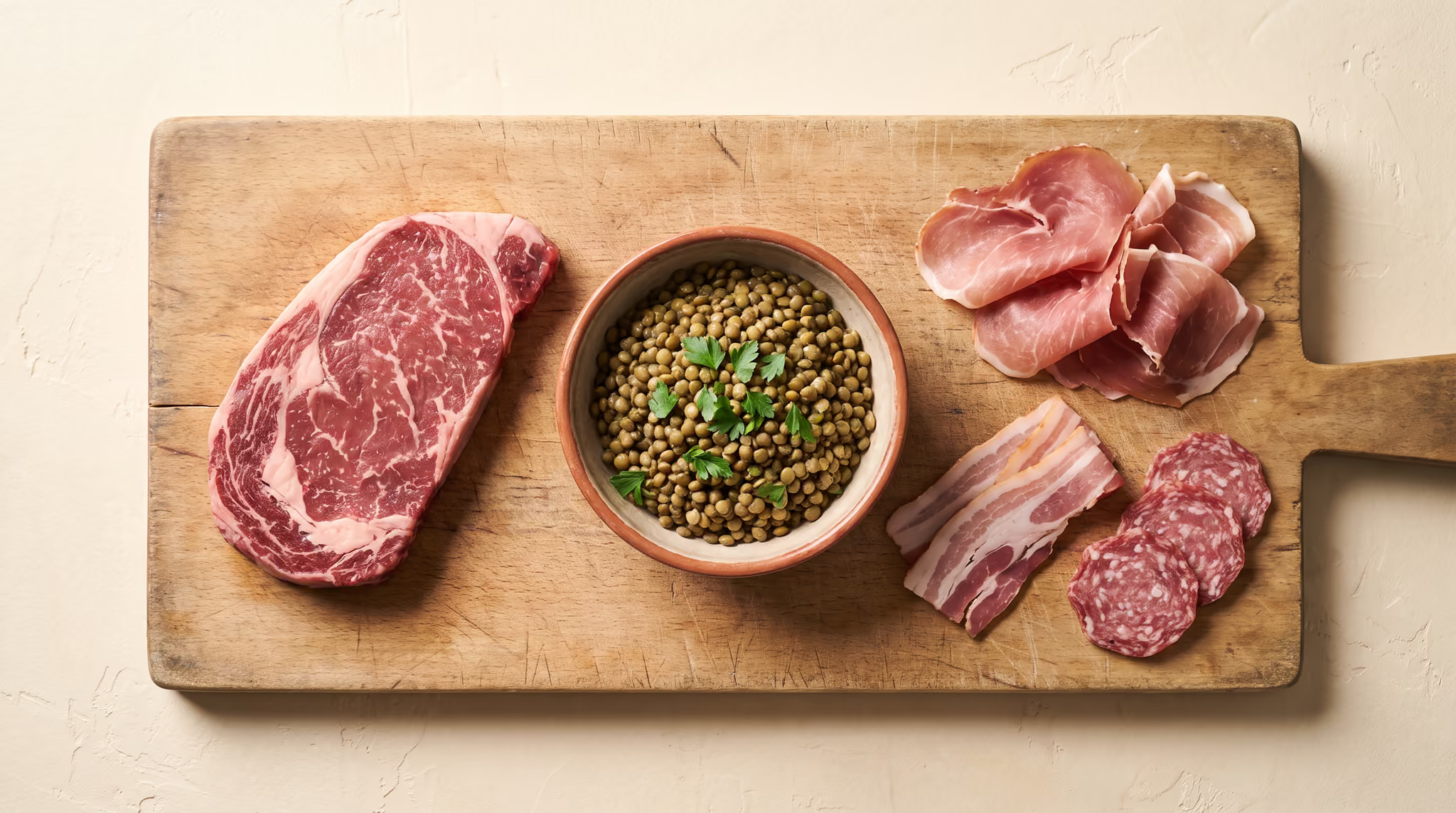
Most health bodies, including WHO, the NHS and the World Cancer Research Fund, advise limiting red meat and eating little processed meat. The evidence for processed meat is stronger than for unprocessed. The 2019 NutriRECS guidance and the 2022 Burden of Proof study rated the evidence for unprocessed red meat as low certainty or weak, and randomized trials on hard outcomes are lacking.
The rules
The rules ofAvoiding red meat
- 1Eat processed meat (bacon, ham, sausage, salami, hot dogs, jerky, canned meat) rarely or never.
- 2Limit unprocessed red meat (beef, veal, pork, lamb, mutton, goat) to a set weekly amount, such as at most 3 portions or 350 to 500 g cooked.
- 3Or, for the strict version, eat no mammalian meat at all.
- 4Replace red meat with legumes, soy, nuts, fish or poultry rather than refined carbohydrates.
- 5Plan iron intake from other sources if you cut red meat completely.
Share these rules as an image or a link.
| Processed meat only | Cut processed meat to rare or none; keep unprocessed red meat at moderate amounts. |
|---|---|
| WCRF limit | At most about 3 portions of red meat a week (350 to 500 g cooked) and very little processed meat. |
| NHS limit | No more than 70 g a day average of cooked red and processed meat combined. |
| Meatless days | One or more meat-free days a week, such as Meatless Monday. |
| Pescatarian or poultry-only | No red meat at all, with fish or poultry as the main animal protein. |
| EAT-Lancet planetary health diet | A reference of about 14 g of red meat a day within a mostly plant diet. |
What it aims to do
- Lower colorectal cancer risk, especially by cutting processed meat.
- Reduce the risk of coronary heart disease and type 2 diabetes.
- Lower LDL cholesterol when red meat is replaced with plant proteins.
- Reduce TMAO and other gut-derived metabolites linked to heart disease.
- Reduce the environmental footprint of the diet.
What it claims, and what the evidence shows
Grades reflect evidence in people. Animal and cell results alone never earn more than limited.
Cancer risk
Moderate evidenceHeart and blood vessels
Mixed evidenceBlood sugar and insulin
Limited evidenceLifespan and mortality
Limited evidenceGut health
Limited evidence
Key takeaways
- 1
Processed and unprocessed red meat differ: IARC rates processed meat a cause of colorectal cancer (Group 1) and red meat probably carcinogenic (Group 2A).
- 2
Each 50 g a day of processed meat raises colorectal cancer risk by about 18%; Group 1 describes certainty, not the size of risk.
- 3
Cohorts link each daily serving to 13% (unprocessed) to 20% (processed) higher mortality, but no large trial confirms this.
- 4
The 2019 NutriRECS guidance said continue current intake on low-certainty evidence; Harvard and others said it misapplied GRADE.
- 5
The replacement decides the result: legumes, soy, nuts and fish lower LDL and are linked to lower mortality, refined carbohydrates are not.
Is red meat bad for you?
Processed meat is the clearer problem: IARC classifies it as a cause of colorectal cancer, with risk up 18% per 50 g a day. For unprocessed red meat the evidence of harm is weaker and debated. Higher intakes are linked to modestly more heart disease, diabetes and early death in cohorts.
The question has two parts, and most confusion comes from mixing them.
| Term | What it includes |
|---|---|
| Red meat | All mammalian muscle meat: beef, veal, pork, lamb, mutton, horse and goat |
| Processed meat | Meat transformed by salting, curing, fermentation, smoking or other processes for flavor or preservation: ham, bacon, sausages, hot dogs, salami, corned beef, jerky, canned meat |
| Not red meat | Poultry, fish, eggs and plant proteins |
Definitions from IARC and WHO [1] [19].
What the evidence says, in one line each:
- Processed meat and colorectal cancer: sufficient evidence in humans; each 50 g a day raises risk by about 18% [1] [2].
- Unprocessed red meat and colorectal cancer: limited evidence in humans, strong mechanistic evidence [1].
- Heart disease and diabetes: consistent associations for processed meat, weaker and less consistent for unprocessed red meat [6] [5].
- Mortality: each extra daily serving linked to 13% (unprocessed) to 20% (processed) higher death rates in US cohorts [15].
- Randomized trials: none tests red meat against hard outcomes well; the best available found little or no effect [11].
The effects are relative and modest. Avoiding red meat matters most for people who eat it daily, and most of all for processed meat.
Does red meat cause cancer? What did IARC conclude in 2015?
In October 2015, 22 experts convened by IARC reviewed more than 800 studies. They classified processed meat as carcinogenic to humans (Group 1) for colorectal cancer and red meat as probably carcinogenic (Group 2A). Group 1 reflects certainty of the evidence, not size of risk.
The IARC working group of 22 experts from 10 countries based its decision mainly on large prospective cohorts from the previous 20 years [1] [20].
- Processed meat (Group 1): sufficient evidence that it causes colorectal cancer. Each 50 g eaten daily, about two slices of ham, raises risk by 18% [1].
- Red meat (Group 2A): limited human evidence, mainly for colorectal cancer, with associations also seen for pancreatic and prostate cancer, plus strong mechanistic evidence [1].
Same group as tobacco, not the same risk. WHO's explainer is explicit that IARC groups describe how sure scientists are that something can cause cancer, not how much cancer it causes [19]. An 18% relative increase in a cancer with a lifetime risk of a few percent is a small absolute change for one person, though a meaningful one across a population, as IARC's Kurt Straif noted [1].
Dose response. A meta-analysis of prospective studies found colorectal cancer risk rose 17% per 100 g a day of fresh red meat and 18% per 50 g a day of processed meat, roughly linearly up to about 140 g a day [2]. The World Cancer Research Fund's update of 111 cohorts put the combined figure at 12% per 100 g a day [3].
The dissent. The 2019 NutriRECS review of the same cohorts found that cutting processed meat by 3 servings a week was associated with only very small decreases in cancer, on low-certainty evidence [4]. A 2022 Burden of Proof analysis rated the evidence for unprocessed red meat and colorectal cancer as weak [5]. Both groups agree on the direction; they disagree on how sure we can be.
How the red meat debate unfolded
2010
Meta-analysis separates processed from unprocessed meat
2011
Colorectal cancer dose-response meta-analysis
2012
Harvard cohorts link each daily serving to higher mortality
2013
Carnitine to TMAO pathway shown in mice and people
2015
IARC: processed meat Group 1, red meat Group 2A
2019
NutriRECS suggests adults continue current intake
2019
Red meat diet doubles TMAO in a feeding trial
2020
Diabetes Care response rejects the NutriRECS approach
2022
Burden of Proof finds weak evidence for unprocessed red meat
Is red meat bad for your heart and cholesterol?
Processed meat is linked to 42% more coronary heart disease per 50 g a day; unprocessed red meat shows a smaller or no association. In trials, red meat raises LDL cholesterol only compared with plant proteins such as legumes, soy and nuts, by about 8 mg/dL (0.20 mmol/L)0.20 mmol/L (8 mg/dL).
Cohorts. An early meta-analysis split the two types. Processed meat was linked to 42% higher coronary heart disease risk per 50 g a day; unprocessed red meat showed no association (RR 1.00 per 100 g a day) [6]. Later, longer cohorts found smaller links for both: in 43,272 US men followed for 30 years, each daily serving was associated with 11% higher risk for unprocessed and 15% for processed red meat [7]. In UK Biobank, each 70 g a day of red and processed meat was linked to 15% higher ischaemic heart disease risk [12].
Trials on cholesterol. What replaces red meat matters:
- Against all comparison diets combined, red meat made no difference to LDL, HDL, ApoB or blood pressure [8].
- Against high-quality plant proteins (legumes, soy, nuts), red meat produced smaller decreases in total cholesterol (by 0.26 mmol/L) and LDL (by 0.20 mmol/L, about 8 mg/dL) [8].
- Eating at least 35 g a day did not worsen lipids or blood pressure compared with eating less [10].
- In a tightly controlled feeding trial, red meat and white meat raised LDL and ApoB by similar amounts compared with nonmeat protein [9]. On lipids alone, swapping beef for chicken does not help; swapping it for plants does.
So if you have high cholesterol, swapping red meat for legumes, soy or nuts helps; swapping it for refined carbohydrates does not. See LDL cholesterol and ApoB.
Processed versus unprocessed meat and heart disease and diabetes
- Heart disease: unprocessed red meat (100 g)1 relative risk per daily serving
- Heart disease: processed meat (50 g)1.42 relative risk per daily serving
- Diabetes: unprocessed red meat (100 g)1.16 relative risk per daily serving
- Diabetes: processed meat (50 g)1.19 relative risk per daily serving
Show the data
| Item | Value (relative risk per daily serving) | Low | High | Note |
|---|---|---|---|---|
| Heart disease: unprocessed red meat (100 g) | 1 | 0.81 | 1.23 | |
| Heart disease: processed meat (50 g) | 1.42 | 1.07 | 1.89 | |
| Diabetes: unprocessed red meat (100 g) | 1.16 | 0.92 | 1.46 | |
| Diabetes: processed meat (50 g) | 1.19 | 1.11 | 1.27 |
Does red meat raise diabetes risk or shorten life?
Cohorts consistently link red and especially processed meat to higher type 2 diabetes risk and modestly higher mortality, about 13% to 20% per daily serving. How confident to be is the core of the debate: Harvard researchers rate the diabetes evidence high quality, NutriRECS rates it low certainty.
Mortality. In 121,342 US health professionals and nurses, each additional daily serving was linked to 13% higher total mortality for unprocessed red meat and 20% for processed. Replacing one serving a day with fish, poultry, nuts, legumes, low-fat dairy or whole grains was associated with 7% to 19% lower mortality [15].
Diabetes. Processed meat was linked to 19% higher diabetes risk per 50 g a day in an early meta-analysis [6]. In UK Biobank, each 70 g a day of red and processed meat was linked to 30% higher diabetes risk, though higher BMI accounted for a substantial part of the associations [12].
Two ways to grade the same data. NutriRECS applied GRADE, which starts observational evidence at low certainty, and concluded that cutting 3 servings a week was associated with very small reductions in mortality, heart attack, stroke and diabetes [14]. Frank Hu's group applied NutriGRADE, designed for nutrition studies, and rated the diabetes evidence high quality and the mortality evidence moderate [13].
The randomized evidence. Only one large trial is informative: in 48,835 women, a diet lower in red meat (as part of a low-fat diet) had little or no effect on mortality (HR 0.99) [11]. The reviewers themselves noted few trials and small differences in red meat intake [11], and Harvard critics pointed out that the key trial tested a low-fat diet, not red meat reduction [21].
Risk per extra daily serving in two US cohorts
- Death from any cause: unprocessed1.13 hazard ratio per serving a day
- Death from any cause: processed1.2 hazard ratio per serving a day
- Cardiovascular death: unprocessed1.18 hazard ratio per serving a day
- Cardiovascular death: processed1.21 hazard ratio per serving a day
- Cancer death: unprocessed1.1 hazard ratio per serving a day
- Cancer death: processed1.16 hazard ratio per serving a day
Show the data
| Item | Value (hazard ratio per serving a day) | Low | High | Note |
|---|---|---|---|---|
| Death from any cause: unprocessed | 1.13 | 1.07 | 1.2 | |
| Death from any cause: processed | 1.2 | 1.15 | 1.24 | |
| Cardiovascular death: unprocessed | 1.18 | 1.13 | 1.23 | |
| Cardiovascular death: processed | 1.21 | 1.13 | 1.31 | |
| Cancer death: unprocessed | 1.1 | 1.06 | 1.14 | |
| Cancer death: processed | 1.16 | 1.09 | 1.23 |
What was the 2019 NutriRECS controversy?
In 2019, Annals of Internal Medicine published guidance from the NutriRECS consortium suggesting adults continue their current red and processed meat intake. It contradicted nearly every major health body and drew fierce responses over its methods, its reading of the evidence and its lead author's past funding.
What NutriRECS did. The consortium ran four systematic reviews of health effects and one of people's values and preferences, rated certainty with GRADE, and had a 14-member panel from 7 countries vote [22]. It found low-certainty evidence that eating 3 fewer servings a week was associated with very small benefits [14] [4]. Weighing those small, uncertain benefits against people's attachment to meat, it issued a weak recommendation to continue current intake [22].
The editorial. Aaron Carroll and Tiffany Doherty argued that repeated warnings based on small relative risks were not changing behavior, and that environmental and animal welfare arguments might persuade more people [23].
The responses.
- Harvard's Nutrition Source said the reviews' own meta-analyses largely confirmed links with poorer health, that GRADE was built for drug trials rather than diet, that the trial review leaned on a low-fat diet trial, and that excluding environmental impact was a mistake [21].
- Frank Hu and colleagues argued in Diabetes Care that the guidance rested on flawed methodology and misread nutritional evidence [13].
- JAMA reported on the backlash and on questions about the lead author's earlier industry-linked research funding [24].
- Annals later published corrected versions of the guideline and its reviews [22].
What to take from it. Neither side found that red meat is good for health. The disagreement is about certainty and about how to turn uncertain, modest relative risks into advice. On the numbers, both readings support eating less processed meat; for unprocessed red meat, reasonable experts disagree on how strongly to recommend cutting back.
What in red meat might be harmful? Heme, nitrites and TMAO
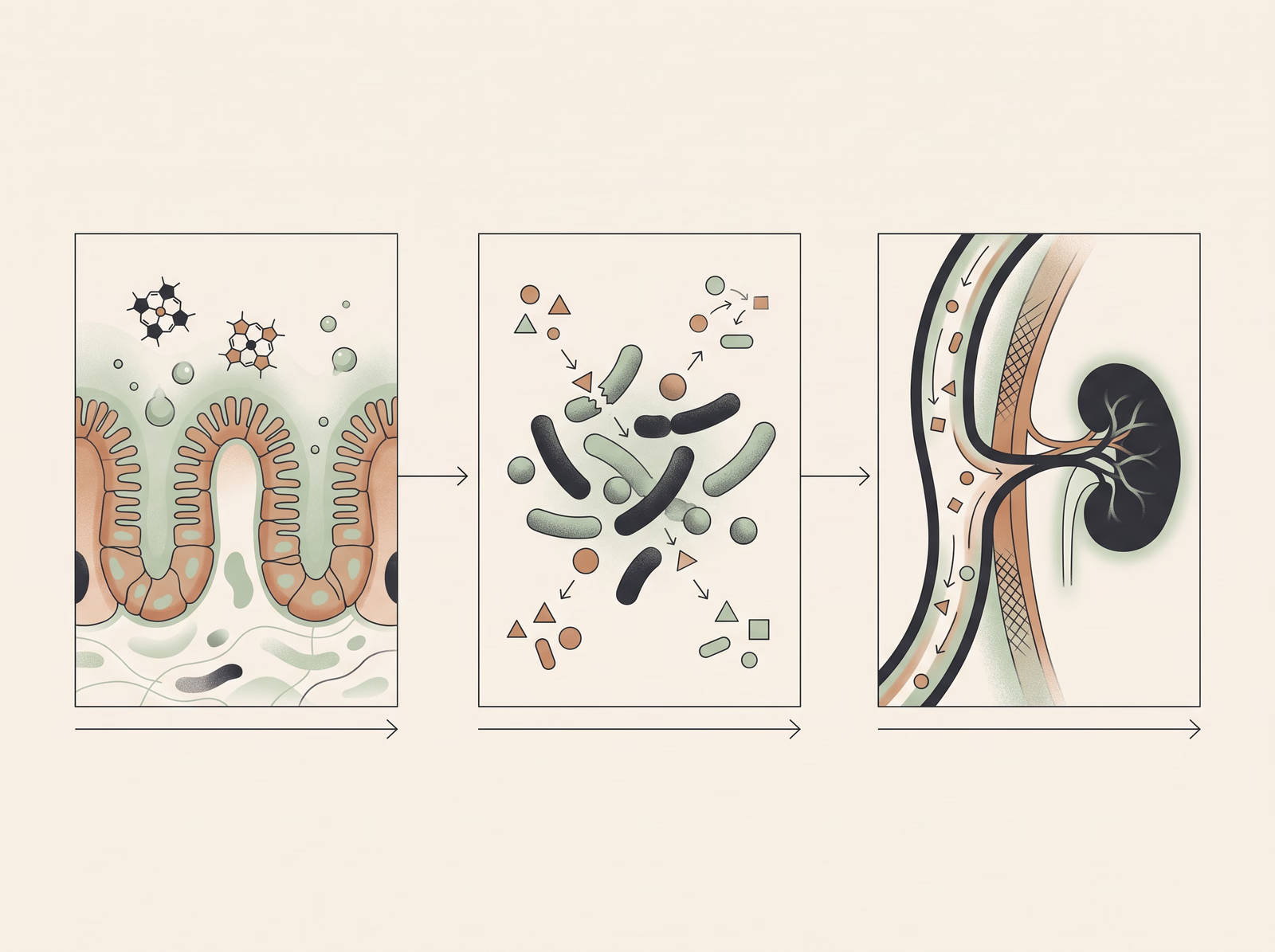
Three mechanisms lead. Heme iron promotes carcinogenic N-nitroso compounds and oxidized fats in the colon; nitrites and nitrates in processed meat add more; and gut bacteria turn carnitine from red meat into TMAO, which more than doubled on a red meat diet in a controlled trial.
Heme iron. People with the highest heme intake had 18% higher colon cancer risk, and heme catalyzes the formation of N-nitroso compounds and cytotoxic aldehydes from fat oxidation [18]. In rats and mice at dietary doses, heme increased precancerous lesions and tumor load, while heterocyclic amines from high-heat cooking and added nitroso compounds did not [25]. IARC described the mechanistic evidence for red meat as strong even though the human evidence was limited [1].
Processing. Curing, smoking and salting define processed meat [1]. Heme iron, heterocyclic amines from high-heat cooking and N-nitroso compounds are the three proposed explanations for the cancer link [25], and nitrite curing adds to N-nitroso formation, a leading hypothesis for why processed meat carries more risk.
TMAO. Gut bacteria convert L-carnitine, abundant in red meat, into trimethylamine, which the liver turns into TMAO. In mice, this accelerated atherosclerosis, and omnivores made more TMAO from carnitine than vegans or vegetarians [17]. In a controlled feeding trial in 113 healthy adults, 4 weeks of red meat, but not white meat or non-meat protein, more than doubled plasma and urine TMAO and reduced the kidneys' clearance of it [16]. TMAO is a marker with plausible links to heart disease, but no trial has shown that lowering it prevents heart attacks.
LDL cholesterol. Red meat also leaves LDL higher than plant proteins do [8], a separate pathway to heart disease from TMAO.
How much red meat is too much?
The NHS advises cutting back if you eat more than 90 g of cooked red and processed meat a day, to an average of 70 g or less. The World Cancer Research Fund advises at most about 3 portions (350 to 500 g cooked) a week and very little processed meat.
| Source | Red meat | Processed meat |
|---|---|---|
| NHS (UK) | Cut to 70 g a day average or less if eating more than 90 g | Counted in the same total |
| World Cancer Research Fund | At most about 3 portions, 350 to 500 g cooked, a week | Very little, if any |
| EAT-Lancet Commission [26] | About 14 g a day reference [27] | Very low |
| NutriRECS (2019) | Continue current intake (weak recommendation) [22] | Continue current intake |
| AumniVIDA Mediterranean protocol | No separate limit | At most 1 serving of 50 g a week |
NHS and WCRF figures from their published guidance (see Examples).
For scale, the NHS lists a quarter-pound burger at 78 g, a 5 oz rump steak at 102 g and a cooked breakfast of two sausages and two rashers of bacon at 130 g.
Is red meat bad for you once a week?
Apart from EAT-Lancet's planetary reference, no major guideline sets a limit below about 3 portions a week. Mortality associations in cohorts are expressed per daily serving [15], and in trials, eating at least 35 g a day did not worsen lipids or blood pressure [10]. A weekly steak is inside the NHS and WCRF limits.
What the main guidelines allow
- WCRF: 350 to 500 g cooked red meat a week
- EAT-Lancet: about 14 g a dayAbout 98 g a week, a planetary health reference.
- WCRF: at most about 3 portions a week350 to 500 g cooked red meat, and very little processed meat.
- NHS: 70 g a day average or lessAbout 490 g a week of red and processed meat combined.
- NHS: cut back above 90 g a dayAbout 630 g a week.
For scale, the NHS lists a quarter-pound burger at 78 g, a 5 oz rump steak at 102 g and two sausages with two rashers of bacon at 130 g. Processed meat is the clearer risk: IARC Group 1, with colorectal cancer risk up about 18% per 50 g a day.
Who should limit red meat, who should not, and what should replace it?
The strongest case for limiting is for people eating processed meat daily and those with a family history of colorectal cancer or high LDL cholesterol. People at risk of iron deficiency may benefit from some red meat. What replaces it matters most: legumes, fish, poultry and nuts, not refined carbohydrates.
Replacement decides the result. In US cohorts, swapping a daily serving of red meat for fish, poultry, nuts, legumes, low-fat dairy or whole grains was linked to 7% to 19% lower mortality [15]. In trials, swapping it for legumes, soy or nuts lowered LDL; swapping it for other foods combined did not [8].
Iron. Red meat is a rich source of well-absorbed heme iron. In UK Biobank, more unprocessed red meat was linked to less iron deficiency anaemia (HR 0.80 per 50 g a day) [12]. Menstruating, pregnant and young people cutting red meat should plan iron from legumes, fortified grains and other sources, and can check ferritin.
Alpha-gal syndrome. Some people must avoid red meat entirely. After certain tick bites, people can develop IgE antibodies to a sugar called alpha-gal, causing delayed anaphylaxis or hives 3 to 6 hours after eating beef, pork or lamb [28].
The skeptics. Frédéric Leroy and Nathan Cofnas argue that claims of harm are improbable given human evolutionary history and lack robust support [27]. They are right that the evidence for unprocessed red meat is weak by trial standards [5]; they disagree with most guideline bodies about what to do with weak but consistent evidence.
For whole patterns that cut red meat, see the Mediterranean diet and plant-based diets. For the opposite approach, see the carnivore diet.
The studies, by type
Strongest designs first. Scroll each row; every card links to the paper and says whether it supports the protocol.
Systematic reviews and meta-analyses (10)
Randomized controlled trials (1)
Large observational studies in people (3)
Mechanistic studies in people (1)
Animal and cell studies (2)
Case reports and N-of-1 experiments (1)
Hypotheses and expert reviews (10)
Who follows it, who backs it, who doubts it
Public positions summarized in our words. Follow each link for the full context.
Support it
Frank HuNutrition epidemiologist, senior author of the Diabetes Care response to NutriRECS
Argues that NutriRECS misapplied GRADE to nutrition and that, graded with NutriGRADE, the link between red and processed meat and type 2 diabetes is high quality evidence.
Walter WillettProfessor of epidemiology and nutrition, Harvard; co-chair of the EAT-Lancet Commission
Led the EAT-Lancet Commission, which proposed a mostly plant-based planetary health diet with very low red meat for both human health and the environment.
Stanley HazenResearcher, Cleveland Clinic; co-leads preventive cardiology
His team showed that red meat raises TMAO, a gut-derived compound linked to heart disease, and he sees diet change as a way to lower it.
Mixed or cautious
Aaron CarrollCo-author of the Annals of Internal Medicine editorial on the NutriRECS guidance
Argued that health warnings about red meat rest on small relative risks, no longer change minds, and that environmental and animal welfare reasons may be more persuasive.
Oppose or doubt it
Bradley JohnstonLead author of the NutriRECS red meat guidance
Led the 2019 guidance concluding that the evidence for health benefits from eating less red and processed meat is low certainty, and suggesting adults continue current intake.
Nina TeicholzJournalist, author of The Big Fat Surprise
Argues that fear of red meat traces largely to Harvard epidemiologist Walter Willett and is rarely questioned by nutrition authorities.
Frédéric LeroyFood scientist and critic of low red meat guidance
Argues with Nathan Cofnas that health harms from red meat are improbable given human evolution and are not supported by robust evidence, and opposes guidance to keep intake very low.
Public examples
- NHS: red meat and bowel cancer risk
Advises people eating more than 90 g of cooked red and processed meat a day to cut to 70 g or less, with a table of portion weights.
- World Cancer Research Fund: limit red and processed meat
Recommends no more than about 3 portions of red meat a week, 350 to 500 g cooked, and very little if any processed meat.
- Meatless Monday
A campaign run by the GRACE Communications Foundation, with Johns Hopkins as science adviser, that encourages one meat-free day a week.
- EAT-Lancet planetary health diet
A mostly plant reference diet with very low red meat, updated in 2025.
How to follow it
- Log a normal week to see how much processed and unprocessed red meat you eat, in grams.
- Cut processed meat first: replace bacon, ham and sausage at breakfast and lunch with eggs, fish, hummus or beans.
- Set a weekly limit for unprocessed red meat, such as 3 portions or 350 to 500 g cooked, and choose lean cuts.
- Replace red meat meals with legumes, soy, nuts, fish or poultry, not with refined grains or sweets.
- Add one or two meat-free days a week using lentil, bean or tofu dishes.
- If you cut red meat completely, plan iron from legumes, fortified cereals and leafy greens, and check ferritin.
- Recheck LDL cholesterol after 2 to 3 months if lowering cholesterol is a goal.
How to know you are following it
Count grams or portions of processed and unprocessed red meat each week, using the NHS portion guide for scale. Targets: processed meat at most once a week (AumniVIDA's Mediterranean protocol allows 1 serving of 50 g), and unprocessed red meat within your chosen weekly limit. Ferritin and hemoglobin are the safety markers; LDL cholesterol and ApoB are the markers most likely to move when red meat is replaced with plant protein.
Common mistakes
- Treating unprocessed steak and processed meat as the same risk.
- Replacing red meat with refined carbohydrates, pastries or processed plant products.
- Assuming chicken nuggets or processed poultry are a healthy swap.
- Cutting red meat without replacing its iron, zinc and B12, especially for menstruating women and teenagers.
- Reading a Group 1 cancer classification as meaning bacon is as dangerous as smoking.
Who should be careful
Check with a clinician first if you
- You have iron deficiency, heavy periods or are pregnant: cutting red meat is fine, but plan iron and check ferritin with your clinician.
- You are an older adult with poor appetite or low protein intake: make sure replacement foods keep protein high enough.
- You have a history of an eating disorder: rule-based food avoidance can be risky.
- You have chronic kidney disease: the protein source and amount may need guidance from your care team.
- You have alpha-gal syndrome: you must avoid mammalian meat, and sometimes dairy and gelatin, under an allergist's guidance.
Possible side effects
- Lower iron and zinc intake if replacements are poorly planned.
- Lower vitamin B12 if all animal foods are cut.
- Lower protein intake if red meat is replaced with refined carbohydrates.
- More gas and bloating when legumes increase quickly.
Watch
Talks and explainers worth your time. Nothing loads from YouTube until you press play.
Is Meat Bad for You? Is Meat Unhealthy?
KurzgesagtKurzgesagt – In a Nutshell@kurzgesagtSubscribers25.8MStartedJuly 2013CountryGermanyVideos397Total views4BNew videos, last 30 days6New videos, last year81From YouTube, 2026-10-31Open on YouTube
An animated overview of what nutrition studies can and cannot say about meat.
Study finds that processed meat causes cancer, but how big is the risk?
PBS NewsHourPBS NewsHour@pbsnewshourSubscribers5.4MStartedNovember 2009CountryUnited StatesVideos63.9KTotal views3.3BNew videos, last 30 days500New videos, last year500+From YouTube, 2026-10-31Open on YouTube
News coverage of the 2015 IARC classification that puts the relative risk in context.
Is red meat bad for you?
Mount Sinai Health SystemMount Sinai Health System@mountsinainycSubscribers174KStartedFebruary 2009CountryUnited StatesVideos3.4KTotal views53.3MNew videos, last 30 days8New videos, last year135From YouTube, 2026-10-31Open on YouTube
A short clinical answer from a major academic health system.
Heart Disease and Gut Bacteria: Update on TMAO
Cleveland ClinicCleveland Clinic@clevelandclinicSubscribers761KStartedFebruary 2007CountryUnited StatesVideos6.6KTotal views396.5MNew videos, last 30 days64New videos, last year500+From YouTube, 2026-10-31Open on YouTube
The research group behind the TMAO findings explains the gut bacteria pathway.
Health risks of red meat questioned
CBC News: The NationalCBC News: The National@cbcthenationalSubscribers2.2MStartedOctober 2007CountryCanadaVideos38.6KTotal views1.6BNew videos, last 30 days287New videos, last year500+From YouTube, 2026-10-31Open on YouTube
News coverage of the 2019 NutriRECS guidance and the reaction to it.
Biomarkers it can move
- LDL cholesterolLDL cholesterol (LDL-C) is the cholesterol carried inside low-density lipoprotein particles, the main particles that deliver cholesterol to tissues and lodge in artery walls.
- ApoBApoB (apolipoprotein B) is the protein on every LDL, VLDL, IDL and Lp(a) particle, one per particle, so a blood ApoB test counts the particles that drive atherosclerosis.
- FerritinFerritin is the protein that stores iron inside your cells, and a blood ferritin test estimates how much iron you have in reserve.
- HbA1cHbA1c (A1c) is the percentage of hemoglobin in red blood cells that has glucose attached.
- hs-CRPhs-CRP is a blood test that measures C-reactive protein, an inflammation protein made by the liver, at very low levels.
- TriglyceridesTriglycerides are the main form of fat in the body and in the blood, carried by VLDL from the liver and chylomicrons from the gut.
Common questions
Is red meat bad for you?
How much red meat is bad for you?
The NHS advises cutting to 70 g a day or less if you eat more than 90 g of cooked red and processed meat a day. The World Cancer Research Fund suggests at most about 3 portions (350 to 500 g cooked) a week.
Is red meat bad for you once a week?
Is red meat bad for your cholesterol?
Compared with legumes, soy or nuts, red meat leaves LDL about 8 mg/dL (0.20 mmol/L)0.20 mmol/L (8 mg/dL) higher; compared with other foods combined it makes no clear difference [8].
Is red meat bad for your colon?
Is processed meat worse than unprocessed red meat?
Is red meat bad for you a myth?
Is it healthier to not eat red meat?
It depends on the replacement. Swapping red meat for fish, poultry, nuts, legumes or whole grains is linked to lower mortality [15]; swapping it for refined carbohydrates is not expected to help.
Is red meat good for you on your period?
Red meat is a rich source of well-absorbed heme iron, and more unprocessed red meat was linked to less iron deficiency anaemia in UK Biobank [12]. People who avoid it can get iron from legumes and fortified foods and check ferritin.
What is TMAO and does red meat raise it?
TMAO is made when gut bacteria break down carnitine and choline. Four weeks of red meat more than doubled blood TMAO in a controlled trial [16], but lowering TMAO has not been shown to prevent heart disease.
Sources
- 1.International Agency for Research on Cancer. IARC Monographs evaluate consumption of red meat and processed meat (Press release No. 240). IARC, 2015. Link
- 2.Chan DS, Lau R, Aune D, et al. Red and processed meat and colorectal cancer incidence: meta-analysis of prospective studies. PLoS One, 2011. doi:10.1371/journal.pone.0020456
- 3.Vieira AR, Abar L, Chan DSM, et al. Foods and beverages and colorectal cancer risk: a systematic review and meta-analysis of cohort studies, an update of the evidence of the WCRF-AICR Continuous Update Project. Ann Oncol, 2017. doi:10.1093/annonc/mdx171
- 4.Han MA, Zeraatkar D, Guyatt GH, et al. Reduction of Red and Processed Meat Intake and Cancer Mortality and Incidence: A Systematic Review and Meta-analysis of Cohort Studies. Ann Intern Med, 2019. doi:10.7326/M19-0699
- 5.Lescinsky H, Afshin A, Ashbaugh C, et al. Health effects associated with consumption of unprocessed red meat: a Burden of Proof study. Nat Med, 2022. doi:10.1038/s41591-022-01968-z
- 6.Micha R, Wallace SK, Mozaffarian D. Red and processed meat consumption and risk of incident coronary heart disease, stroke, and diabetes mellitus: a systematic review and meta-analysis. Circulation, 2010. doi:10.1161/CIRCULATIONAHA.109.924977
- 7.Al-Shaar L, Satija A, Wang DD, et al. Red meat intake and risk of coronary heart disease among US men: prospective cohort study. BMJ, 2020. doi:10.1136/bmj.m4141
- 8.Guasch-Ferré M, Satija A, Blondin SA, et al. Meta-Analysis of Randomized Controlled Trials of Red Meat Consumption in Comparison With Various Comparison Diets on Cardiovascular Risk Factors. Circulation, 2019. doi:10.1161/CIRCULATIONAHA.118.035225
- 9.Bergeron N, Chiu S, Williams PT, et al. Effects of red meat, white meat, and nonmeat protein sources on atherogenic lipoprotein measures in the context of low compared with high saturated fat intake: a randomized controlled trial. Am J Clin Nutr, 2019. doi:10.1093/ajcn/nqz035
- 10.O'Connor LE, Kim JE, Campbell WW. Total red meat intake of ≥0.5 servings/d does not negatively influence cardiovascular disease risk factors: a systemically searched meta-analysis of randomized controlled trials. Am J Clin Nutr, 2017. doi:10.3945/ajcn.116.142521
- 11.Zeraatkar D, Johnston BC, Bartoszko J, et al. Effect of Lower Versus Higher Red Meat Intake on Cardiometabolic and Cancer Outcomes: A Systematic Review of Randomized Trials. Ann Intern Med, 2019. doi:10.7326/M19-0622
- 12.Papier K, Fensom GK, Knuppel A, et al. Meat consumption and risk of 25 common conditions: outcome-wide analyses in 475,000 men and women in the UK Biobank study. BMC Med, 2021. doi:10.1186/s12916-021-01922-9
- 13.Qian F, Riddle MC, Wylie-Rosett J, et al. Red and Processed Meats and Health Risks: How Strong Is the Evidence?. Diabetes Care, 2020. doi:10.2337/dci19-0063
- 14.Zeraatkar D, Han MA, Guyatt GH, et al. Red and Processed Meat Consumption and Risk for All-Cause Mortality and Cardiometabolic Outcomes: A Systematic Review and Meta-analysis of Cohort Studies. Ann Intern Med, 2019. doi:10.7326/M19-0655
- 15.Pan A, Sun Q, Bernstein AM, et al. Red meat consumption and mortality: results from 2 prospective cohort studies. Arch Intern Med, 2012. doi:10.1001/archinternmed.2011.2287
- 16.Wang Z, Bergeron N, Levison BS, et al. Impact of chronic dietary red meat, white meat, or non-meat protein on trimethylamine N-oxide metabolism and renal excretion in healthy men and women. Eur Heart J, 2019. doi:10.1093/eurheartj/ehy799
- 17.Koeth RA, Wang Z, Levison BS, et al. Intestinal microbiota metabolism of L-carnitine, a nutrient in red meat, promotes atherosclerosis. Nat Med, 2013. doi:10.1038/nm.3145
- 18.Bastide NM, Pierre FH, Corpet DE. Heme iron from meat and risk of colorectal cancer: a meta-analysis and a review of the mechanisms involved. Cancer Prev Res (Phila), 2011. doi:10.1158/1940-6207.CAPR-10-0113
- 19.World Health Organization. Cancer: Carcinogenicity of the consumption of red meat and processed meat. WHO, 2015. Link
- 20.Bouvard V, Loomis D, Guyton KZ, et al. Carcinogenicity of consumption of red and processed meat. Lancet Oncol, 2015. doi:10.1016/S1470-2045(15)00444-1
- 21.Harvard T.H. Chan School of Public Health. New 'guidelines' say continue red meat consumption habits, but recommendations contradict evidence. The Nutrition Source, 2019. Link
- 22.Johnston BC, Zeraatkar D, Han MA, et al. Unprocessed Red Meat and Processed Meat Consumption: Dietary Guideline Recommendations From the Nutritional Recommendations (NutriRECS) Consortium. Ann Intern Med, 2019. doi:10.7326/M19-1621
- 23.Carroll AE, Doherty TS. Meat Consumption and Health: Food for Thought. Ann Intern Med, 2019. doi:10.7326/M19-2620
- 24.Rubin R. Backlash Over Meat Dietary Recommendations Raises Questions About Corporate Ties to Nutrition Scientists. JAMA, 2020. doi:10.1001/jama.2019.21441
- 25.Bastide NM, Chenni F, Audebert M, et al. A central role for heme iron in colon carcinogenesis associated with red meat intake. Cancer Res, 2015. doi:10.1158/0008-5472.CAN-14-2554
- 26.Willett W, Rockström J, Loken B, et al. Food in the Anthropocene: the EAT-Lancet Commission on healthy diets from sustainable food systems. Lancet, 2019. doi:10.1016/S0140-6736(18)31788-4
- 27.Leroy F, Cofnas N. Should dietary guidelines recommend low red meat intake?. Crit Rev Food Sci Nutr, 2020. doi:10.1080/10408398.2019.1657063
- 28.Commins SP, Satinover SM, Hosen J, et al. Delayed anaphylaxis, angioedema, or urticaria after consumption of red meat in patients with IgE antibodies specific for galactose-alpha-1,3-galactose. J Allergy Clin Immunol, 2009. doi:10.1016/j.jaci.2008.10.052
AumniVIDA explains health information for general wellness. Talk to your clinician before changing your diet, training or medication for a health condition.