
What do high triglycerides mean?
Updated October 31, 2026 · 14 sources · Written by the AumniVIDA team
UnitsShort answer
High triglycerides mean your blood carries more triglyceride-rich particles than guidelines consider normal: 150 mg/dL (1.7 mmol/L)1.7 mmol/L (150 mg/dL) or more when fasting. From 150 to 499 mg/dL the concern is heart disease. At 500 mg/dL (5.6 mmol/L)5.6 mmol/L (500 mg/dL), and especially 1,000 mg/dL (11.3 mmol/L)11.3 mmol/L (1,000 mg/dL) or more, pancreatitis becomes the main risk.
Acute pancreatitis risk by nonfasting triglyceride level
- 89 to 176 mg/dL (1 to 1.99 mmol/L)1.6 times the risk
- 177 to 265 mg/dL (2 to 2.99 mmol/L)2.3 times the risk
- 266 to 353 mg/dL (3 to 3.99 mmol/L)2.9 times the risk
- 354 to 442 mg/dL (4 to 4.99 mmol/L)3.9 times the risk
- 443 mg/dL (5 mmol/L) or more8.7 times the risk
Show the data
| Item | Value (times the risk) | Low | High | Note |
|---|---|---|---|---|
| 89 to 176 mg/dL (1 to 1.99 mmol/L) | 1.6 | 1 | 2.6 | |
| 177 to 265 mg/dL (2 to 2.99 mmol/L) | 2.3 | 1.3 | 4 | |
| 266 to 353 mg/dL (3 to 3.99 mmol/L) | 2.9 | 1.4 | 5.9 | |
| 354 to 442 mg/dL (4 to 4.99 mmol/L) | 3.9 | 1.5 | 10 | |
| 443 mg/dL (5 mmol/L) or more | 8.7 | 3.7 | 20 |
Key takeaways
- 1
High triglycerides usually come from overproduction by the liver driven by insulin resistance, excess energy, sugar and alcohol; very high levels usually add failed clearance [1].
- 2
Most people with high triglycerides have no symptoms; at very high levels the warning sign is pancreatitis, with severe abdominal pain [2].
- 3
Pancreatitis risk was 8.7 times higher at nonfasting levels of 443 mg/dL (5 mmol/L)5 mmol/L (443 mg/dL) or more than under 89 mg/dL [3].
- 4
What counts as high triglycerides?
A fasting level of 150 mg/dL (1.7 mmol/L)1.7 mmol/L (150 mg/dL) or more counts as high in US and European guidance. US bodies call 200 to 499 mg/dL high and 500 mg/dL (5.6 mmol/L)5.6 mmol/L (500 mg/dL) or more very high; the 2026 US guideline groups 150 to 499 mg/dL as mild to moderate.
The thresholds differ in name more than in substance [6]:
- 150 to 199 mg/dL (1.7 to 2.2 mmol/L)1.7 to 2.2 mmol/L (150 to 199 mg/dL): borderline high in AHA and NLA guidance.
- 200 to 499 mg/dL (2.3 to 5.6 mmol/L)2.3 to 5.6 mmol/L (200 to 499 mg/dL): high. The 2019 European guideline considers drug treatment in high-risk patients above 200 mg/dL (2.3 mmol/L)2.3 mmol/L (200 mg/dL) once secondary causes are excluded [1].
- 500 mg/dL (5.6 mmol/L)5.6 mmol/L (500 mg/dL) or more: very high or severe. The 2026 US guideline shifts the main goal toward preventing pancreatitis here, most urgently at 1,000 mg/dL (11.3 mmol/L)11.3 mmol/L (1,000 mg/dL) or more [2].
The 2018 US guideline also treats persistent levels of 175 mg/dL (1.97 mmol/L)1.97 mmol/L (175 mg/dL) or more as a factor that can favor a statin [7]. For a nonfasting sample, European labs flag 175 mg/dL (2 mmol/L)2 mmol/L (175 mg/dL) or more [8]. Every guideline category is on the triglycerides hub.
What causes high triglycerides?
Most high triglycerides come from the liver making too much VLDL, driven by insulin resistance, excess weight, sugar, refined starch and alcohol. Diabetes, an underactive thyroid, kidney disease, pregnancy, some medicines and inherited variants that slow clearance also raise them.
The 2026 US guideline review lists the reversible causes to check first: poor blood sugar control, alcohol excess, obesity, an underactive thyroid, kidney disease, refined-carbohydrate intake, pregnancy and triglyceride-raising medicines [2].
Mechanism matters. With borderline to moderately raised triglycerides, overproduction by the liver is usually the main problem. With severe elevations, reduced clearance by lipoprotein lipase dominates [1]. Insulin resistance feeds both: it sends more fatty acids to the liver, increases fat made in the liver and raises apoC-III, which slows clearance [1]. That is why high triglycerides so often come with raised fasting insulin, a rising HbA1c and liver fat.
Genes set the background. Rare variants that impair lipoprotein lipase raise triglycerides even when output is normal, and a complete lack of the enzyme causes extreme levels [1].
Sugar has a measurable effect on its own: in trials, higher sugar intakes raised triglycerides by about 10 mg/dL (0.11 mmol/L)0.11 mmol/L (about 10 mg/dL) regardless of weight change [9].
What are the symptoms of high triglycerides?
High triglycerides usually cause no symptoms and show up only on a blood test. At very high levels the main danger is acute pancreatitis, which causes severe abdominal pain and needs urgent care.
Between 150 and 499 mg/dL, triglycerides do their damage silently, through the arteries over years. You will not feel them.
At very high levels the picture changes. Hypertriglyceridemia is the third most common cause of acute pancreatitis after alcohol and gallstones, behind up to 4% of cases [6]. The inherited form, familial chylomicronemia syndrome, causes persistent chylomicronemia, recurrent abdominal pain and a high pancreatitis risk [2].
Because triglycerides fall quickly in the first days of pancreatitis, hospitals are advised to measure them on admission so the cause is not missed [6]. Sudden severe abdominal pain is a reason to seek urgent care, whatever your last lipid result.
What does a triglyceride level over 1,000 mean?
A level over 1,000 mg/dL (11.3 mmol/L)11.3 mmol/L (1,000 mg/dL) means pancreatitis prevention comes first. It usually reflects failed clearance of chylomicrons, often on top of a reversible trigger, and persistent levels this high raise the question of an inherited chylomicronemia syndrome.
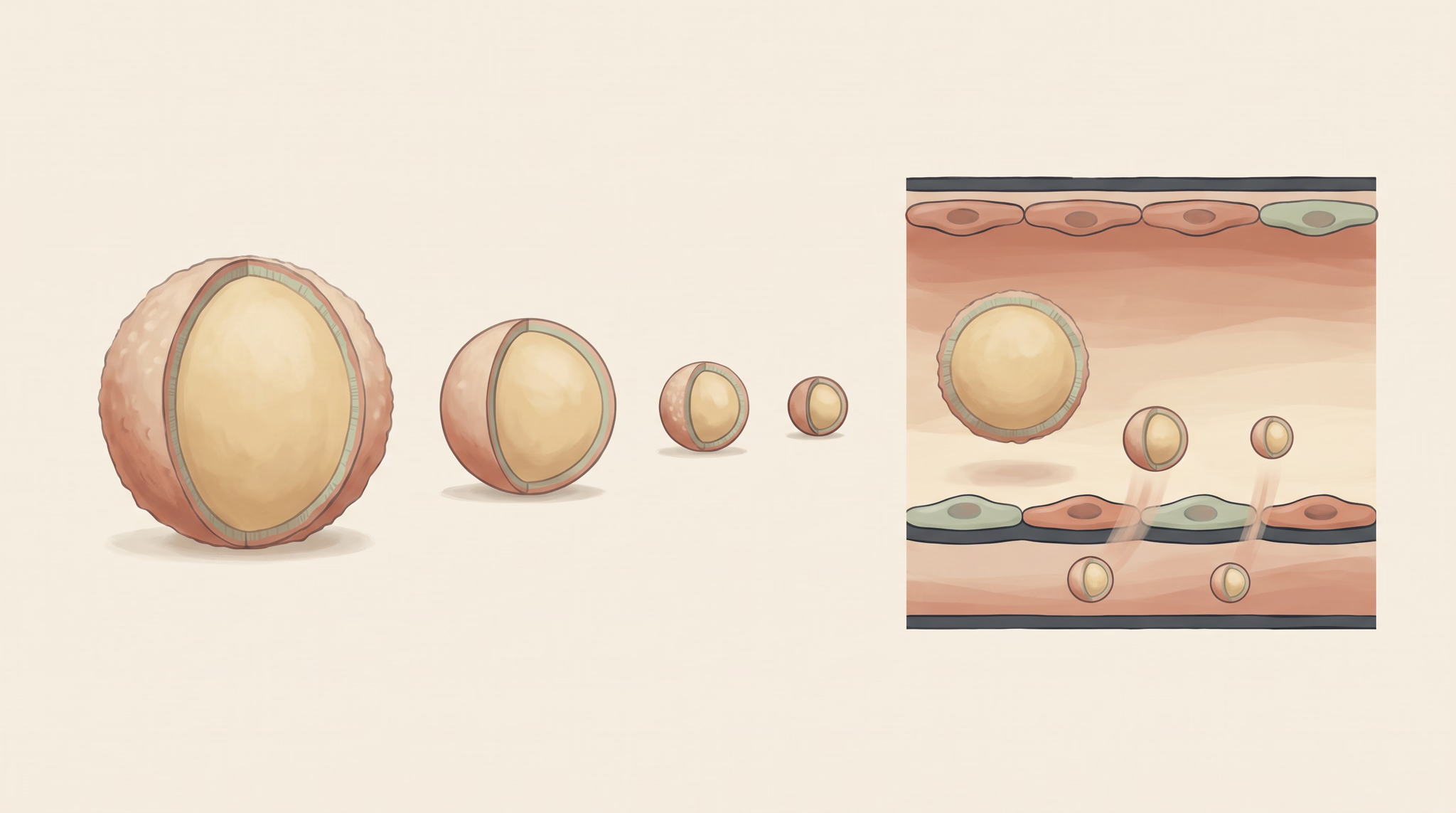
In one retrospective study, 20% of patients with triglycerides above 1,000 mg/dL had at least one attack of acute pancreatitis [6]. Chylomicrons at these levels are too large to enter the artery wall, so the main threat is to the pancreas rather than the arteries [1].
What guidelines describe at this level [2]:
- Fix reversible contributors quickly: uncontrolled diabetes, alcohol, pregnancy, an underactive thyroid, kidney disease, obesity and triglyceride-raising medicines.
- A very low-fat diet to cut chylomicron production, with specialist dietary support and no alcohol or added sugar. NLA guidance limits fat to 10 to 15% of calories [6].
- Fenofibrate and prescription omega-3 as add-ons, aimed at pancreatitis rather than heart risk.
- Suspect familial chylomicronemia syndrome when levels stay above 1,000 mg/dL after secondary causes are fixed. The 2026 guideline recommends olezarsen for confirmed cases.
The newest evidence comes from drugs that block apoC-III. In two trials of 1,061 people with severe hypertriglyceridemia, olezarsen lowered triglycerides by 49 to 72 percentage points more than placebo and cut acute pancreatitis (rate ratio 0.15) [4]. In persistent chylomicronemia with a median level of 2,044 mg/dL, plozasiran lowered triglycerides by 78 to 80% versus 17% with placebo [5].
Do high triglycerides raise heart attack risk?
Yes, on average. People with higher triglycerides have more heart attacks, and genetic studies suggest the particles are causal. The risk follows the number of ApoB particles, so ApoB and non-HDL cholesterol say more about heart risk than the triglyceride number alone.
Across 29 studies, people in the top third of triglycerides had 1.72 times the coronary risk of those in the bottom third [10]. Genetically higher remnant cholesterol, the cholesterol inside triglyceride-rich particles, carried a 2.8-fold causal risk per 39 mg/dL (1 mmol/L)1 mmol/L (39 mg/dL) [11].
The benefit of lowering triglyceride-rich particles appears proportional to the drop in ApoB [12]. That explains why pemafibrate lowered triglycerides by 26.2% without reducing events: ApoB went up by 4.8% [13]. For heart risk, the 2026 US guideline keeps LDL and non-HDL cholesterol as treatment targets and uses statins as the foundation [2]. See the ApoB guide and the LDL cholesterol guide.
What should you ask about a high result?
Ask whether the test should be repeated, fasting if the nonfasting value was over 440 mg/dL (5 mmol/L)5 mmol/L (440 mg/dL), which secondary causes have been checked, and what your ApoB or non-HDL cholesterol shows. Decisions about medicine belong with your clinician.
Useful questions to take to an appointment:
- Was the sample fasting? If a nonfasting value was above 440 mg/dL (5 mmol/L)5 mmol/L (440 mg/dL), a fasting repeat is reasonable [8].
- Have blood sugar, thyroid, kidney function and medicines been reviewed as causes [2]? HbA1c and TSH are the usual first tests.
- What do ApoB and non-HDL cholesterol show? With high triglycerides, LDL cholesterol alone can understate the particle count.
- Is my level in the range where pancreatitis prevention comes first?
The how to lower triglycerides page ranks the lifestyle and medical options by how much they lower the number.
More about Triglycerides
- Triglycerides: the full guideTriglycerides are the main form of fat in the body and in the blood, carried by VLDL from the liver and chylomicrons from the gut.
- How to lower triglyceridesTo lower triglycerides, lose 5 to 10% of body weight if you carry extra (about 20% lower), cut sugar, refined starch and alcohol (about 10 to 20% lower) and do regular aerobic exercise.
- What is a normal triglyceride level?A normal fasting triglyceride level is under 150 mg/dL (1.7 mmol/L) in US and European guidance, and under 100 mg/dL (1.2 mmol/L) is optimal.
- Triglyceride to HDL ratio: what it tells youThe triglyceride to HDL ratio is triglycerides divided by HDL cholesterol from a standard lipid panel.
- What do low triglycerides mean?Low triglycerides, well below 100 mg/dL (1.1 mmol/L), usually reflect efficient fat clearance from leanness, exercise, low-carbohydrate eating or protective genes, and come with lower heart risk.
Protocols that act on Triglycerides
- Low-glycemic dietA low-glycemic diet favors carbohydrate foods that raise blood sugar slowly, rated by the glycemic index (GI): 55 or less is low and 70 or more is high.
- Mediterranean dietThe Mediterranean diet is an eating pattern built on vegetables, fruit, legumes, whole grains, nuts, fish and olive oil as the main fat, with little red or processed meat, butter or sweets.
- Ketogenic dietA ketogenic diet keeps carbohydrate under about 20 to 50 g a day so the body burns fat and makes ketones, defined in supervised programs as blood BHB of 0.5 to 3.0 mmol/L.
- Time-restricted eatingTime-restricted eating means eating all of the day's food and caloric drinks within a consistent daily window, usually 6 to 10 hours, and fasting the rest of the day.
Common questions
Is a triglyceride level of 200 high?
Is a triglyceride level of 500 dangerous?
It is very high. At 500 mg/dL (5.6 mmol/L)5.6 mmol/L (500 mg/dL) or more, guidelines start to focus on preventing pancreatitis, and this becomes urgent at 1,000 mg/dL or more [2].
Can triglycerides be too high to calculate LDL?
Yes. Labs calculate LDL with the Friedewald equation only when triglycerides are below 400 mg/dL (4.5 mmol/L)4.5 mmol/L (400 mg/dL); above that they measure LDL directly [8].
Are high triglycerides genetic?
What is the treatment for high triglycerides?
Treatment starts with secondary causes and lifestyle, adds a statin when heart risk calls for one, and uses fibrates, prescription omega-3 or newer apoC-III drugs for very high levels [2]. A clinician decides which applies.
Sources
- 1.Ginsberg HN, Packard CJ, Chapman MJ, et al. Triglyceride-rich lipoproteins and their remnants: metabolic insights, role in atherosclerotic cardiovascular disease, and emerging therapeutic strategies-a consensus statement from the European Atherosclerosis Society. Eur Heart J, 2021. doi:10.1093/eurheartj/ehab551
- 2.Sabouret P, Mafrica D, Giamundo DM, et al. The 2026 ACC/AHA Dyslipidemia Guideline: A Critical and Transatlantic Perspective on Personalized Lipid Management. Life (Basel), 2026. doi:10.3390/life16091470
- 3.Pedersen SB, Langsted A, Nordestgaard BG. Nonfasting Mild-to-Moderate Hypertriglyceridemia and Risk of Acute Pancreatitis. JAMA Intern Med, 2016. doi:10.1001/jamainternmed.2016.6875
- 4.Marston NA, Bergmark BA, Alexander VJ, et al. Olezarsen for Managing Severe Hypertriglyceridemia and Pancreatitis Risk. N Engl J Med, 2026. doi:10.1056/NEJMoa2512761
- 5.Watts GF, Rosenson RS, Hegele RA, et al. Plozasiran for Managing Persistent Chylomicronemia and Pancreatitis Risk. N Engl J Med, 2025. doi:10.1056/NEJMoa2409368
- 6.Karalis DG. A Review of Clinical Practice Guidelines for the Management of Hypertriglyceridemia: A Focus on High Dose Omega-3 Fatty Acids. Adv Ther, 2017. doi:10.1007/s12325-016-0462-y
- 7.Grundy SM, Stone NJ, Bailey AL, et al. 2018 AHA/ACC/AACVPR/AAPA/ABC/ACPM/ADA/AGS/APhA/ASPC/NLA/PCNA Guideline on the Management of Blood Cholesterol: A Report of the American College of Cardiology/American Heart Association Task Force on Clinical Practice Guidelines. Circulation, 2019. doi:10.1161/CIR.0000000000000625
- 8.Nordestgaard BG, Langsted A, Mora S, et al. Fasting is not routinely required for determination of a lipid profile: clinical and laboratory implications including flagging at desirable concentration cut-points-a joint consensus statement from the European Atherosclerosis Society and European Federation of Clinical Chemistry and Laboratory Medicine. Eur Heart J, 2016. doi:10.1093/eurheartj/ehw152
- 9.Te Morenga LA, Howatson AJ, Jones RM, Mann J. Dietary sugars and cardiometabolic risk: systematic review and meta-analyses of randomized controlled trials of the effects on blood pressure and lipids. Am J Clin Nutr, 2014. doi:10.3945/ajcn.113.081521
- 10.Sarwar N, Danesh J, Eiriksdottir G, et al. Triglycerides and the risk of coronary heart disease: 10,158 incident cases among 262,525 participants in 29 Western prospective studies. Circulation, 2007. doi:10.1161/CIRCULATIONAHA.106.637793
- 11.Varbo A, Benn M, Tybjaerg-Hansen A, et al. Remnant cholesterol as a causal risk factor for ischemic heart disease. J Am Coll Cardiol, 2013. doi:10.1016/j.jacc.2012.08.1026
- 12.Ference BA, Kastelein JJP, Ray KK, et al. Association of Triglyceride-Lowering LPL Variants and LDL-C-Lowering LDLR Variants With Risk of Coronary Heart Disease. JAMA, 2019. doi:10.1001/jama.2018.20045
- 13.Das Pradhan A, Glynn RJ, Fruchart JC, et al. Triglyceride Lowering with Pemafibrate to Reduce Cardiovascular Risk. N Engl J Med, 2022. doi:10.1056/NEJMoa2210645
- 14.Do R, Willer CJ, Schmidt EM, et al. Common variants associated with plasma triglycerides and risk for coronary artery disease. Nat Genet, 2013. doi:10.1038/ng.2795