
DASH diet
What is dash diet?
The DASH diet (Dietary Approaches to Stop Hypertension) is an eating plan rich in vegetables, fruit, whole grains, low-fat dairy, beans and nuts, with little red meat, sweets or saturated fat. In feeding trials it lowered systolic blood pressure by 5.5 mm Hg overall and 11.4 mm Hg in people with hypertension, and more with less sodium.
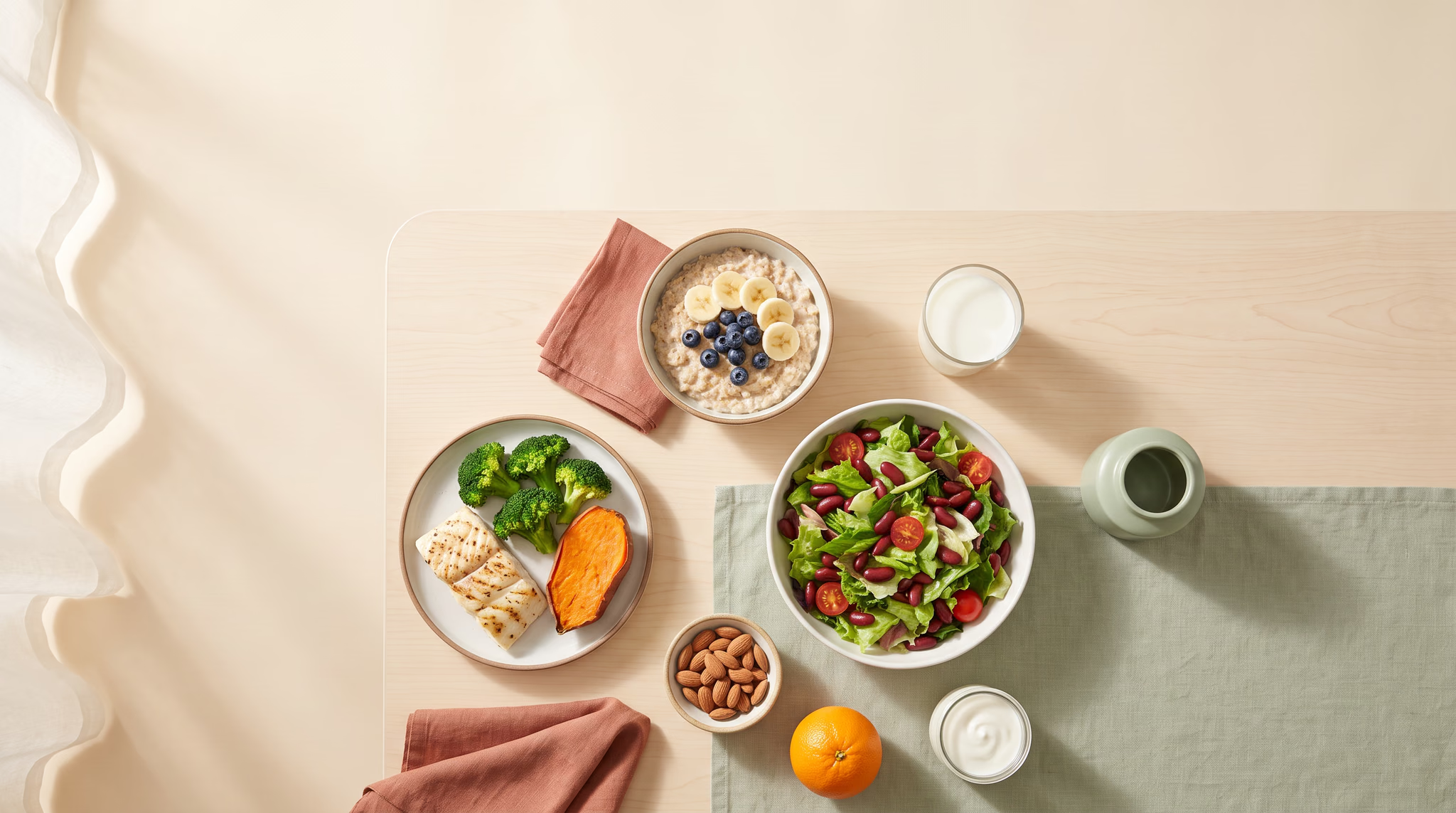
Feeding trials, free-living trials and meta-analyses agree that DASH lowers blood pressure, most of all with less sodium and in people with higher readings, and US guidelines list it as first-line treatment. What is not proven is the effect on heart attacks, strokes and death: Cochrane found too few events in DASH trials, so that benefit rests on cohorts and on blood pressure as a surrogate. How low sodium should go is still argued.
The rules
The rules ofDASH diet
- 1Eat 4 to 5 servings of vegetables and 4 to 5 servings of fruit a day at 2,000 calories.
- 2Eat 6 to 8 servings of grains a day, most of them whole grains.
- 3Eat 2 to 3 servings of fat-free or low-fat milk, yogurt or cheese a day.
- 4Keep lean meat, poultry and fish to 6 one-ounce servings a day or fewer.
- 5Eat nuts, seeds or legumes 4 to 5 times a week.
- 6Keep fats and oils to 2 to 3 servings a day, using vegetable oils rather than butter or tropical oils.
- 7Keep sweets and added sugars to 5 servings a week or fewer.
- 8Keep sodium to 2,300 mg a day, or 1,500 mg for a larger blood pressure effect.
- 9Scale the servings to your calorie needs using the NHLBI table.
Share these rules as an image or a link.
| Original DASH (1997) | The combination diet at about 3,000 mg of sodium a day, tested with weight held constant. |
|---|---|
| DASH-Sodium (low sodium DASH) | The same pattern with sodium cut to about 1,500 mg a day, which gave the largest drops in blood pressure. |
| OmniHeart protein or unsaturated fat versions | About 10% of calories moved from carbohydrate to protein (half from plants) or to mostly monounsaturated fat. |
| Higher-fat DASH | Full-fat dairy in place of low-fat, with less sugar and fruit juice. |
| DASH4D | A version for type 2 diabetes with fewer carbohydrates, more unsaturated fat and less potassium. |
| DASH for weight loss | The same servings at a lower calorie level, often combined with exercise, as in the ENCORE and PREMIER trials. |
| AumniVIDA protocol | Daily sodium at most 2,300 mg, potassium at least 3,500 mg and at least 500 g of fruit, berries and vegetables, paired with home blood pressure readings. |
What it aims to do
- Lower blood pressure in people with elevated readings or hypertension, with or without medication.
- Prevent high blood pressure in people whose readings are creeping up.
- Reduce the long-term risk of heart attack, stroke and kidney disease that comes with high blood pressure.
- Improve LDL cholesterol, insulin sensitivity and weight as secondary effects.
- Give a flexible, family-friendly pattern of common foods rather than a restrictive diet.
What it claims, and what the evidence shows
Grades reflect evidence in people. Animal and cell results alone never earn more than limited.
Heart and blood vessels
Strong evidenceHeart and blood vessels
Limited evidenceHeart and blood vessels
Mixed evidenceLifespan and mortality
Limited evidenceBlood sugar and insulin
Limited evidenceBody fat and weight
Limited evidenceInflammation
Mixed evidence
Key takeaways
- 1
DASH is a servings-based plan: at 2,000 calories, 4 to 5 servings each of vegetables and fruit, 6 to 8 of grains, 2 to 3 of low-fat dairy, and nuts or legumes 4 to 5 times a week.
- 2
In the original feeding trial it lowered systolic pressure by 5.5 mm Hg overall and 11.4 mm Hg in people with hypertension, with sodium unchanged.
- 3
Adding low sodium (about 1,500 mg) roughly doubled the effect, up to 20.8 mm Hg in people starting at 150 mm Hg or higher.
- 4
Effects outside the feeding lab are smaller, about 3 to 5 mm Hg, and fade when people stop eating this way.
- 5
No trial has shown DASH prevents heart attacks or strokes; that benefit rests on cohorts and the blood pressure drop.
What is the DASH diet, and what does DASH stand for?
DASH stands for Dietary Approaches to Stop Hypertension. It is an eating plan built from ordinary foods: lots of vegetables, fruit, whole grains and low-fat dairy, regular beans and nuts, modest lean meat and fish, and little saturated fat, sweets or sodium.
The plan came out of a set of feeding trials funded by the US National Heart, Lung, and Blood Institute (NHLBI). In the first, published in 1997, researchers cooked every meal for 459 adults and kept salt and body weight constant, so that only the food pattern changed [1]. The pattern that won was called the combination diet. It became the DASH diet.
Three things make DASH different from most diets people search for:
- It was designed in a trial, not a kitchen. Its rules are servings per day at a given calorie level, tested against a typical American diet [18].
- It targets blood pressure first. Weight loss, cholesterol and blood sugar are secondary effects, and smaller ones.
- It needs no special foods. NHLBI describes it as daily and weekly goals for food groups, not a list of banned items [18].
Who is the DASH diet for? It was tested in adults with blood pressure above optimal or stage 1 hypertension, both with and without medication [1] [12]. Current US guidance names DASH-style eating as one of the first-line treatments for high blood pressure, alongside weight management, sodium restriction, activity and less alcohol [19]. It is also a reasonable everyday pattern for people without high blood pressure, though the effect on their readings is smaller.
What it is not. DASH is not a weight loss diet, although it can be eaten at a lower calorie level. It is not low carbohydrate: the original menus were high in grains and fruit. And the first trial did not cut sodium at all; the low sodium version came later [20].
A DASH day at 2,000 calories
Every day
Servings at 2,000 calories, with one serving example.
- Grains, mostly whole: 6 to 8 (1 slice of bread)
- Vegetables: 4 to 5 (1 cup raw leafy greens)
- Fruit: 4 to 5 (1 medium fruit)
- Fat-free or low-fat dairy: 2 to 3 (1 cup milk or yogurt)
- Lean meat, poultry or fish: 6 or fewer (1 ounce cooked, or 1 egg)
- Fats and oils: 2 to 3
Each week
- Nuts, seeds and legumes: 4 to 5 servings
- Sweets: 5 servings or fewer
Sodium and potassium
Daily limits and targets.
- Sodium: at most 2,300 mg
- Sodium: 1,500 mg for a larger drop in blood pressure
- Potassium: at least 3,500 mg (AumniVIDA target)
- Potassium: about 4,700 mg (NHLBI menu design)
Source: NHLBI, Following the DASH Eating Plan. NHLBI publishes servings for seven calorie levels.
What can you eat on the DASH diet? The food list and servings
At 2,000 calories a day, DASH means 6 to 8 servings of grains (mostly whole), 4 to 5 of vegetables, 4 to 5 of fruit, 2 to 3 of low-fat dairy, 6 or fewer of lean meat, poultry or fish, 4 to 5 a week of nuts, seeds and legumes, and 5 or fewer sweets a week.
NHLBI publishes servings for seven calorie levels. The table shows four of them. A serving is small: 1 slice of bread, half a cup of cooked rice or pasta, 1 cup of raw leafy greens, 1 medium fruit, 1 cup of milk or yogurt, 1 ounce of cooked meat or fish, or 1 egg [18].
Foods to favor
- Whole grain bread, oatmeal, brown rice, unsalted popcorn.
- Broccoli, carrots, leafy greens, tomatoes, potatoes, sweet potatoes, beans and peas.
- Bananas, oranges, berries, melon, dried apricots and other fruit.
- Fat-free or low-fat milk, yogurt and reduced-fat cheese.
- Fish, skinless poultry and lean meat, broiled, roasted or poached.
- Almonds, walnuts, peanuts, sunflower seeds, lentils and kidney beans.
- Vegetable oils such as canola, olive and corn oil.
Foods to limit on the DASH diet
NHLBI asks people to limit fatty meats, full-fat dairy, coconut, palm and palm kernel oils, sugar-sweetened drinks and sweets, and to keep sodium to 2,300 mg a day, or 1,500 mg for a larger drop in blood pressure [18]. Most sodium comes from packaged and restaurant food such as bread, cold cuts, pizza, soups, sandwiches and cheese, not the salt shaker [21].
What AumniVIDA scores
The AumniVIDA DASH protocol scores three daily targets from logged meals: sodium at most 2,300 mg, potassium at least 3,500 mg and at least 500 g of fruit, berries and vegetables. It pairs them with home blood pressure readings, because the readings show whether the pattern is working for you.
| Food group | 1,600 kcal | 2,000 kcal | 2,600 kcal | Serving examples |
|---|---|---|---|---|
| Grains, mostly whole | 6 | 6 to 8 | 10 to 11 | 1 slice bread; half cup cooked rice or pasta |
| Vegetables | 3 to 4 | 4 to 5 | 5 to 6 | 1 cup raw leafy; half cup cooked |
| Fruits | 4 | 4 to 5 | 5 to 6 | 1 medium fruit; quarter cup dried |
| Fat-free or low-fat dairy | 2 to 3 | 2 to 3 | 3 | 1 cup milk or yogurt; 1.5 oz cheese |
| Lean meat, poultry, fish | 3 to 4 or less | 6 or less | 6 or less | 1 oz cooked; 1 egg |
| Nuts, seeds, legumes | 3 to 4 a week | 4 to 5 a week | 1 a day | 1.5 oz nuts; half cup cooked beans |
| Fats and oils | 2 | 2 to 3 | 3 | 1 tsp oil; 1 tbsp mayonnaise |
| Sweets and added sugars | 3 or less a week | 5 or less a week | 2 or less a day | 1 tbsp sugar or jam |
| Sodium limit | 2,300 mg | 2,300 mg | 2,300 mg | 1,500 mg lowers blood pressure further |
What each part of the diet did in the 1997 DASH trial
- Fruit and vegetables diet, everyone2.8 mm Hg lower systolic pressure than control
- DASH diet, everyone5.5 mm Hg lower systolic pressure than control
- DASH diet, no hypertension3.5 mm Hg lower systolic pressure than control
- DASH diet, hypertension11.4 mm Hg lower systolic pressure than control
Show the data
| Item | Value (mm Hg lower systolic pressure than control) | Low | High | Note |
|---|---|---|---|---|
| Fruit and vegetables diet, everyone | 2.8 | |||
| DASH diet, everyone | 5.5 | |||
| DASH diet, no hypertension | 3.5 | |||
| DASH diet, hypertension | 11.4 |
How much does the DASH diet lower blood pressure?
In controlled feeding trials, DASH lowered systolic pressure by about 5.5 mm Hg overall and 11.4 mm Hg in people with hypertension. DASH plus low sodium did more: up to 20.8 mm Hg in people starting at 150 mm Hg or higher. Free-living trials and meta-analyses show smaller average drops of about 3 to 5 mm Hg.
The original DASH trial. After 8 weeks with sodium (about 3,000 mg a day) and weight held constant, the DASH diet lowered systolic and diastolic pressure by 5.5 and 3.0 mm Hg more than the control diet. A diet with extra fruit and vegetables alone did about half as much: 2.8 mm Hg systolic. In the 133 participants with hypertension the DASH effect was 11.4/5.5 mm Hg; in the 326 without, 3.5/2.1 mm Hg [1] [20].
DASH-Sodium. The next trial fed 412 adults either DASH or a control diet at three sodium levels for 30 days each: about 3,300, 2,300 and 1,500 mg a day [20]. Each step down in sodium lowered pressure on both diets. DASH at the low sodium level gave a systolic pressure 7.1 mm Hg lower in people without hypertension and 11.5 mm Hg lower in people with hypertension than the control diet at the high level [2].
Bigger effects at higher starting pressure. A reanalysis by baseline systolic pressure found that low sodium plus DASH lowered systolic pressure by 5.3 mm Hg in people starting under 130 mm Hg, 7.5 at 130 to 139, 9.7 at 140 to 149 and 20.8 at 150 mm Hg or higher [3]. That last figure is similar to what a blood pressure drug can do, but it comes from a small subgroup on fully provided meals.
Outside the feeding lab. When people buy and cook their own food, effects shrink. A meta-analysis of 30 trials with 5,545 adults found average reductions of 3.2 mm Hg systolic and 2.5 mm Hg diastolic [4]. An umbrella review put the systolic effect at 5.2 mm Hg [5].
How long before the DASH diet works?
Weeks, not months. In the DASH4D crossover trial, most of the blood pressure drop on each diet happened in the first 3 weeks [12]. Measure at home over several weeks and compare averages, not single readings.
Low sodium DASH lowers blood pressure most when it starts high
- Starting under 130 mm Hg5.3 mm Hg lower systolic pressure
- Starting 130 to 139 mm Hg7.5 mm Hg lower systolic pressure
- Starting 140 to 149 mm Hg9.7 mm Hg lower systolic pressure
- Starting 150 mm Hg or higher20.8 mm Hg lower systolic pressure
Smallest subgroup
Show the data
| Item | Value (mm Hg lower systolic pressure) | Low | High | Note |
|---|---|---|---|---|
| Starting under 130 mm Hg | 5.3 | |||
| Starting 130 to 139 mm Hg | 7.5 | |||
| Starting 140 to 149 mm Hg | 9.7 | |||
| Starting 150 mm Hg or higher | 20.8 | Smallest subgroup |
Why does the DASH diet lower blood pressure?
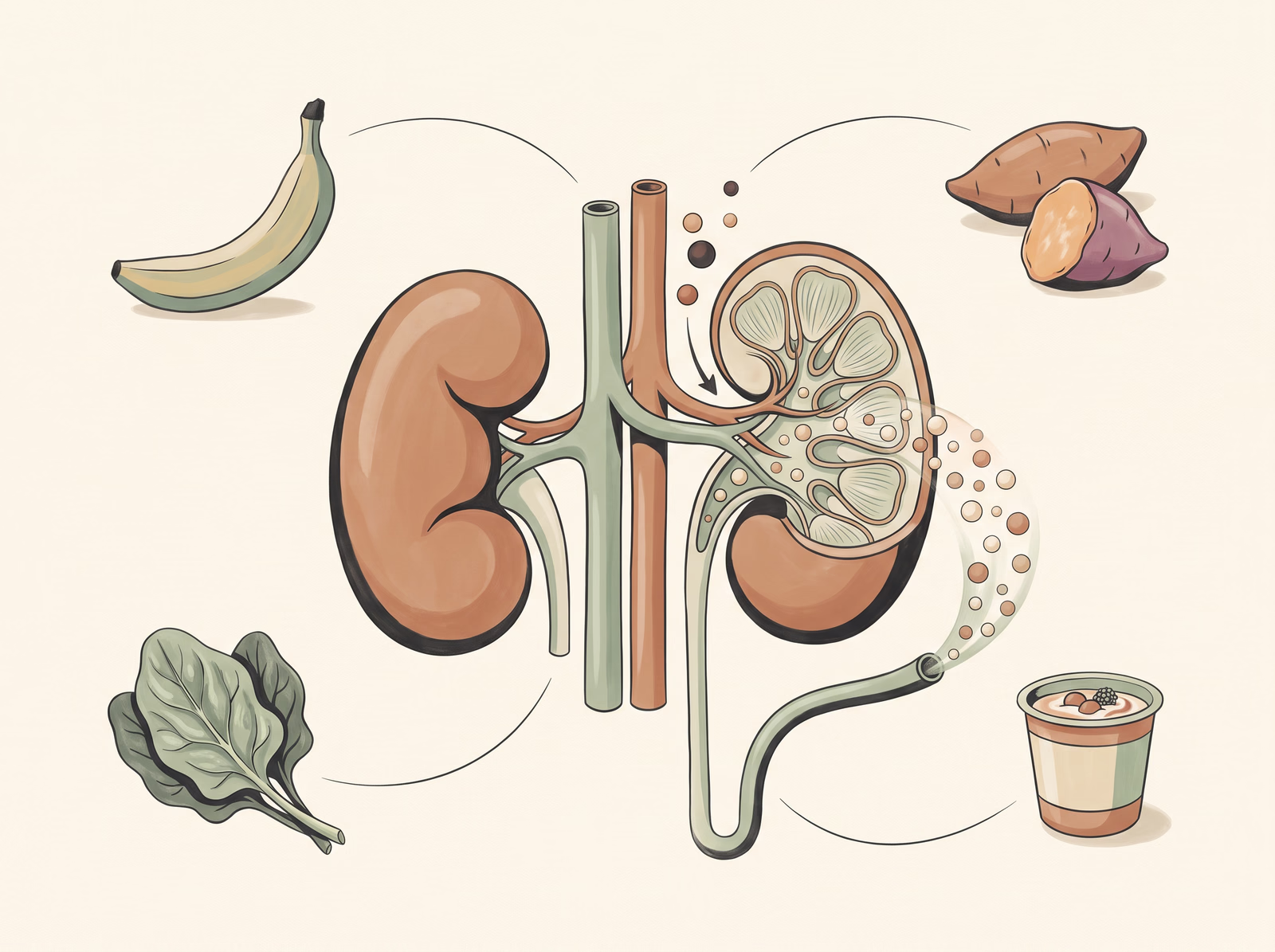
Mainly through the kidneys and minerals. DASH supplies more potassium, magnesium, calcium and fiber, and it helps the kidneys excrete sodium at a lower blood pressure. Cutting sodium works through a partly separate pathway, which is why the two add up.
- Sodium excretion. In DASH-Sodium participants, the DASH diet roughly doubled the slope of the pressure-natriuresis curve (from 29.5 to 64.9 mmol a day per mm Hg). The kidneys cleared sodium at a lower pressure, a natriuretic effect much like a mild diuretic [22].
- Potassium. Trials of extra potassium lower systolic pressure by 3.49 mm Hg on average and by 7.16 mm Hg when intake reaches 90 to 120 mmol a day, about 3,500 to 4,700 mg [23]. NHLBI designs DASH menus around 4,700 mg of potassium [21].
- The whole pattern. Fruit and vegetables alone produced about half the effect of full DASH in the first trial, so low-fat dairy, nuts and less saturated fat seem to add something [1].
- Heart strain. In DASH-Sodium, DASH lowered high-sensitivity troponin, a marker of heart muscle injury, by 18%, and sodium reduction lowered NT-proBNP, a marker of strain, by 19% [16].
One rat study is worth knowing about because it did not work: DASH-style nutrient profiles did not change blood pressure in normal or hypertensive rats over 8 weeks [24]. The human feeding trials, not animal work, are what the evidence rests on.
How much sodium and potassium should you have on DASH?
NHLBI sets a sodium limit of 2,300 mg a day, or 1,500 mg for a bigger effect, and designs DASH to deliver about 4,700 mg of potassium. AumniVIDA scores sodium at 2,300 mg or less and potassium at 3,500 mg or more, the lower end of the range where potassium trials showed their largest effect.
Sodium. The DASH-Sodium trial showed a dose response: 3,300 to 2,300 to 1,500 mg a day lowered pressure at each step [2] [20]. NHLBI therefore gives two limits, 2,300 mg and 1,500 mg [18]. Meta-analysis suggests DASH lowers systolic pressure more in people whose sodium stays above 2,400 mg, so the diet partly offsets a salty background [4].
Potassium. NHLBI menus aim for 4,700 mg of potassium a day [21]. Few people reach that. AumniVIDA's 3,500 mg target matches the lower end of the 90 to 120 mmol a day range where potassium trials found the largest drop [23]. Potatoes, yogurt, sweet potatoes, beans, bananas, oranges, tomato sauce and fish are rich sources [21].
Is there a debate about sodium?
Yes, about how low to go, not about whether DASH lowers blood pressure.
- The PURE cohort estimated sodium from a single morning urine sample in 101,945 people. Compared with 4.00 to 5.99 g of sodium a day, both more than 7 g and less than 3 g were linked to more deaths and cardiovascular events [25]. Critics of PURE note that one spot urine sample measures individual intake poorly, and sick people may eat less.
- James DiNicolantonio and colleagues argue that sodium restriction has not been shown to reduce cardiovascular events and that the body regulates sodium tightly enough to leave it alone [26].
- On the other side, a cluster-randomized trial in 20,995 older adults in rural China found that a salt substitute with 25% potassium chloride cut stroke by 14% and death by 12% [27]. The 2025 US guideline now includes potassium-based salt substitutes, with caution in severe kidney disease [19].
The randomized evidence favors less sodium and more potassium for blood pressure. Whether going below about 1,500 mg adds hard-outcome benefit is not settled.
Does the DASH diet help with cholesterol, diabetes and weight loss?
Modestly. DASH lowered LDL cholesterol by about 11 mg/dL in its first trial but also lowered HDL. It lowers fasting insulin and may lower HbA1c, and it adds about 1.4 kg of weight loss over 8 to 24 weeks. It is not the strongest option for any of these alone.
Cholesterol. In the original trial, DASH lowered LDL cholesterol by 10.7 mg/dL (0.28 mmol/L)0.28 mmol/L (10.7 mg/dL) and total cholesterol by 13.7 mg/dL, but also lowered HDL by 3.7 mg/dL, with no change in triglycerides [8]. The 2025 Cochrane review found little to no effect on LDL cholesterol in longer trials [7]. In the OmniHeart trial, swapping about 10% of calories from carbohydrate to protein lowered LDL by a further 3.3 mg/dL [28]. For more on targets, see LDL cholesterol and triglycerides.
A higher-fat DASH. Swapping low-fat for full-fat dairy and cutting sugar lowered blood pressure as much as standard DASH and lowered triglycerides more, without a significant rise in LDL cholesterol, in a 36-person crossover trial [9].
Diabetes and blood sugar. DASH lowers fasting insulin, but in a meta-analysis its effects on fasting glucose and HOMA-IR were not significant [11]. An umbrella review found an HbA1c reduction of 0.53%, from only 2 small trials [5]. In adults with type 2 diabetes, a lower carbohydrate DASH4D diet with less sodium lowered systolic pressure by 4.6 mm Hg, mostly through sodium [12]. See HbA1c and fasting insulin.
Weight loss. A meta-analysis found 1.42 kg more weight loss over 8 to 24 weeks than control diets, more when DASH was eaten at a calorie deficit [13]. Combining DASH with exercise and weight loss lowered clinic blood pressure by 16.1/9.9 mm Hg, versus 11.2/7.5 mm Hg for DASH alone [14].
Uric acid and gout. DASH lowered serum uric acid by 0.35 mg/dL, and by 1.29 mg/dL in the few participants with high levels [17].
Does the DASH diet prevent heart attacks, strokes and early death?
Probably helps, but it has never been proven in a trial. Cohorts link high DASH scores with about 20% less heart disease and stroke, and the blood pressure drop predicts fewer events. Cochrane found too few events in DASH trials to answer the question directly.
Cohorts. Among 88,517 US nurses followed for 24 years, women with the highest DASH-style scores had 24% lower coronary heart disease risk and 18% lower stroke risk than those with the lowest [6]. Pooled cohorts link DASH with 20% less cardiovascular disease, 21% less coronary disease and 19% less stroke, on low certainty evidence [5]. Each 5-point rise on a 40-point adherence score tracks with 5% lower all-cause mortality [10]. Cohorts cannot rule out that people who eat this way also exercise more and smoke less.
Trials. The 2025 Cochrane review found only 5 eligible trials, all in people without heart disease, lasting 16 weeks to 12 months. They recorded almost no heart attacks, strokes or deaths, so the effect on these outcomes remains unknown [7]. The closest proof of hard outcomes comes from salt substitution, not DASH itself [27].
The adherence problem. Only 19.4% of US adults with hypertension ate in line with DASH in 1999 to 2004, fewer than a decade earlier [29]. Even with free groceries and a dietitian, the blood pressure benefit in the GoFresh trial disappeared within 3 months of deliveries stopping [30]. DASH works while people eat it; staying on it is the hard part.
What DASH has and has not proven
Step 1
Blood pressure: strong
About 3 to 5 mm Hg lower
Feeding trials and a meta-analysis of 30 trials; up to 20.8 mm Hg with low sodium from 150 mm Hg.
Step 2
Cholesterol and weight: modest
LDL 10.7 mg/dL (0.28 mmol/L)0.28 mmol/L (10.7 mg/dL) lower
In the first trial; longer trials show little LDL effect. Weight about 1.4 kg lower.
Step 3
Heart disease: cohorts only
About 20% less cardiovascular disease
Pooled cohorts on low certainty evidence; higher adherence tracks with lower mortality.
Step 4
Outcome trials: not yet
Too few events to judge
Cochrane 2025 found 5 trials with almost no heart attacks, strokes or deaths.
The closest outcome trial is of salt substitution, not DASH: salt with 25% potassium chloride cut stroke by 14%.
DASH vs Mediterranean, MIND and keto: which is better, and what do critics say?
For blood pressure, DASH has the strongest feeding-trial evidence. For heart attacks and strokes, the Mediterranean diet has outcome trials and DASH does not. MIND borrows from both for brain health. Critics question the low-fat dairy rule and very low sodium targets, not the core pattern.
| Question | DASH | Mediterranean | MIND | Ketogenic |
|---|---|---|---|---|
| Designed for | Blood pressure | Heart health, tradition | Brain aging | Seizures, then weight |
| Fat | Low saturated fat, vegetable oils | Olive oil as main fat | Olive oil as main fat | High |
| Dairy | 2 to 3 low-fat servings a day | Moderate | Cheese under once a week | Often full-fat |
| Sodium target | 2,300 or 1,500 mg | None set | None set | None set |
| Outcome trials for events | None | PREDIMED, Lyon, CORDIOPREV | None | None |
Read the Mediterranean diet page for its outcome trials, and the MIND diet page for the brain-focused hybrid of the two. The ketogenic diet page covers the low carbohydrate end. DASH and Mediterranean are close enough that you can combine them: the OmniHeart trial showed that a DASH-type diet with more unsaturated fat, mostly monounsaturated, lowered blood pressure a little more than the original [28].
What critics say about the DASH diet
- Low-fat dairy is not essential. Ronald Krauss's group found that full-fat dairy in a DASH diet lowered blood pressure just as well [9].
- Sodium targets may be too low. PURE investigators and James DiNicolantonio argue that very low sodium targets are not proven to cut events [25] [26].
- Hard outcomes are missing. Cochrane rates the trial evidence for events low to very low [7].
- Glycemic index adds little. Within a DASH-like diet, the OmniCarb trial found low glycemic index foods did not improve blood pressure or insulin resistance [20].
Supporters such as Lawrence Appel point out that cardiovascular and kidney risk rise steadily with blood pressure across its usual range, and that diet change can be the first treatment for stage 1 hypertension [31].
The studies, by type
Strongest designs first. Scroll each row; every card links to the paper and says whether it supports the protocol.
Systematic reviews and meta-analyses (7)
Randomized controlled trials (12)
Large observational studies in people (3)
Mechanistic studies in people (2)
Animal and cell studies (1)
Hypotheses and expert reviews (7)
Who follows it, who backs it, who doubts it
Public positions summarized in our words. Follow each link for the full context.
Support it
Lawrence AppelPhysician and epidemiologist, Johns Hopkins; lead author of the DASH, PREMIER and OmniHeart trials
Led the writing group that argues excess salt, low potassium, excess weight, alcohol and poor diet drive blood pressure, and that diet change can be the first treatment for stage 1 hypertension.
Stephen JuraschekPhysician-researcher, Beth Israel Deaconess Medical Center and Harvard Medical School
Showed that low sodium plus DASH lowers systolic pressure most in people with the highest starting readings, and later tested home-delivered DASH groceries in Boston.
Marla HellerRegistered dietitian and author of DASH diet books
Runs a DASH diet site and book series that present DASH as a plan for weight loss as well as blood pressure and cholesterol, including vegetarian and weight loss versions.
Mixed or cautious
Ronald KraussLipid researcher, University of California San Francisco
Supports the DASH pattern but tested a higher-fat version with full-fat dairy, which lowered blood pressure as much and triglycerides more, questioning the low-fat dairy rule.
Martin O'DonnellPhysician-researcher, lead author of the PURE sodium analysis
Reported that both high and low estimated sodium intake were linked to more deaths and cardiovascular events, while more potassium was linked to fewer, challenging very low sodium targets.
Oppose or doubt it
James DiNicolantonioPharmacist-researcher and author of The Salt Fix
Argues against the low sodium part of DASH-style advice: he says sodium restriction has not been shown to cut cardiovascular events and may harm people with cardiometabolic disease.
Public examples
- NHLBI DASH eating plan
The official plan: servings for seven calorie levels, serving sizes, weekly menus at 1,500 or 2,300 mg of sodium and worksheets.
- NHLBI: Living with DASH
Sodium tips for shopping, cooking and eating out, and a list of potassium-rich foods with milligrams per serving.
- Harvard Nutrition Source DASH review
A plain-language review of the research, with pitfalls such as the need to plan menus yourself.
- The DASH Diet (Marla Heller)
A commercial site and book series built on DASH, including weight loss and vegetarian versions.
How to follow it
- Find your calorie level in the NHLBI table and note the servings for each food group.
- Add one fruit or vegetable serving to every meal and snack until you reach 8 to 10 a day.
- Switch most grains to whole grains: oatmeal, whole wheat bread, brown rice.
- Have 2 to 3 servings of low-fat milk or yogurt a day, or a calcium-rich alternative if you avoid dairy.
- Plan beans, lentils, nuts or seeds 4 to 5 times a week, and keep meat portions to palm-sized pieces.
- Read labels for sodium; choose fresh or frozen over canned and cured foods, and cook with herbs, spices and lemon instead of salt.
- When eating out, ask for no added salt and skip pickled, cured, smoked or soy-sauce dishes.
- Measure your blood pressure at home before you start and several times a week for 4 to 8 weeks, then compare weekly averages.
How to know you are following it
Researchers score DASH adherence in several ways: an 8-component food score where each group is ranked by fifths, giving 8 to 40 points; a 9-nutrient score from 0 to 9, where 4.5 or more counts as DASH-accordant; and a 10-point score of food groups and sodium. AumniVIDA scores daily sodium, potassium and fruit and vegetable grams from logged meals, and checks the result against your weekly home blood pressure average. A 24-hour urine sodium test is the most accurate check of salt intake.
Common mistakes
- Adding fruit and vegetables without cutting sodium, which leaves much of the blood pressure benefit on the table.
- Counting the salt shaker but missing sodium in bread, cheese, deli meat, soup, pizza and restaurant food.
- Judging the diet on one or two readings instead of weekly averages over a month or more.
- Assuming DASH alone will cause large weight loss without attention to calories.
- Stopping or changing blood pressure medication on your own after readings improve.
- Going straight from a low-fiber diet to 10 servings of produce and beans, which causes bloating.
Who should be careful
Check with a clinician first if you
- You have chronic kidney disease or take drugs that raise potassium, such as ACE inhibitors, ARBs, spironolactone or potassium-sparing diuretics: ask your clinician before raising potassium or using potassium-based salt substitutes.
- You take blood pressure medication: readings can fall within weeks, so measure at home and talk to your clinician about any dizziness or low readings.
- You have heart failure or another condition with a prescribed fluid or sodium target: follow that target.
- You take warfarin: a large rise in leafy green vegetables changes vitamin K intake, so keep it steady and tell your prescriber.
- You are pregnant, have an eating disorder or are on insulin or sulfonylureas: set up changes with your clinician or dietitian.
Possible side effects
- Gas and bloating as fiber rises; build up fruit, vegetables and beans over a few weeks.
- Digestive upset from dairy in people with lactose intolerance; lactose-free milk or yogurt works.
- Light-headedness if blood pressure falls on top of medication.
- A small fall in HDL cholesterol in some people on the low-fat version.
Follow it in AumniVIDA
Follow the DASH pattern with sodium under 2,300 mg a day, potassium of at least 3,500 mg and 500 g of fruit and vegetables, and see what it does to your home blood pressure average.
The targets
AumniVIDA scores these from your logged meals and measurements, and shows the evidence grade for each protocol.
Targets
- Sodium: at most 2,300 mg/day
- Potassium: at least 3,500 mg/day
- Fruit, berries and vegetables: at least 500 g/day
How AumniVIDA follows it with your data
- Score sodium and potassium. Track your daily sodium, potassium and fruit and vegetables against your logged meals.
- Measure regularly. The protocol reminds you when your last blood pressure reading is older than 14 days. Photograph your cuff to log a reading.
- Read averages, not single readings. AumniVIDA compares weekly averages with your baseline, and separates readings tagged with caffeine or stress.
- Measure well. Sit with your back supported, rest 5 minutes, avoid caffeine for 30 minutes and keep the cuff at heart level.
Follow up to five protocols on the free plan, or the full library with Pro. Rank them, and when two protocols disagree, the higher-ranked one guides the app.
Watch
Talks and explainers worth your time. Nothing loads from YouTube until you press play.
High Blood Pressure? What to Eat & Avoid (DASH Diet Guide)
Mayo ClinicMayo Clinic@mayoclinicSubscribers1.3MStartedJune 2006CountryUnited StatesVideos12.6KTotal views501.8MNew videos, last 30 days61New videos, last year500+From YouTube, 2026-10-31Open on YouTube
A practical guide from a major clinic on what to eat and what to cut.
What Is the DASH Diet?
Cleveland ClinicCleveland Clinic@clevelandclinicSubscribers761KStartedFebruary 2007CountryUnited StatesVideos6.6KTotal views396.5MNew videos, last 30 days64New videos, last year500+From YouTube, 2026-10-31Open on YouTube
A short clinical explainer of the food groups and why they matter.
DASH Diet Basics | WebMD
WebMDWebMD@webmdSubscribers203KStartedJuly 2006CountryUnited StatesVideos2.9KTotal views66.7MNew videos, last 30 days38New videos, last year364From YouTube, 2026-10-31Open on YouTube
A quick overview of the basics for beginners.
What is the D.A.S.H. Eating Plan?
Kettering HealthKettering Health@ketteringhealthSubscribers7.6KStartedJuly 2009CountryUnited StatesVideos836Total views3.8MNew videos, last 30 days3New videos, last year27From YouTube, 2026-10-31Open on YouTube
A hospital dietitian's walk-through of the eating plan.
Biomarkers it can move
- LDL cholesterolLDL cholesterol (LDL-C) is the cholesterol carried inside low-density lipoprotein particles, the main particles that deliver cholesterol to tissues and lodge in artery walls.
- TriglyceridesTriglycerides are the main form of fat in the body and in the blood, carried by VLDL from the liver and chylomicrons from the gut.
- HbA1cHbA1c (A1c) is the percentage of hemoglobin in red blood cells that has glucose attached.
- Fasting insulinFasting insulin is the level of insulin in your blood after at least 8 hours without food.
- hs-CRPhs-CRP is a blood test that measures C-reactive protein, an inflammation protein made by the liver, at very low levels.
- ApoBApoB (apolipoprotein B) is the protein on every LDL, VLDL, IDL and Lp(a) particle, one per particle, so a blood ApoB test counts the particles that drive atherosclerosis.
Common questions
What does DASH stand for?
Dietary Approaches to Stop Hypertension. The name comes from the 1997 NHLBI-funded trial that tested the eating pattern against a typical American diet [1].
Does the DASH diet include eggs?
Yes. NHLBI counts 1 egg as one serving in the lean meat, poultry and fish group, which is 6 servings a day or fewer at 2,000 calories [18].
How long does it take for the DASH diet to lower blood pressure?
Usually a few weeks. In the DASH4D feeding trial, most of the drop on each diet came in the first 3 weeks [12]. Compare home averages over a month.
Is the DASH diet good for weight loss?
It helps a little: about 1.42 kg more weight loss over 8 to 24 weeks than control diets, more when calories are cut [13]. It was designed for blood pressure, not weight.
Does the DASH diet lower cholesterol?
Is the DASH diet good for diabetes?
Can you drink alcohol on the DASH diet?
NHLBI advises limiting alcohol as part of a heart-healthy lifestyle alongside DASH [21]. The trials did not test alcohol, and less is better for blood pressure.
Is the DASH diet safe with kidney disease?
Ask your clinician first. DASH is high in potassium, and potassium-based salt substitutes call for caution in severe kidney disease [19].
Sources
- 1.Appel LJ, Moore TJ, Obarzanek E, et al. A clinical trial of the effects of dietary patterns on blood pressure. DASH Collaborative Research Group. N Engl J Med, 1997. doi:10.1056/NEJM199704173361601
- 2.Sacks FM, Svetkey LP, Vollmer WM, et al. Effects on blood pressure of reduced dietary sodium and the Dietary Approaches to Stop Hypertension (DASH) diet. DASH-Sodium Collaborative Research Group. N Engl J Med, 2001. doi:10.1056/NEJM200101043440101
- 3.Juraschek SP, Miller ER 3rd, Weaver CM, et al. Effects of Sodium Reduction and the DASH Diet in Relation to Baseline Blood Pressure. J Am Coll Cardiol, 2017. doi:10.1016/j.jacc.2017.10.011
- 4.Filippou CD, Tsioufis CP, Thomopoulos CG, et al. Dietary Approaches to Stop Hypertension (DASH) Diet and Blood Pressure Reduction in Adults with and without Hypertension: A Systematic Review and Meta-Analysis of Randomized Controlled Trials. Adv Nutr, 2020. doi:10.1093/advances/nmaa041
- 5.Chiavaroli L, Viguiliouk E, Nishi SK, et al. DASH Dietary Pattern and Cardiometabolic Outcomes: An Umbrella Review of Systematic Reviews and Meta-Analyses. Nutrients, 2019. doi:10.3390/nu11020338
- 6.Fung TT, Chiuve SE, McCullough ML, et al. Adherence to a DASH-style diet and risk of coronary heart disease and stroke in women. Arch Intern Med, 2008. doi:10.1001/archinte.168.7.713
- 7.Bensaaud A, Seery S, Gibson I, et al. Dietary Approaches to Stop Hypertension (DASH) for the primary and secondary prevention of cardiovascular diseases. Cochrane Database Syst Rev, 2025. doi:10.1002/14651858.CD013729.pub2
- 8.Obarzanek E, Sacks FM, Vollmer WM, et al. Effects on blood lipids of a blood pressure-lowering diet: the Dietary Approaches to Stop Hypertension (DASH) Trial. Am J Clin Nutr, 2001. doi:10.1093/ajcn/74.1.80
- 9.Chiu S, Bergeron N, Williams PT, et al. Comparison of the DASH (Dietary Approaches to Stop Hypertension) diet and a higher-fat DASH diet on blood pressure and lipids and lipoproteins: a randomized controlled trial. Am J Clin Nutr, 2016. doi:10.3945/ajcn.115.123281
- 10.Soltani S, Arablou T, Jayedi A, et al. Adherence to the dietary approaches to stop hypertension (DASH) diet in relation to all-cause and cause-specific mortality: a systematic review and dose-response meta-analysis of prospective cohort studies. Nutr J, 2020. doi:10.1186/s12937-020-00554-8
- 11.Shirani F, Salehi-Abargouei A, Azadbakht L. Effects of Dietary Approaches to Stop Hypertension (DASH) diet on some risk for developing type 2 diabetes: a systematic review and meta-analysis on controlled clinical trials. Nutrition, 2013. doi:10.1016/j.nut.2012.12.021
- 12.Pilla SJ, Yeh HC, Mitchell CM, et al. Dietary Patterns, Sodium Reduction, and Blood Pressure in Type 2 Diabetes: The DASH4D Randomized Clinical Trial. JAMA Intern Med, 2025. doi:10.1001/jamainternmed.2025.1580
- 13.Soltani S, Shirani F, Chitsazi MJ, et al. The effect of dietary approaches to stop hypertension (DASH) diet on weight and body composition in adults: a systematic review and meta-analysis of randomized controlled clinical trials. Obes Rev, 2016. doi:10.1111/obr.12391
- 14.Blumenthal JA, Babyak MA, Hinderliter A, et al. Effects of the DASH diet alone and in combination with exercise and weight loss on blood pressure and cardiovascular biomarkers in men and women with high blood pressure: the ENCORE study. Arch Intern Med, 2010. doi:10.1001/archinternmed.2009.470
- 15.Appel LJ, Champagne CM, Harsha DW, et al. Effects of comprehensive lifestyle modification on blood pressure control: main results of the PREMIER clinical trial. JAMA, 2003. doi:10.1001/jama.289.16.2083
- 16.Juraschek SP, Kovell LC, Appel LJ, et al. Effects of Diet and Sodium Reduction on Cardiac Injury, Strain, and Inflammation: The DASH-Sodium Trial. J Am Coll Cardiol, 2021. doi:10.1016/j.jacc.2021.03.320
- 17.Juraschek SP, Gelber AC, Choi HK, et al. Effects of the Dietary Approaches to Stop Hypertension (DASH) Diet and Sodium Intake on Serum Uric Acid. Arthritis Rheumatol, 2016. doi:10.1002/art.39813
- 18.National Heart, Lung, and Blood Institute. Following the DASH Eating Plan. NHLBI, National Institutes of Health, 2026. Link
- 19.Brown C, Clark D 3rd, Jones DW. Updates in the 2025 AHA/ACC Hypertension Guideline. Curr Hypertens Rep, 2026. doi:10.1007/s11906-026-01372-9
- 20.National Heart, Lung, and Blood Institute. Health Benefits of DASH. NHLBI, National Institutes of Health, 2026. Link
- 21.National Heart, Lung, and Blood Institute. Living With DASH. NHLBI, National Institutes of Health, 2026. Link
- 22.Akita S, Sacks FM, Svetkey LP, et al. Effects of the Dietary Approaches to Stop Hypertension (DASH) diet on the pressure-natriuresis relationship. Hypertension, 2003. doi:10.1161/01.HYP.0000074668.08704.6E
- 23.Aburto NJ, Hanson S, Gutierrez H, et al. Effect of increased potassium intake on cardiovascular risk factors and disease: systematic review and meta-analyses. BMJ, 2013. doi:10.1136/bmj.f1378
- 24.Doyle L, Cashman KD. The effect of nutrient profiles of the Dietary Approaches to Stop Hypertension (DASH) diets on blood pressure and bone metabolism and composition in normotensive and hypertensive rats. Br J Nutr, 2003. doi:10.1079/BJN2003833
- 25.O'Donnell M, Mente A, Rangarajan S, et al. Urinary sodium and potassium excretion, mortality, and cardiovascular events. N Engl J Med, 2014. doi:10.1056/NEJMoa1311889
- 26.DiNicolantonio JJ, Niazi AK, Sadaf R, et al. Dietary sodium restriction: take it with a grain of salt. Am J Med, 2013. doi:10.1016/j.amjmed.2013.05.020
- 27.Neal B, Wu Y, Feng X, et al. Effect of Salt Substitution on Cardiovascular Events and Death. N Engl J Med, 2021. doi:10.1056/NEJMoa2105675
- 28.Appel LJ, Sacks FM, Carey VJ, et al. Effects of protein, monounsaturated fat, and carbohydrate intake on blood pressure and serum lipids: results of the OmniHeart randomized trial. JAMA, 2005. doi:10.1001/jama.294.19.2455
- 29.Mellen PB, Gao SK, Vitolins MZ, et al. Deteriorating dietary habits among adults with hypertension: DASH dietary accordance, NHANES 1988-1994 and 1999-2004. Arch Intern Med, 2008. doi:10.1001/archinternmed.2007.119
- 30.Juraschek SP, Col H, Ferro K, et al. DASH-Patterned Groceries and Effects on Blood Pressure: The GoFresh Randomized Clinical Trial. JAMA, 2026. doi:10.1001/jama.2025.21112
- 31.Appel LJ, Giles TD, Black HR, et al. ASH Position Paper: Dietary approaches to lower blood pressure. J Clin Hypertens (Greenwich), 2009. doi:10.1111/j.1751-7176.2009.00136.x
- 32.Campbell AP. DASH Eating Plan: An Eating Pattern for Diabetes Management. Diabetes Spectr, 2017. doi:10.2337/ds16-0084
AumniVIDA explains health information for general wellness. Talk to your clinician before changing your diet, training or medication for a health condition.